Quick answer
To choose safe stuffed animals for toddlers, look for plush toys with no detachable small parts, non-toxic materials, and a durable build that won't shed fibers or stuffing.
Why small parts are the biggest risk
The number one safety concern with stuffed animals for toddlers is choking. Buttons, plastic eyes, ribbons, or any piece that can be pulled off and fit into a child's mouth is a hazard. For children under three, avoid any plush with glued or sewn-on accessories that can be chewed loose.
Material safety matters
Toddlers explore by putting toys in their mouths, so the fabric and fill must be non-toxic. Look for plush toys labeled as meeting safety standards (like ASTM or EN71). Avoid anything with a strong chemical smell, which can indicate volatile organic compounds (VOCs) in the dye or stuffing.
Construction and durability
A safe stuffed animal should have reinforced seams that can withstand tugging and washing. Loose stitching can release stuffing, which is a choking hazard. Also check that the toy is machine-washable (or at least surface-washable) so you can keep it clean without damaging it.
Decision rules for choosing safe stuffed animals for toddlers
- Check for small parts: If the plush has buttons, plastic eyes, bows, or any piece that can be pulled off, it's not safe for a toddler under 3. Choose toys with embroidered or painted features instead. Embroidered eyes and nose eliminate the choking risk entirely.
- Verify non-toxic materials: Look for a safety certification label (ASTM, EN71) and avoid any toy with a strong chemical odor. Wash new plush toys before first use to remove any surface residues. A quick wash also removes dust and potential allergens.
- Test seam strength: Gently tug at seams and any attached parts. If you feel any give or see loose threads, the toy may not withstand toddler play. Also check that the stuffing is securely enclosed. Reinforced seams mean the toy will survive washing and rough play.
- Consider size and weight: A stuffed animal should be large enough that it cannot be stuffed entirely into the mouth (at least 5-6 inches in any dimension). Very small plush toys are best kept for older children. Larger plush toys are also easier for toddlers to hug and carry.
Safe stuffed animal examples from Melissa & Doug
-
Baby Giraffe Stuffed Animal: The Baby Giraffe Stuffed Animal has a removable pacifier and baby bottle that fit into the mouth, plus a cloth diaper for changing. The detachable accessories are designed to be used together with the toy, but for toddlers under 3, you should remove and store these small pieces to prevent choking.
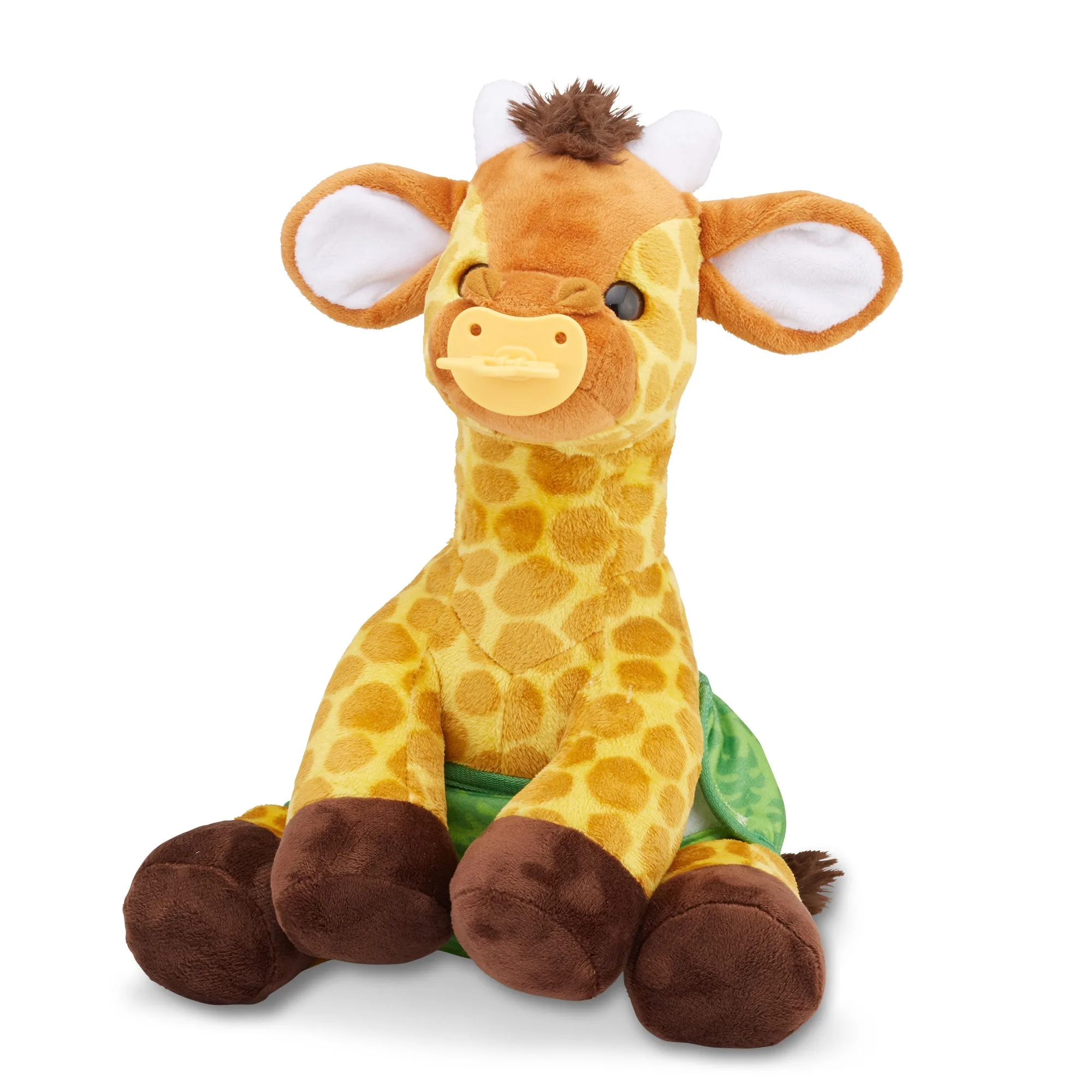
Baby Giraffe Stuffed Animal
-
Jumbo Burrow Bunny Stuffed Plush Animal: The Jumbo Burrow Bunny Stuffed Plush Animal is extra-soft, squishy, and sits about 21 inches tall with no small attached parts. Its large size and lack of small accessories make it a naturally safer choice for toddlers who still mouth toys, and it's built to last through years of cuddles.
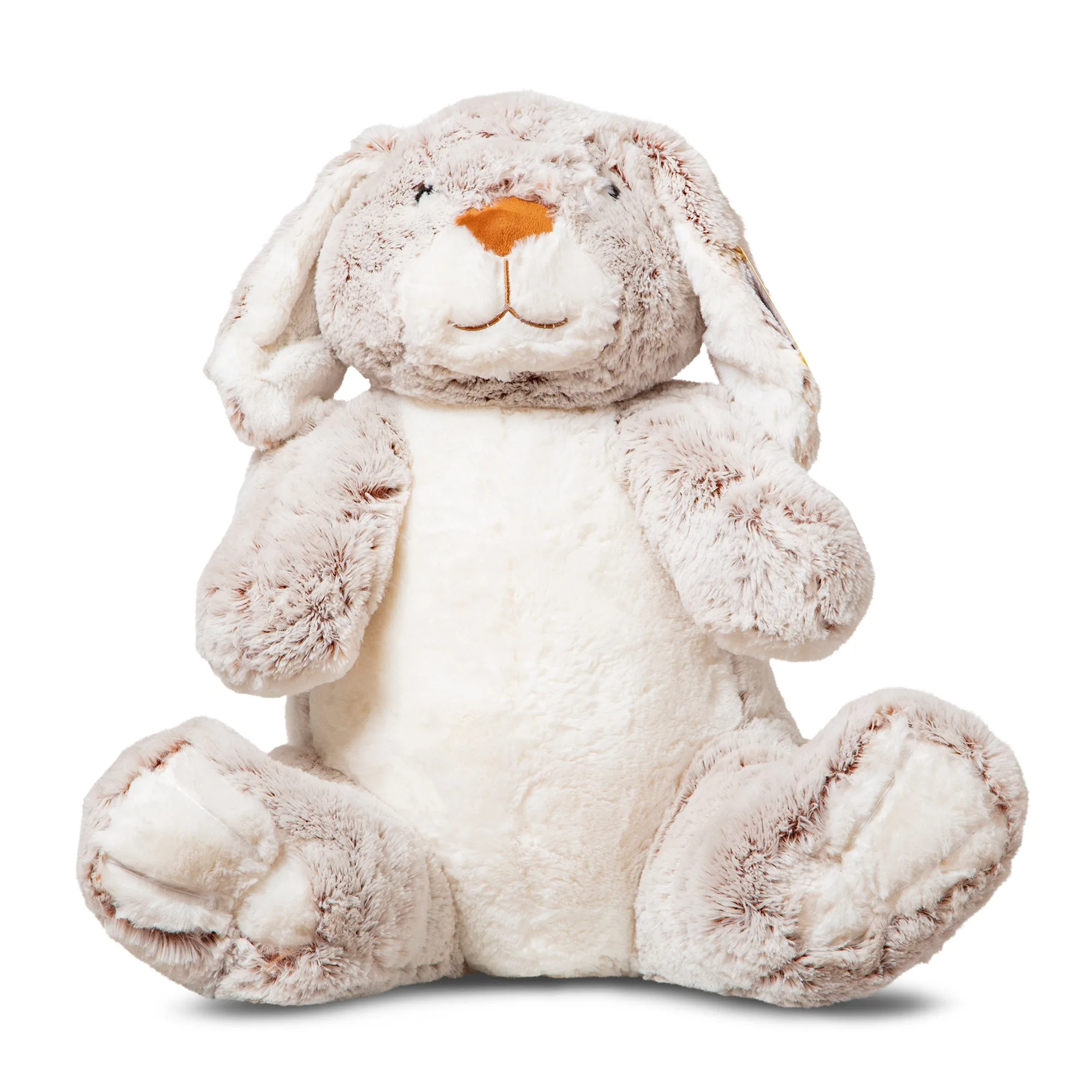
Jumbo Burrow Bunny Stuffed Plush Animal
Who should choose which type
Best for
- Parents of toddlers 12-24 months who want a cuddly companion with no small parts
- Caregivers looking for a plush toy that can be washed regularly
Not for
- Parents who want a toy with interactive features like buttons or sound (those are better for older children)