Quick Answer
For a first scooter, choose a 3-wheel lean-to-steer model with light-up wheels for ages 3–5, then move to a 2-wheel or larger-wheel scooter as balance improves. For older kids and teens, consider a pro model with a rear foot brake, and for adults, an electric commuter.
Why Age and Skill Matter More Than Price
A scooter that's too advanced can frustrate a beginner, while one that's too basic will bore a confident rider. Age gives a rough starting point, but skill level—balance, coordination, and confidence—should guide your final choice.
Three-wheel scooters with lean-to-steer technology are ideal for toddlers and young kids because they offer stability without training wheels. As your child gains balance, they can transition to a two-wheel scooter or a model with larger wheels for speed.
Light-Up Wheels: Fun or Functional?
Light-up wheels are a popular feature on kids' scooters, and they serve a practical purpose beyond fun. They make the rider more visible to cars and pedestrians during twilight rides, adding a safety element.
The LED lights are typically powered by motion, so they light up as the scooter moves—no batteries required. This makes them a low-maintenance way to increase visibility without extra cost.
Electric Scooters: When to Consider
Electric scooters are a different category altogether. They're designed for older kids, teens, and adults, and they require more balance and responsibility. If your child is under 12, a manual scooter is usually a better fit.
For adults or older teens commuting to school or work, an electric scooter offers convenience and sustainability. Look for features like folding frames for portability and dual braking systems for safety.
Decision Rules for Choosing a Scooter
- Age 2–3 (first scooter): Choose a 3-wheel scooter with a wide deck and lean-to-steer technology. Look for adjustable handlebars to accommodate growth. Light-up wheels add fun and visibility. Ensure the handlebar height is within reach when your child stands on the deck.
- Age 4–5 (building confidence): Stick with a 3-wheel scooter but consider one with higher-performance bearings for a smoother ride. If your child already balances well, you might try a 2-wheel model with training wheels. Watch for your child's ability to steer without wobbling—this signals readiness for a 2-wheel scooter.
- Age 6–12 (ready for more): Move to a scooter with a rear foot brake and larger wheels for speed. A pro model with lean-to-steer technology is still beneficial for refining coordination. Check that your child can comfortably reach the handlebars and use the brake effectively.
- Teens and adults (commuting or fun): Consider an electric scooter with a folding frame and dual braking system for portability and safety. Check the top speed and range to match your commute needs. Always wear a helmet and follow local electric scooter regulations.
Scooter Features That Matter
-
Flyer Glider Jr. Scooter with Light Up Wheels: The Flyer Glider Jr. Scooter features premium polyurethane wheels with LED lights and high-performance bearings, plus a nylon clamp that adjusts the handlebar to any height. This scooter grows with your toddler, and the light-up wheels add visibility without needing batteries, making it a smart first scooter for ages 3–5.
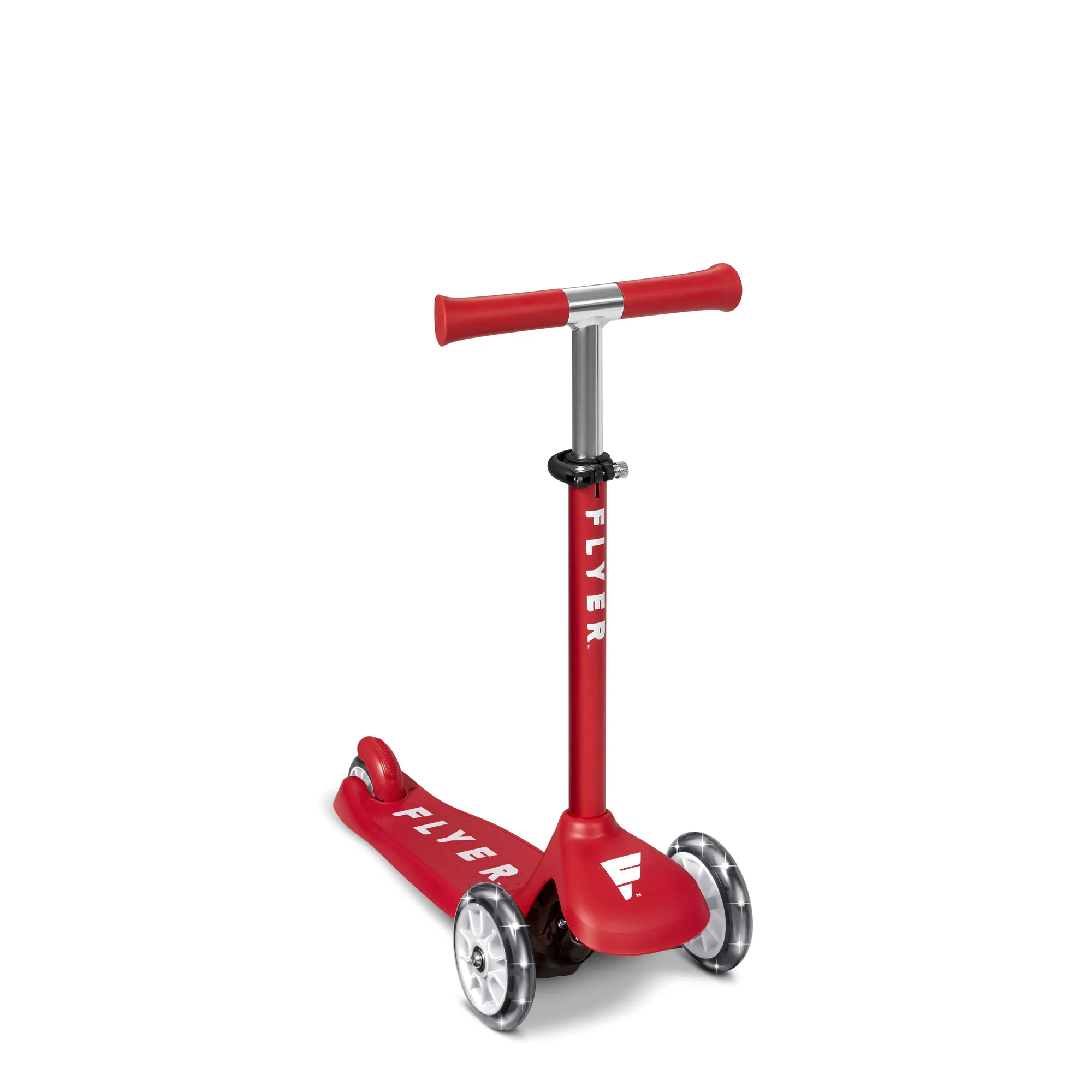
Flyer Glider Jr. Scooter with Light Up Wheels
-
Flyer Glider Pro with Light Up Wheels: The Flyer Glider Pro includes lean-to-steer technology, a rear foot brake, and deluxe hand grips, designed for ages 5–12. The rear brake gives older kids more control, and the lean-to-steer design helps refine balance and coordination as they gain confidence.
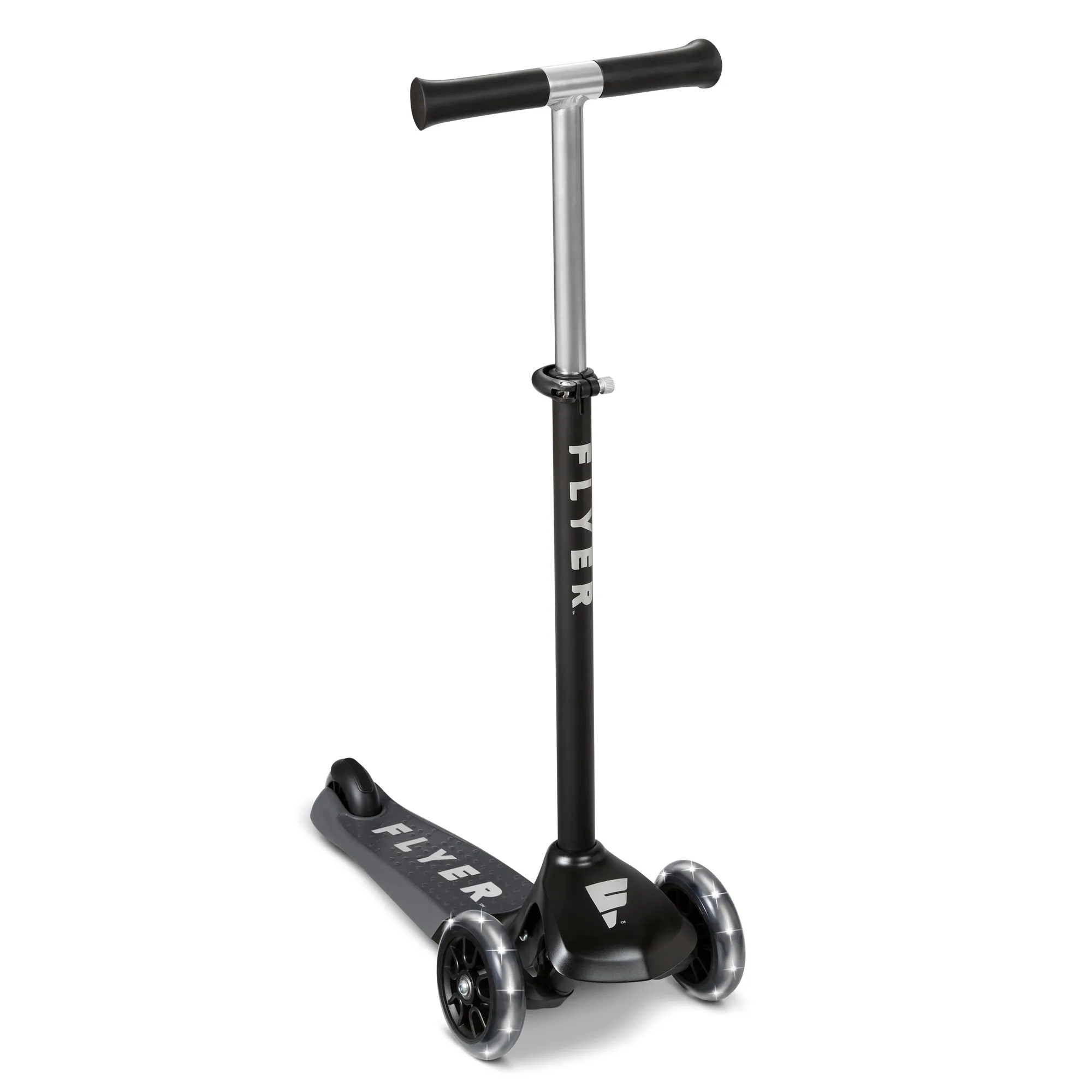
Flyer Glider Pro with Light Up Wheels
Who Should Choose What
Best for
- Toddlers and young kids (ages 3–5) just learning to ride—a 3-wheel light-up scooter with lean-to-steer
- Older kids (ages 5–12) who have mastered balance and want more speed—a pro scooter with a rear brake
Not for
- Kids under 3—they may lack the coordination for any scooter; consider a ride-on toy instead
- Adults or teens looking for a commuter vehicle—a manual scooter won't provide the speed or range; consider an electric model