Quick answer
For most laptops, phones, and tablets, a 240W USB-C cable gives you the headroom to charge anything now and in the future. Focus on wattage that matches your device's needs, a length that works with your setup, and durability for daily use.
Wattage: match the cable to your device's power needs
A 240W cable can deliver far more power than most devices need. Phones typically draw 20-45W, tablets around 30-60W, and laptops can pull 60-100W or more. A 240W cable ensures you're never the bottleneck, even with future devices.
If you only charge a phone, a lower-wattage cable might be cheaper, but it limits you when you upgrade to a laptop or a power-hungry accessory. For a versatile cable that works across your devices, 240W is the safe choice.
Check your device's charging specification (often in the manual or on the charger) to see the maximum wattage it accepts. The cable must support at least that wattage, but higher is always fine.
Length: think about where you'll use it
Cable length affects convenience and charging speed. Longer cables let you sit farther from a wall outlet or use your device while plugged in, but they can be bulkier to carry. Shorter cables are easier to pack but limit placement.
For desk setups or charging from a distant outlet, a longer cable—like an extended USB-C cable—is practical. For travel or a bedside table, a shorter length often works better.
Measure the distance between your typical outlet and where you use your device. Add a little extra for flexibility, but don't overbuy length you won't use.
Durability: cables take daily abuse
Cables bend, pull, and get stepped on. Look for reinforced connectors, braided or thick jacket materials, and strain relief at the ends. A durable cable lasts longer and avoids charging interruptions.
If you move between home, office, and travel, a rugged cable is worth the investment. For a stationary setup, durability matters less, but it still extends the cable's life.
Consider how often you'll unplug and coil the cable. Frequent use accelerates wear, so prioritize durability if you're an active user.
Decision rules for picking your 240W USB-C cable
- Check your device's wattage: Look up the maximum charging wattage for each device you plan to use. Choose a cable that supports at least that wattage; 240W covers all current devices. If you own a laptop that needs 100W, a 240W cable gives you headroom for upgrades.
- Pick a length for your main use: For desk use or distant outlets, choose a longer cable (e.g., 2m or more). For travel or bedside, a shorter cable is easier to manage. Measure the distance from outlet to device before buying.
- Prioritize durability for active use: If you carry your cable daily or use it in high-traffic areas, choose one with reinforced connectors and a sturdy jacket. A durable cable costs more upfront but saves replacements later.
Product facts
-
240W USB-C to USB-C Extended Power Cable: The OtterBox 240W USB-C to USB-C Extended Power Cable supports 240W of power delivery, enough for almost any USB-C device. You can use one cable for your laptop, phone, tablet, and future devices without worrying about power limits.
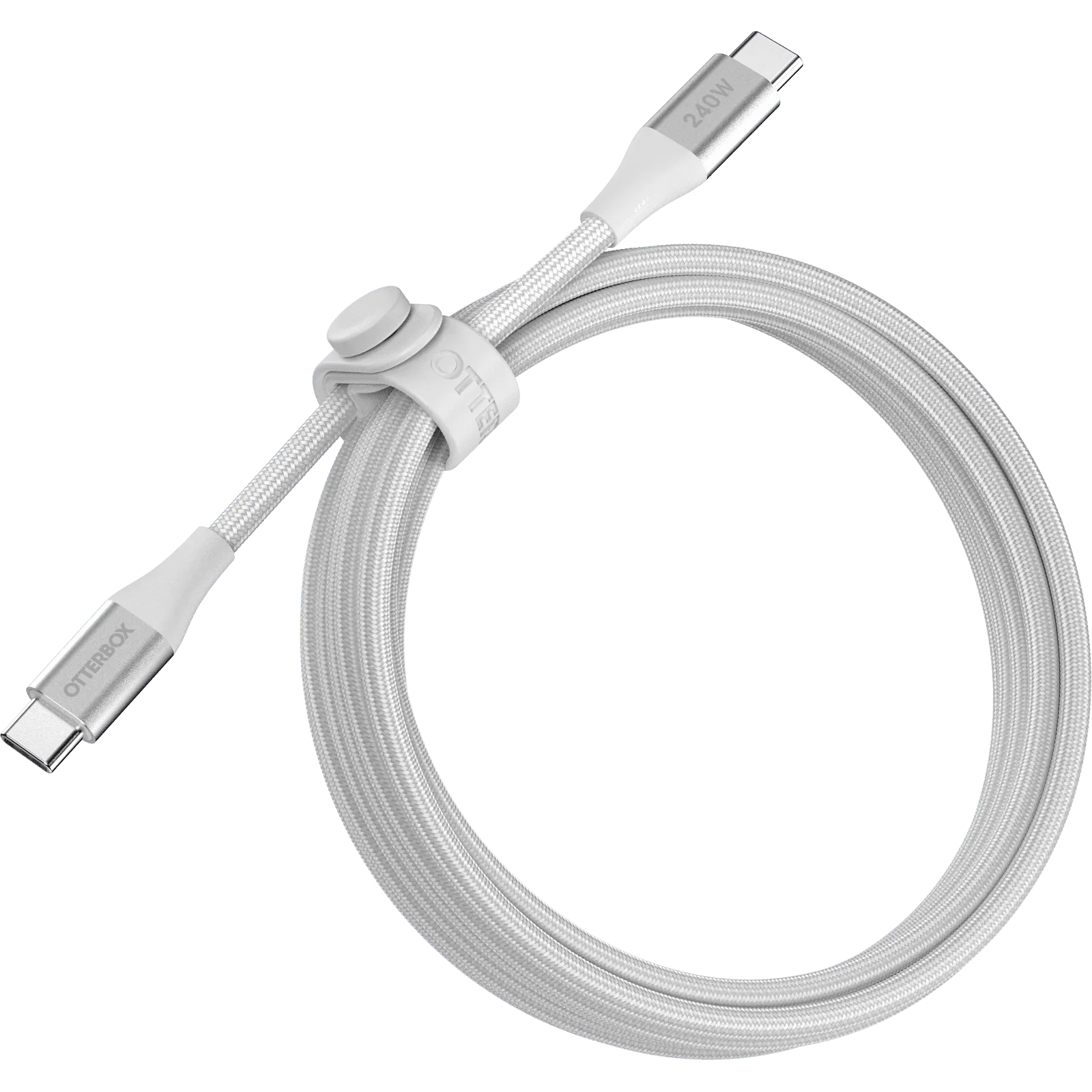
240W USB-C to USB-C Extended Power Cable
Who should pick a 240W USB-C cable?
Best for
- People who charge multiple devices including laptops and want one cable for all
- Users who want future-proofing for upcoming USB-C devices
Not for
- If you only charge a single low-wattage phone and never plan to charge larger devices, a lower-wattage cable may be cheaper and sufficient