Quick answer
Choose a front-clip harness for dogs that pull, a back-clip harness for calm walkers, and a step-in harness for dogs that dislike overhead gear. Measure your dog’s chest girth and neck, not just weight.
Why a harness is often better than a collar
Collars can strain a dog’s neck, especially if they pull or lunge. A properly fitted harness distributes pressure across the chest and shoulders, reducing the risk of tracheal injury or spinal damage. This is especially important for brachycephalic breeds (like pugs or bulldogs) and small dogs with delicate necks.
However, not every harness suits every dog. Some dogs find harnesses restrictive or uncomfortable, and a poor fit can cause chafing or escape. Take time to adjust straps and observe your dog’s movement during the first few walks.
Understanding harness types and their trade-offs
Front-clip harnesses attach the leash at the chest. When your dog pulls, the harness gently turns them sideways, discouraging forward momentum. These are excellent for training loose-leash walking but can cause some dogs to twist or trip if the clip is too low.
Back-clip harnesses attach at the shoulder blades. They allow full freedom of motion and are easy to put on, but they do little to stop pulling—and may even encourage it by letting the dog lean into the pressure.
Step-in harnesses are ideal for dogs that dislike having something pulled over their head. They buckle around the chest and belly, making them a good choice for anxious or sensitive dogs. The trade-off is that they can shift if not snug, so check the fit regularly.
Sizing: the most common mistake
Many owners buy a harness based on their dog’s weight, but weight alone is unreliable. A 30-pound dog with a deep chest may need a different size than a 30-pound dog with a narrow frame. Always measure chest girth (just behind the front legs) and neck circumference. Compare those numbers to the manufacturer’s sizing chart, not a generic table.
A harness that is too loose can slip off; one that is too tight can rub sores or restrict breathing. You should be able to fit two fingers flat under any strap. If the harness shifts more than an inch when the dog moves, it’s too large.
Decision rules for choosing a harness
- Dog pulls on leash: Choose a front-clip harness. The chest attachment redirects pulling force and makes it easier to teach loose-leash walking. Pair with a hands-free leash for consistent training.
- Dog walks calmly or is elderly: A back-clip harness is fine. It offers freedom of movement and is quick to put on, but avoid it if your dog ever lunges or bolts.
- Dog hates overhead gear: Use a step-in harness. It buckles around the chest and belly, reducing stress during dressing. Confirm it sits snugly behind the front legs. Check fit weekly—step-in styles loosen over time.
- Puppy or growing dog: Buy an adjustable harness with multiple strap points. Expect to resize or replace it every 2–3 months as the dog grows. Avoid buying too large to “grow into”—a loose harness can cause falls or escapes. Re-measure chest girth every 4 weeks.
- Small or brachycephalic breed: A front-clip or step-in harness with a padded chest plate reduces pressure on the trachea. Avoid back-clip harnesses that allow the leash to pull upward on the neck. Look for a Y-shaped front panel that sits away from the throat.
Product facts
-
Guide To Collars, Leashes & Harnesses: Whole Dog Journal’s Guide To Collars, Leashes & Harnesses explains how collars can teach a dog to pull and how improper leash use can cause permanent physical damage. This guide helps you understand why a harness may be safer than a collar and how to choose and fit one correctly, preventing injury and improving walks.
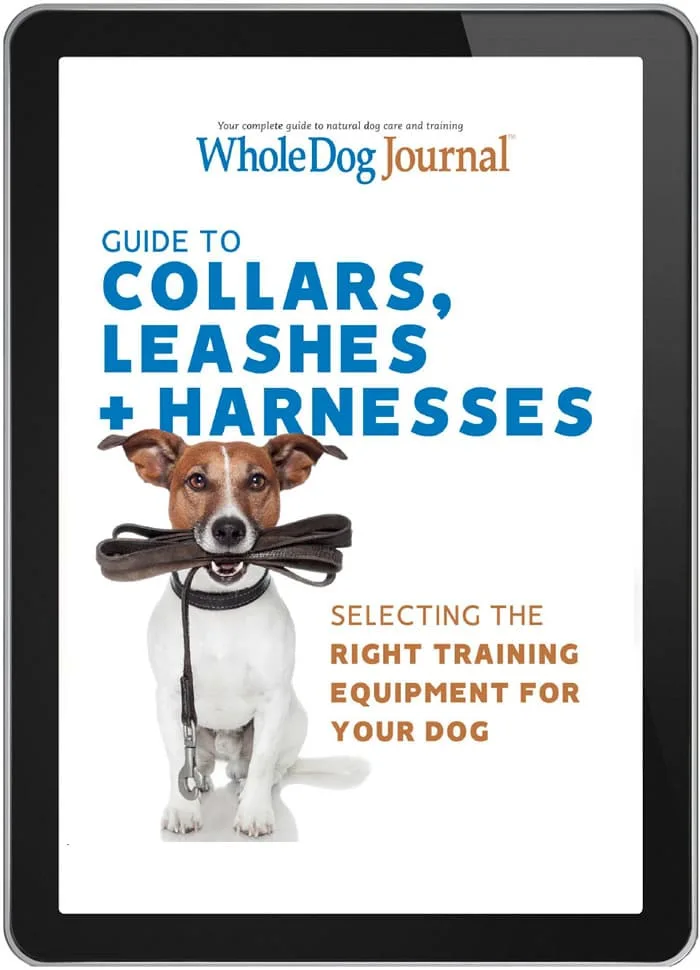
Guide To Collars, Leashes & Harnesses
Who should use a harness
Best for
- Dogs that pull on leash and need gentle redirection
- Small breeds or brachycephalic dogs prone to tracheal collapse
- Puppies and growing dogs that need a safe, adjustable fit
Not for
- Dogs that try to escape or back out of gear—a martingale collar or harness with a safety strap may be more secure