Quick answer
Most toddlers are ready for first chopsticks between 24 and 30 months, once they can stab food with a fork and hold a crayon in a fist grip. Start with connected training chopsticks and soft foods like banana or scrambled egg. Practice for five minutes at a time, and let your child eat the rest of the meal with a spoon so hunger never turns practice into a power struggle.
Readiness signs that matter more than age
Age is a rough guide, not a deadline. Watch for three practical signs instead: your toddler can spear a soft food with a fork and bring it to their mouth, they can hold a thick crayon and make marks on paper, and they show interest in copying how you eat. If two of those three are true, a first pair of training chopsticks is worth trying.
Skip chopsticks if your child is in a throwing phase or is teething hard enough to chew on utensils. A teether is a better outlet for that urge than a mealtime tool. The Silicone Teether is made with FDA grade non-toxic silicone and sized for little hands to hold, so it can absorb the chewing impulse outside of meals.
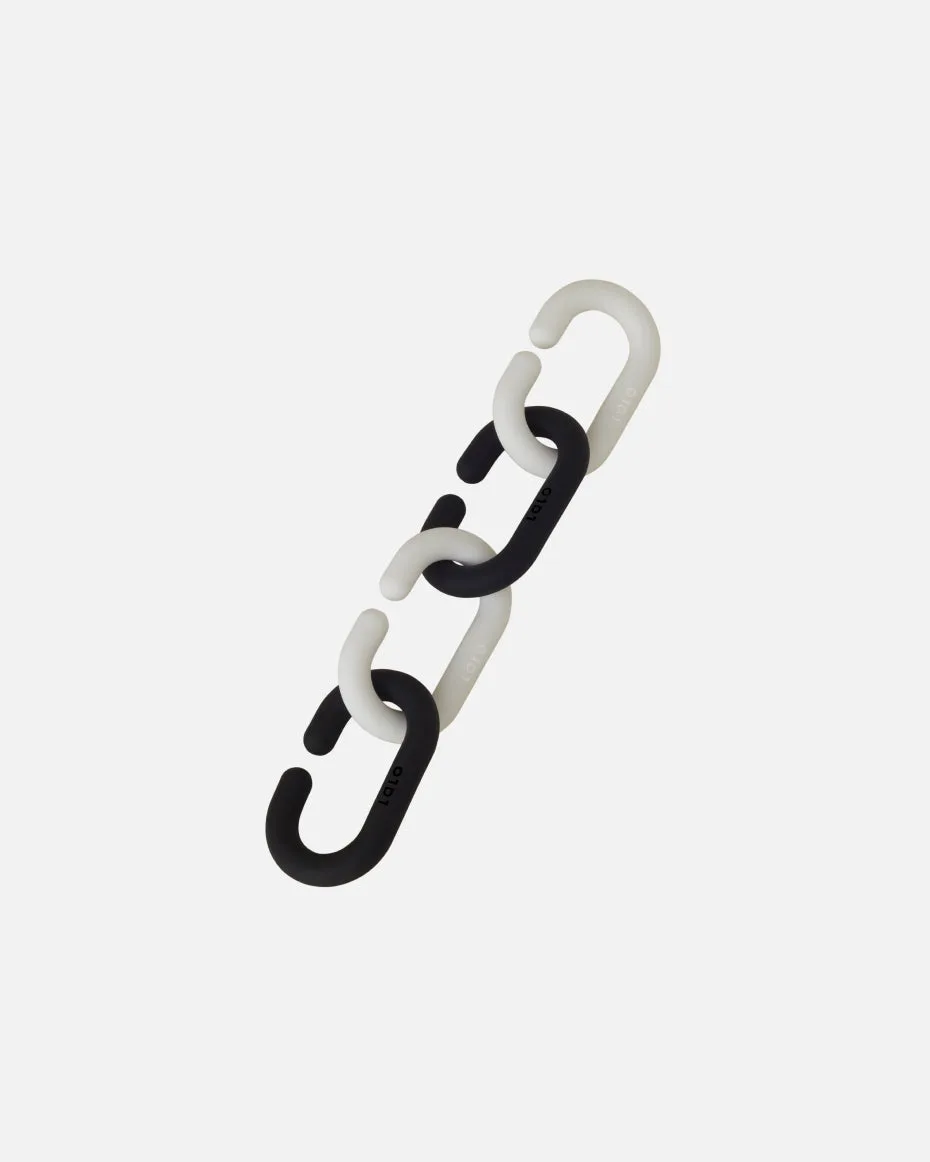
Silicone Teether
Set up the meal so practice can succeed
Chopstick practice fails most often because the food is too slippery or too small. Cut soft foods into finger-length strips about the width of a pencil: banana, avocado, cooked carrot, scrambled egg, or soft bread. These give the sticks something to grip.
Serve a small portion for practice and keep the rest of the meal within reach. Put a fork or spoon next to the chopsticks so your toddler can switch when they get tired. Expect the first sessions to be messy, and put a bib and a splash mat under the chair before you start.
How long practice should last
Five minutes per meal is plenty at first. Toddlers learn motor skills through short, repeated attempts, not long drills. If your child asks for more, continue; if they push the chopsticks away, end practice for that meal without comment and try again the next day.
Progress is uneven. A toddler may pinch a banana strip successfully at lunch and drop the sticks repeatedly at dinner. That is normal and not a sign to stop. Give it two to three weeks of low-pressure exposure before deciding whether to pause.
Five steps to teach toddler chopsticks
- Step 1: Let your toddler play with the chopsticks before food: Hand over the connected training chopsticks during playtime so your child can open and close them without the pressure of eating. Ten or twenty clicks builds the hand motion before mealtime. Checkpoint: your toddler can open and close the sticks on their own, even if the grip is clumsy.
- Step 2: Place a soft strip between the tips and help close: Put a banana or cooked carrot strip between the tips and guide your child's hand to squeeze. Do the first few together, then let them try alone. Common mistake: using slippery or crumbly food. If it slides out every time, switch to a grippier strip.
- Step 3: Practice picking up from a flat plate: Move the food to a flat plate rather than a deep bowl. A flat surface lets the sticks slide under the food instead of fighting the bowl wall. Checkpoint: your toddler can lift one piece from plate to mouth without dropping it more than half the time.
- Step 4: Add a second food shape: Once strips work, try small cubes or short noodles. Different shapes teach your child to adjust the angle of the sticks instead of relying on one motion. Common mistake: jumping to rice or peas too soon. Those are the hardest foods to grip and the fastest way to cause a meltdown.
- Step 5: Offer chopsticks alongside a spoon, not instead of it: Keep a spoon or fork on the tray for the rest of the meal. Practice ends when your child decides, not when you decide. Next step: repeat at one meal per day for two to three weeks, then add a second meal if your toddler is still interested.
Product facts
- Chopsticks: Set of two sticks and holders made for chopstick mastery, featuring food-gripping strength, in non-toxic, BPA-free, food-grade silicone that is dishwasher safe. The holders keep the sticks connected so a toddler can focus on the pinching motion instead of alignment, and the dishwasher-safe silicone makes cleanup realistic after messy practice meals.