Two rulers, two different cutting jobs
The choice between a circle cutter ruler and a square ruler is not about which one is better. It is about which shape you need to cut. A circle ruler is built to cut perfect circles and rings from fabric, while a square ruler is built to cut, square, and trim blocks with straight edges and accurate angles.
If your projects regularly call for round shapes, a dedicated circle template saves time and guesswork. If you mostly piece quilts and need clean square blocks, a square ruler is the workhorse. Many quilters eventually own both, but if you are buying your first ruler, match it to the shapes you cut most often.
When a circle cutter ruler earns its place
The OmniArc Circle Cutter is a template for cutting circles and rings from fabric. It supports 4", 6", 8", 10", and 12" circles, so you can produce a range of sizes without drafting your own pattern. The tool is designed for folding fabric into quarters, lining up the folds with radius lines, and cutting along curved grooves with a knife or small rotary cutter.
That quarter-fold method is the key difference from a square ruler. Instead of measuring and marking a full circle, you work with a folded quarter and let the template guide the cut. The result is a repeatable circle with less handling. The trade-off is that this ruler is specialized: it does not replace a square ruler for straight cuts, squaring blocks, or trimming seams.
OmniArc Circle Cutter details that matter
-
Non-Slip Circle Cutter Ruler: Curved grooves for cutting 4", 6", 8", 10", and 12" circles. Five fixed sizes cover common circle projects without needing separate templates.
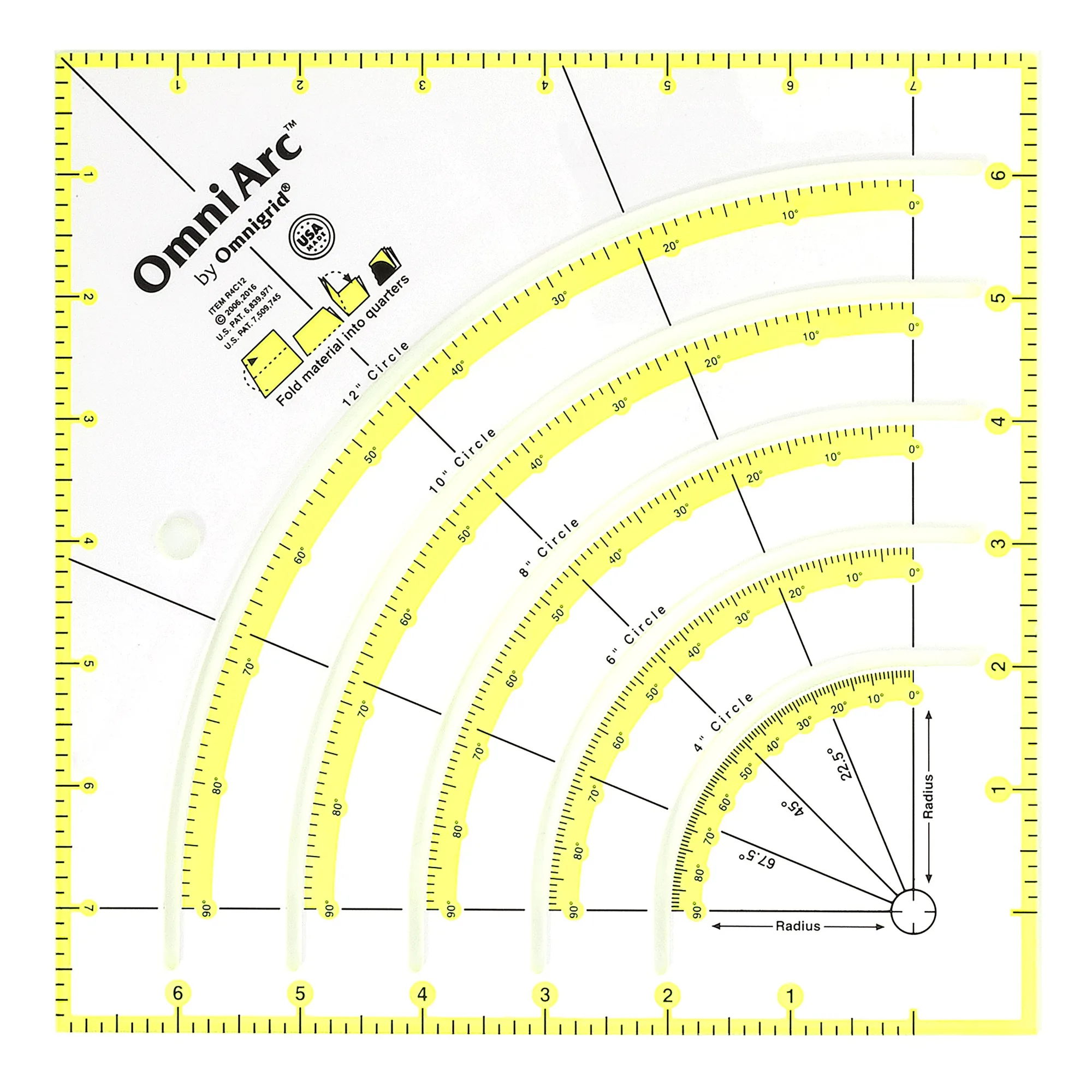
Non-Slip Circle Cutter Ruler
-
Non-Slip Circle Cutter Ruler: Patented non-slip backing helps keep the ruler in place while cutting. Stability matters when you are guiding a rotary cutter along a curve.
-
Non-Slip Circle Cutter Ruler: 1/8" thick optical-acrylic is laser cut to work with rotary cutters and craft knives. The material and thickness are chosen for blade contact, so the template holds up to repeated cutting.
-
Non-Slip Circle Cutter Ruler: Fluorescent ink pigment and highlighted precision markings improve visibility in low light and on all colors and patterns. Clear markings help you line up folds and radius lines accurately, especially on busy fabrics.
Where a square ruler does more work
The Omnigrid Square Ruler Value Pack is a set of quilting rulers designed for cutting, squaring, and trimming blocks. Each ruler includes an extra 1/2" for seam allowances and diagonal angle lines, which makes it easier to measure and cut pieces that finish at a intended size. The rulers are made from heavy-duty acrylic with laser-cut edges for smooth, deep cutting.
Unlike the circle template, square rulers are general-purpose. They are the tool you reach for when you need straight strips, accurate corners, or to trim a block to size. The value pack comes in three size options, so you can choose the set that matches the block sizes you sew most.
Omnigrid Square Ruler Value Pack details
-
Square Ruler Value Pack: Contains Omnigrid quilting rulers with an extra 1/2" for seam allowances and diagonal angle lines. The seam allowance and angle lines support common quilting measurements and bias cuts.
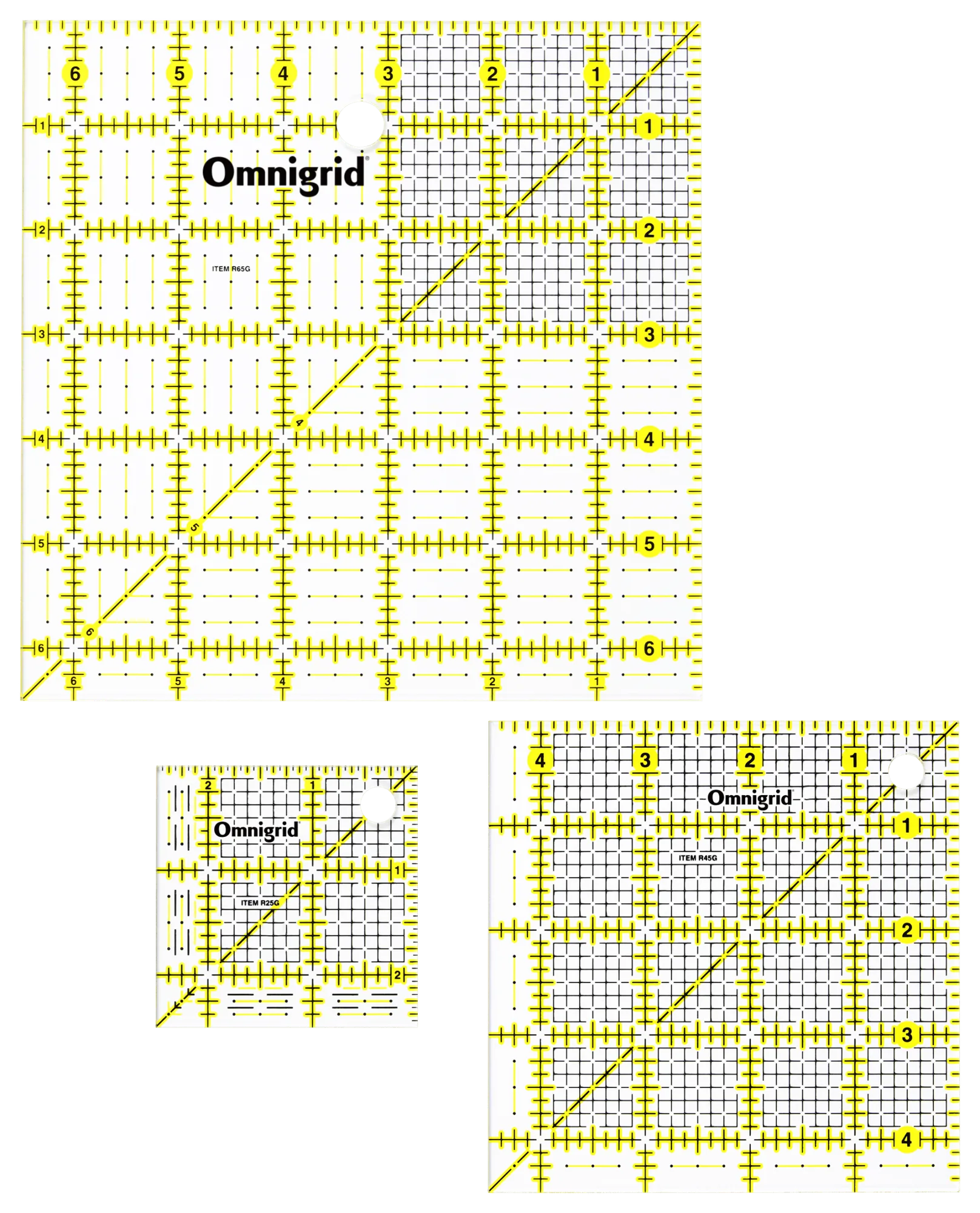
Square Ruler Value Pack
-
Square Ruler Value Pack: Patented double-sight lines show up on light and dark fabrics. You can align the ruler accurately regardless of fabric color.
-
Square Ruler Value Pack: Left- and right-hand numbering and angle system. The rulers are usable whether you are left- or right-handed.
-
Square Ruler Value Pack: Available in three size sets: 2-1/2", 4-1/2" & 6-1/2"; 2-1/2", 4-1/2", 6-1/2" & 9-1/2"; or 4-1/2", 6-1/2", 9-1/2" & 12-1/2". You can choose a set that covers the block sizes you actually sew, rather than buying individual rulers.
Circle ruler vs square ruler at a glance
The two rulers differ in shape, cutting method, and the range of tasks they handle. Use this comparison to see which one fits your next project.
- Primary shape: Circle cutter ruler: circles and rings. Square ruler: squares, rectangles, and straight-edged blocks.
- Cutting method: Circle ruler: fold fabric into quarters, align folds with radius lines, and cut along curved grooves. Square ruler: align fabric edges with markings and cut straight lines.
- Sizes: Circle ruler: 4", 6", 8", 10", and 12" circles. Square ruler: sets covering 2-1/2" up to 12-1/2" squares, depending on the set.
- Best for: Circle ruler: appliqué circles, round quilt elements, and ring shapes. Square ruler: squaring blocks, trimming half-square triangles, and cutting strips.
- Non-slip feature: Circle ruler: patented non-slip backing. Square ruler: non-slip backing is not confirmed by the supplied information.
- Markings: Circle ruler: fluorescent ink and highlighted precision markings. Square ruler: double-sight lines, diagonal angle lines, and left- and right-hand numbering.
How to choose based on your next project
Start with the shape you need to cut. If you are making a quilt with curved elements, round appliqué, or circular motifs, the OmniArc Circle Cutter gives you fixed sizes and a guided cutting method. If you are piecing blocks, cutting strips, or trimming seams, the Omnigrid Square Ruler Value Pack is the more versatile choice.
Consider your fabric handling, too. The circle ruler relies on folding and cutting along curves, which may feel different from straight rotary cutting. The square ruler follows the familiar straight-edge workflow most quilters already use. If you are new to rotary cutting, a square ruler is often the more natural first purchase. If you already own square rulers and keep needing circles, add the circle template.
What the product records do not confirm
The supplied information does not include care instructions, safety guidelines, or compatibility details for either ruler. It also does not confirm a non-slip backing on the square ruler. These gaps do not mean the products lack those features; they simply are not documented in the available records. When choosing, rely on the confirmed specifications above and check the product packaging or manufacturer guidance for anything else you need.