Quick answer
Rinse PPSU bottles immediately after feeding, wash with warm soapy water and a soft brush, then sterilize using steam, boiling, or a microwave sterilizer. Avoid harsh abrasives and high-heat settings that can warp the plastic.
Why PPSU needs gentle care
PPSU is a lightweight, heat-resistant plastic that withstands repeated sterilization, but it's not indestructible. Using abrasive scrubbers or very high heat can scratch or deform the bottle, creating places where bacteria hide and shortening its lifespan.
The wide neck design of these bottles makes them easier to fill and clean, but the wider opening also means you need to pay attention to the threads and the inside of the nipple to remove all milk residue.
Step-by-step cleaning and sterilizing routine
- Rinse immediately after feeding: Take the bottle apart (bottle, collar, nipple, cap) and rinse all parts under warm running water right after feeding. This prevents milk from drying and sticking. Don't let milk dry on the bottle—it's much harder to remove later.
- Wash with warm soapy water: Use a mild dish soap and a soft bottle brush. Clean the inside of the bottle, the threads, and the nipple with a small nipple brush. Pay extra attention to the wide neck area where residue can collect. Never use abrasive sponges or harsh cleaners—they can scratch PPSU and harbor bacteria.
- Rinse thoroughly: Rinse every part under clean running water to remove all soap residue. Soap residue can irritate your baby's tummy. Check that no soap bubbles remain, especially inside the nipple.
- Sterilize using your preferred method: You can sterilize PPSU bottles by boiling them in water for 5 minutes, using a steam sterilizer, or a microwave sterilizer. Follow the sterilizer's instructions and ensure all parts are fully submerged (for boiling) or placed correctly. Boiling longer than 5 minutes or using very high heat can damage the plastic over time.
- Air-dry completely: Place all parts on a clean drying rack or a clean towel, ensuring they are upside down to allow water to drain. Let them air-dry completely before assembling or storing. Do not use a dish towel to dry—it can transfer bacteria. Air-drying is the safest.
- Assemble and store correctly: Once dry, put the bottle back together and store it in a clean, dry place. If you're not using it immediately, keep the nipple covered to protect it from dust. Always store bottles disassembled if they won't be used within a few hours—this prevents moisture buildup.
Product spotlight
-
Pigeon PPSU Nursing Baby Bottle Wide Neck (Pack of 4), Streamlined Body, Natural Feel, Easy to Clean, Heat-Resistant, 5.4 oz and 8.1 oz: This Pigeon PPSU wide neck bottle set is made from durable, heat-resistant PPSU and is built for everyday feeding from newborn through later stages. You can safely sterilize these bottles repeatedly without worrying about warping or releasing harmful chemicals, making them a long-term feeding investment.
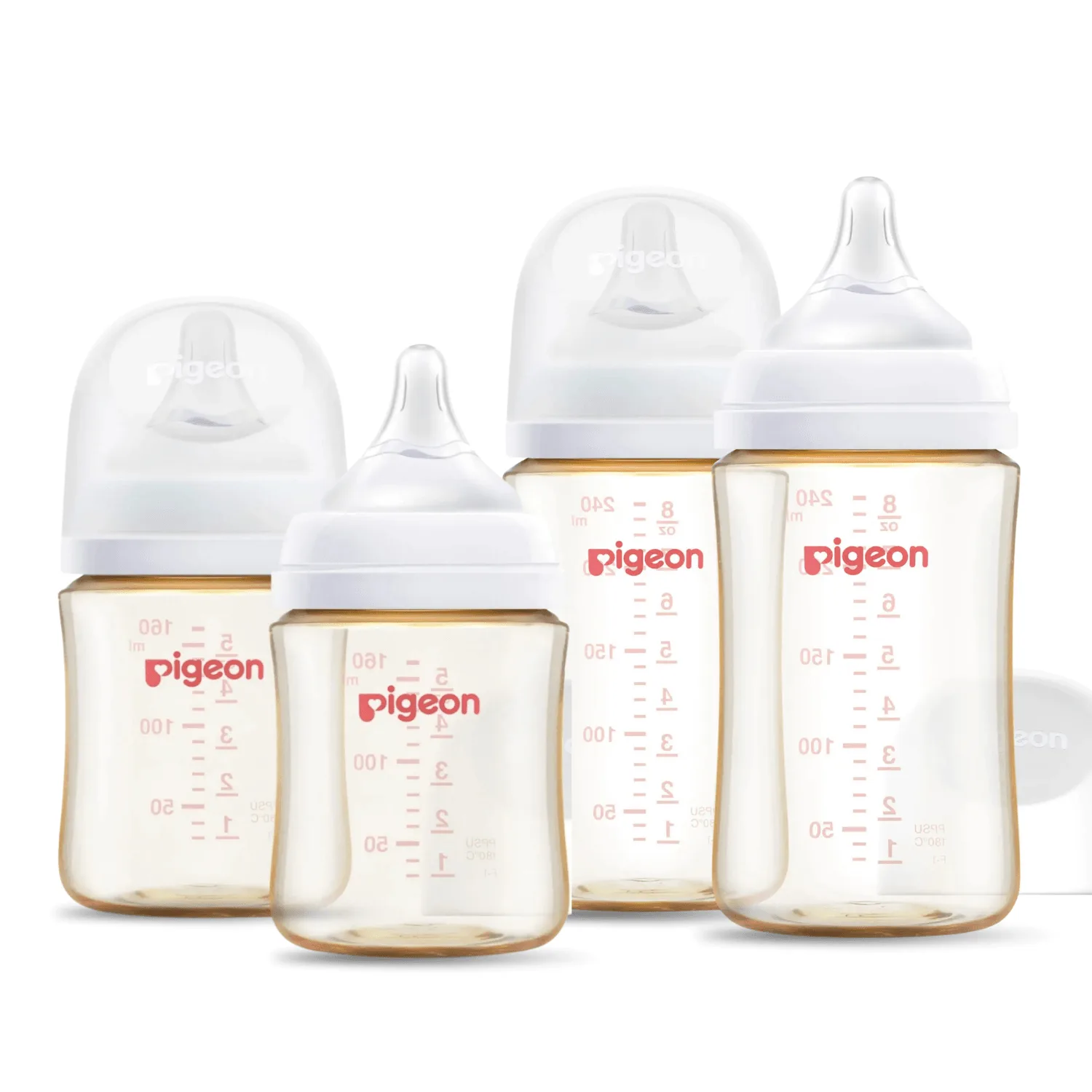
Pigeon PPSU Nursing Baby Bottle Wide Neck (Pack of 4), Streamlined Body, Natural Feel, Easy to Clean, Heat-Resistant, 5.4 oz and 8.1 oz