Quick answer
Match the blade to the coat, not to a single universal number: use a #10 for faces, paws, and sanitary areas; a #7F for short, smooth body work on most drop coats; and a #4F or #5F when you need more length on double coats. For matted coats, skip fine blades and start with a #10 or #7F to remove the mat safely, then finish with the length the owner wants.
Read the blade number as cut length, not quality
On most clipper systems, a higher number leaves less hair. A #10 leaves roughly 1.5 mm, a #7F leaves about 3 mm, and a #4F leaves about 9 mm. The letter F means the blade is full-tooth and leaves a smoother finish than a skip-tooth blade of the same number. That difference matters most on visible body work and least on sanitary trims.
- #10: closest common cut; faces, paws, sanitary, and pre-shave on mats
- #7F: short body work with a slightly softer finish than #10
- #4F or #5F: more length for double coats and owners who want a natural look
- Skip-tooth: faster feed on heavy coat, but leaves a rougher surface
Which clipper blade for dog coat type
Coat density and texture decide how fast a blade feeds and how much heat it builds. Fine, silky coats clip quickly with a #10 or #7F, but the blade can run warm on repeated passes. Dense double coats need a #4F or #5F first to take bulk off, then a finer blade only where the owner wants a closer finish. Curly or wool coats are the exception: they hold mats close to the skin, so start coarser than you think and check the skin line before going shorter.
Choosing a clipper blade for a matted coat
Never push a fine blade into a tight mat. The blade grabs, the clipper stalls, and the skin gets nicked. Start with a #10 or #7F and work in short strokes under the mat edge, or use the corner of the blade to break the mat open. If the mat sits directly on skin, clip it out rather than combing it loose. A #30 blade is for surgical or very close work, not for routine mat removal.
Blade size for face and paws
Use a #10 for paw pads and the inside of the ear, and a #10 or #15 for the face depending on how tight the owner wants the finish. Keep the blade cool and use the corner rather than the full width around eyes and lips. A #7F on a muzzle leaves a softer look but can leave enough hair to obscure the eye line, so many groomers reserve it for the cheeks and stop short of the nose.
Decision rules for picking a blade
- If the coat is matted at the skin: Start with a #10 and clip under the mat edge. Do not attempt a #4F or #5F on a tight mat. Remove the mat first; finish the length second.
- If the owner wants a short, smooth body: Use a #7F for most drop coats, then check for lines under good light. A #10 is for closer work on faces, paws, and sanitary areas, not the whole body.
- If the dog has a dense double coat: Take bulk off with a #4F or #5F, then decide whether a #7F finish is needed. Going straight to a #10 on heavy coat slows the clip and heats the blade.
- If the blade starts dragging or feels hot: Stop, cool the blade, and check that the coat is dry and clean before changing numbers. Heat and drag are signals to change technique, not to push harder.
Products that support this blade plan
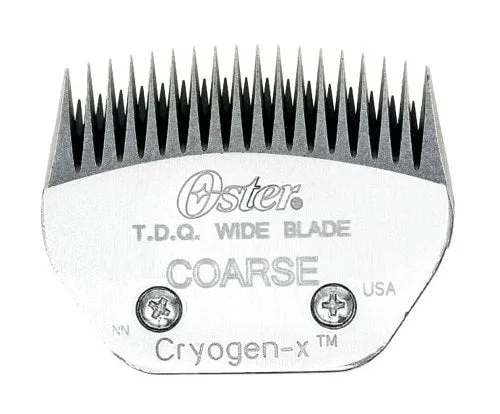
- Oster TDQ Coarse: Oster Professional blades are made from high-carbon steel, hardened to RC62-66 in-house, then cryogenically treated before sharpening and testing. A harder, tested edge holds up through repeated mat work and dense coat, so you replace blades less often.
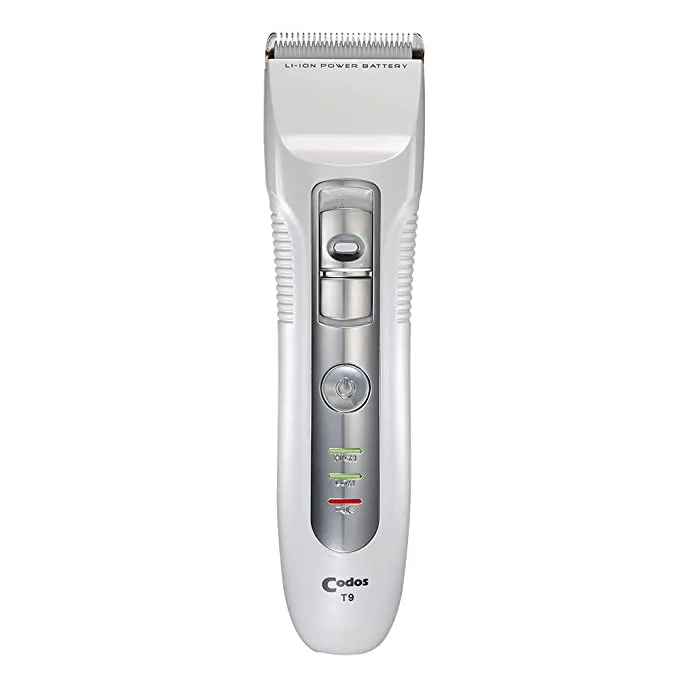
- Codo T9 Clipper: The Codo T9 Clipper uses a ceramic blade designed to resist heat build-up, a lithium battery that charges in 3 hours for 4.5 hours of use, and four length gears with a stepped power display. Useful for face-and-paw work where the clipper runs in short bursts and heat control matters more than raw power.
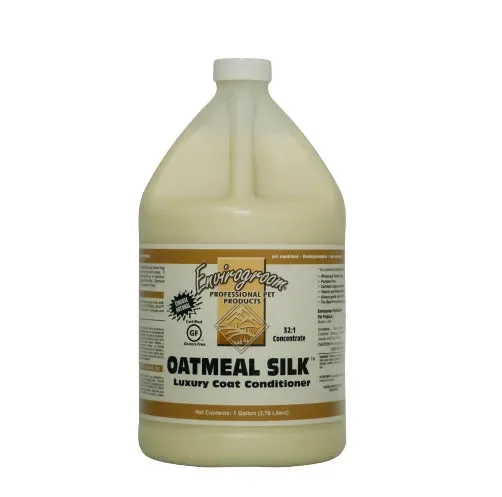
- Oatmeal Silk 32:1 Luxury Coat Conditioner: Oatmeal Silk 32:1 Luxury Coat Conditioner is an anti-static formula for all coat types, safe for puppies, kittens, and horses, and available in 17 oz and 1 gallon. Conditioning before clipping helps the blade feed evenly through dry or static-prone coat, especially on fine textures.
Who this blade plan suits
Best for
- Groomers matching a blade to a specific coat type before the appointment
- Owners deciding between a #10 and #7F for face, paw, and sanitary work
- Anyone clipping a matted coat who needs a safe starting blade
Not for
- Surgical or veterinary close-clipping, which needs a #30 or #40 and a different protocol
- Show-ring finish work that depends on scissor and hand-stripping technique rather than clipper blades
- Groomers who have not confirmed their clipper accepts the blade size and tooth type