Quick answer
For year-round gardening, choose a greenhouse that gives you at least 100 square feet of growing space and enough height for tall crops and shelving. If you mainly start seeds and grow a few herbs, a compact model like the 9x6 Poppy works; for serious production, the 14.5x12 Savannah offers room to move and grow.
Why height matters as much as floor space
When you garden through winter, you'll likely add shelving, hanging baskets, and taller crops. A greenhouse with a steep roofline or extended trellis gives you vertical growing options without sacrificing floor space. For example, the Poppy's three-sided trellis roof lets you train vines overhead, while the Savannah's gabled design accommodates tall plants and provides headroom for comfortable work.
Measure the height at the eaves, not just the peak. Low eaves can limit shelving and make it hard to reach plants at the back. A greenhouse that feels spacious at eye level often has more usable volume than a wider one with a shallow roof.
Think about workflow and access
Year-round gardening means you'll be in the greenhouse in all weather, so plan for easy movement. A wide door and clear floor space let you bring in a wheelbarrow or move pots without squeezing. If you plan to pot plants or rinse produce inside, a built-in sink is a practical addition that saves trips to the house.
Consider how you'll water, prune, and harvest. A greenhouse that's packed to the walls may look productive, but if you can't reach the back shelves, you'll waste time and risk plant damage. Leave a path at least 24 inches wide for comfortable access.
Greenhouse size FAQ
How much space do I need for seed starting?
For a few trays of seedlings, a 6x4 or 6x6 greenhouse can work if you use shelves. For a steady supply of vegetables, plan for at least 100 square feet of floor space. Start with a list of what you want to grow; it will tell you how many trays and pots you need.
What's the minimum height for tall crops?
Look for a greenhouse with at least 7 feet of peak height if you want to grow tomatoes, peppers, or other tall plants. Low eaves can limit staking and overhead lighting. Check the eave height, not just the peak, to ensure you can place shelves and hang lights.
How do I choose between a compact and a large greenhouse?
A compact model like the Poppy suits gardeners who focus on seed starting, herbs, and a few potted plants. A larger model like the Savannah is better if you want to grow a wide range of crops year-round, need room for a wheelbarrow, or plan to spend significant time inside. Think about how much time you'll spend inside; a larger greenhouse is easier to work in but costs more to heat.
What about heating and insulation?
For year-round use, choose glazing with good insulation. 10mm 4-wall polycarbonate holds more heat than standard 6mm twin-wall, which can reduce heating costs in winter. Check the R-value of the glazing; higher R-values mean better heat retention.
Should I plan for future expansion?
Yes, if you think you'll grow more later. A larger greenhouse now can save you from upgrading soon, but consider your available yard space and budget. Measure your yard and check local zoning rules before committing to a size.
Greenhouse options to consider
-
9x6 Poppy Greenhouse: The Poppy 9x6 cedar greenhouse features an extended three-sided trellis roof for hanging baskets and climbing vines, and uses 10mm 4-wall polycarbonate rated at R-2.1. This compact model maximizes vertical space and retains heat well, making it a good fit for seed starting and small-scale year-round growing.
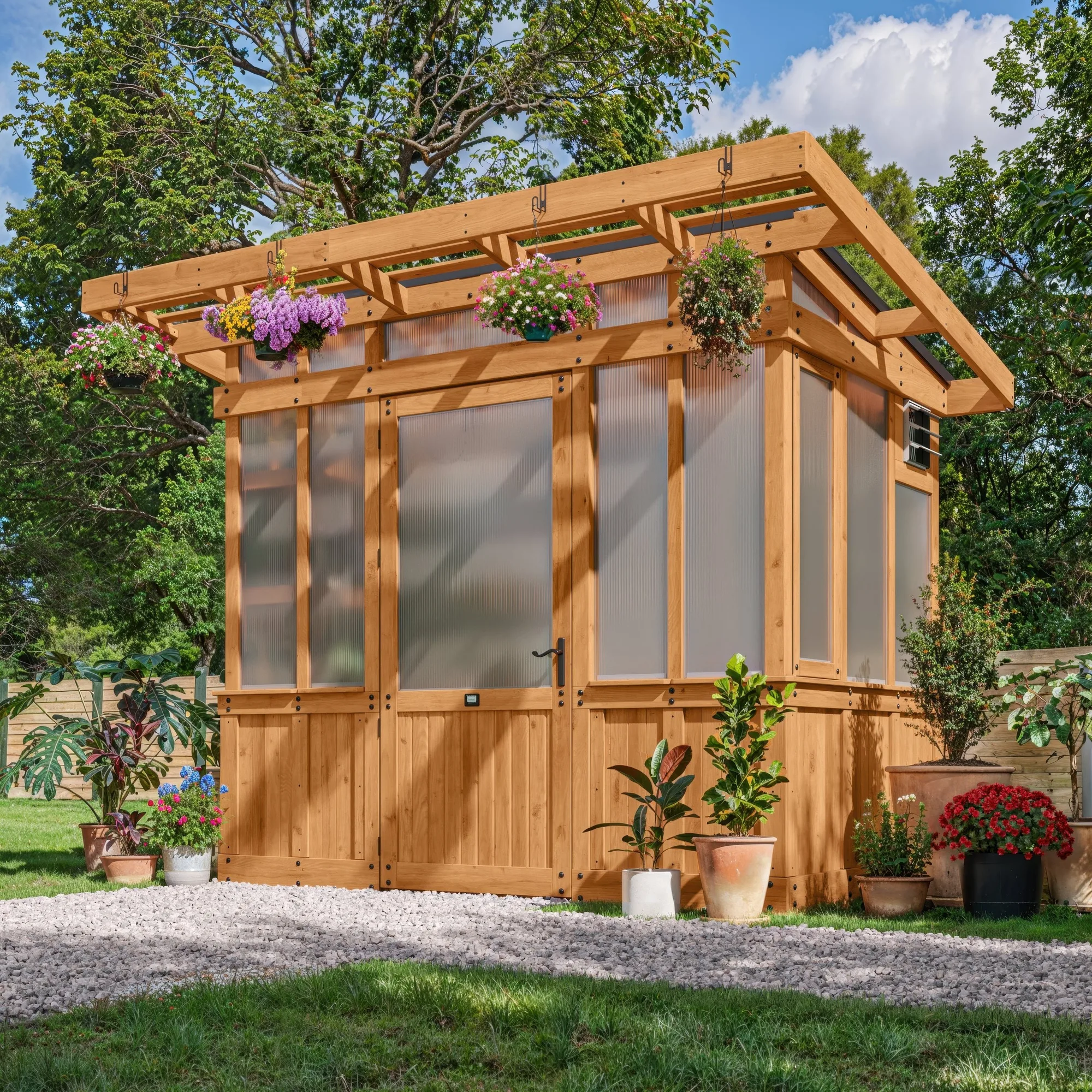
9x6 Poppy Greenhouse
-
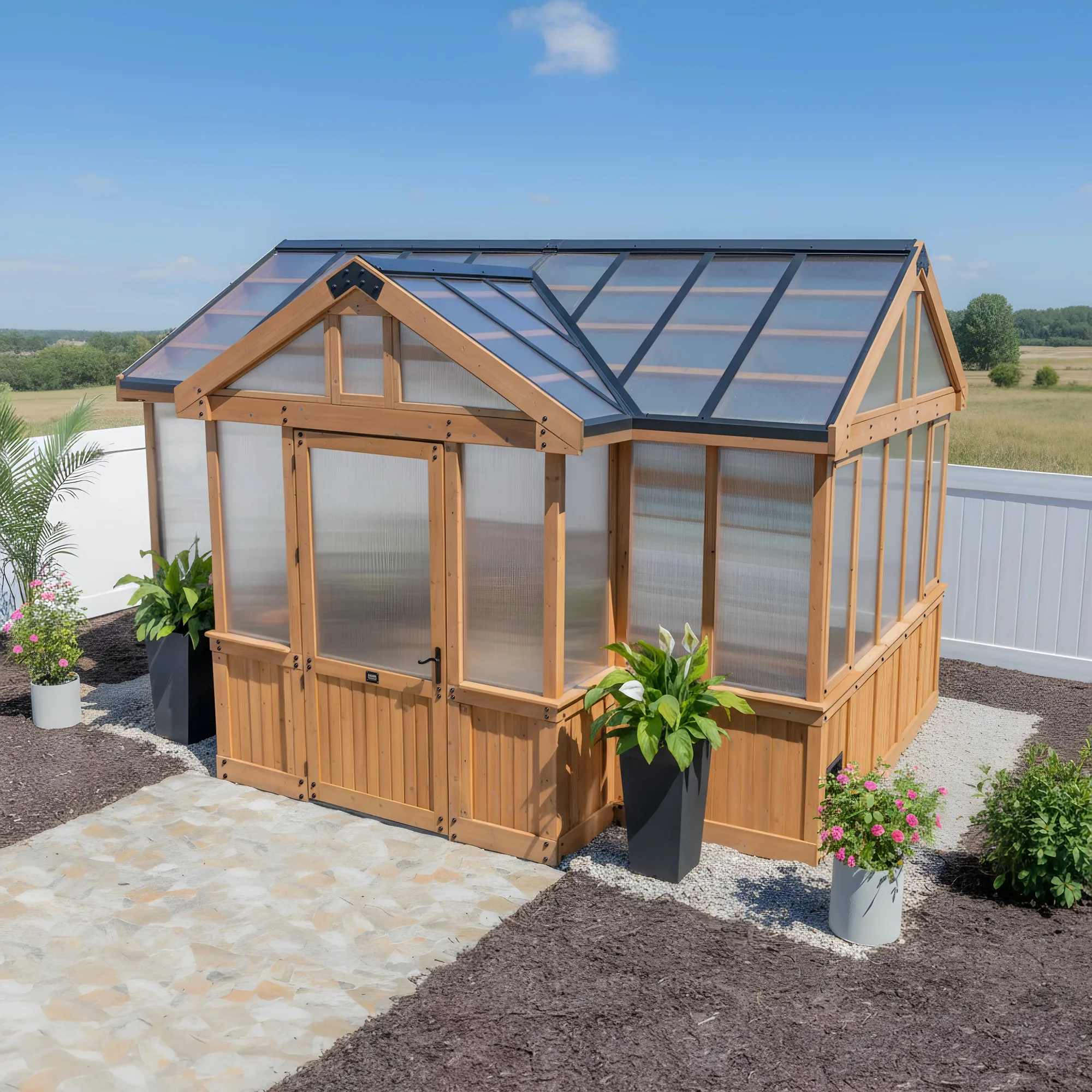
14.5x12 Savannah Greenhouse: The Savannah 14.5x12 cedar greenhouse offers 161 square feet, 55 linear feet of staging shelves, a wide entry door, and a built-in stainless steel sink. The generous footprint and built-in features support serious year-round gardening, including tall crops and space to work comfortably.
14.5x12 Savannah Greenhouse