Quick answer
Switch to cloth diaper training pants when your child stays dry for about two hours, tells you before they go, and can pull pants up and down with help. Use trainers as a backup for small accidents, not as a full diaper replacement.
Why the switch timing matters more than the product
The transition from diapers to underwear works best when it follows signs of readiness, not a calendar. If you switch too early, trainers become an expensive diaper; too late, you miss the window when your child wants to do it themselves.
Cloth trainers feel wet against the skin, which gives immediate feedback that disposable pull-ups often hide. That feedback is the main reason potty training with cloth can move faster for some families, but it also means you will handle more laundry during the first weeks.
What trainers can and cannot do
Trainers are designed to catch small accidents on the way to the potty, not to hold a full bladder like a diaper. Expect them to contain a miss long enough for your child to finish walking to the bathroom, not to survive a nap or a long car ride.
If your child is still having large, predictable pees, keep using diapers for those times and offer trainers only during short, supervised awake windows. This keeps the trainer feeling special and prevents frustration for both of you.
How to choose trainers that support independence
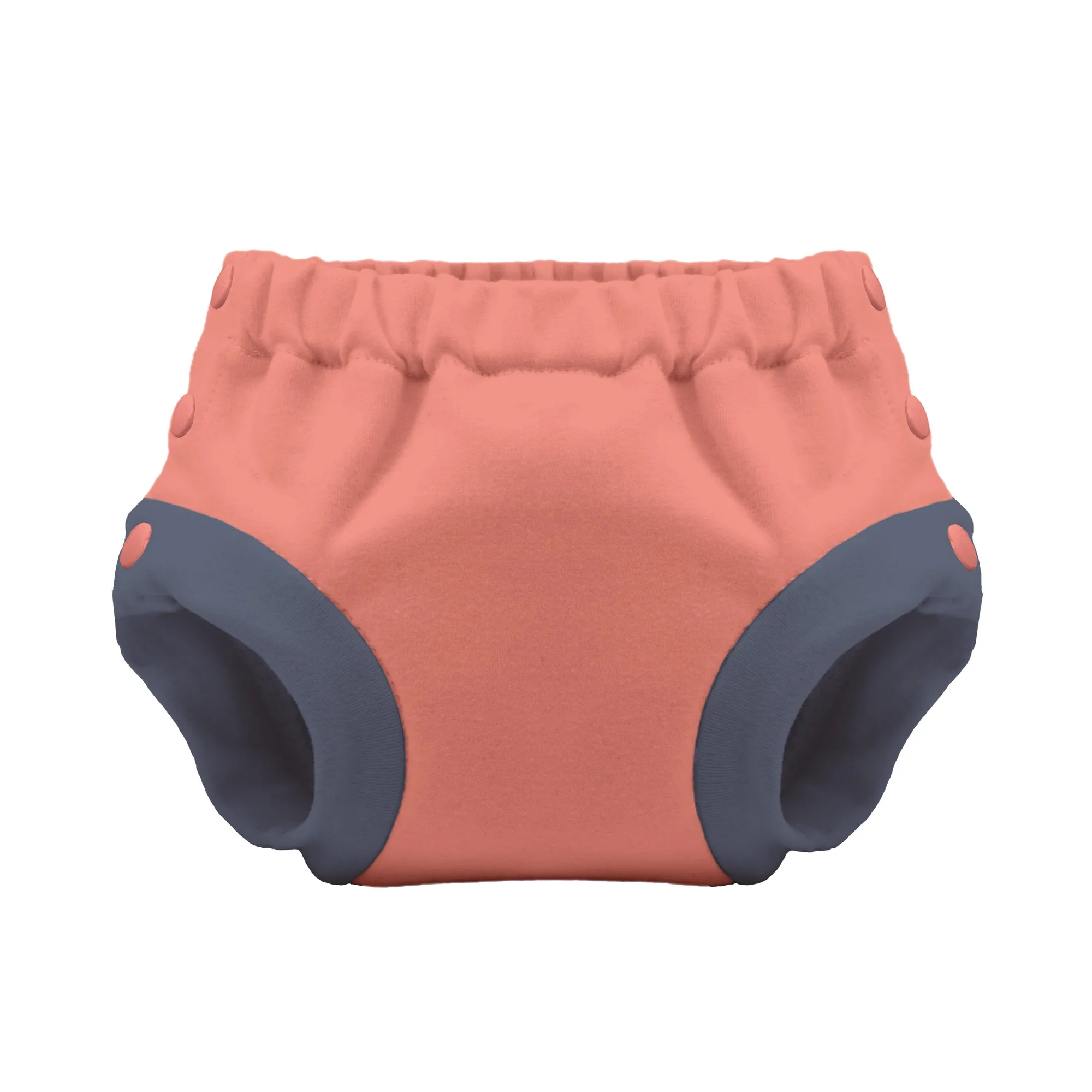
Pull-up design matters because your child needs to manage clothing without your help. Side snaps are the quiet hero here: they let you remove a soiled trainer without pulling it down over legs, which keeps cleanup quick and lets your child stay involved.
Check the size and color options against your child's current measurements, and avoid sizing up for room to grow. A loose trainer leaks at the leg; a snug one is hard for small hands to pull down.
Steps to switch from diapers to cloth trainers
- Track dry stretches for three days: Note how long your child stays dry between changes and whether they tell you before or during a pee. Start trainers only when you see a consistent two-hour dry stretch and some awareness. If dry stretches are shorter than one hour, wait and recheck in two weeks.
- Introduce trainers for short awake windows: Put trainers on after breakfast or after a nap, when you can watch your child closely. Keep diapers for naps, nights, and outings until trainers are consistently dry. A trainer is not a diaper replacement; it is practice gear.
- Practice the pull-down and pull-up routine: Have your child pull trainers down before sitting and up after washing hands. Use side snaps only for poop cleanup so the pull-up habit stays strong. If your child cannot pull them down with help, the size or style is not working yet.
- Expect and handle small accidents without shame: When a miss happens, stay neutral, help your child to the potty to finish, and change into dry trainers. Keep a wet bag nearby so cleanup is calm and quick. Punishing accidents slows progress; neutral cleanup keeps the focus on the potty.
- Expand trainer time only after a dry week: Once your child stays dry in trainers during awake windows for several days, add outings and then naps. Move at your child's pace, not the calendar. If accidents increase after adding a new time block, go back to the previous step for a few days.
Product facts
-
Trainers: Thirsties Trainers are made from soft organic cotton and feature an easy pull-up design with side snaps. The pull-up shape supports independent dressing, while side snaps make cleanup faster after an accident.
Trainers