Quick answer
Most dense or crumbly coconut flour bakes come from three fixable mistakes: using too much coconut flour, too few eggs, or baking batter that has been left to sit. Start by cutting the flour by about a quarter and adding one extra egg. If the crumb is still dry, check your resting time and liquid balance before you change the recipe again.
Why coconut flour behaves differently from grain flours
Coconut flour is finely ground from dehydrated and defatted mature coconut meat, so it has almost no fat and absorbs far more liquid than wheat or most gluten-free blends. That absorption is why a batter that looks wet can bake into a dry, tight crumb. It also means the flour-to-egg ratio does most of the structural work in a recipe. Eggs supply the moisture and binding that gluten would normally provide, so a coconut flour bake is often more sensitive to egg count than to any other ingredient.
Because the flour is gluten-free by nature, you are not fighting gluten development when a bake turns out dense. You are usually fighting a ratio problem, a hydration problem, or both. Treat the first bake as a baseline, then adjust one variable at a time so you can tell what actually changed the result.
Diagnose before you adjust
Slice the cooled bake and look at the crumb before you change the recipe. A tight, gummy center with a wet streak points to underbaking or too much liquid. A dry, sandy crumb that falls apart points to too much coconut flour or too few eggs. A loaf that rises well in the oven then sinks as it cools usually had too much leavening or was moved before it set.
Write down what you changed and what you saw. Two or three notes are enough to turn a frustrating bake into a repeatable one, and they save you from over-correcting on the next attempt.
- Gummy center: reduce liquid slightly or extend bake time, then test with a skewer.
- Sandy, crumbly crumb: reduce coconut flour or add one egg.
- Sunk middle: check leavening amount and avoid opening the oven early.
- Dry edges with a wet middle: your pan is too dark or the oven runs hot.
The flour and egg ratio that usually works
A practical starting point for coconut flour baking problems is one egg for every 1 to 2 tablespoons of coconut flour, plus roughly equal parts liquid by volume to the flour. This is a starting range, not a rule, because cocoa, mashed banana, and nut butters all change how much moisture the batter needs. If your recipe was written for a grain flour, do not swap one cup for one cup. Coconut flour is far more absorbent, so a direct swap is the most common cause of a dense result.
When you convert a recipe, replace about 1 cup of grain flour with roughly 1/4 to 1/3 cup coconut flour, then add one egg and a few tablespoons of extra liquid. Mix, let the batter rest for five to ten minutes, and look at it again. If it has thickened past a scoopable batter, add liquid a tablespoon at a time.
Resting, mixing, and baking details that change the crumb
Coconut flour keeps absorbing liquid after mixing, so batter that looks right the moment you finish stirring can bake up dry. A short rest of five to ten minutes lets the flour hydrate evenly and gives you a chance to loosen the batter before it goes in the pan. Mix until the batter is just combined; overmixing will not build gluten, but it can knock out the air that helps a coconut flour bake rise.
Bake at a moderate temperature and check early. Coconut flour bakes brown faster than grain flour on the outside while the center is still setting, so a light-colored pan and a skewer test near the center are more reliable than the clock. Let the bake cool in the pan for ten minutes before turning it out, because a warm coconut flour crumb is fragile.
Symptom, cause, and what to do next
- Dense, heavy loaf: Usually too much coconut flour or too few eggs for the amount of flour. Cut the flour by about a quarter and add one egg, then rest the batter five to ten minutes before baking. If the next bake is still dense, reduce flour again rather than adding more leavening.
- Crumbly, dry slice: The batter was likely over-floured or under-hydrated, or it sat long enough that the flour absorbed the liquid you added. Add liquid a tablespoon at a time and mix just until combined. If it stays dry after two adjustments, the recipe's flour-to-egg ratio is the problem, not your mixing.
- Gummy center with set edges: The outside set before the middle finished. Lower the oven temperature slightly, use a lighter pan, and test with a skewer near the center instead of relying on the timer. If the center is still wet after a longer bake, you likely added too much liquid, so reduce it next time.
- Good rise, then a sunken middle: Too much leavening or the bake was moved before it set. Leave it in the oven until the center springs back and avoid opening the door during the first two-thirds of the bake. If it sinks again, cut the leavening by a quarter and keep everything else the same.
- Stop point: when to switch flours: If you have adjusted flour, eggs, liquid, and resting time across two or three bakes and the result is still not close, coconut flour may not suit that recipe. Recipes with a high ratio of liquid to dry ingredients, or those that depend on a light, airy crumb, are the hardest to convert. Choose a recipe written for coconut flour, or blend it with a gluten-free flour blend, instead of continuing to convert a grain-flour recipe.
Product facts that matter for these fixes
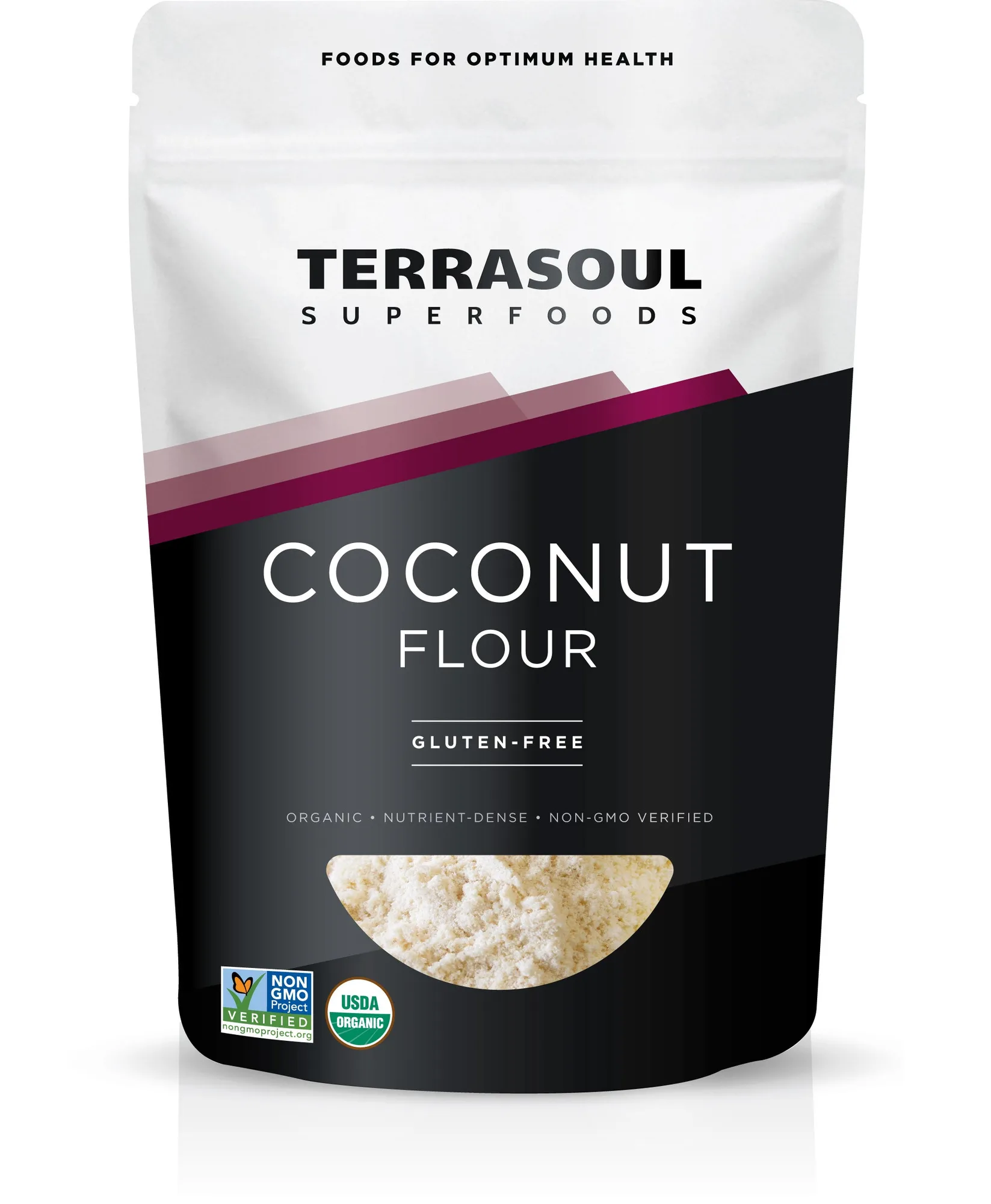
- Coconut Flour: Terrasoul Superfoods organic coconut flour is finely ground from dehydrated and defatted mature coconut meat, sourced from handpicked coconuts grown on sustainable organic farms in Sri Lanka. A fine, defatted grind absorbs liquid quickly and evenly, which is exactly why the rest-and-adjust step matters more here than with a coarser flour.
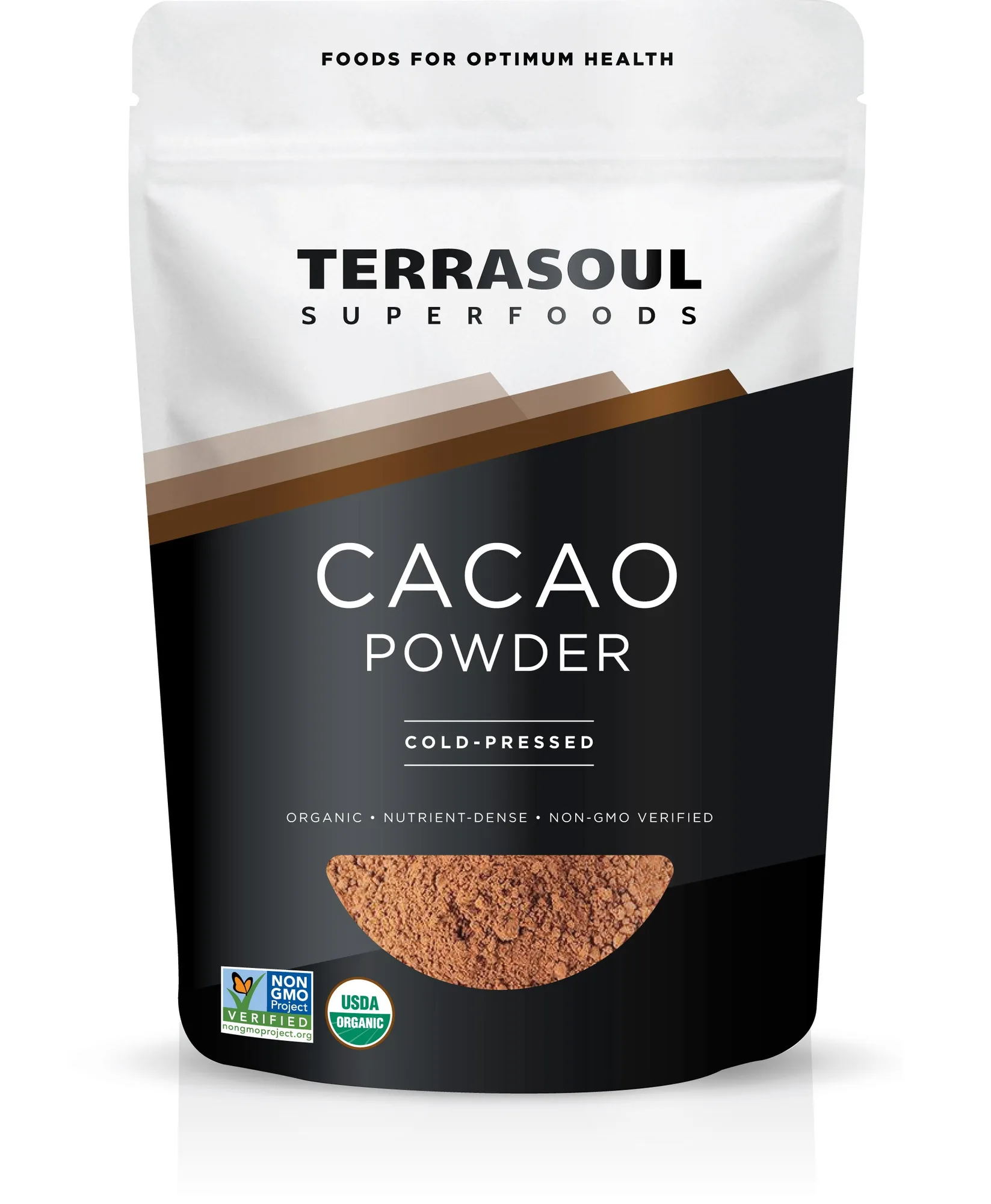
- Cacao Powder: Terrasoul Superfoods raw cacao powder is certified organic, kosher, Non-GMO Project verified, fermented, and naturally gluten-free. Cacao powder is dry and absorbent, so when you add it to a coconut flour recipe, treat it as an extra drying ingredient and add liquid or an egg to compensate.