Quick Answer
Most stand mixer dough failures come from five fixable errors: overmixing, using the wrong speed, ignoring dough consistency, overcrowding the bowl, and neglecting the dough hook. Learn to spot each symptom early, correct your technique, and know when to stop the mixer to protect both your dough and your machine.
Stand mixers are workhorses in the kitchen, but even the best machine can produce disappointing dough if you make a few common mistakes. Overmixed bread turns tough, undermixed dough won't rise, and a strained motor can overheat or stall. The good news: most of these problems are easy to diagnose and fix once you know what to look for.
This guide walks through the five most frequent stand mixer dough mistakes, explains the likely cause behind each symptom, and gives you a clear corrective action. You'll also learn the exact point where you should stop mixing—or switch to a different tool—so your dough comes out right every time.
Mistake 1: Overmixing the Dough
Symptom: Your bread turns out dense, tough, or rubbery, even though you followed the recipe exactly. The dough may also feel tight and spring back aggressively when you poke it.
Likely cause: You left the mixer running too long. Gluten develops quickly once flour and water combine, and more mixing isn't always better. Overmixing breaks down the gluten structure and oxidizes the dough, which ruins its texture.
Corrective action: Always set a timer and follow the recipe's suggested mixing time, but also watch the dough. Stop as soon as it pulls away from the sides of the bowl and forms a smooth, elastic ball. If you're unsure, do the windowpane test: stretch a small piece of dough thin—if it forms a translucent membrane without tearing, it's done.
- Use low to medium speed (KitchenAid stand mixers typically perform best on speed 2 for dough) to slow gluten development and give you more control.
Mistake 2: Using the Wrong Speed
Symptom: The dough climbs up the dough hook, the mixer struggles, or ingredients aren't incorporating evenly. You might also see flour flying out of the bowl.
Likely cause: You started on too high a speed. High speed makes the dough climb the hook, creates a mess, and can strain the motor. Too low a speed, on the other-75970">other-75969">other-75968">other-75967">other hand, may not develop gluten properly.
Corrective action: Always start on the lowest speed (stir or speed 1) to combine ingredients, then gradually increase to speed 2 for kneading. If the dough climbs the hook, stop, scrape it down, and reduce the speed. For stiff doughs, never exceed speed 2—this protects both the dough and your mixer's motor.
- If your dough is very stiff, add liquid gradually rather than increasing speed.
Mistake 3: Ignoring Dough Consistency
Symptom: The dough is either too dry (crumbly, doesn't come together) or too wet (sticks to the sides, never forms a ball).
Likely cause: Flour absorbs moisture differently depending on humidity, brand, and age. Recipes give approximate amounts, but you need to adjust based on what you see in the bowl.
Corrective action: If the dough is too dry, add water one tablespoon at a time while the mixer runs on low. If it's too wet, add flour one tablespoon at a time. The goal is a dough that cleans the sides of the bowl but still feels slightly tacky. Stop mixing as soon as you reach that consistency—don't keep adding flour just because the dough isn't perfectly smooth yet.
- Keep a small bowl of flour and water nearby so you can adjust quickly without stopping the mixer for long.
Mistake 4: Overcrowding the Bowl
Symptom: Ingredients are not mixing evenly, the mixer labors, or the dough forms around the hook instead of in the bowl. You might also see unmixed flour at the bottom.
Likely cause: You put too much dough in the bowl for your mixer's capacity. Every stand mixer has a recommended maximum dough batch—exceeding it makes proper kneading impossible and can overheat the motor.
Corrective action: Check your mixer's manual for the maximum dough capacity. As a rule of thumb, the bowl should never be more than two-thirds full of dough. If you need to make a larger batch, divide it in half and mix each portion separately. If your recipe consistently exceeds your mixer's capacity, consider upgrading to a larger model or mixing by hand for those big batches.
- For a standard 4.5-quart tilt-head mixer, stick to recipes calling for no more than 6 cups of flour.
Mistake 5: Neglecting the Dough Hook
Symptom: The dough hook doesn't seem to grab the dough, leaving it in a ball at the bottom of the bowl while the hook spins above it. Or the hook leaves the dough but doesn't knead it effectively.
Likely cause: You're using the wrong attachment or not using the dough hook correctly. The dough hook is designed specifically for yeast doughs; using a paddle or whisk for kneading won't work. Also, some dough hooks need to be pushed down into the dough manually at the start.
Corrective action: Always use the dough hook for yeast doughs. When you start, use a spatula to push the dough down into the hook's path until it catches. If the hook still doesn't engage, stop and shape the dough into a ball before restarting. If you're making a very stiff dough, you may need to knead by hand for the last few minutes to achieve the right texture.
- Keep your dough hook clean and dry before use to prevent dough from slipping off.
Diagnosis at a Glance
- Symptom: Dense, tough bread: Likely overmixing. Stop as soon as the dough pulls away from the bowl and passes the windowpane test. If you've already overmixed, the dough can't be fixed—start over and use a timer next time.
- Symptom: Dough climbs the hook or flies out: Speed too high. Start on low, then keep it at speed 2 for kneading. Scrape down as needed. If the dough keeps climbing even at speed 2, your dough may be too stiff—add liquid gradually.
- Symptom: Dough too dry or too wet: Adjust flour or water one tablespoon at a time while mixing on low. If you can't achieve a smooth, elastic dough after adjustments, your flour may be old—switch to fresh flour.
- Symptom: Mixer labors or dough uneven: Bowl overcrowded. Divide the batch and mix in smaller portions. If your mixer still struggles with a half batch, consider a larger model or hand kneading.
- Symptom: Dough hook doesn't catch: Use the dough hook, push dough into its path, and shape into a ball before restarting. If the hook still won't grab, your dough may be too dry—add water, or knead by hand.
KitchenAid® Products That Help
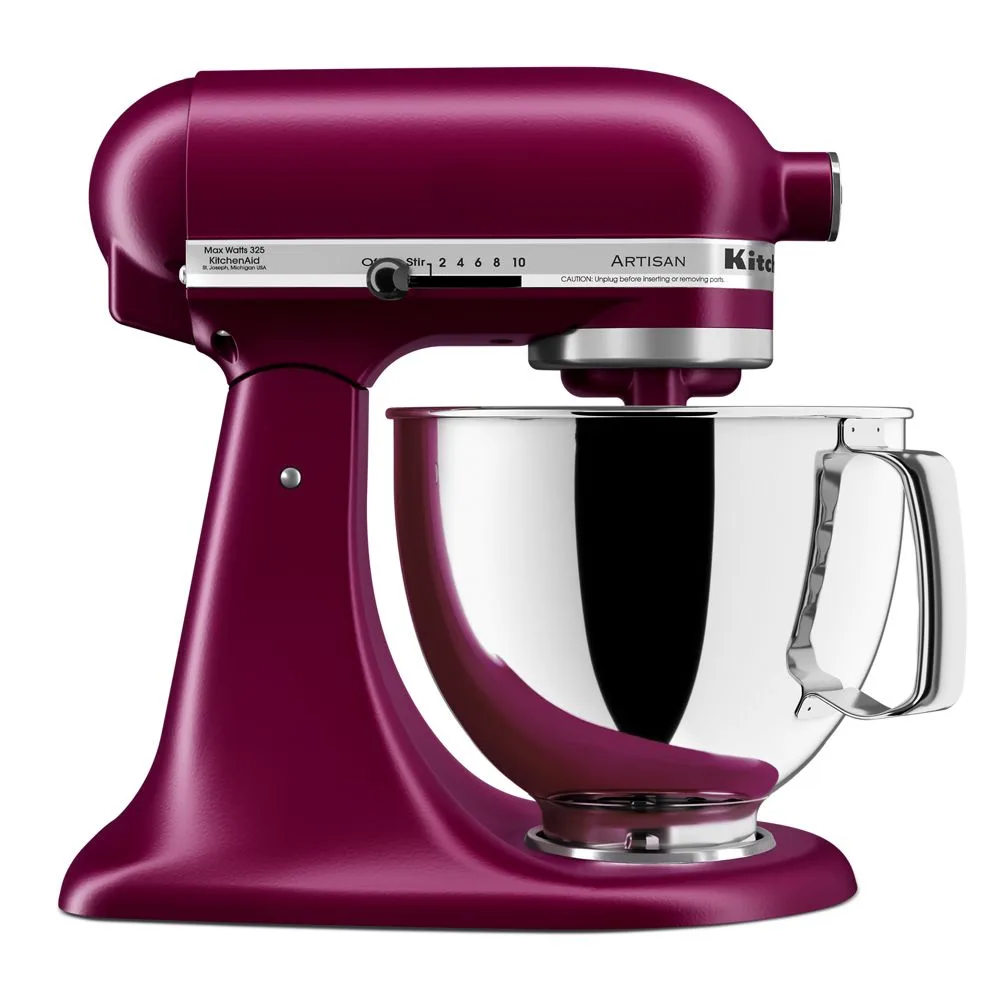
- Juniper: The KitchenAid® Juniper stand mixer offers reliable performance and durable construction, designed to handle a wide range of mixing tasks with ease. A sturdy stand mixer like the Juniper gives you consistent speed control and enough power for everyday bread doughs, so you can focus on technique rather than fighting the machine.
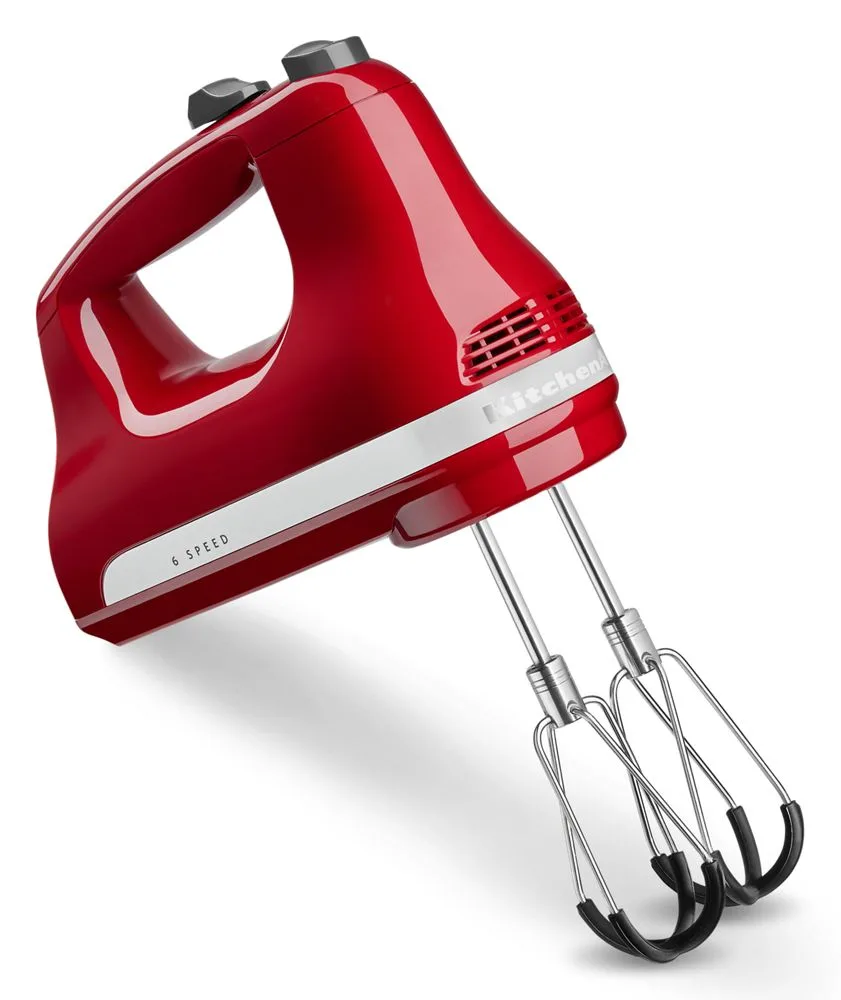
- Ink Blue: The KitchenAid Ink Blue Hand Mixer is designed for efficient mixing, whipping, and blending of a variety of ingredients, with an ergonomic handle for comfortable use. When a recipe calls for a small batch or a gentle fold, a hand mixer gives you more control and is easier to stop mid-way—perfect for avoiding overmixing delicate doughs.
Mastering your stand mixer is about knowing when to stop, not just when to start. By recognizing these five common mistakes early, you can adjust your technique and save both your dough and your mixer. With a little practice and a reliable machine like the KitchenAid® Juniper stand mixer, you'll be turning out perfectly kneaded bread every time.