Quick answer
A baby dress rides up when the waist or bodice is too loose, the fabric is too slick, or the dress is simply too long for the way your baby moves. Check the waistband and shoulder fit first, then adjust with a onesie base layer, a belt or ribbon, or a smaller size. If the dress still bunches after those fixes, it is a sizing or fabric mismatch, not a styling problem.
You put your baby in a sweet prairie dress, and ten minutes later the hem is around her armpits. It is one of the most common baby dress sizing issues parents run into, and it almost always has a physical cause rather than a mystery.
This guide walks through the usual suspects behind a baby dress riding up, from puff sleeve dress too big problems to prairie dress fit problems, and gives you fixes you can try at home before you decide the dress is the wrong cut.
Start with the waist and shoulder fit
Most riding-up complaints trace back to a loose waist or a shoulder that slips. A gathered tier skirt or a full wrap panel adds weight below the waist, and if the waistband is not snug, that weight pulls the bodice upward as your baby crawls, scoots, or gets picked up. Check whether you can slide two fingers under the waistband; if you can slide your whole hand, the fit is too loose.
Shoulders matter too. A puff sleeve that sits off the shoulder lets the whole dress shift, and a wide neckline gives the bodice room to travel. Look at where the shoulder seam sits when your baby is upright and again when she is on her tummy. If the seam moves more than a finger width, the dress is likely to ride up.
- Pinch the waistband at the back and see how much fabric you can gather; more than an inch means the waist is too loose.
- Check the shoulder seam in both sitting and crawling positions, not just standing.
- Test the dress right after a diaper change, when the fit is most accurate.
Match the fabric to how your baby moves
Slick fabrics slide against each other, which lets a dress travel upward. Rib knits and modal blends have a smooth, drapey hand, and while they feel lovely, they can be more prone to shifting than a cotton interlock with a bit more grip. This is not a defect; it is a tradeoff between softness and stay-put structure.
If your baby is in the crawling stage, a dress with a closer-fitting bodice and a shorter skirt will stay in place better than a long, full tier. Save the longer prairie styles for stroller days, carrier days, or when your baby is mostly being held.
- Choose a shorter hem for crawling days and a longer hem for carried days.
- Layer a snug base underneath to give the dress something to grip.
- Avoid sizing up just for length if the waist is already loose.
Use layering to keep the dress in place
Dress layering for babies is the simplest fix for a dress that will not stay down. A snug bodysuit or footie underneath gives the dress a textured base, and the friction between the two layers reduces how much the dress slides. It also means a slightly loose waist is less noticeable because the base layer holds the silhouette.
For a prairie top and short set, tucking the top into the shorts or adding a thin sash at the waist can anchor the look. Avoid bulky layers underneath, since extra bulk can push the dress up rather than hold it down.
- Put the base layer on first, then the dress, and smooth the dress down from the shoulders.
- Use a soft ribbon or fabric sash at the waist for a gentle anchor, never tight.
- Skip thick sweaters under a fitted bodice; they add bulk and lift the dress.
When to size down and when to choose another cut
If the waist is loose, the shoulders slip, and the hem sits low even on a standing baby, sizing down is worth trying. But if the next size down is too short in the torso or tight across the chest, the cut is the problem, not the size. A dress with a defined waist seam and a shorter skirt will usually stay put better than a loose tiered style.
Stop adjusting and choose a different option when the dress rides up even with a snug base layer and a properly fitted waist. At that point, a two-piece set or a footie gives you the same look with less fuss. There is no shame in saving the prairie dress for photos and special occasions.
- Size down only if the smaller size still allows full arm and leg movement.
- If two sizes both ride up, switch to a set or a footie for daily wear.
- Keep the dress for events where your baby is mostly held or seated.
Fit diagnosis: symptom, cause, fix, and stop point
- Waistband slides up over the diaper: The waist is too loose for the weight of the skirt, so movement pulls the bodice upward. Try a smaller size or add a snug base layer; if the waist still slides, switch to a set with an elastic waistband short.
- Shoulders slip off during crawling: A wide neckline or off-shoulder puff sleeve lets the whole dress shift when your baby is on hands and knees. Check the shoulder seam in a crawling position; if it moves more than a finger width, the cut is wrong for active days.
- Dress bunches at the chest when picked up: Slick modal or bamboo fabric slides against itself, and lifting a baby compresses the skirt upward. Layer a cotton interlock bodysuit underneath for grip; if it still bunches, save the dress for carried or seated occasions.
- Hem stays low but the bodice twists: The dress is likely too long in the torso for your baby's proportions, so the waist seam sits below the natural waist. Try a shorter cut or a two-piece set; do not keep sizing up hoping the torso will fit.
Products that address common fit issues
- short puff sleeve prairie top + bike short set | tiny dragonfly | modal skinny rib: Features a top with short puff sleeves, gathered elastic ruffle sleeve cuffs, front button placket, and gathered tiers paired with matching bike shorts with elastic waistband. The matching bike shorts give you a secure bottom layer, and the elastic waistband on the shorts helps anchor the set so the top does not travel up as your baby moves.
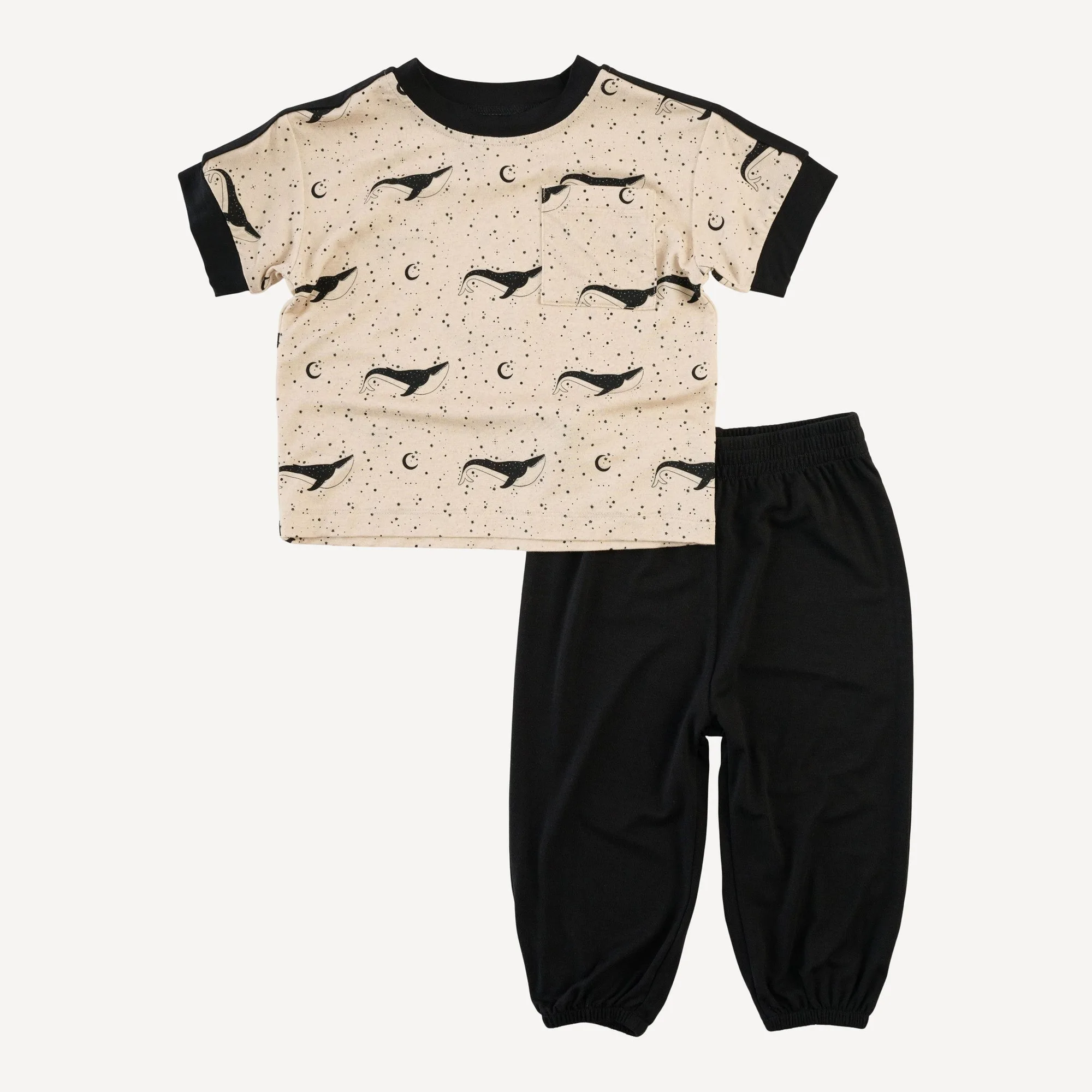
- jamie set | mystical whale | light weight bamboo: Features a boxy fit tee with topstitch detail paired with matching shorts with elastic waistband. A two-piece set avoids the riding-up problem entirely because there is no skirt to climb; the elastic waistband shorts stay in place while the boxy tee skims rather than pulls.
- long sleeve two way zipper footie | navy night | bamboo: Features fold-over hand mitts and two-way front zipper closure with chin guard to protect babies' skin. When a dress simply will not stay down, a footie is the practical alternative for crawling and napping; the two-way zipper makes diaper changes easier without removing the whole outfit.
A baby dress that rides up is usually telling you something about the waist, the shoulders, or the fabric, not about your baby. Fix the fit with a base layer or a smaller size first, and if the dress still climbs, choose a set or footie for daily wear and keep the prairie style for calmer days.