Quick answer
Choose the LC MAXII Altera EPM240 CPLD board for deterministic, low-latency logic gate projects using hardware description languages. Choose the TinyDuino Arduino board when you need a familiar microcontroller ecosystem and quick sensor prototyping.
Understanding the core difference
A CPLD (Complex Programmable Logic Device) like the Altera EPM240 is a hardware-level logic device. You program it with a hardware description language (HDL) or schematic design to define parallel, deterministic gate operations. It has no operating system and no sequential program counter, making it ideal for fixed, high-speed logic chains.
An Arduino board like the TinyDuino is a microcontroller. It runs sequential sketches in a loop, has an operating environment, and is designed for flexible sensor reading, decision-making, and peripheral control. The trade-off is that timing is less deterministic than a CPLD.
When the choice matters
If your project requires hard real-time responses—such as a custom protocol converter, a high-speed state machine, or a glue-logic interface between two digital systems—the EPM240 CPLD's gate-level control and deterministic timing are a clear advantage.
If your project involves reading multiple sensors, driving displays, or communicating over Wi-Fi or Bluetooth, the TinyDuino's Arduino compatibility and shield connector give you a huge library of existing code and hardware add-ons.
Trade-offs at a glance
- Determinism vs flexibility: The EPM240 CPLD executes gate-level logic with no OS overhead; the TinyDuino runs sequential sketches that can be interrupted by library calls or timing jitter.
- Development effort: The CPLD requires learning hardware description languages or schematic entry; the TinyDuino uses the familiar Arduino IDE and C++-like sketches.
- Expandability: The EPM240 board is a standalone logic device with limited I/O expansion; the TinyDuino connects to a wide ecosystem of Arduino shields and modules.
Product facts at a glance
-
LC MAXII Altera EPM240 CPLD development board: Low cost development board for the Altera EPM240T100C5 (MAXII) CPLD device. Uses Altera's free design suite for schematic or HDL design. You can create and download custom parallel logic circuits without paying for a commercial software license, making it accessible for learning and prototyping CPLD designs.
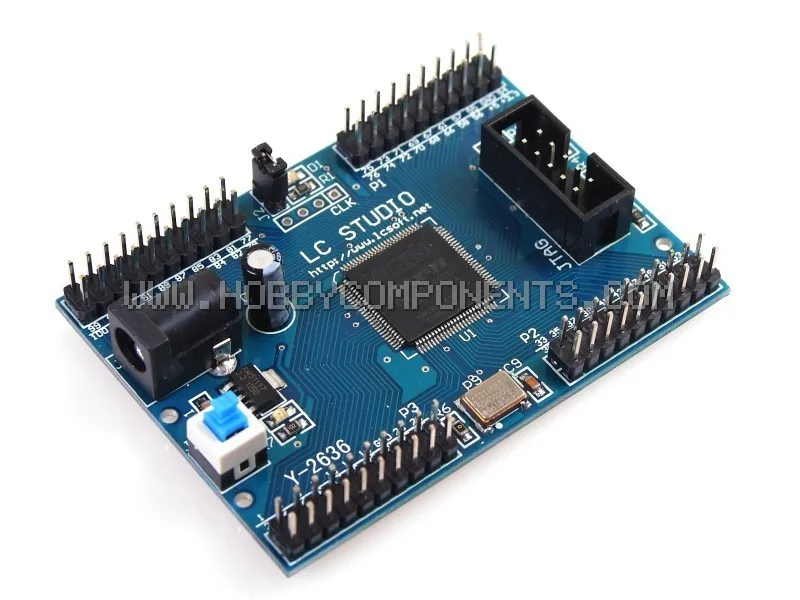
LC MAXII Altera EPM240 CPLD development board
-
TinyCircuits Tinyduino Processor Board (Variations Available): Arduino compatible board in an ultra compact package, roughly equivalent to an Arduino Uno with the same processor and signals brought out to a shield connector. Most existing Arduino sketches run without changes, so you can reuse your code and shields while shrinking the footprint to less than a quarter's size.
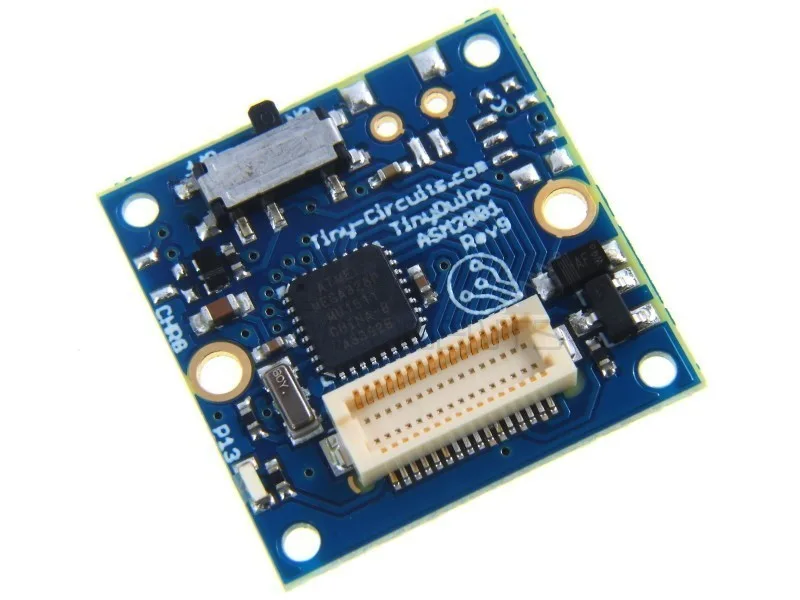
TinyCircuits Tinyduino Processor Board (Variations Available)
Which board fits your project?
Best for
- Projects requiring deterministic, low-latency logic gates (e.g., custom protocol converters, state machines, glue logic)
- Learning CPLD design with a free toolchain and low-cost hardware
Not ideal for
- Projects needing a wide range of sensors, displays, or wireless connectivity
- Developers who want to reuse existing Arduino sketches and shield hardware