When you buckle up, you expect your seatbelt and airbags to work. But what about your dog? If you travel with your furry friend, their safety in the car is just as important as yours. That's why crash-tested dog crates have become a hot topic among pet owners and industry experts alike.
But not all 'crash-tested' claims are created equal. In this article, we'll break down what crash-tested dog crates really mean, the industry standards that exist, and how to choose a kennel that offers genuine protection. We'll also explore how brands like GUNNER are raising the bar for dog crate safety.
What Does 'Crash-Tested' Actually Mean?
A crash-tested dog crate is one that has been subjected to simulated vehicle collisions to evaluate its structural integrity and ability to protect a dog during an accident. However, the term 'crash-tested' is not regulated by any single federal agency. This means that any manufacturer can claim their crate is crash-tested, even if the test was minimal or not performed by an independent lab.
For a crate to be genuinely crash-worthy, it should be tested under realistic conditions that mimic real-world accidents. This includes high-speed impacts, rollovers, and side collisions. The crate should contain the dog securely, prevent ejection, and absorb impact forces to reduce injury risk.
- Look for testing by independent laboratories, not just internal claims.
- Check if the test simulates real-world crash scenarios, not just static pressure.
- Verify whether the crate has been tested with a dog-sized dummy or a live animal.
Industry Standards for Dog Crate Safety Testing
While there's no universal standard, several organizations have developed protocols for evaluating pet restraint systems. The Center for Pet Safety (CPS) is one of the most recognized independent testers. They conduct crash tests on pet crates, carriers, and harnesses, and they publish results to help consumers make informed decisions. Their testing includes 30 mph and 50 mph frontal impacts, as well as rollover simulations.
Another standard is the Federal Motor Vehicle Safety Standard (FMVSS) 213, which applies to child restraint systems. Some dog crate manufacturers voluntarily test their products to similar standards to demonstrate their commitment to safety. However, it's important to note that passing a crash test does not guarantee your dog will survive every accident—it significantly improves the odds.
- Center for Pet Safety (CPS) is a leading independent crash-test organization.
- FMVSS 213 is a child seat standard that some dog crates aim to meet.
- Always ask for the specific test protocol and results.
Key Features of a Crash-Tested Dog Crate
When evaluating a crash-tested dog crate, look for features that enhance safety. The material should be impact-resistant—aluminum and heavy-duty plastics are common. The door should have a secure locking mechanism that won't pop open on impact. Ventilation is crucial to prevent overheating, but it shouldn't compromise structural integrity.
Also, consider how the crate is anchored in your vehicle. Many crash-tested crates come with tie-down points or mounting kits. Without proper anchoring, even the strongest crate can become a projectile. GUNNER's G1 kennels, for example, are designed with reinforced corners, a double-wall rotomolded construction, and a patented locking system. They are also tested with a 75-pound dog dummy at 30 mph and 50 mph impacts.
- Reinforced corners and double-wall construction add strength.
- A secure, easy-to-operate latch prevents accidental opening.
- Built-in tie-down points allow for proper vehicle anchoring.
How GUNNER Kennels Meet the Highest Safety Standards
GUNNER is a brand that has made crash safety a priority. Their G1 kennels are independently tested by the Center for Pet Safety and have earned their highest rating. The kennels are constructed from a rotomolded double-wall design that provides superior impact resistance. The door features a patented locking system that stays shut during a crash, yet opens easily for you.
GUNNER also offers a range of sizes and colors, including the G1TM KENNEL - Ducks Unlimited Orange and the G1TM KENNEL - MOSSY OAK BOTTOMLAND BLACK. These kennels are designed to fit securely in most vehicles, and they come with tie-down anchors for added safety. Whether you're a hunter with a working dog or a family taking a road trip, GUNNER provides peace of mind.
- GUNNER G1 kennels are CPS-certified for crash safety.
- They feature a patented locking system and impact-resistant construction.
- Available in various sizes and colors to fit your vehicle and style.
Choosing the Right Crash-Tested Crate for Your Dog
When choosing a crash-tested dog crate, consider your dog's size, the vehicle space, and your travel habits. Measure your dog from nose to tail and from floor to top of head while standing. The crate should allow your dog to stand, turn around, and lie down comfortably. Also, think about how you'll secure the crate—some vehicles have tie-down points, while others may require additional anchoring systems.
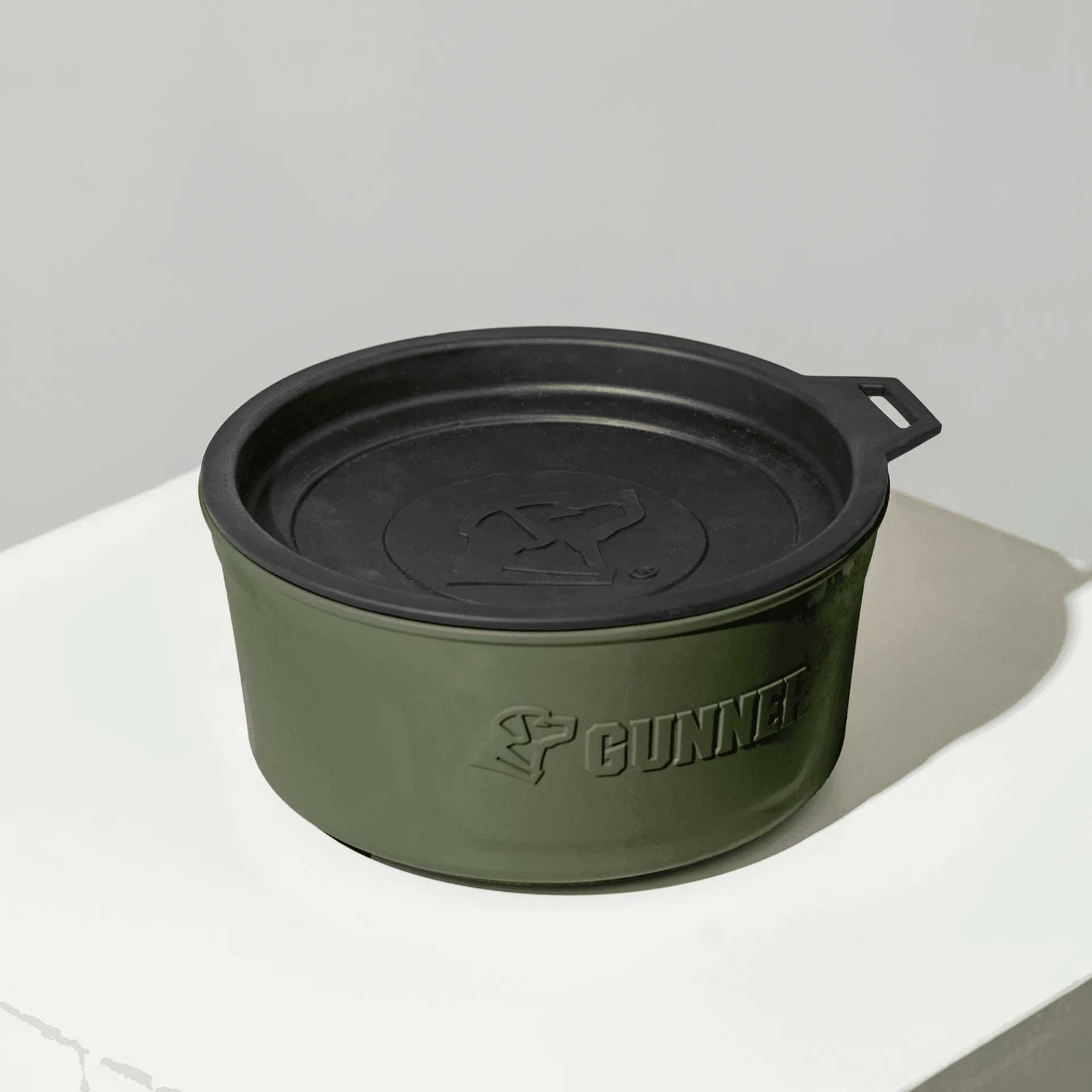
Beyond safety, comfort matters. A crate that's too hot or cramped will stress your dog. Look for crates with good ventilation and easy access. The GUNNER DOG BOWL - GUNNER GREEN is a great accessory to attach inside the crate for water during long trips. And for extra comfort, consider adding a HOMESTEAD DOG BED Quail Tan to make the space cozy.
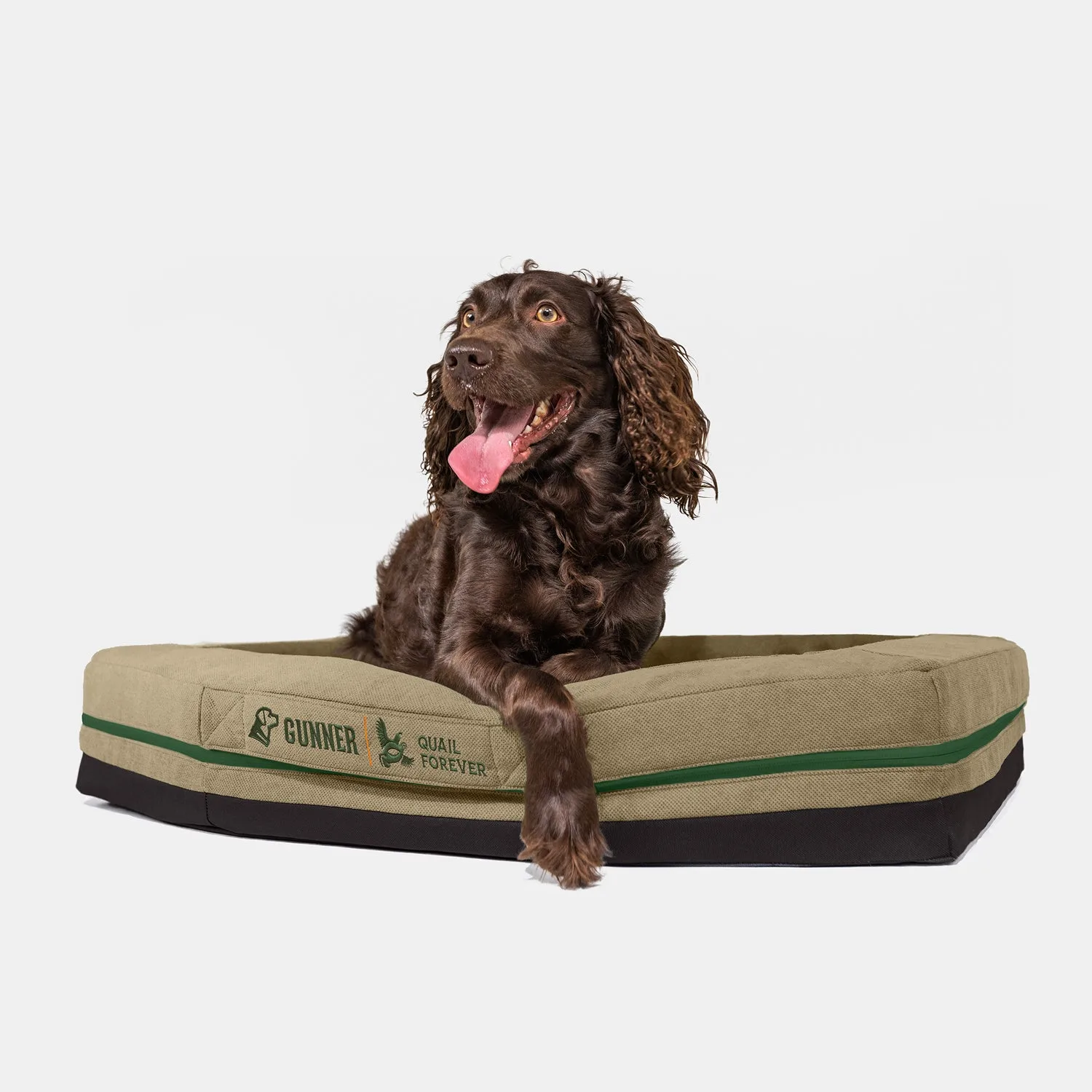
HOMESTEAD DOG BED Quail Tan
- Measure your dog accurately before buying a crate.
- Consider the crate's placement in your vehicle and anchoring options.
- Accessories like a dog bowl and a bed can make the crate more comfortable.
The Future of Dog Crate Safety
As more pet owners prioritize safety, the industry is evolving. We're seeing more brands invest in independent crash testing and publish their results. Some are even developing smart crates with sensors that detect impact and alert emergency services. The demand for crash-tested dog crates is growing, and that's a positive trend for our furry companions.
However, it's essential to stay informed. Not every 'crash-tested' claim is backed by rigorous testing. Look for certification from trusted organizations like the Center for Pet Safety, and always check the test results. Your dog's life depends on it.
- The industry is moving toward more transparent safety testing.
- Smart crates with impact sensors are on the horizon.
- Always verify crash-test claims with independent results.
Choosing a crash-tested dog crate is one of the most important decisions you can make for your dog's safety. By understanding the standards and looking for independent certifications, you can ensure your furry friend is protected on every journey. Explore the GUNNER G1TM KENNEL - Ducks Unlimited Orange to see how top-tier crash safety meets everyday comfort.