Quick answer
Choose a dog crate that is large enough for your adult dog to stand, turn around, and lie down comfortably, but not so large that they can eliminate in one corner and sleep in another. Look for sturdy construction, good ventilation, and a design that fits your home's style.
Size matters more than you think
A crate that is too small will be uncomfortable and stressful for your dog. A crate that is too large can undermine potty training by allowing your dog to designate a bathroom area. Measure your dog from nose to tail and from floor to the top of their head while sitting. Add 2-4 inches to each dimension to find the right crate size.
Material and construction trade-offs
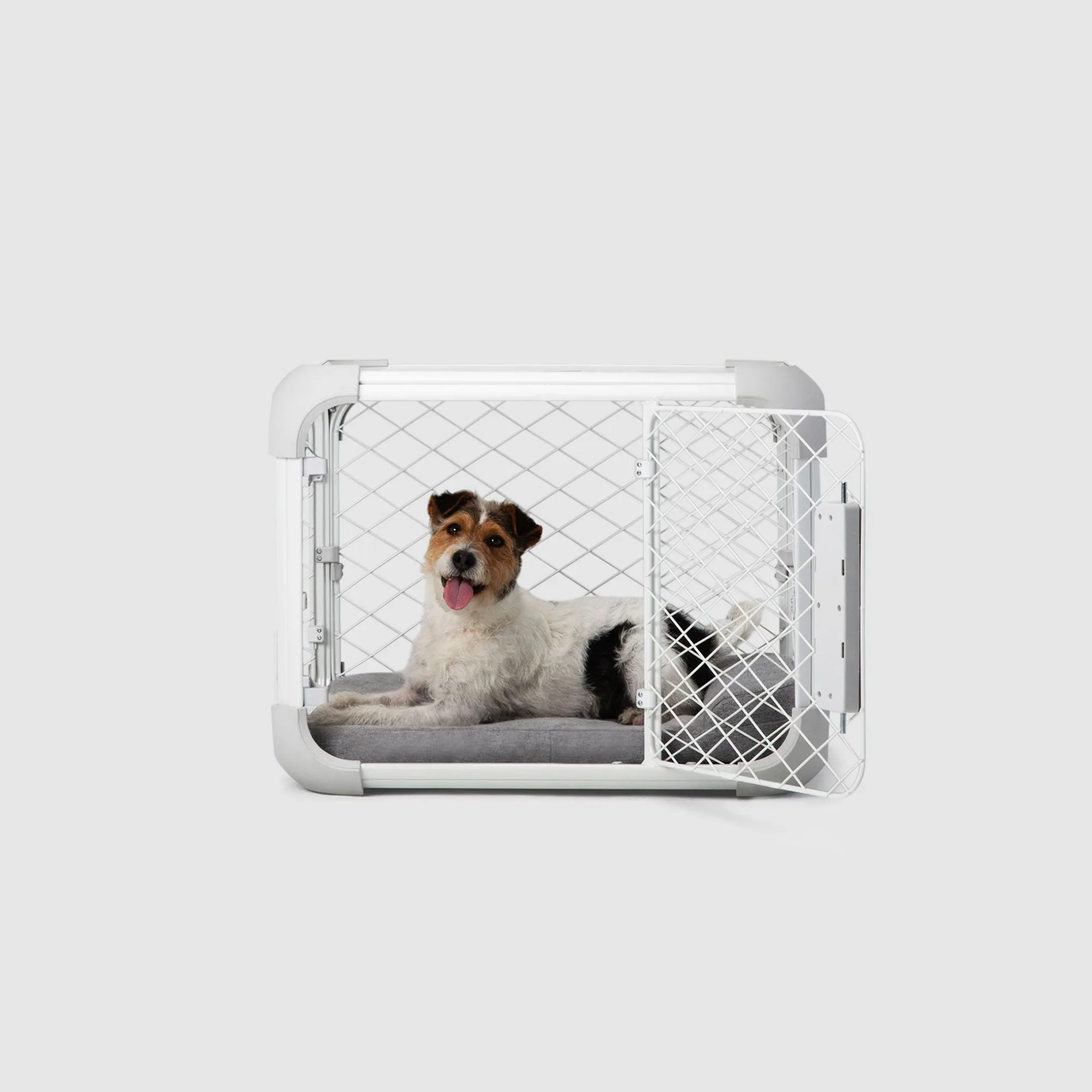
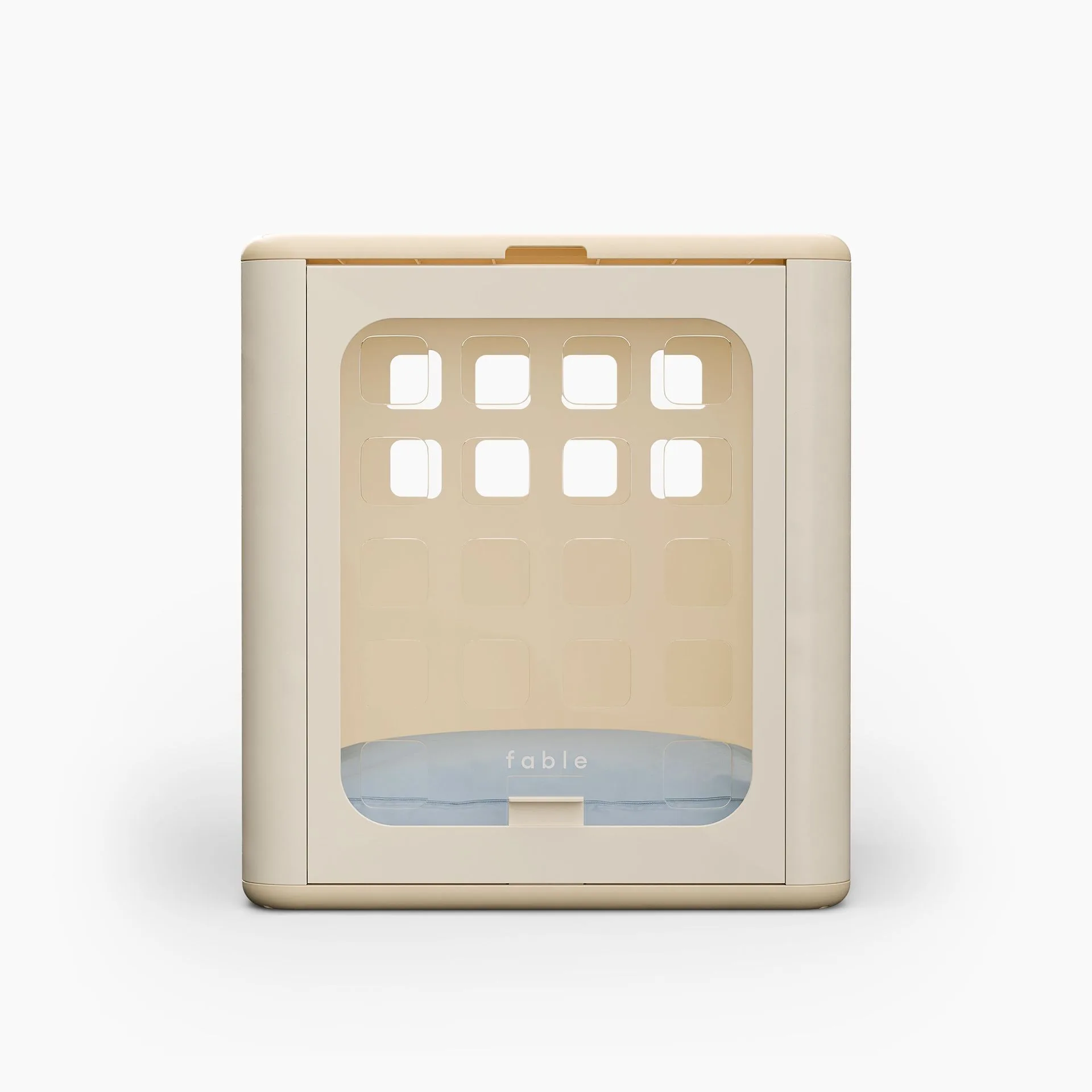
Wire crates offer excellent ventilation and visibility but can be noisier and less home-friendly. Plastic crates are more den-like and quieter but may have limited airflow. The Essential Crate from Fable Pets combines a lightweight, modern design with generous airflow, creating a calm den-like space while doubling as a sleek side table. This dual-purpose approach saves floor space and blends into your decor.
Safety features are non-negotiable
Look for rounded edges, no sharp points, and secure latches that your dog cannot accidentally open. Ensure the crate has a solid floor or a removable tray that is easy to clean. Avoid crates with protruding parts that could catch a collar or paw.
Decision rules for choosing a dog crate
- Measure your dog correctly: Measure your dog's length (nose to tail base) and height (floor to top of head when sitting). Add 2-4 inches to each. This ensures enough room for comfort without extra space that encourages soiling.
- Choose a crate that fits your home: If the crate will live in a shared space like a living room, consider a design that doubles as furniture, such as the Essential Crate. In a utility room or garage, a basic wire or plastic crate may suffice. A crate that looks good in your home is more likely to stay in a convenient location, making training easier.
- Prioritize ventilation and safety: Ensure the crate has ample airflow, rounded edges, and secure latches. Avoid crates with sharp points or gaps where paws or collars could get caught.
- Plan for your dog's adult size: If you have a puppy, estimate their adult size using breed guidelines and choose a crate that will fit them as an adult. Many crates come with dividers to adjust the space as your puppy grows. Using a divider saves you from buying multiple crates as your puppy grows.
Product spotlight
-
Essential Crate: A lightweight dog crate and a side table all in one. It doubles as a sleek side table while creating a calm, den-like space for your pet to rest and recharge. This dual-purpose design saves space and blends into your home decor, making it easier to keep the crate in a main living area where your dog feels part of the family.
Essential Crate
Who is this for?
Best for
- Dog owners who want a crate that doubles as furniture and blends into home decor
- Owners of small to medium breeds that fit comfortably in a lightweight, modern crate
Not for
- Owners of very large or giant breeds that need extra-heavy-duty crates
- Those who need a crate primarily for travel or outdoor use (plastic airline-approved crates are better)