Quick answer
Choose a size 2 crewel hand needle when you are embroidering with thicker threads or yarn, such as wool, tapestry wool, or multiple strands, and you need a sharp point that pierces the fabric. Its large eye holds the thicker thread without fraying, while the sharp tip works on woven fabrics that are not too tightly woven. If you usually stitch with fine cotton or silk, go down to a smaller crewel size or use a finer needle instead.
Crewel hand needles are sharp-pointed embroidery needles with an elongated eye. Size 2 is one of the larger sizes in that family, which makes it a practical choice when your thread is thicker than standard six-strand floss. The larger eye lets wool and heavier threads pass through without stripping or tangling, and the sharp tip lets you pierce woven fabric instead of pushing between the weave.
This guide explains when a size 2 crewel needle is the right tool, how to match it to your thread and fabric, and how it compares with the other needles you may already own. You will also see how a few well-chosen Prym and Dritz accessories make crewel work easier to organize and less fiddly to set up.
What a size 2 crewel needle actually is
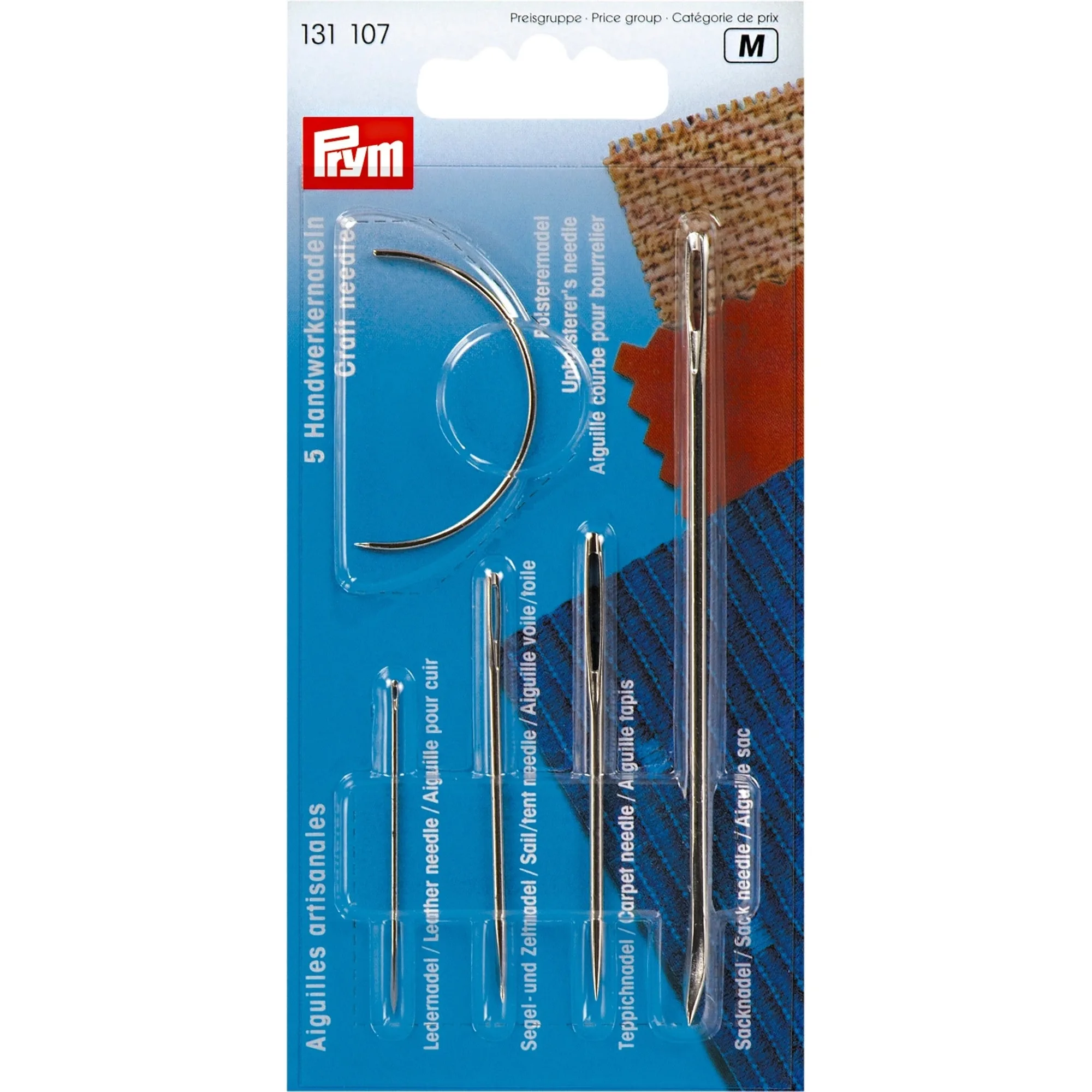
Crewel needles are defined by two features: a sharp point and a long eye. The sharp point lets you pierce the surface of woven fabric, which is useful for crewel embroidery, wool work, and surface embroidery on firmly woven cloth. The long eye is wider and longer than a standard embroidery needle, so thicker threads and yarns can pass through without being squeezed or frayed.
Size 2 sits near the larger end of the crewel needle range. Larger needle numbers mean finer needles, so a size 2 is thicker and longer than a size 5 or size 7. That extra size gives you a bigger eye and more shaft strength, which matters when you are pulling wool or several strands through a fabric. It also means the needle leaves a slightly larger hole, so it is not the best choice for very fine or tightly woven fabric.
- Sharp point: pierces woven fabric rather than slipping between threads.
- Long eye: holds thicker thread without stripping or fraying.
- Size 2: a larger crewel size for wool, yarn, and multi-strand work.
When to reach for a size 2 crewel needle
Use a size 2 crewel needle when your thread is the deciding factor. If you are stitching with wool, tapestry wool, thick pearl cotton, or several strands of floss held together, a standard embroidery needle eye may be too small. The larger eye of a size 2 lets the thread move through the fabric with less friction, which reduces fraying and keeps your stitches looking even.
It is also a good choice for beginners who are learning crewel-style stitches on medium-weight woven fabric. The larger eye is easier to thread, and the longer shaft gives you more to hold onto. If you are working on a very fine fabric such as silk or batiste, or if you are using a single strand of fine cotton, a smaller crewel needle or a sharp embroidery needle will give you neater results.
- Choose size 2 for wool, tapestry wool, thick pearl cotton, or multiple strands.
- Choose a smaller crewel size for fine floss on lightweight fabric.
- If the needle leaves a visible hole, go down a size.
How to match the needle to thread and fabric
The needle should be large enough to carry the thread easily but small enough that it does not distort the fabric. A simple test: thread your needle and pull it through a scrap of your project fabric. If the thread strips, frays, or squeaks, the eye is too small. If the needle leaves a hole that does not close after a stitch or two, the needle is too large.
For crewel work on medium-weight linen or cotton, size 2 is often a good middle ground. If you are using a single strand of fine wool, a size 3 or 4 may be enough. If you are using bulky yarn, you may need a tapestry needle instead, because tapestry needles have a blunt tip that slides between the weave rather than piercing it. The right choice depends on whether you want the needle to pierce or to glide.
- Thread a needle and test it on a fabric scrap before starting your project.
- If the thread frays, size up; if the fabric distorts, size down.
- Use a tapestry needle for counted work on evenweave; use crewel for surface embroidery.
Storage and organization that makes crewel work easier
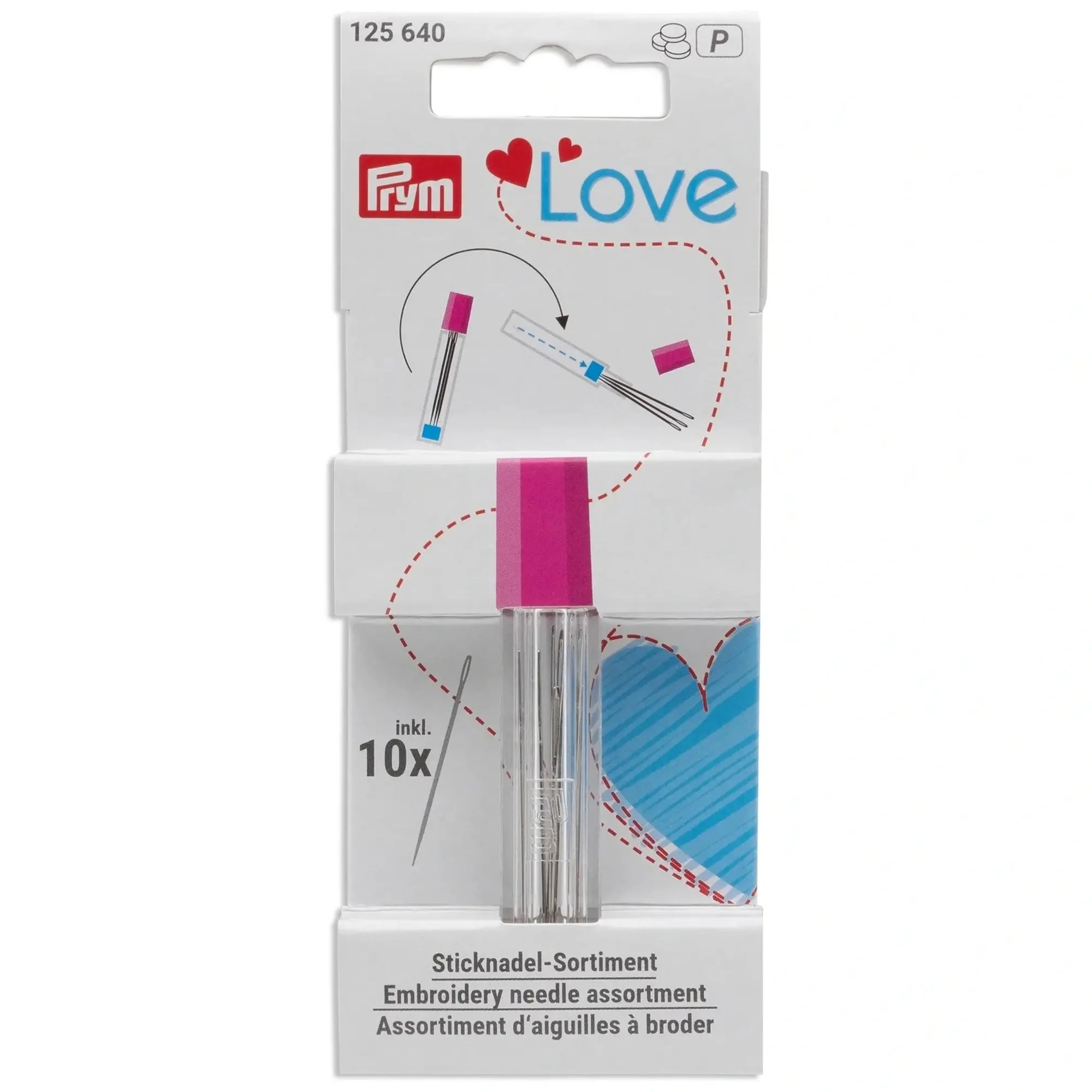
Crewel needles are small, and it is easy to lose track of which size is which once they are out of the package. A dedicated needle storage container keeps sizes separated and protects the points. The Prym Love quiver is one option: it holds embroidery needles up to five centimeters long and uses an integrated magnet to keep them in place, even when you remove one needle. That means fewer spills and less time hunting for the right size.
For projects that involve pattern pieces or pinned templates, a combined pin cushion and pattern weight can keep things from shifting while you stitch. The Prym Love Fruit Pin Cushion & Pattern Weight is filled with sand and weighs about 0.8 ounces, so it holds pattern pieces in place and doubles as a pin holder. It is a small thing, but it reduces the stop-start of adjusting your work.
- Keep sizes separate so you can grab the right needle without guessing.
- A magnetic quiver prevents needles from scattering if you tip it over.
- A weighted pin cushion keeps pattern pieces steady on your work surface.
What to look for when buying crewel needles
Check the eye first. A true crewel needle has a long eye that is noticeably wider than a standard embroidery needle of the same size. If the eye looks short and round, it is probably a sharp embroidery needle, which is fine for floss but less comfortable with wool. The point should be sharp but not so sharp that it catches and splits the fabric threads.
Size labeling matters too. Crewel needles are usually sold in mixed sizes or specific sizes, and size 2 may be packaged with other sizes. If you mainly stitch with wool, buy a pack that includes size 2 or a dedicated size 2 pack. If you are unsure, start with an assortment so you can test which size suits your thread and fabric before committing to a full pack.
- Look for a long eye, not just a large one.
- Buy an assortment if you are new to crewel work.
- Replace needles when they feel rough or catch on the fabric.
Decision rules for choosing a crewel needle size
- Thread thickness: If your thread is wool, tapestry wool, thick pearl cotton, or multiple strands of floss, start with a size 2 crewel needle. If it is a single strand of fine cotton or silk, choose a smaller crewel size. The thread should pass through the eye without fraying or stripping.
- Fabric weight: On medium-weight woven linen or cotton, size 2 is a practical choice. On fine or tightly woven fabric, size down to avoid leaving visible holes. If the needle leaves a hole that does not close, go down one size.
- Stitch type: For surface embroidery stitches that pierce the fabric, use a sharp crewel needle. For counted thread work on evenweave, use a blunt tapestry needle instead. Crewel needles pierce; tapestry needles glide between threads.
- Needle condition: Replace your needle if it feels rough, catches on the fabric, or has a bent tip. A worn needle can snag threads and distort stitches. Keep spare size 2 needles on hand so you can swap mid-project.
Products that support crewel and hand embroidery
- Embroidery needle assortment in the Prym Love quiver: Contains 10 embroidery needles and stores needles up to five centimeters long. An integrated magnet keeps needles in place even when one is removed, and the tube is designed so needles stay put if held at an angle after opening. Keeps your crewel and embroidery needles organized by size and prevents spills, so you can find the right needle quickly while stitching.
- Fruit Pin Cushion & Pattern Weight: Can be used as a pattern weight or pin cushion. Each crocheted cushion weighs about 0.8 ounces and is filled with sand, so it holds pattern pieces in place and can double as a stress ball. Useful for holding pattern pieces or templates steady while you transfer designs or position fabric for crewel embroidery.
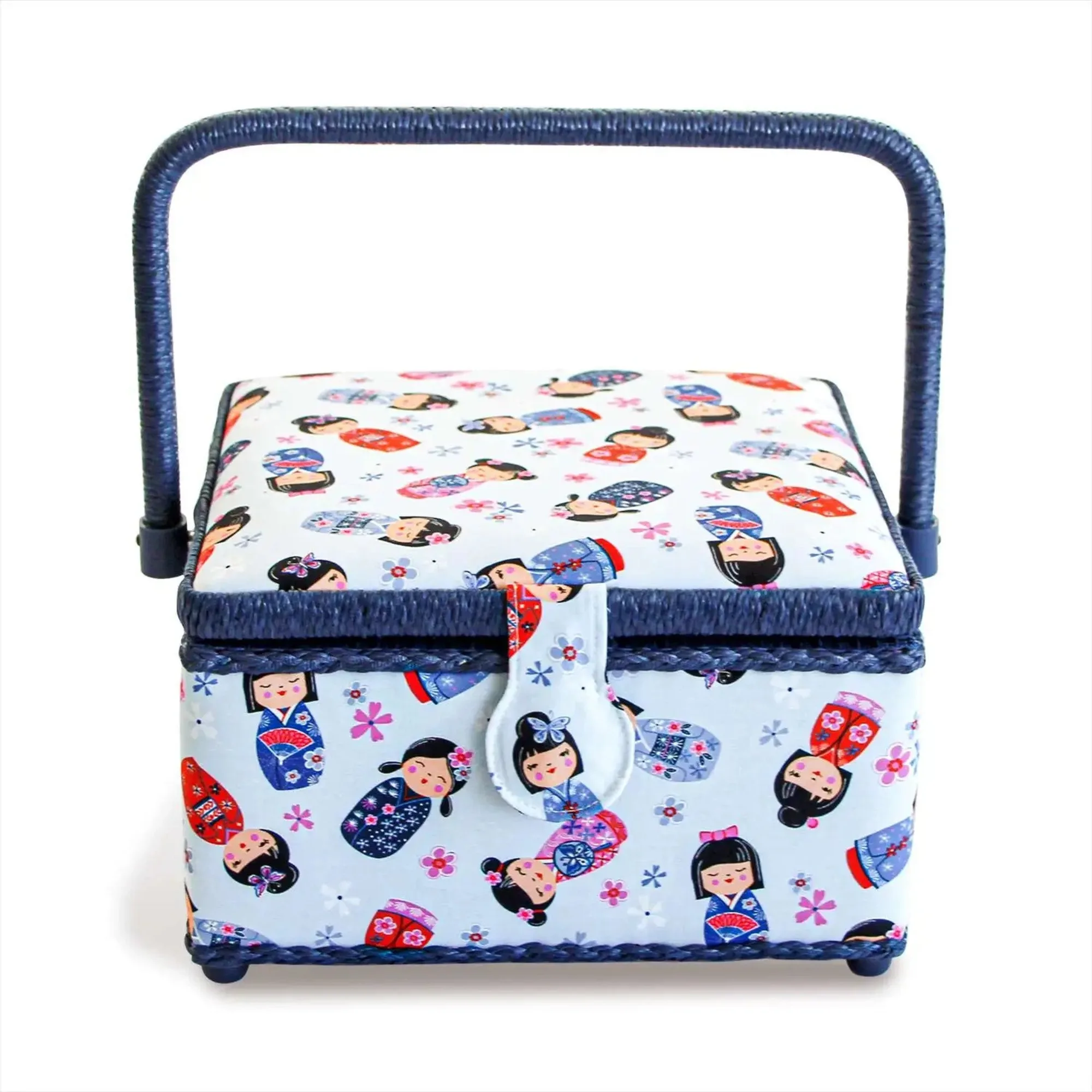
- https://prymamerica.com/products/612085-7dac32a296c638b6e5d75813-1318017Square Sewing Basket, Medium, Kokeshi Dolls: Item Number: 612085. A dedicated basket keeps needles, threads, and small tools together so your crewel project is ready to pick up and put away.
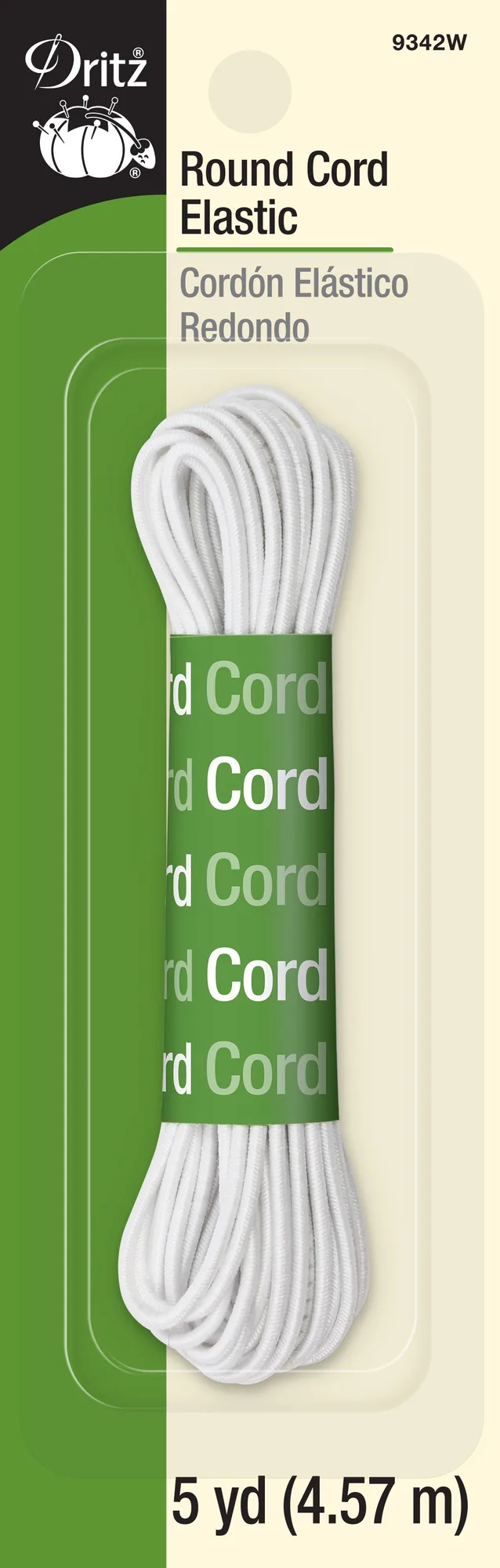
- Round Cord Elastic, White: A light, stretch elastic cord great for making buttonhole loops and creating gathers on clothing. Hand wash and air dry, or machine wash and dry at low temperatures. Useful for garment and accessory projects that pair with hand embroidery, such as button loops or gathered details.
Who should choose a size 2 crewel needle
Best for
- Stitchers working with wool, tapestry wool, or thick embroidery threads
- Surface embroidery on medium-weight woven fabrics such as linen or cotton
- Beginners who want an easier-to-thread needle with a longer shaft to hold
Not for
- Fine silk or lightweight fabric where a size 2 would leave visible holes
- Counted thread work on evenweave, where a blunt tapestry needle works better
- Very fine single-strand embroidery, where a smaller crewel or embroidery needle gives neater results
A size 2 crewel needle is a practical tool when your thread is thicker than standard floss and your fabric can handle a sharp point. Match the needle to your thread first, then to your fabric, and keep your sizes organized so you can switch without slowing down. If you are unsure, start with an assortment and test on a scrap before you commit to a full project.