Quick answer
Crib sheets and bassinet sheets are different sizes and should never be swapped. A safe sheet fits tightly around the entire mattress with no loose fabric, and the mattress itself must match the sheet's labeled dimensions. If you are unsure, measure the mattress first, then buy the sheet made for that exact size.
Why the size difference matters
A crib mattress is significantly larger than a bassinet mattress, so a crib sheet will bunch and wrinkle on a bassinet pad, and a bassinet sheet cannot stretch over a crib mattress at all. Loose fabric is the main hazard: it can cover a baby's face or tangle around them. That is why safe crib bedding starts with a sheet that is made for the mattress you actually own, not one that almost fits.
How a safe fit should look and feel
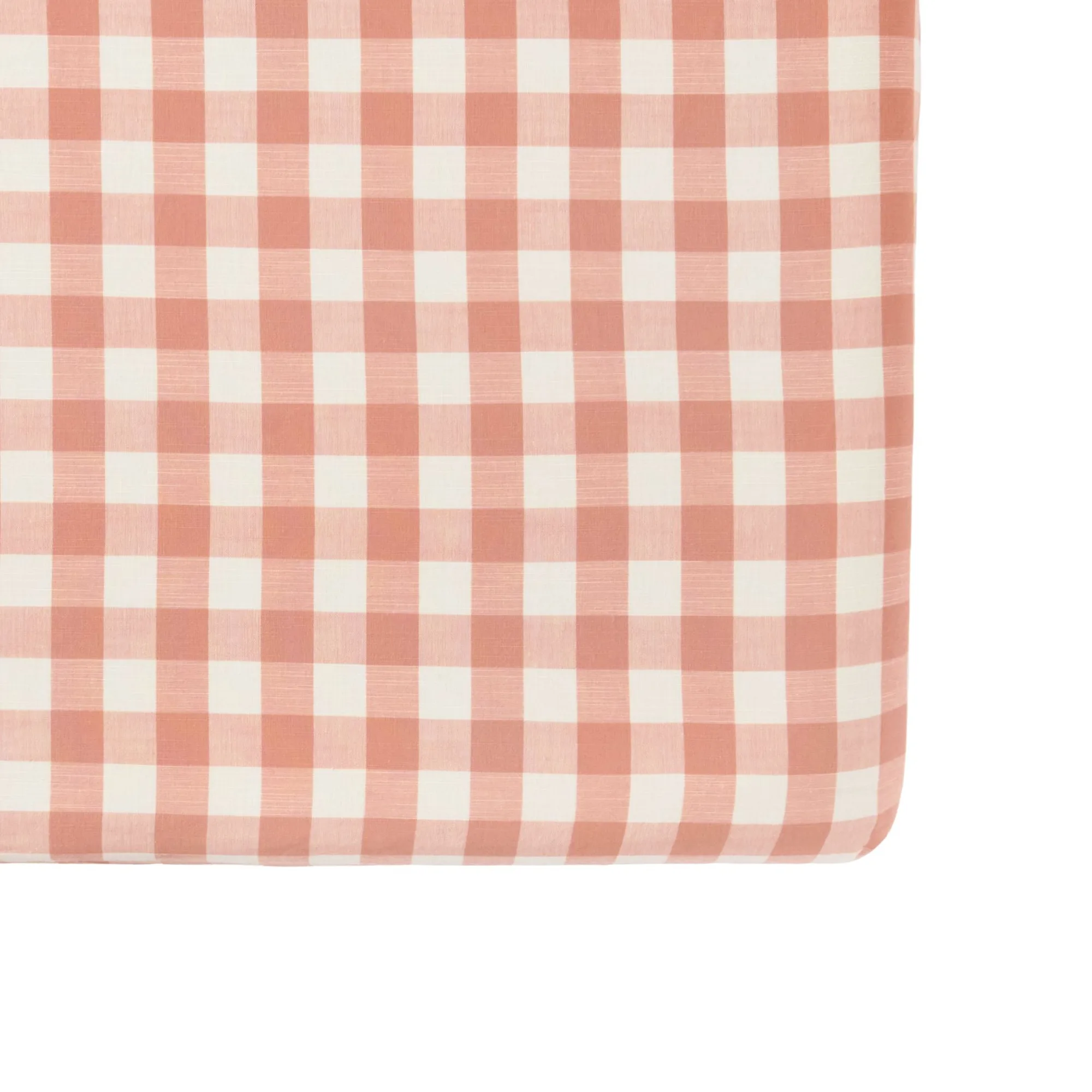
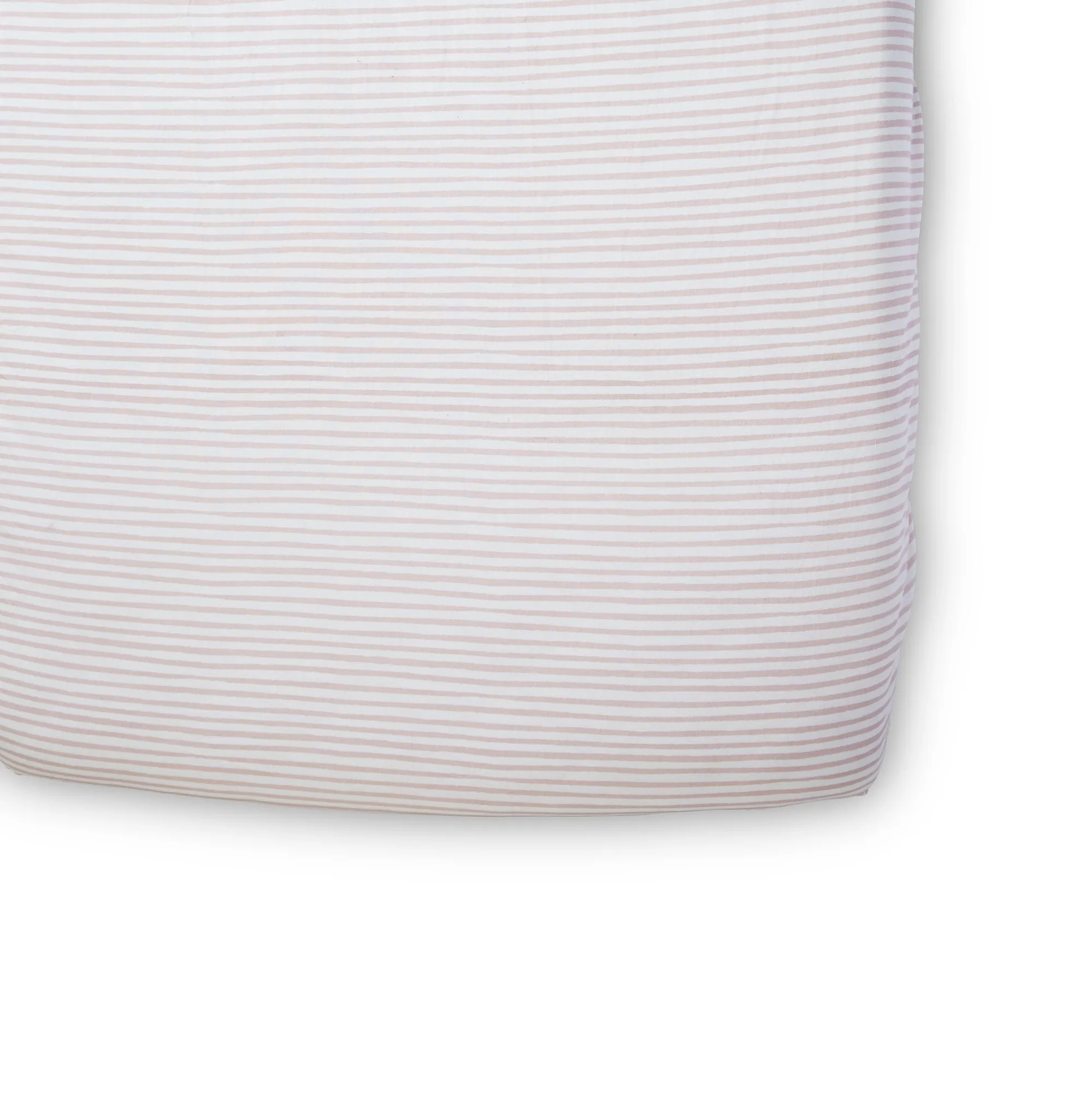
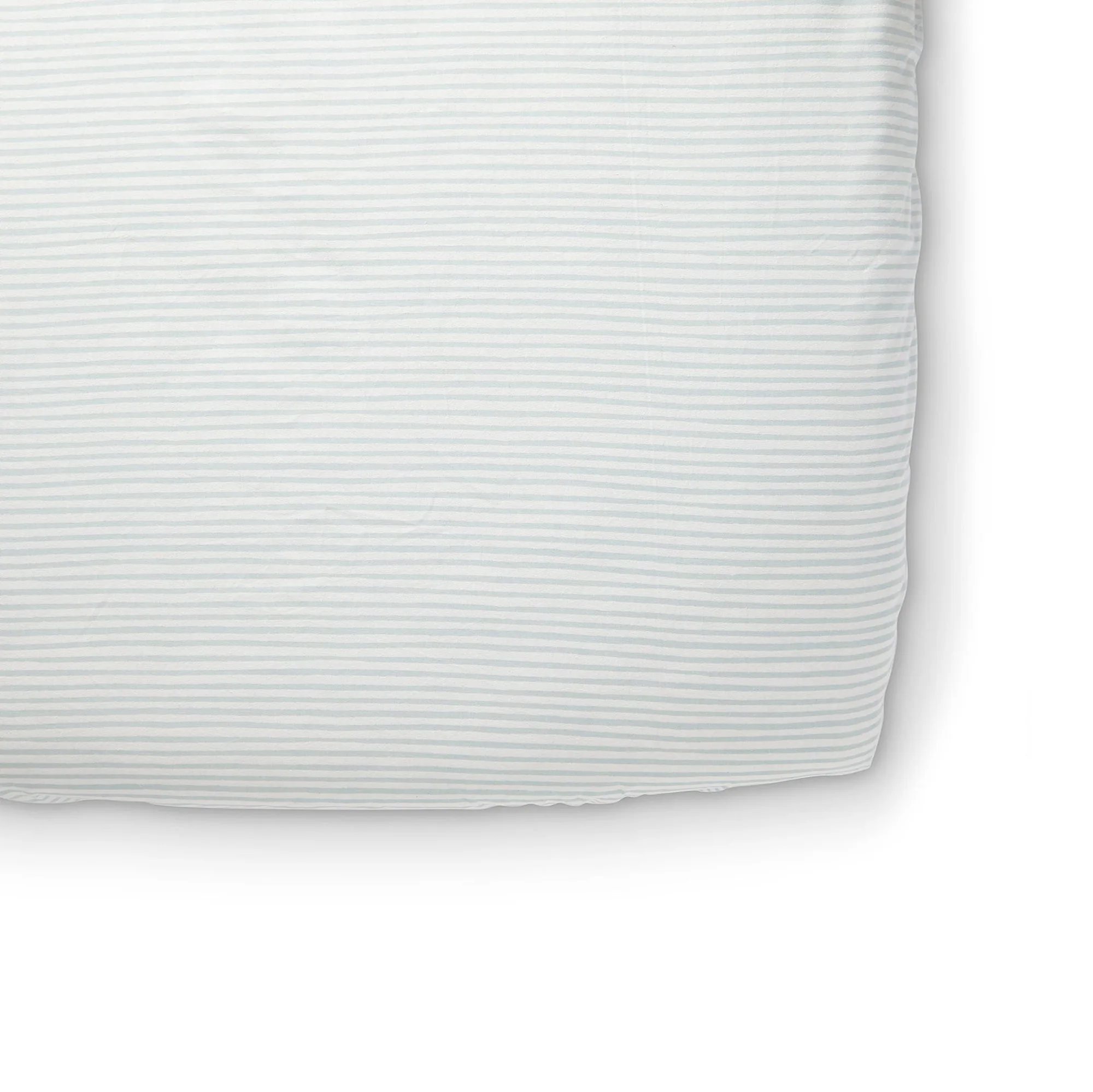
A properly fitted sheet hugs the mattress on all four sides with no gaps, folds, or excess material you can pinch. The corners should stay put when you lift the mattress edge, and the elastic should pull the fabric underneath, not across the sleep surface. If you can gather a handful of loose sheet on top, it is too big.
- Measure the mattress length, width, and depth before buying any sheet.
- Check that the sheet's labeled size matches those measurements exactly.
- After making the bed, run your hand across the surface to feel for wrinkles or loose fabric.
What to check before you buy
Crib and bassinet sheets are often sold by mattress size rather than by the word 'crib' or 'bassinet' alone. Look for the specific dimensions on the packaging or product page. If a listing only says 'universal' or 'standard' without numbers, treat that as a missing specification and look for a sheet that states its size. The same caution applies to mattress depth: a deep mattress needs a sheet with enough stretch to wrap fully underneath.
Trade-offs when choosing between crib and bassinet sheets
- Crib sheet: longer use, larger footprint: A crib sheet fits a full-size crib mattress and lasts through the toddler years, but it will not fit a bassinet pad and takes more storage space. Choose crib sheets if your baby is already in a crib or will transition soon.
- Bassinet sheet: compact fit, short lifespan: A bassinet sheet is sized for a small bassinet mattress and stays snug only on that pad. It becomes useless once your baby moves to a crib. Buy only as many bassinet sheets as you need for the newborn stage.
- Fitted corners: security vs. ease of changing: Deep elastic corners hold the sheet tightly and reduce loose fabric, but they can be harder to pull on and off during middle-of-the-night changes. Prioritize a secure fit over speed; a loose sheet is never worth the convenience.
Pehr products that support a safe sleep setup
- Ribbed Baby Footless Sleeper - Rush Hour Mist: Ribbed Baby Footless Sleeper - Rush Hour Mist is made from GOTS certified organic cotton in a soft, stretchy rib knit with a full-length zipper. A footless sleeper keeps a baby warm without loose blankets in the crib, and the zipper makes nighttime changes faster.
- Ribbed Tights with Grips - Natural: Ribbed Tights with Grips - Natural are made from soft, ribbed organic cotton with bottom grips and a snug, stay-put waistband. For cooler rooms, tights under a sleeper add warmth without adding loose bedding to the crib.
- Pom Pom Hamper - Blush: Pom Pom Hamper - Blush is made from durable 100% cotton canvas with a wipeable base and a metal top ring. A hamper keeps spare sheets and sleep sacks off the floor and out of the crib, which helps you avoid loose items near the sleep space.
Which sheet is right for your sleep space?
Best for
- Parents using a full-size crib mattress who want a sheet that will last through the toddler years
- Caregivers who need a sheet that stays tight on a standard crib mattress with no loose fabric
Not for
- Bassinets, cradles, or mini-cribs that use a smaller mattress size
- Anyone who has not measured their mattress and is guessing at the size