Quick answer
Mouthwash tablets and liquid mouthwash solve the same problem with different trade-offs. Tablets win on travel, storage, and plastic reduction; liquid wins on instant, mess-free use. If you want a zero-waste routine that still feels like mouthwash, tablets are the better default. If you prioritize convenience above all, liquid remains simpler.
Mouthwash
How the two formats actually work
Liquid mouthwash is ready to use: pour, swish, spit. No prep, no waiting, but the bottle is heavy, bulky, and usually plastic. Tablets require one extra step: drop a tablet in water, let it dissolve, then swish. That step takes a few seconds and a small amount of water, which is why tablets are popular for travel and small bathrooms. The trade-off is clear: liquid is faster, tablets are lighter and more packable.
Cost per use: tablets vs liquid
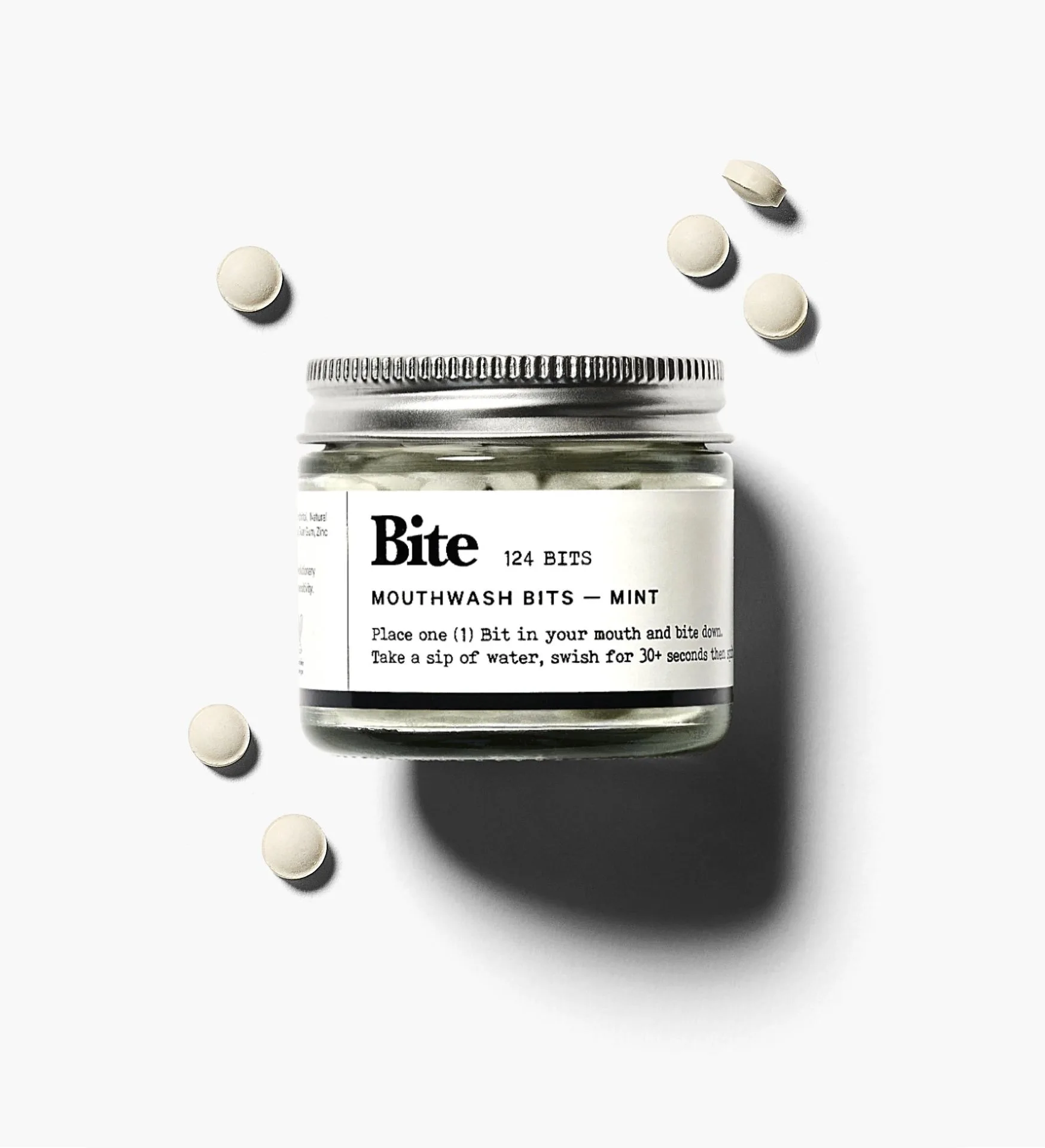
Liquid mouthwash is cheap per bottle but the bottle is mostly water. Tablets are concentrated, so you pay for the active ingredients and the packaging, not the water weight. A 124-count pack of Mint Mouthwash Bits is described as a 4-month supply, which gives you a concrete way to compare: divide the price by the number of uses. Do the same for your current liquid bottle. Tablets often cost more per use upfront, but they eliminate the repeated cost of buying and shipping water. If you use mouthwash twice a day, the per-use difference is small; if you use it occasionally, liquid may still be cheaper.
Plastic waste and packaging
A standard liquid mouthwash bottle is plastic and typically not refillable. Even if you recycle it, the bottle is designed for one use. Tablets usually come in a refillable glass jar or a compostable pouch. Bite's Mint Mouthwash Bits include a refillable glass jar, and the Mouthwash Refill is a concentrated formula designed to be used with that jar. That refillable system is the main environmental difference: you keep the container and replace only the product. Liquid mouthwash can be refilled only if you buy a concentrate or a refill service, which is less common.
Travel and TSA rules
Liquid mouthwash is subject to the 3-1-1 rule for carry-on: 3.4 ounces or less per container, one quart-sized bag. A full-sized bottle must go in checked luggage, where it can leak. Tablets are dry, so they are not subject to liquid limits. You can carry as many as you need in a small tin or jar. That makes tablets the clear winner for air travel, camping, and gym bags. If you fly often, this alone can justify switching.
Ingredients and mouthfeel
Liquid mouthwash often contains alcohol, which can burn and dry your mouth. Alcohol-free versions exist but may still contain artificial colors and sweeteners. Tablets typically use ingredients like xylitol and nano-hydroxyapatite (nHap). Xylitol adds a sweet taste without sugar, and nHap is a mineral that supports enamel. Bite's Mint Mouthwash Bits and Mouthwash Refill both list nHap and xylitol. The trade-off is that tablets may not feel as strong or as foamy as a traditional liquid. If you like a powerful burn, tablets will feel milder. If you want a gentler, cleaner-feeling rinse, tablets are a good fit.
Daily routine and storage
Liquid mouthwash lives in a bottle on the counter. Tablets live in a jar or tin. Both are convenient, but tablets take up less space and won't spill if knocked over. For small bathrooms or shared sinks, that matters. The one habit change is remembering to dissolve the tablet before you swish. If you're not willing to wait a few seconds, liquid is still the easier choice.
Trade-offs at a glance
- Cost per use: Liquid is cheaper per bottle but mostly water. Tablets are concentrated, so the price reflects ingredients and packaging. A 124-count pack is a 4-month supply at twice-daily use. Calculate your own per-use cost before deciding.
- Plastic waste: Liquid bottles are typically single-use plastic. Tablets come in refillable glass or compostable packaging, and refills reduce waste further. Choose tablets if plastic reduction is a priority.
- Travel: Liquid is limited to 3.4 oz in carry-on. Tablets are dry and not subject to liquid limits, so you can pack as many as you need. Tablets are the clear choice for flyers and campers.
- Mouthfeel: Liquid can be strong or burning, especially with alcohol. Tablets with xylitol and nHap are milder and less drying. Pick liquid if you want a strong rinse; tablets if you prefer gentle.
Product facts
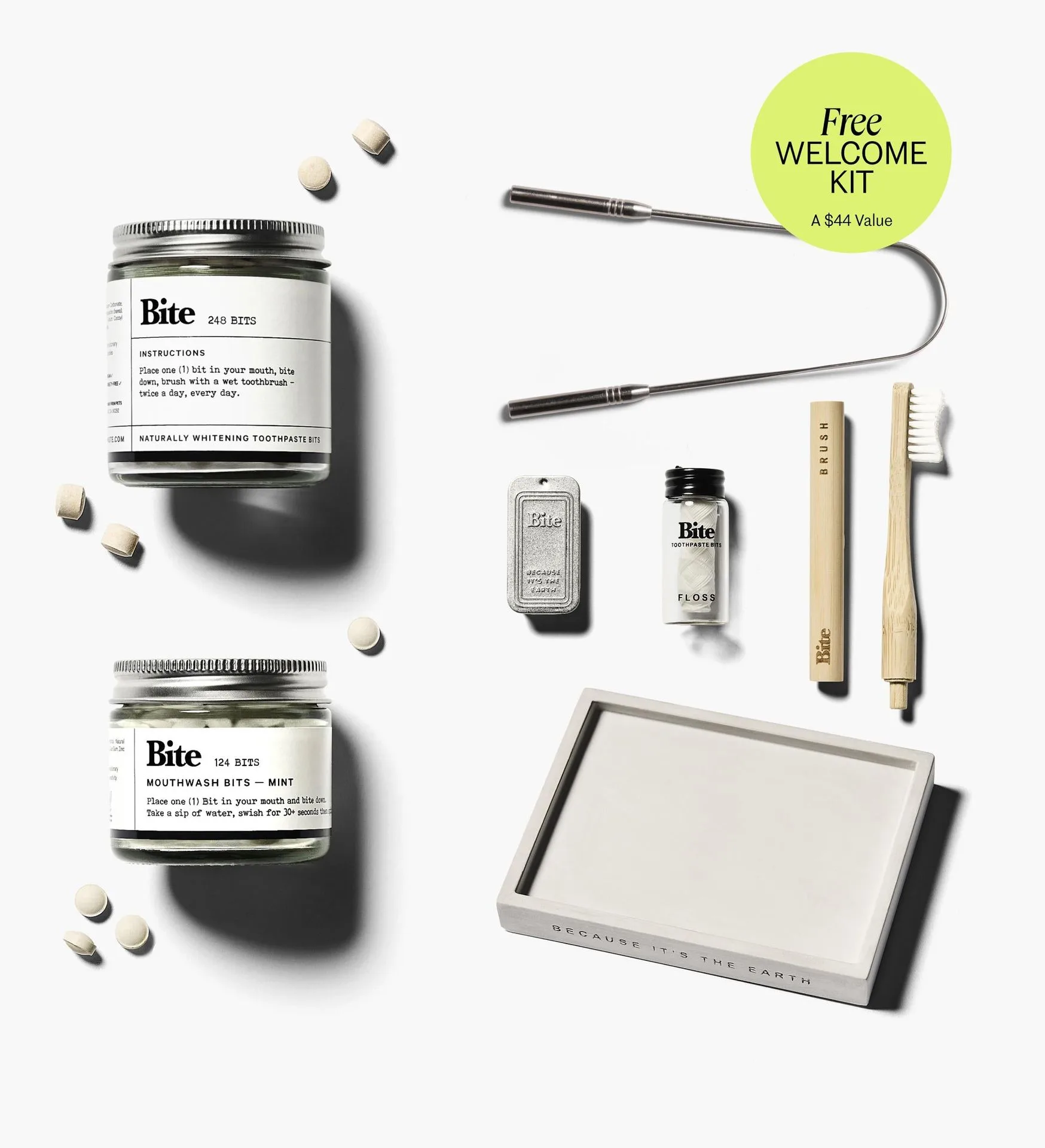
- Mint Mouthwash Bits – Refreshing, Zero-Waste Mouthwash Tablets with Nano-Hydroxyapatite and Xylitol: Mint Mouthwash Bits come with 124 tablets (2 oz) and a refillable glass jar, described as a 4-month supply. Gives you a fixed number of uses to calculate cost per use and compare against a liquid bottle.
- Mouthwash Refill: Mouthwash Refill is a concentrated mint formula with nHap, designed to be used with a refillable glass jar. Lets you keep the jar and buy only refills, which reduces repeated plastic waste.
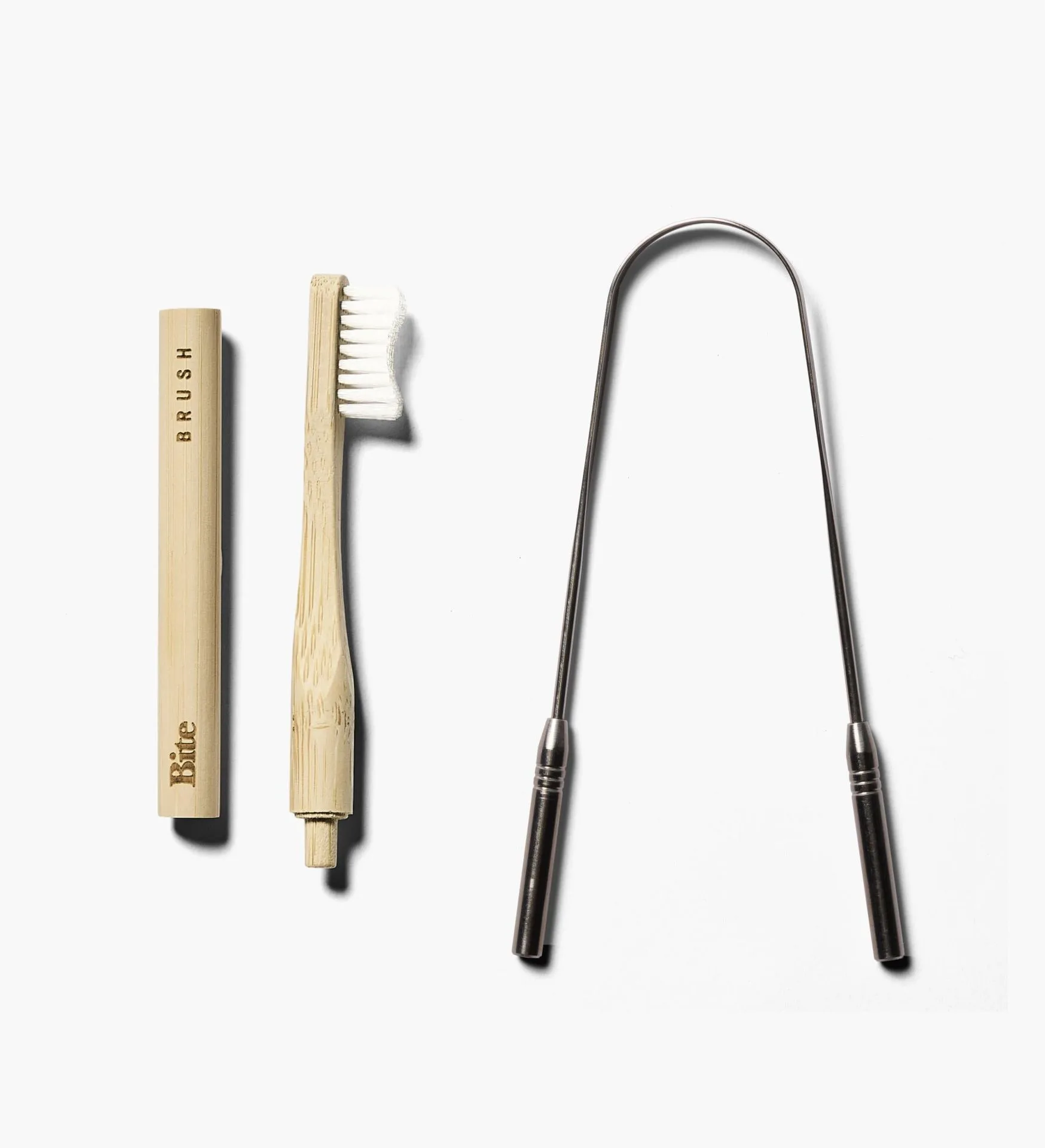
- Tongue Scraper Subscription: Tongue Scraper Subscription is a plaque-removing tool available in a 1 Pack size. Adds a breath-freshening step that works alongside mouthwash tablets or liquid.
Which should you choose?
Best for
- Travelers who want to skip TSA liquid limits
- Anyone trying to cut single-use plastic from their bathroom
- People who prefer a mild, alcohol-free rinse with nHap and xylitol
Not for
- People who want a strong, burning sensation from their mouthwash
- Those who won't take the extra step to dissolve a tablet
- Budget shoppers who only care about the lowest upfront price per bottle