Quick answer
Take d-mannose capsules at the first sign of urinary discomfort, ideally on an empty stomach with a full glass of water. For daily prevention, a single 1,000 mg serving in the morning works well. Always follow the label directions and drink plenty of water throughout the day.
How D-Mannose Supports Urinary Tract Health
D-mannose is a simple sugar that occurs naturally in fruits like cranberries. Unlike regular sugar, your body does not metabolize it for energy. Instead, it passes largely unchanged into the urine, where it can bind to certain bacteria and help flush them out before they attach to the bladder wall. This makes it a targeted option for urinary tract health, especially for those who experience recurrent discomfort.
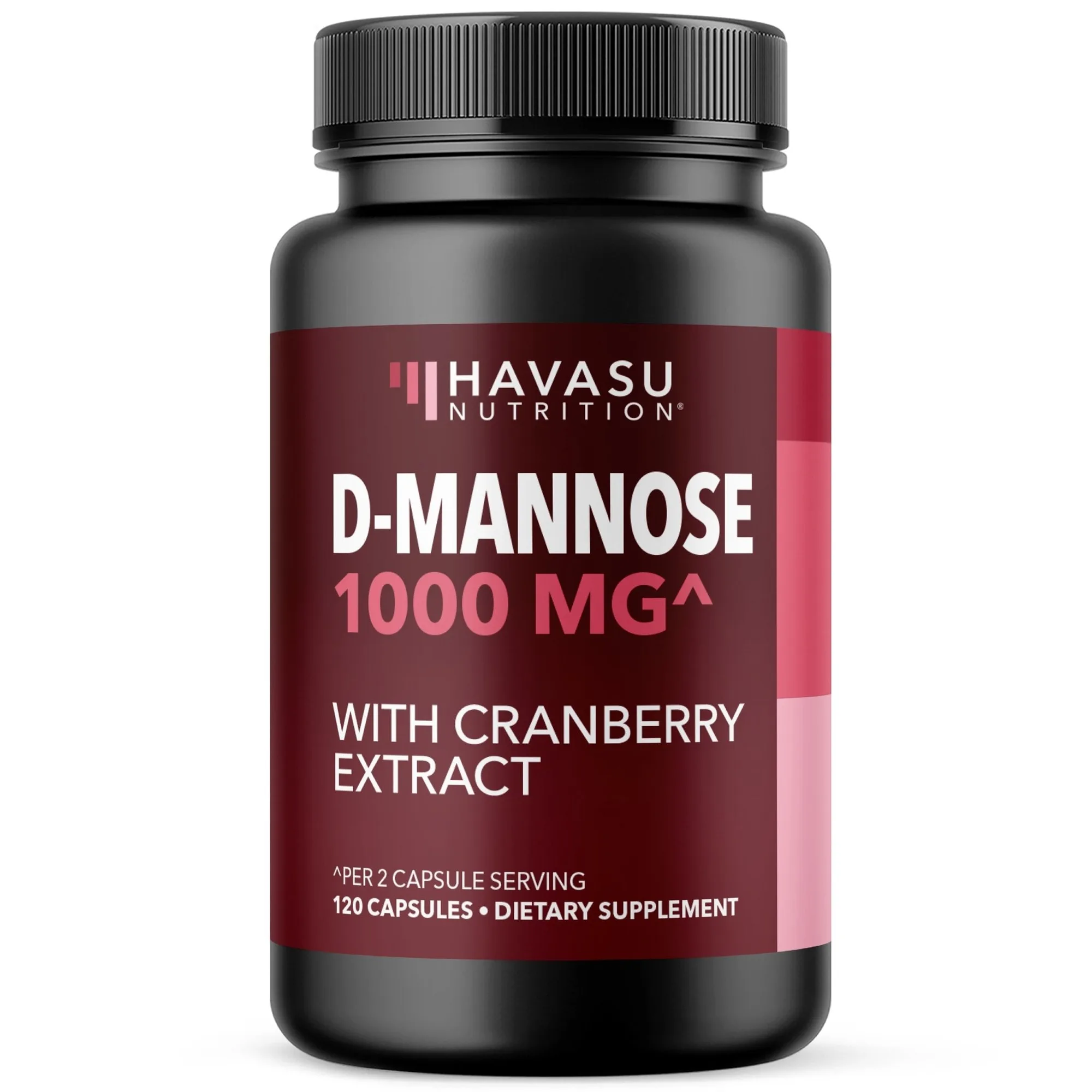
Many people turn to d-mannose as a cranberry alternative because it delivers a higher concentration of the active compound thought to support urinary function. A typical d-mannose capsule provides 1,000 mg per serving, often combined with cranberry extract for added support. The Havasu Nutrition D-Mannose Capsules, for example, include 200 mg of cranberry 4:1 extract per serving to complement the d-mannose.
When to Take D-Mannose Capsules for Best Results
Timing matters for d-mannose because it works locally in the urinary tract. Taking it on an empty stomach—about 30 minutes before a meal or two hours after—helps maximize absorption and ensures the compound reaches the bladder quickly. Pair it with a full glass of water to support flushing.
For acute symptoms, some users take 1,000 mg every three to four hours for the first day, then reduce to a maintenance dose. For daily prevention, a single morning serving is usually sufficient. Always check the label for the specific d-mannose dosage recommended by the manufacturer, as products vary. The Havasu Nutrition D-Mannose Capsules suggest two capsules per serving, delivering 1,000 mg of d-mannose plus cranberry extract.
What to Expect and When to See a Doctor
D-mannose is generally well-tolerated, but it is not a substitute for medical treatment. If you experience severe pain, fever, blood in urine, or symptoms that persist beyond 48 hours, consult a healthcare provider. D-mannose works best for mild, uncomplicated urinary discomfort and may not be effective against all types of bacteria.
For those with diabetes, it is worth noting that d-mannose is a sugar, though it does not spike blood glucose the same way as table sugar. Still, monitor your levels if you have concerns. Pregnant or nursing women should also check with their doctor before starting any new supplement.
Symptom check: Is d-mannose right for you?
- Symptom: Mild urinary discomfort, frequent urge to urinate, or a sensation of pressure in the lower abdomen. D-mannose may help if symptoms are mild and recent.
- Likely cause: Bacteria (often E. coli) adhering to the bladder lining. D-mannose binds to these bacteria and helps flush them out. Works best when taken at the first sign of discomfort.
- Corrective action: Take 1,000 mg of d-mannose on an empty stomach with a full glass of water. Repeat every 3–4 hours for the first day if needed. Increase water intake. Most people notice improvement within 24–48 hours.
- Stop or choose another option: If symptoms worsen, include fever or blood, or persist beyond 48 hours, stop taking d-mannose and consult a doctor immediately. D-mannose is not a replacement for antibiotics in confirmed infections.
Product spotlight
- D-Mannose Capsules, 120ct: Each 2-capsule serving delivers 1,000 mg of d-mannose and 200 mg of cranberry 4:1 extract, formulated to help support urinary tract health and bladder comfort. This dual-action blend provides both the targeted bacterial-flushing benefit of d-mannose and the antioxidant support of cranberry, making it a convenient all-in-one option for urinary tract health.