Quick answer
For most party and family games, a D6 set is the practical choice: everyone reads the same cube, turns move faster, and you rarely need more than a handful. Choose a polyhedral set when your group also plays RPGs or games that call for a d20, d12, or percentile die. If your table mixes both, keep one D6 set for board games and one polyhedral set for roleplaying nights.
Party games and family board games live or die on pace. The dice you hand out shape that pace more than most players expect, because every extra shape adds a moment of hesitation at the table.
This comparison looks at the d6 dice set vs polyhedral question through the lens of casual play: what each type does well, where each one slows a group down, and how to decide without buying dice you will not use. The trade-off is simple: D6 sets win on speed and familiarity, while polyhedral sets win on range and roleplaying utility.
What each set actually contains
A D6 set is built around the six-sided cube. That is the die most people learned first, and it is the only shape many party games require. If a game asks you to roll two dice and move, a D6 set covers it without anyone hunting for the right shape.
A polyhedral set covers the full spread used in RPGs. Dispel's 7-piece sets include one D4, D6, D8, D10, D%, D12, and D20, so the same pouch handles a board game night and a campaign session. The trade-off is that casual players only reach for one or two of those shapes, leaving the rest as table clutter unless you also play roleplaying games.
- Count the shapes your group actually rolls before buying a full polyhedral set.
- A 7-piece set is a good baseline if you play both board games and RPGs.
Speed and readability at the table
Party games reward fast turns. A cube with large, high-contrast numbers is read at a glance, which matters when six people are waiting on one roll. Polyhedral dice can be just as readable, but the shapes themselves add a beat of decision-making for players who do not use them often.
Sharp-edged construction is one detail worth knowing. Dispel's polyhedral sets use sharp edges, which the catalog notes allow for more randomized rolls compared to traditional rounded-edge dice. That is a real benefit for RPGs and any game where fair randomization matters, but it is not a reason to replace a perfectly good D6 set for casual play.
- Choose high-contrast numbers for party games played in dim rooms.
- Keep one shared bowl of D6 dice so nobody reaches across the table mid-turn.
When a polyhedral set earns its place
Polyhedral dice become necessary the moment your group tries a roleplaying game or a board game with variable damage, percentile checks, or odd-shaped dice. A d20 handles attack rolls, a d% handles percentile tables, and the smaller shapes cover everything between. Buying one 7-piece set is usually cheaper than assembling shapes one at a time.
The catch is that a polyhedral set is only worth it if those shapes get used. If your group plays party games almost exclusively, a full set spends most of its life in the bag. That is not a flaw in the dice; it is a mismatch between the set and the games on your shelf.
- Buy a polyhedral set when at least one regular game needs a d20 or d%.
- If you only need d6s, buy a D6 set and skip the extra shapes.
Mixing both at one table
Many households do not choose one or the other. They keep a D6 set for board game night and a polyhedral set for the campaign that runs on weekends. Separating them by pouch or tray prevents the mid-game scramble when someone needs a d8 and finds only cubes.
If you want a single set that covers the widest range, a 7-piece polyhedral set is the safer buy because it includes a D6 alongside the other shapes. If you want the fastest possible party game setup, a dedicated D6 set still wins on simplicity.
- Label or color-code pouches so the right set reaches the table.
- A polyhedral set already includes a D6, so it can cover light board games in a pinch.
Trade-offs to weigh before you buy
- Speed vs range: A D6 set is faster to read and hand out, but it cannot cover games that call for a d20, d12, or percentile die. Pick speed if your shelf is mostly party and family games.
- Familiarity vs flexibility: New players already know a cube, so D6 sets lower the learning curve; polyhedral sets ask players to learn which shape does what. Pick familiarity for mixed-age groups and first-time players.
- Cost per useful die: A 7-piece polyhedral set includes a D6 plus six shapes you may not use in casual games, while a D6 set spends its full cost on the die you actually roll. Pick the set that matches the games you play most, not the one with the most pieces.
Catalog facts that matter for this choice
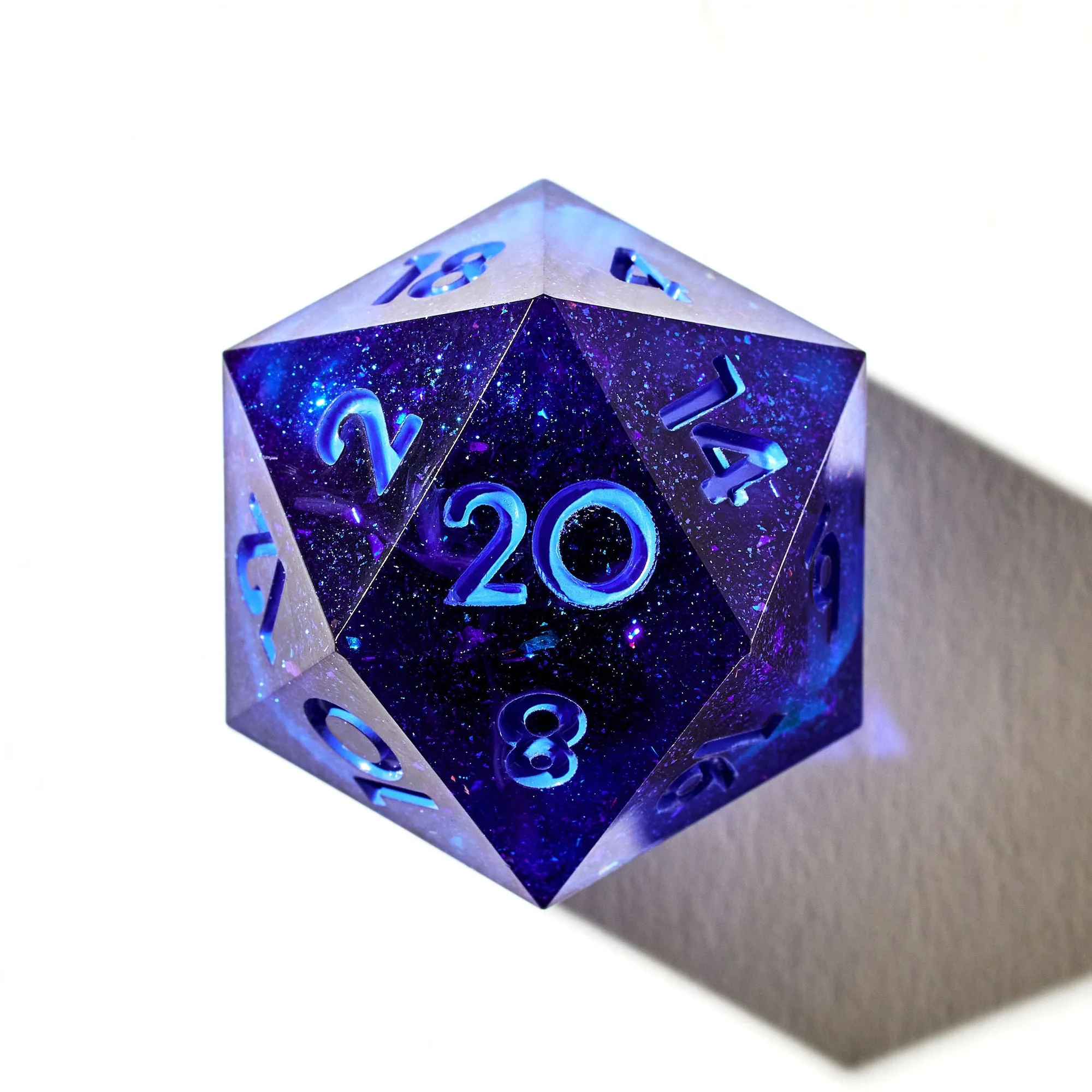
- Deep Blue Sea 7-Piece Polyhedral Set: Each 7-piece set includes one D4, D6, D8, D10, D%, D12, and D20, with sharp-edged construction for more randomized rolls compared to traditional rounded-edge dice. This is the broadest single purchase for a mixed group, because the included D6 covers simple board games while the other shapes cover RPGs.
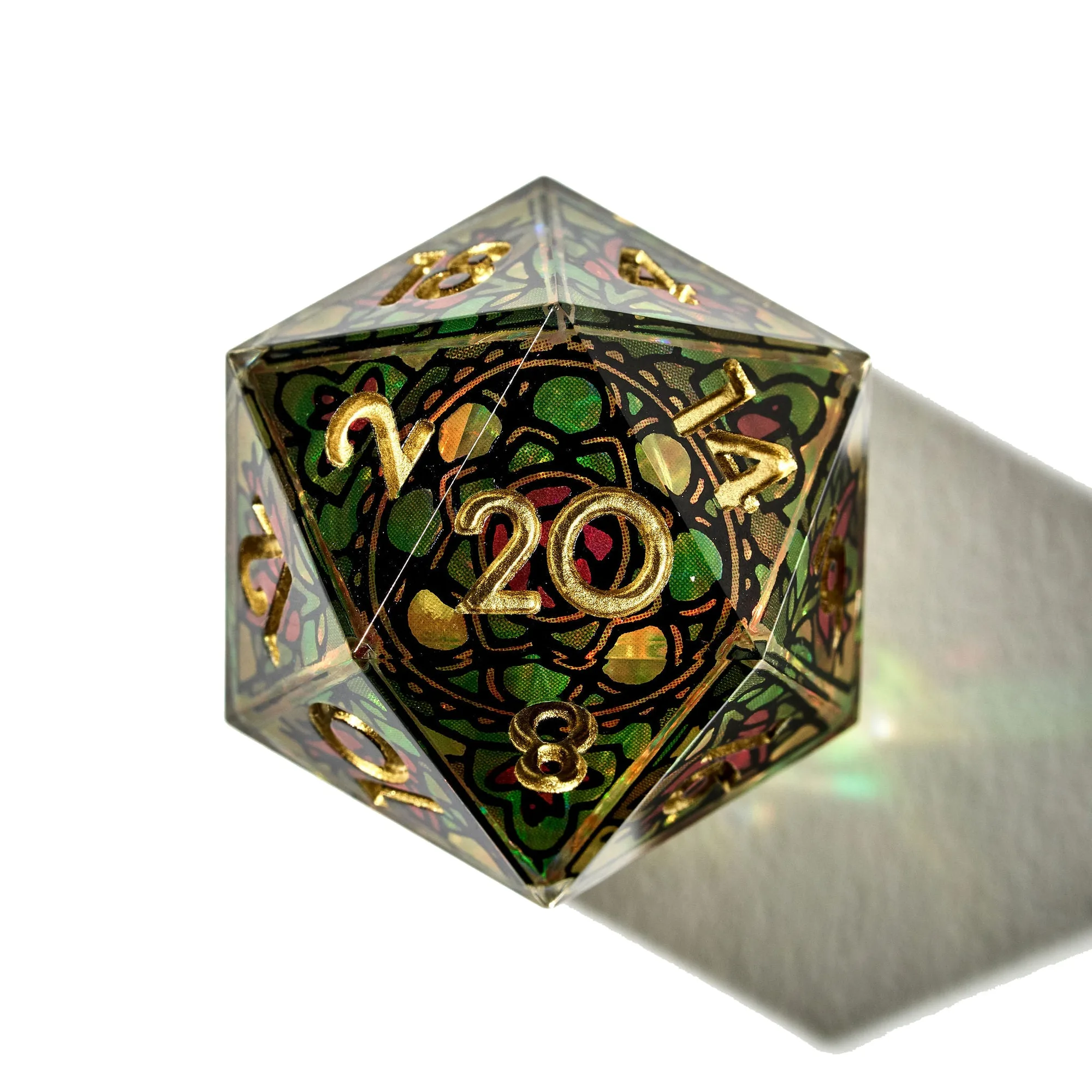
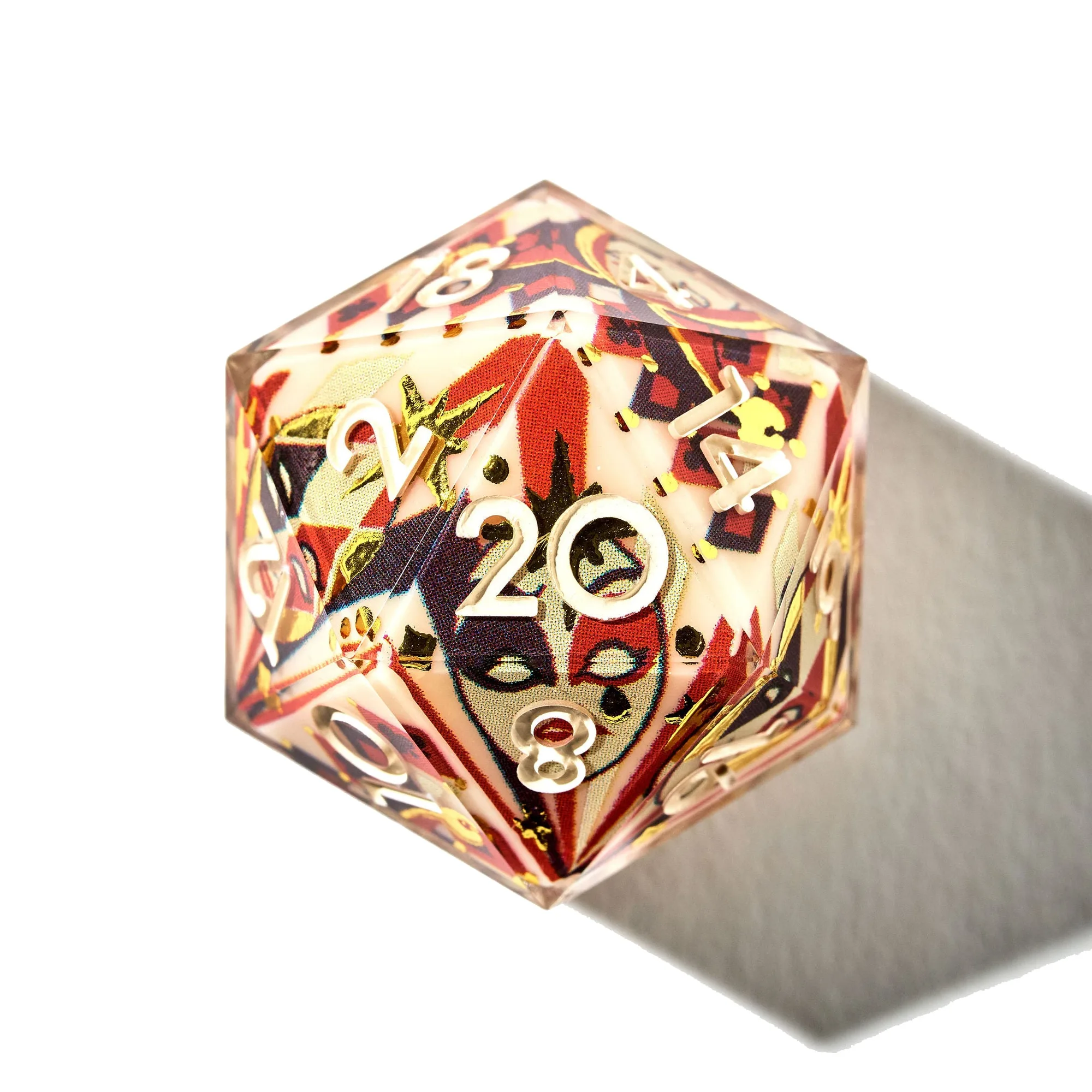
- Harlequin 7-Piece Iconic Dice Set: Each 7-piece set includes one D4, D6, D8, D10, D%, D12, and D20, with gold foil and vintage illustrations on an ivory core with matching matte numbers. Readable matte numbers and a full shape spread make it a reasonable pick if you want one set that works for both party games and roleplaying sessions.
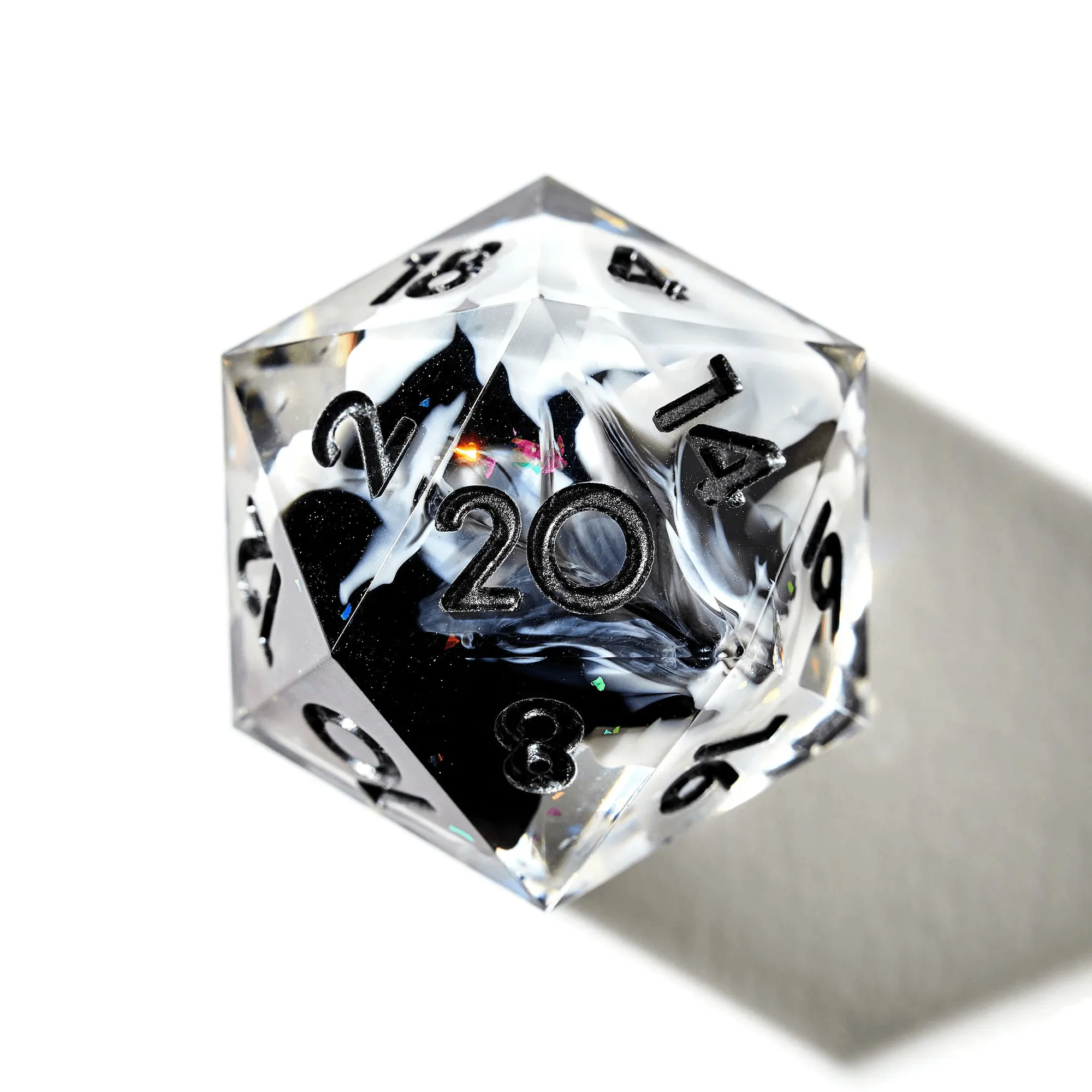
- Alien Worlds 7-Piece Terraform Dice Set: Each 7-piece set includes one D4, D6, D8, D10, D%, D12, and D20, with a clear resin shell encasing a white landscape and black-inked numbers. The black-inked numbers on a lighter core support quick reading, which helps when turns need to move fast.
Which set fits your table
Best for
- Party and family game groups that mostly roll six-sided dice
- Tables that want fast turns and minimal rules overhead
- Hosts buying a shared set that new players can read at a glance
Not for
- Groups that regularly play RPGs needing a d20, d12, or d%
- Players who want one purchase to cover both board games and campaigns
- Tables where variable damage or percentile checks are part of the rules
Buy a D6 set if your table runs on party and family games, and buy a 7-piece polyhedral set if roleplaying games share the same shelf. The D6 set wins on speed and familiarity; the polyhedral set wins on range. If your group does both, keep one of each and separate them by pouch so the right dice reach the table.