Start with the Canvas in Front of You
The Dali Bobble needlepoint canvas from August Design Works is a hand-painted 18 mesh design that measures 2" × 5" on a 6" × 9" canvas. It celebrates the surrealist genius of Salvador Dalí, whose dreamlike imagery—melting clocks, barren landscapes, and an unmistakable mustache—demands a thoughtful thread palette. Before you pull colors, examine the painted canvas closely. The hand-painted guide tells you exactly where the artist placed each tone, and your job is to translate that into stitches that echo Dalí's bold, unsettling world.
Canvas Specifications at a Glance
-
Dalí Bobble - Needlepoint Canvas: Dimensions: 2” × 5” design (6” x 9” canvas) on 18 mesh The small design area means you have about 10 square inches to capture Dalí's iconic features. 18 mesh is a fine gauge, so you'll use one or two strands of thread for detail work.
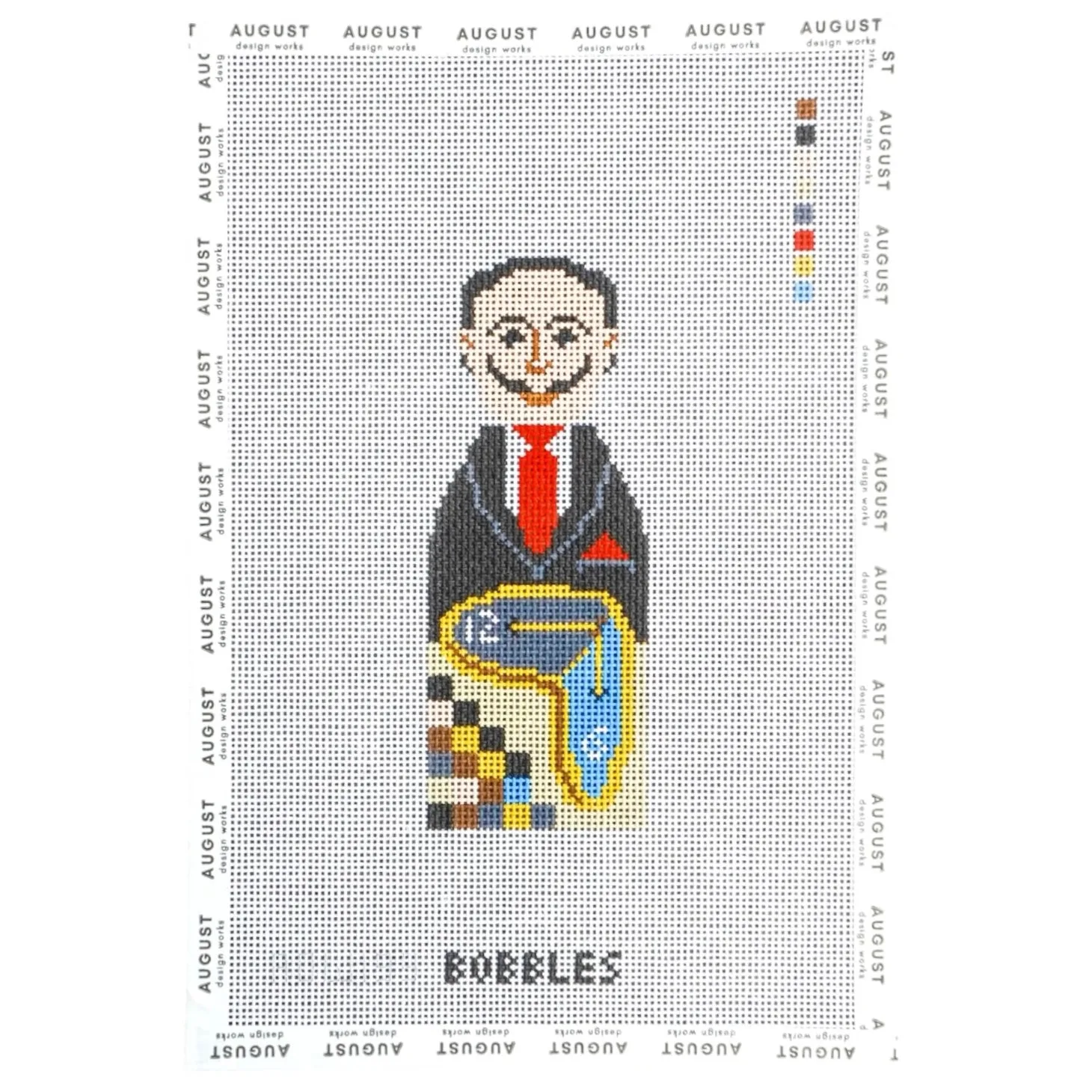
Dalí Bobble - Needlepoint Canvas
-
Dalí Bobble - Needlepoint Canvas: Our Bobbles™ Series celebrate iconic figures with hand-painted needlepoint canvases designed to be stitched, displayed, and collected - each one a little work of art. The hand-painted guide is your color map. Trust its placement for surrealist effects like the melting clocks and the signature mustache.
Plan Your Thread Palette for Surrealist Details
Dalí's surrealist style uses unexpected color contrasts and dreamlike shadows. For the Dali Bobble, think about three visual zones: the face and mustache, the melting clocks, and the barren background. The face likely uses warm flesh tones with sharp highlights on the mustache tips. The melting clocks call for metallic or high-contrast threads—try a pale gold or silver for the clock faces and deep blue or purple for the shadows. The background may be a muted earth tone or a surreal sky; use a single strand to keep the focus on Dalí's features.
Because the canvas is 18 mesh, you have fine control. Use one strand of silk or cotton floss for the mustache and clock details, and two strands for larger areas like the background. The hand-painted guide will show you where the original artist placed the darkest darks and lightest lights—follow those cues to create depth.
A Practical Stitching Order for the Dali Bobble
This sequence helps you build the portrait from the inside out, keeping the surrealist details crisp.
- Stitch the face and mustache first: Start with the skin tones and the iconic mustache. The mustache is the focal point—use a single strand of a dark brown or black for the hair, and a pale cream for the highlights. This establishes Dalí's recognizable expression.
- Add the melting clocks and surreal elements: Next, stitch the clocks and any dreamlike shapes. Use a metallic thread or a high-contrast color (like bright yellow or silver) for the clock faces. The melting effect comes from soft, curved stitches—avoid hard lines.
- Fill in the background: Finally, stitch the background. Use a muted tone that doesn't compete with the portrait. A single strand of a warm gray or pale blue works well. The background sets the surrealist mood without overwhelming the details.
Finishing Ideas for Your Dali Bobble
The supplied information suggests several finishing options: stand-up display piece, ornament, or framed. Given the small 2" × 5" design, a stand-up display or a small frame would let the surrealist details shine. A deep frame with a mat could echo the barren landscapes in Dalí's paintings. If you choose an ornament, consider a metallic cord to match the clock threads.
What the Supplied Information Does Not Tell You
The catalog does not specify thread types, recommended brands, or exact color numbers. The hand-painted guide is your best reference, but you may need to experiment with thread weights. For 18 mesh, a single strand of #5 perle cotton or two strands of stranded cotton floss are common choices. The finishing instructions are general—your local framer or needlepoint shop can advise on the best mounting for a stand-up or frame.