Quick answer
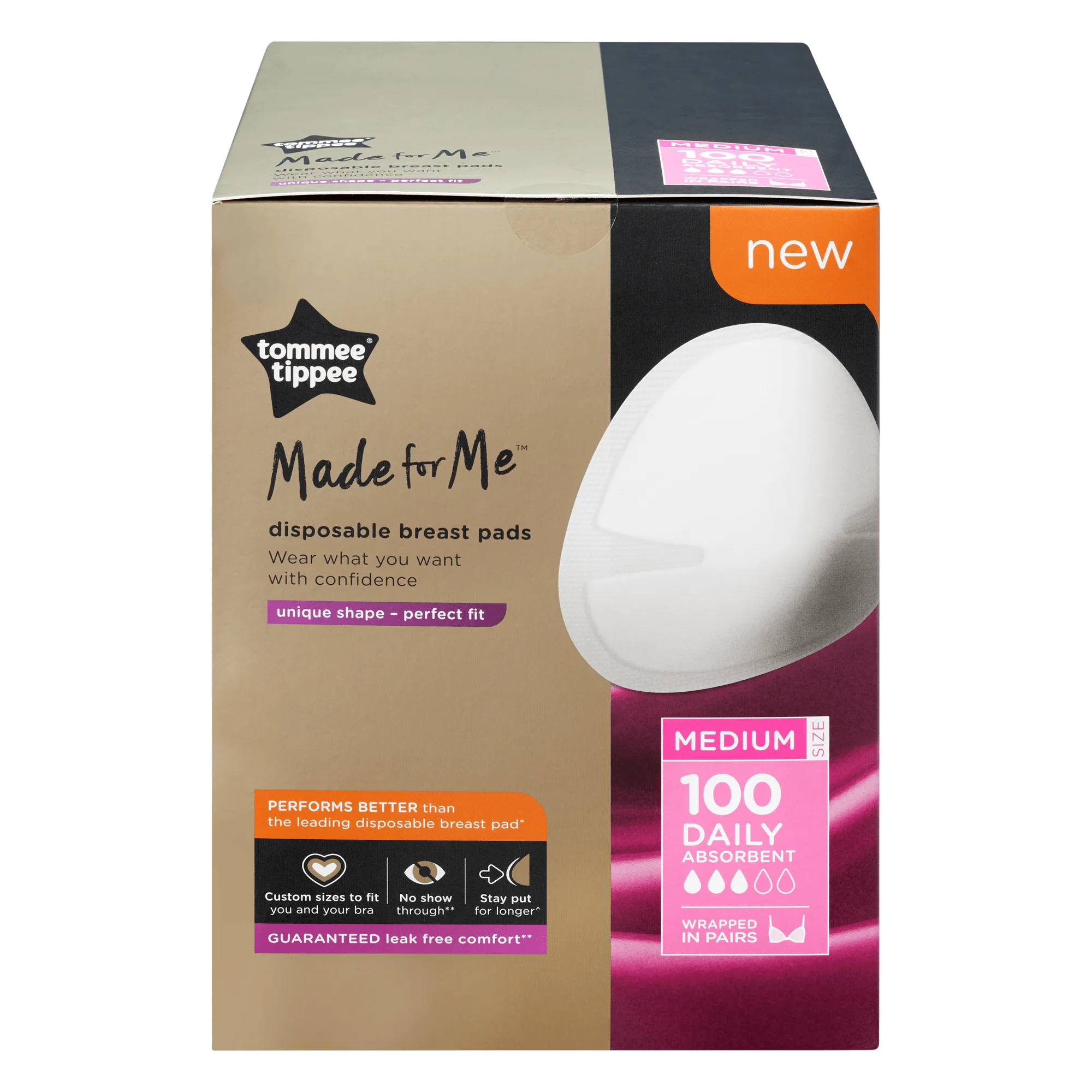
Choose disposable pads when you want the simplest leak protection with no laundry, especially in the early weeks or on workdays. Choose reusable pads when you prefer fewer repeat purchases and don't mind washing them. Many parents keep both: disposables in the diaper bag and at work, reusables at home. If you want a tested disposable option, Tommee Tippee Disposable Breast Pads are designed for absorbency and a comfortable fit.
How absorbency and fit differ between the two types
Absorbency depends on the materials and how well the pad sits against your breast, not just on the disposable-versus-reusable label. Disposable pads often use multiple layers to pull moisture away, while reusable pads rely on fabric layers that you wash and reuse. Either type can leak if it shifts, bunches, or doesn't cover your nipple and areola fully.
Fit matters more than most parents expect. A pad that's too small can slide off the nipple; one that's too large can crease and create gaps. Look for a pad that lies flat inside your bra without folding, and check it after a let-down or a pumping session to see whether it stayed in place. If you use a wearable pump, a bulky pad can interfere with the cup seal, so a thinner pad may be more comfortable during those sessions.
Cost, laundry, and daily logistics
Disposable pads are a repeat purchase: you use them once and throw them away. That means no washing, no drying, and no remembering to pack clean ones, but it also means ongoing cost and more waste. Reusable pads cost more upfront per pad, but you wash and reuse them, so the cost per use drops over time. The trade-off is laundry: you need enough pairs to rotate while others are in the wash, and you need to wash them before milk residue or bacteria build up.
For many parents, the decision comes down to how often you're away from home. If you're pumping at work or traveling, disposables are easier to carry and discard. If you're mostly at home and already doing regular laundry, reusables can fit smoothly into that routine. A hybrid approach—disposables for outings and reusables for home days—often gives you the best of both without committing to one system.
When to replace or rotate your pads
Disposable pads should be changed as soon as they feel damp, because a wet pad against skin can cause irritation and doesn't protect against leaks once saturated. Reusable pads need to be changed on the same principle—when damp—and then washed. Keep enough pairs so you're never reusing a damp pad. If you notice persistent leaking even with frequent changes, check your pad placement and consider whether your bra is holding the pad firmly against your breast.
For pumping parents, pad choice can also affect how your pump parts fit. If you use flange inserts or replacement breast shields, a thick pad can change the angle of the flange against your breast. Adjust the pad so it doesn't sit under the flange, or switch to a thinner pad during pumping sessions. The goal is a flat, secure fit for both the pad and the pump.
Trade-offs at a glance
- Convenience vs. repeat cost: Disposables win on convenience: use once, toss, no laundry. Reusables win on long-term cost: higher upfront, lower per use. If your priority is time and simplicity, go disposable; if it's budget over months, go reusable.
- Leak protection vs. laundry load: Disposables are designed for absorbency and dryness, but you need a steady supply. Reusables can absorb well too, but only if you wash and rotate them consistently. Keep at least a day's worth of reusables clean so you're never caught without a dry pad.
- Fit with pumping gear: A bulky pad can interfere with how a flange or breast shield sits. A thinner pad or careful placement keeps the seal intact. During pumping, position the pad so it doesn't sit under the flange, or switch to a thinner pad.
Product facts
- Disposable Breast Pads by Tommee Tippee: Super absorbent disposable breast pads designed to fit you and provide extra protection against leaks, giving reassurance of staying dry and comfortable. If you want a no-laundry option with tested absorbency, these are a straightforward pick for workdays, travel, and the early postpartum weeks.
- Flange Inserts – 21mm (2-pack) for Wearable Breast Pump and 24mm Flanges: 21mm flange inserts (2-pack) for wearable breast pumps and 24mm flanges, designed to help moms achieve proper alignment, improved comfort, and optimized milk expression. A better flange fit can reduce friction and support more effective milk removal, which matters if you're pumping and also managing leak protection.
Which should you choose?
Best for
- Parents who want no-laundry leak protection for work, travel, or the early weeks
- Anyone who prefers a tested disposable pad and doesn't want to manage a wash routine
Not for
- Parents who want to minimize repeat purchases and are comfortable with regular laundry
- Anyone who prefers reusable fabric pads and already has a washing routine in place