Quick answer
Yes, ashwagandha gummies can work, but only if the dose is meaningful and you take them consistently. The gummy format itself doesn't make ashwagandha ineffective; a weak or vague label does. Compare the actual ashwagandha amount per gummy to what you'd get from a capsule, then give it several weeks of daily use before deciding.
The format isn't the problem: dose is
Ashwagandha has been used for thousands of years in Ayurvedic tradition and is one of the most studied herbs for supporting balance in the body. None of that changes when the herb is delivered in a chewable format. What changes is how much ashwagandha you actually swallow per serving, and that number is where most gummy skepticism comes from.
A gummy can only hold so much powder before it stops tasting like a gummy. Some brands compensate with a small amount of ashwagandha and a lot of sugar; others use a concentrated extract so a single gummy still carries a meaningful dose. You can't tell which one you're holding from the front of the label. Flip the pack over and find the milligram amount of ashwagandha per gummy, then multiply by how many gummies you'd realistically take per day.
How to read an ashwagandha gummy label
Start with the supplement facts panel, not the marketing copy. Look for the words 'ashwagandha root extract' rather than a generic blend, and check whether the extract is standardized. Standardization tells you the extract was made to a consistent level of the plant's active compounds, which is what makes one bottle behave like the next.
Next, check whether the label names a branded extract. KSM-66® is one example of a full-spectrum ashwagandha extract you'll see called out by name. A named extract isn't automatically better for every person, but it does mean the ingredient has a defined identity rather than being an anonymous powder. If the label says 'proprietary blend' and hides the ashwagandha amount inside a total, treat that as a limitation: you cannot calculate your daily dose from it.
Gummies vs capsules: what actually differs
Capsules usually win on dose density. A single capsule can hold far more ashwagandha than a single gummy, so capsule users often reach a higher daily amount with fewer swallows. Gummies win on adherence, which matters more than people admit. A supplement you look forward to taking every morning is a supplement you'll still be taking in week six.
The practical answer is to pick the format you'll actually finish. If you already take several capsules a day and adding one more is fine, capsules give you more room to adjust dose. If capsules make you gag or you keep skipping them, a gummy with a clearly stated ashwagandha amount is the better choice, even if you need two gummies to get there.
How long until ashwagandha works
Ashwagandha is not a switch. Herbal support like this tends to build gradually, and the honest answer is that you should judge it over weeks of consistent daily use, not days. Taking it sporadically, or only on the days you feel stressed, gives you nothing to evaluate.
Set a simple test before you start. Pick a consistent daily time, take the same amount every day, and note how you feel at the end of each week. If nothing has changed after a fair trial of daily use, that's useful information: the product, the dose, or the format isn't right for you. If you notice a difference, you've confirmed the dose works for your body, which is more valuable than any label claim.
Where gummies genuinely fit
Gummies make the most sense for people juggling work, workouts, or just trying to maintain balance mid-cycle who want the herb to be the easiest part of the day. They need no water, no measuring, and no mixing, which removes the two most common reasons people abandon a supplement: inconvenience and taste.
They make the least sense if you need a large, precisely adjustable ashwagandha dose, or if you're stacking several actives that only come in capsule form. In that case, use capsules for ashwagandha and keep gummies for the nutrients where a chewable format is the whole point.
Myth vs. reality: ashwagandha gummies
- Myth: gummies can't contain a real dose: A gummy holds less powder than a capsule, but a concentrated extract can still deliver a meaningful amount. The label, not the format, decides this. Verdict: partly false. Check the milligrams per gummy before dismissing the format.
- Myth: gummies and capsules are interchangeable at the same count: One capsule and one gummy rarely carry the same ashwagandha amount, so matching them by piece count can leave you under-dosed. Verdict: false. Match total daily milligrams, not the number of pieces.
- Myth: you'll know within a few days: Herbal support builds gradually, so sporadic use gives you nothing to judge. Consistent daily use over weeks is the only fair test. Verdict: false. Set a daily routine and review after several weeks.
- Myth: a named extract guarantees it works for you: A named extract like KSM-66® means the ingredient has a defined identity, but it doesn't guarantee your personal response. Verdict: overstated. Use it as a quality signal, then test it on yourself.
Products that match this guidance
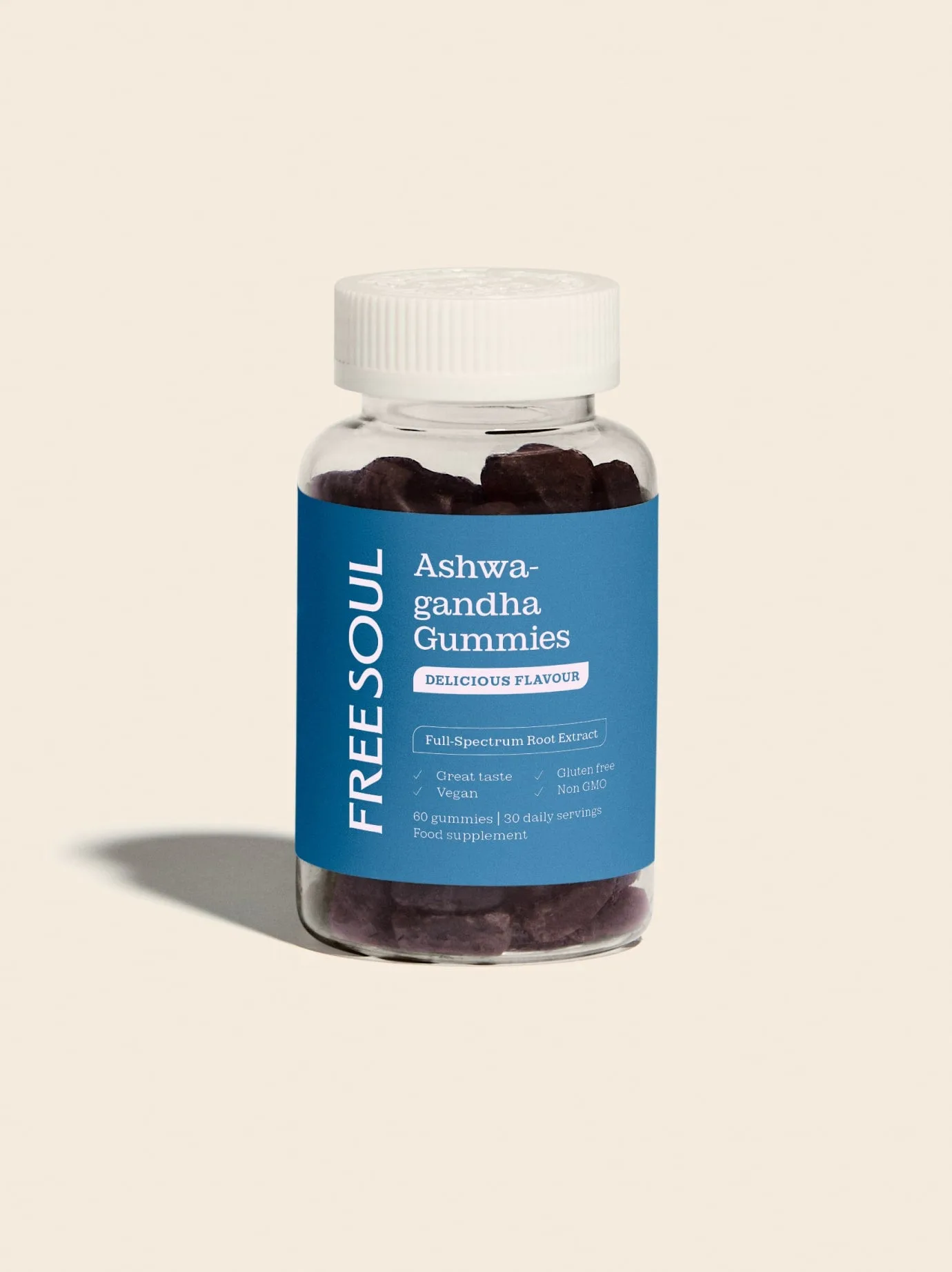
- Ashwagandha Gummies: Ashwagandha gummies delivering high-quality, effective doses in a chewable format, positioned for people juggling work, workouts, or maintaining balance mid-cycle. This is the straightforward gummy option if you want ashwagandha in a daily treat format rather than another capsule.
- Ashwagandha KSM-66® + Lion's Mane: A capsule blend with full-spectrum KSM-66® Ashwagandha, Lion's Mane extract, Zinc and Vitamin B6, formulated for women navigating demanding modern lives and active minds. Choose this if you want a named ashwagandha extract in capsule form, plus zinc and vitamin B6 for cognitive support, instead of a gummy.