Quick answer
Some do, some don't, and the difference usually comes down to specific ingredients and honest expectations rather than clever packaging. Joint supplements and functional treats can support comfort and mobility in dogs with mild stiffness, but they are not a cure for structural problems, and they work best alongside weight control, appropriate exercise, and veterinary guidance.
Why the question is hard to answer in one word
Dogs can't tell us whether their knees feel better, and stiffness often improves on its own with rest or weight loss. That makes personal stories unreliable as proof. The honest position is that certain ingredients have plausible mechanisms and some clinical support, while many products on the market contain token amounts hidden in a long ingredient list. Your job as an owner is to check what is actually in the tub and whether the amount is meaningful, not just whether the front label says 'joint'.
Myth 1: 'Natural' automatically means effective
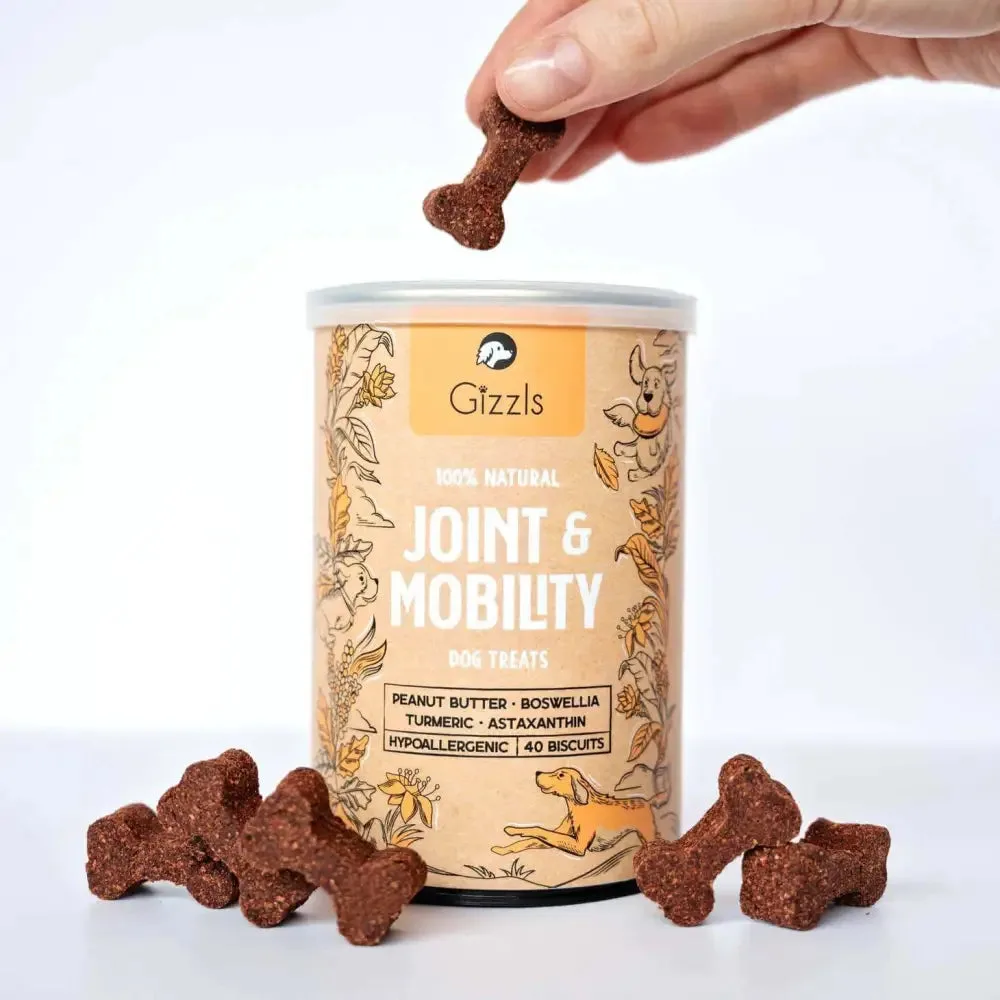
Natural is a sourcing claim, not a potency claim. A biscuit can be grain-free, organic, and still contain so little of an active ingredient that it makes no practical difference. Look for named ingredients and a stated purpose rather than vague blends. For example, a treat that lists Boswellia serrata for slowing cartilage damage in arthritic joints and astaxanthin for recovery support is giving you something concrete to evaluate, even if you still need to judge whether the dose suits your dog.
Myth 2: You need a prescription-strength miracle
Prescription joint diets and some veterinary injectables have their place, but they are not the only route. Many owners start with a daily functional treat or powder because it is easy to give and low-risk. The trade-off is that food-based products tend to be gentler and slower-acting than pharmaceuticals. If your dog is limping, yelping, or reluctant to climb stairs, that is a vet conversation first, not a supplement decision.
Myth 3: One supplement fixes everything forever
Joint health is cumulative. Excess weight, hard floors, and repetitive high-impact play all load the joints, and no capsule cancels that out. Think of supplements as one layer: keep your dog lean, provide traction on slippery floors, warm up before long walks, and use ramps instead of jumps where you can. If you change nothing else, a supplement alone is unlikely to transform a stiff dog.
How to read a joint product label without getting fooled
Start with the ingredient panel, not the marketing panel. Ask three questions: is the active ingredient named specifically, is there a reason given for why it is included, and does the format suit your dog? Powders you sprinkle on food are easy for picky eaters and cats; biscuits work as a daily ritual. Also check whether the product is positioned for prevention, recovery, or day-to-day comfort, because those are different jobs.
- Named actives beat proprietary blends every time.
- A clear serving instruction tells you the maker expects daily use.
- Match the format to your dog's willingness to take it.
- Give any new supplement several weeks before judging, and note changes in a diary.
Verdicts on common joint supplement claims
- Claim: Joint supplements can cure arthritis.: No supplement reverses joint damage. Some ingredients, such as Boswellia serrata, are included to slow cartilage damage and reduce joint inflammation, which is support rather than a cure. Verdict: false as stated. Expect management, not reversal.
- Claim: You will see a difference in a few days.: Functional ingredients tend to work gradually. A fair trial means consistent daily use for several weeks while you track stiffness, willingness to walk, and stair use. Verdict: unrealistic. Give it time and keep notes.
- Claim: Any 'joint' treat is as good as another.: No. Products differ in which actives they name and why. Compare the ingredient panel and the stated purpose, not the front of the packet. Verdict: false. Read the back, not the badge.
- Claim: Supplements replace weight control and exercise.: They do not. Extra weight loads joints, and appropriate movement keeps muscles supporting the joint. Supplements sit alongside those basics. Verdict: false. Use them as one layer of a plan.
- Claim: Natural joint products are risk-free.: Natural does not mean universally safe. Some dogs have sensitivities, and ingredients can interact with medication. Ask your vet before starting anything new, especially if your dog is on other treatment. Verdict: check first, especially with existing conditions.
Products worth examining
- Gizzls 100% Natural Dog Treats For Joint & Mobility: Gizzls 100% Natural Dog Treats For Joint & Mobility are functional biscuits containing organic peanut butter, Boswellia serrata, and astaxanthin. The label names specific ingredients with stated roles, which makes it easier to decide whether the approach fits your dog's needs.
- Dental Seaweed Powder for Dogs & Cats: Plaque Removal: Dental Seaweed Powder for Dogs & Cats is 100% pure Ascophyllum nodosum, clinically proven to reduce plaque and tartar when sprinkled on food once daily. It is a useful reminder that not every daily powder is a joint product; check what each supplement actually targets before buying.
- Vegetable Chew Variety Box For Dogs: The Vegetable Chew Variety Box For Dogs is a plant-based assortment of chews in different flavours and shapes. Chewing occupies a dog and can ease boredom, which matters because a restless dog may overexert stiff joints.