Quick answer
Children do not outgrow a climbing set at a single birthday. They outgrow a specific piece when it becomes too easy, too small, or too boring. A wooden climbing set with adjustable or combinable parts usually stays useful from toddlerhood into the early school years, while a fixed toddler-only frame may be ignored sooner. Buy for the next stage, not just today's.
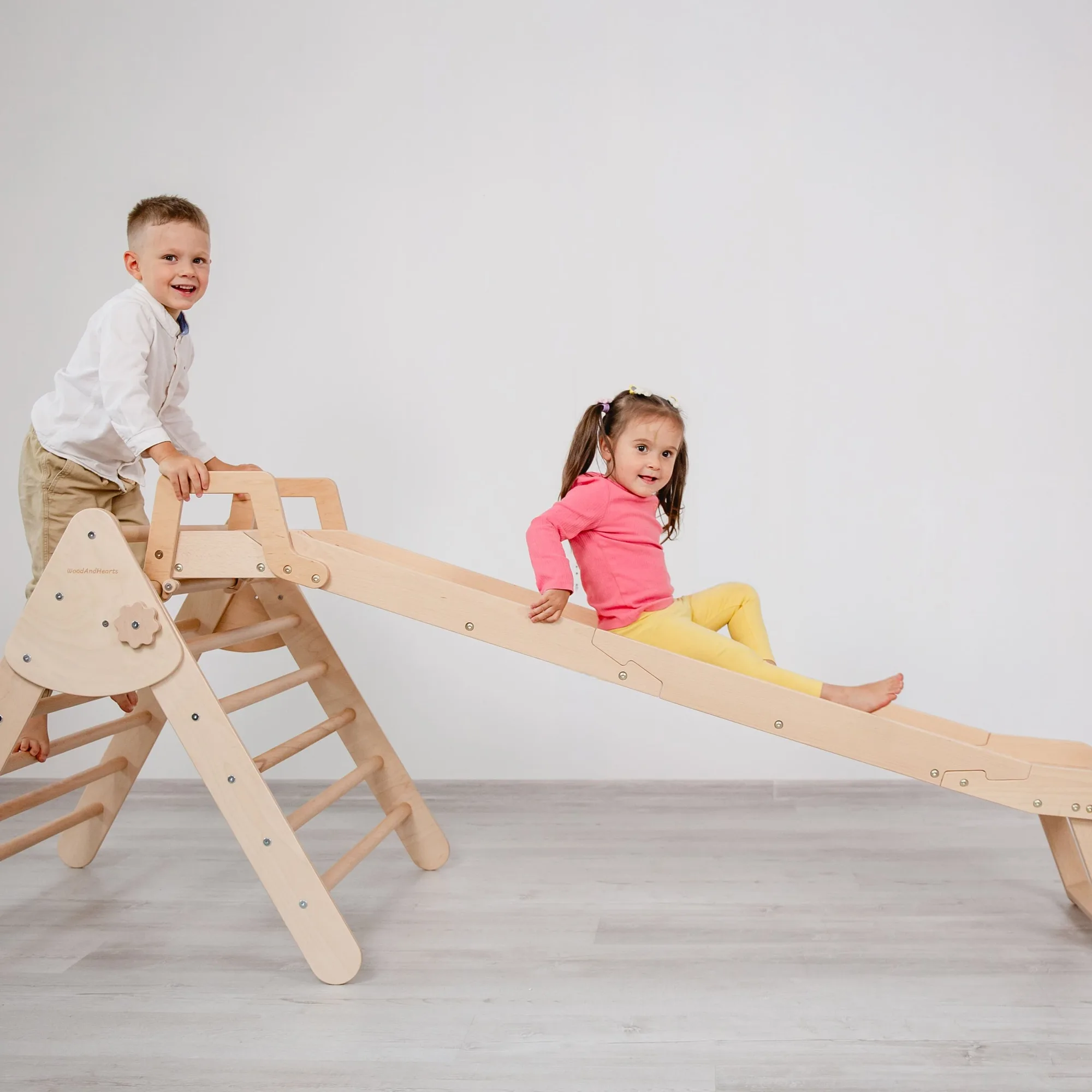
wooden climbing set
Parents ask whether a climbing set is a two-year purchase or a ten-year one. The honest answer: it depends on what you buy and how you use it. A toddler climbing frame that only supports one climbing angle will feel limiting once your child can climb it without thinking. A modular wooden set can be re-arranged, extended, or paired with new pieces as skills grow.
This FAQ covers the real climbing set age range, why kids stop using equipment, and how to judge kids climbing set longevity before you spend. It also points to specific WoodandHearts products where the catalog facts show how the set is meant to grow with a child.
What is the actual climbing set age range?
Most wooden climbing sets are designed for roughly 1 to 7 years, but that range hides a lot. A toddler uses a low triangle for pulling up and stepping. A 4-year-old uses the same triangle as a base for balancing games. A 6-year-old may use it as a fort wall or a launch point for pillows. The equipment does not change; the play does.
The upper limit is usually about size and challenge, not safety. Once a child is taller than the frame's usable height or finds the angle too easy, interest drops. Sets that combine a ladder, arch, slide, or wall give more ways to increase difficulty, which stretches the useful years.
- Under 2: look for low height, wide base, and rounded edges.
- 2-4: the peak years for a toddler climbing frame.
- 5-7: interest continues if the set can be reconfigured or combined.
- 8+: most children want a wall, monkey bars, or outdoor challenge instead.
Why do kids stop using a climbing set?
It is rarely about age. Children abandon equipment when it stops offering a next step. If every climb ends the same way, the brain files it as solved. A set with only one configuration has a shorter play life than one that can become a slide, a tent, a shop counter, or a reading nook.
Storage and setup also matter. A set that must be moved every evening or blocks a doorway gets used less. If the frame lives in a dedicated corner and stays assembled, it stays in the daily play loop far longer.
- Rotate accessories instead of replacing the whole set.
- Add a cushion or tent to refresh a familiar frame.
- Keep the set visible and ready to use, not folded behind a door.
Does a Montessori climbing set last longer than a standard one?
A Montessori climbing set is not magic, but its open-ended design helps. These sets usually avoid screens, lights, and fixed characters, so the child supplies the story. That means the same triangle can be a mountain, a bus, or a stage depending on the day. Open-ended play tends to survive age changes better than single-purpose toys.
The tradeoff is that open-ended sets ask more of the parent at first. You may need to model a few games or rearrange pieces to keep the challenge matched to your child. Once the habit forms, the set works with less input.
- Choose natural wood finishes over themed prints for longer appeal.
- Look for pieces that can be used separately, not only as one unit.
How do you judge kids climbing set longevity before buying?
Read the catalog facts for what is included and how the set is meant to be used, not just the product photo. A set described as compact and suitable for small rooms will have a different lifespan than an all-in-one gym. Neither is better; they solve different problems.
Check whether the set can be extended later. If the brand sells matching ramps, walls, or cushions, you can raise the challenge without replacing the base. That is the cheapest way to extend the years you get from one purchase.
- Count the number of distinct play configurations, not the number of parts.
- Confirm the set fits your ceiling height and wall space before ordering.
- Buy the largest base you can fit if you want the longest use.
What should you buy for a child who is already 5 or 6?
At this age, a simple triangle may be too easy. Look for a climbing set for older kids that adds height, a wall, or monkey bars. The challenge needs to scale with strength, or the equipment becomes a clothes rack. A wall-mounted option also frees floor space, which matters in smaller homes.
If you already own a toddler climbing frame, you do not have to start over. Add a wall or a larger set alongside it and let the younger sibling inherit the original. That is how one purchase becomes two stages of use.
- Prioritize height and grip variety over cute shapes.
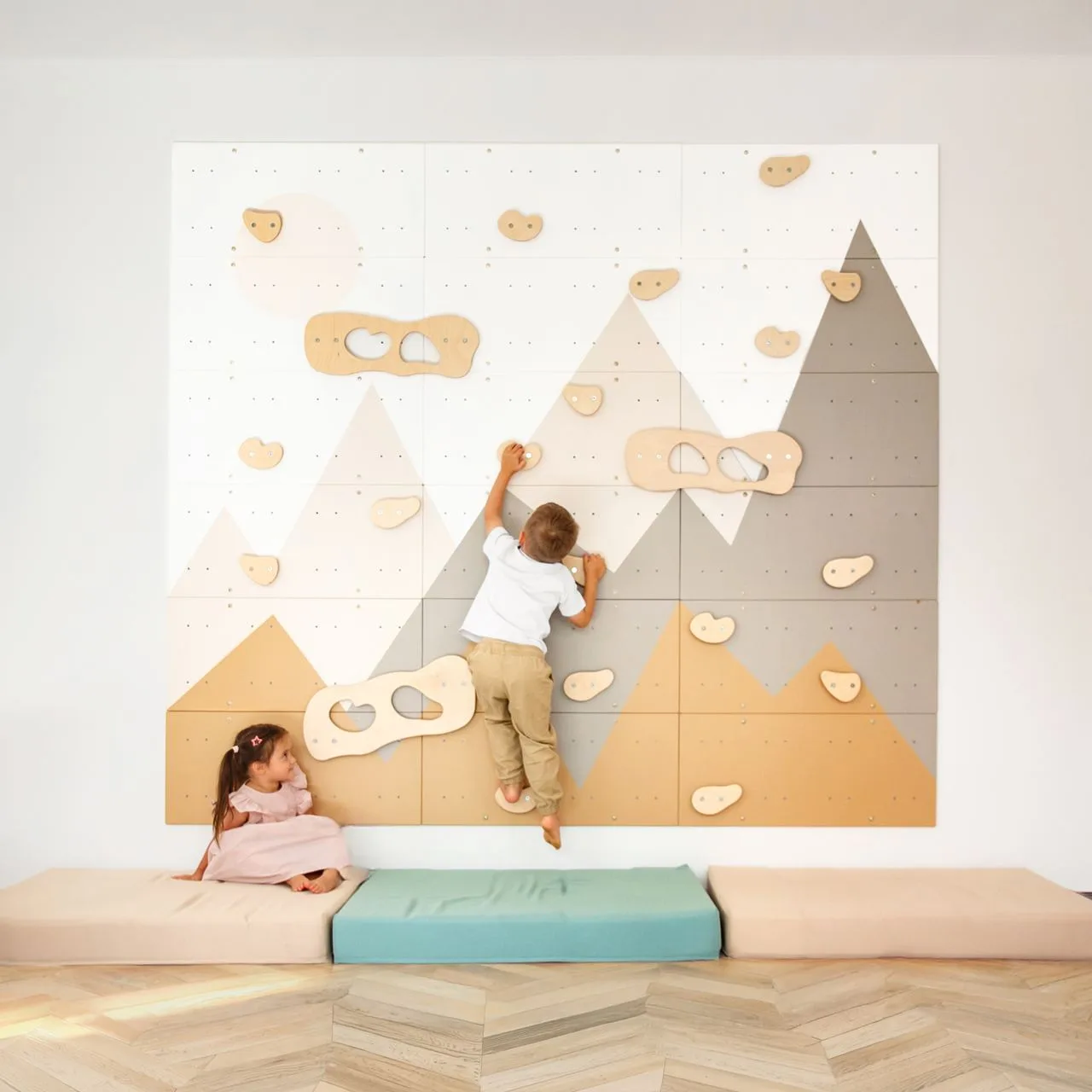
- Wall-mounted sets suit older kids who need a real physical challenge.
- Keep the old frame if a younger child can still use it.
Quick answers to the questions parents ask most
Do kids outgrow climbing sets?
Not by age alone. They outgrow a specific setup when it no longer offers a next challenge. A set that can be rearranged or extended usually stays in use longer than a fixed one. Judge the set by how many ways it can be played, not by the age on the box.
What is the climbing set age range?
Most wooden sets suit roughly 1 to 7 years. Toddlers use them for pulling up and balancing; older kids use them as part of bigger games. After 7, most children want more height or a wall. Plan for the 2-4 year window to be the peak, then add challenge to keep it going.
Is a toddler climbing frame worth it if it only lasts a few years?
Yes, if it is the right frame. A low, stable triangle or arch is the safest way for a 1- or 2-year-old to build strength and confidence. The question is whether you can extend it later. Buy a base that accepts add-ons, or plan to pass it to a younger sibling.
How do I make wooden climbing toys last longer?
Keep the set assembled and visible, rotate small accessories like cushions or tents, and add a new piece before your child loses interest. Check the frame for loose hardware as part of normal upkeep. A five-minute accessory swap often buys another year of play.
When should I move up to a climbing set for older kids?
When your child can complete every climb without effort or stops choosing the set during play. That is the signal to add height, a wall, or monkey bars rather than replace everything. Add challenge in stages instead of buying a whole new gym at once.
Catalog facts that affect how long a set stays in use
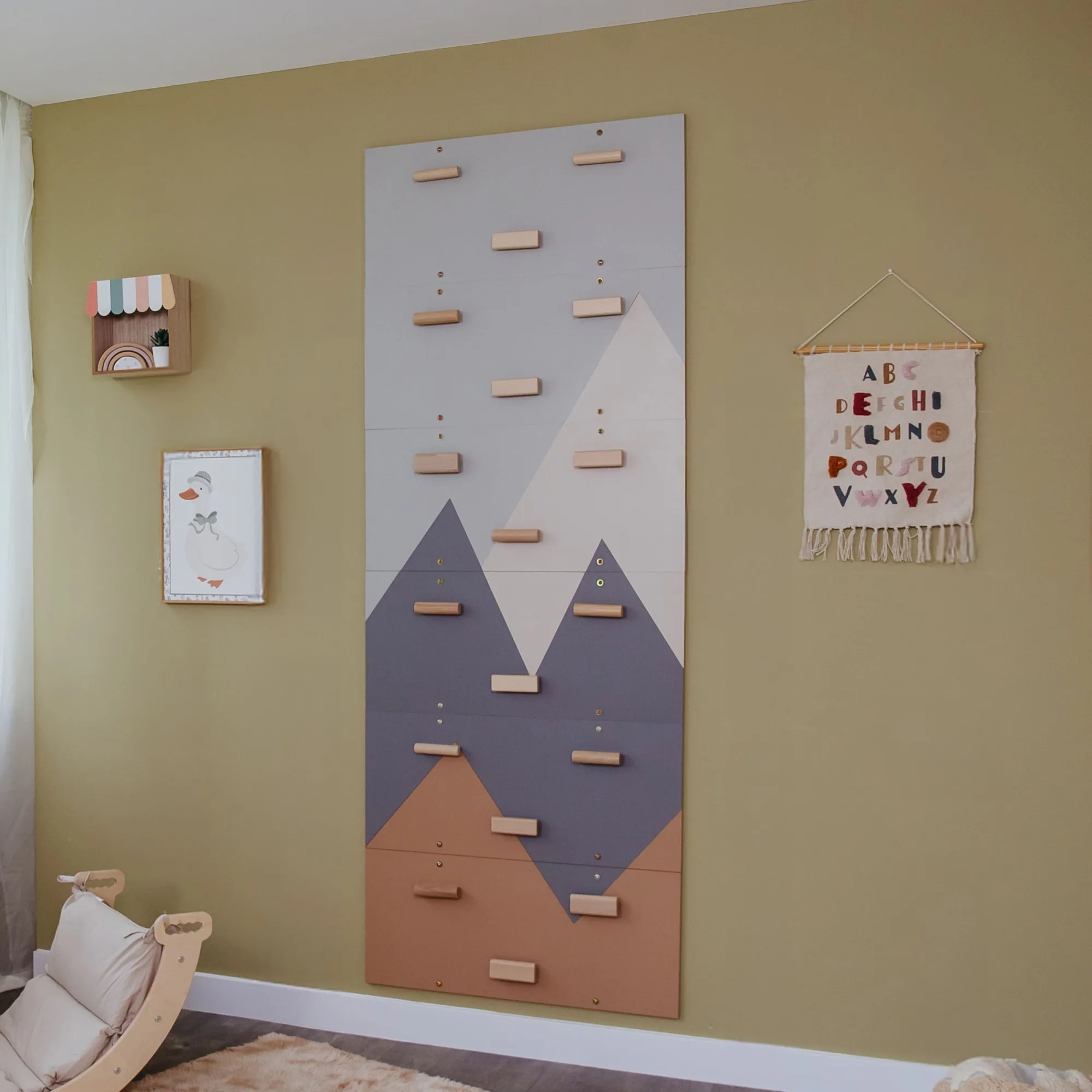
- Kids Indoor Climbing Wall “Mountain”: Described as a compact set that transforms any small room into a fun and active environment, with everything a child needs to stay active, build strength, and develop coordination in a compact design. Compact wall sets fit rooms where a full playground will not, so the equipment stays installed and used instead of stored away. That directly extends its practical lifespan.
- Wooden Climbing Set: A 2-in-1 set that includes a Montessori Triangle (Large size) and a Slide, letting kids climb up and slide down. Two functions in one footprint give a child more ways to play, which usually means more years of use before boredom sets in.
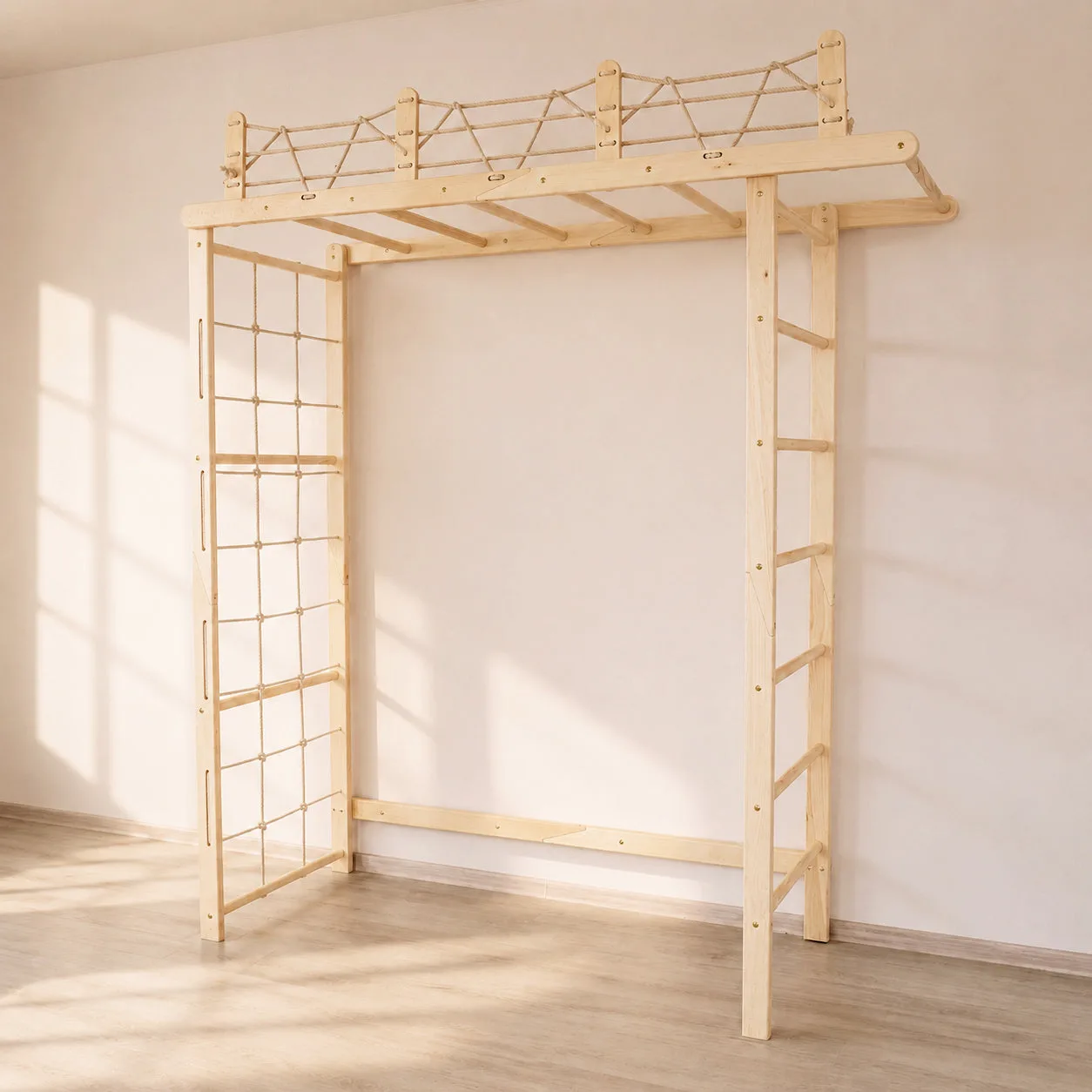
- Playground Set with Monkey Bars: An all-in-one indoor gym that includes climbing monkey bars and is designed to bring adventure, exercise, and creativity into the home. This is the step up for older kids who have outgrown a low triangle. It adds height and grip variety, which is what keeps a 6- or 7-year-old engaged.
- Climbing Arch Cushion: A cushion with ties that can be attached to the arch or used on the floor, available in various sizes and design options. A small add-on like this can refresh a familiar arch and turn it into a cozy spot, so the same frame serves a new purpose as your child grows.
Climbing sets are not outgrown on a schedule. They are outgrown when they stop offering a next step. Choose a wooden set that can be rearranged, extended, or handed down, and you will get years of use instead of one season. If you are unsure where to start, match the set to your child's current skill and your available space, then plan the upgrade before boredom arrives.