Quick answer
Choose a dog backpack only if your dog is fully grown, healthy, and already comfortable wearing a harness for 30+ minutes. Prioritize a snug, non-rotating fit over maximum capacity, keep total added weight under roughly 10% of your dog's body weight to start, and plan to build up over several short sessions before any real hike. If your dog slumps, sidesteps, or refuses to walk, the pack is too heavy, too loose, or not yet appropriate.
Start with the dog, not the pack
Before comparing saddlebags, confirm your dog is a candidate. A dog backpack adds weight, changes balance, and traps heat along the back. Puppies whose growth plates are still open, seniors with joint issues, flat-faced breeds, and dogs with existing back or neck problems are usually better off carrying nothing. Your vet can confirm whether added load is safe for your specific dog.
The second prerequisite is harness tolerance. A dog that fights a harness will fight a loaded pack. If your dog isn't already relaxed in a padded harness for half an hour, spend two weeks on that first. A pack is a harness with cargo, so the harness has to be a non-issue before you add weight.
Fit rules that prevent rubbing and rotation
A dog hiking backpack fit is correct when the saddle sits level on the back, the straps sit clear of the armpits, and you can slide two fingers under every strap. The pack should not shift side to side when your dog trots, and it should not slide forward onto the shoulders when they lower their head to sniff.
Check three points in this order: chest strap (should sit across the breastbone, not the throat), belly strap (behind the ribcage, not on the soft abdomen), and girth tension (snug enough that the pack can't rotate, loose enough that you can still fit two fingers under the strap). If any strap needs to be cranked tight to stop movement, the pack size or shape is wrong for your dog.
- Measure girth at the widest part of the ribcage, then compare to the manufacturer's size chart — never guess from breed alone.
- Measure back length from the base of the neck to the base of the tail to check saddle length.
- Re-check fit after 10 minutes of walking; straps settle once the pack warms up.
Load rules: start lighter than you think
A common starting guideline is 10% of body weight, and many dogs never need more than that. A 25 kg dog starts around 2.5 kg of load, including the pack itself. Build in 10–15% increments over several weeks, and only if your dog moves normally, keeps a loose leash, and isn't panting harder than usual on flat ground.
Distribute weight evenly on both sides. An unbalanced pack pulls to one side and forces your dog to compensate with every stride. Keep the heaviest items low and close to the body, and leave room to remove weight mid-walk if your dog starts lagging. Water is the easiest thing to redistribute or dump.
When a weighted dog backpack helps — and when it doesn't
Weighted dog backpacks are sometimes used for conditioning or to give high-energy dogs a job. That can work for fit, healthy adult dogs under a trainer's or vet's guidance, but it is not a fix for pulling, reactivity, or boredom. Adding weight to a dog that already lunges or bolts increases risk for both of you.
For most owners, the pack's real value is carrying your dog's own gear: water, bowl, treats, waste bags, and a light layer. That keeps your hands free and your everyday leash setup simple. If your dog only needs to carry a collapsible bowl, a full saddlebag may be overkill — a simple harness with a small attachment point is lighter and cooler.
How to run a size chart properly
A dog backpack size chart is only useful if you measure the same way the brand does. Use a soft tape, measure directly against the fur (not over a thick coat), and stand your dog square on all fours. If your dog falls between two sizes, size down for the girth and check that the saddle length still clears the tail base — a too-long saddle rubs the hips, and a too-short one concentrates pressure.
Because sizing varies by brand, buy from a seller with a clear return policy and test the fit indoors on a clean floor before the tags come off. A pack that fits in the store may behave differently once loaded, so always do a loaded test walk before committing to a long hike.
Decision rules before you load up
- Dog is still growing or has joint issues: Skip the pack entirely and use a padded harness instead. Added load on open growth plates or compromised joints is a risk you can't manage with fit adjustments alone. No pack until your vet clears it.
- Dog is fit but new to wearing gear: Start with an empty pack for three or four 10-minute sessions, then add a light, balanced load. If your dog's gait changes or it stops taking treats, remove weight and repeat the previous step. Progress by time and behavior, not by calendar.
- You only need to carry a bowl and bags: A full saddlebag adds bulk and heat for very little benefit. A harness with a small attachment or a lightweight leash setup will be cooler and less fussy. Match capacity to actual cargo, not to the maximum the pack can hold.
- You're choosing between two sizes: Size to the girth first, then confirm the saddle length clears the tail base. If the smaller size pinches the chest strap or the larger size rotates, the shape is wrong for your dog — try a different model. Fit beats capacity every time.
Product facts that matter for pack setups
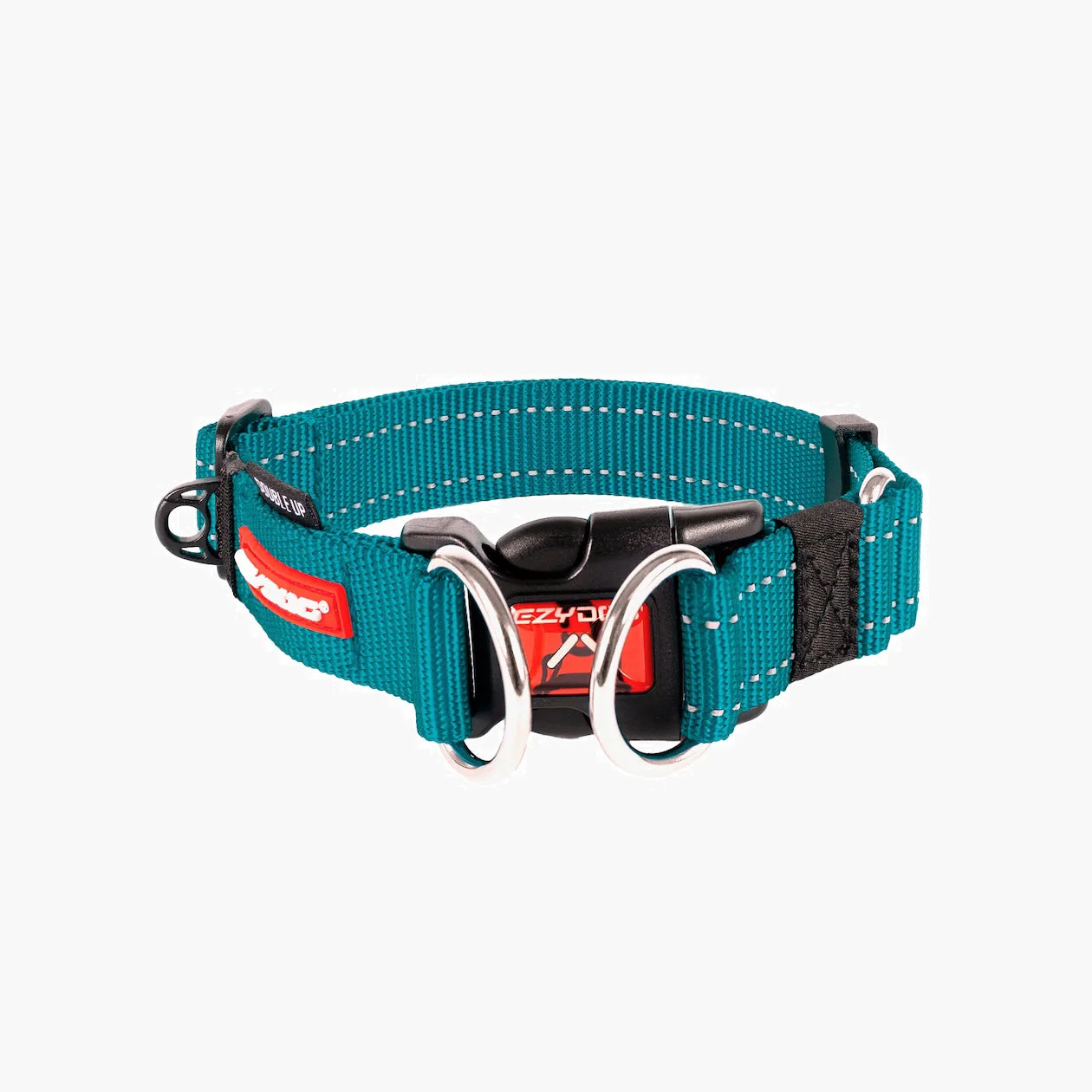
- Double Up™ Collar: The Double Up Collar is built for durability and comfort and adds extra security for dog walking, and it can also be used as a training collar alongside a harness. If you're layering a pack over a harness, a collar that stays put and doubles as a training aid keeps your walking setup simple without adding a second piece of gear.
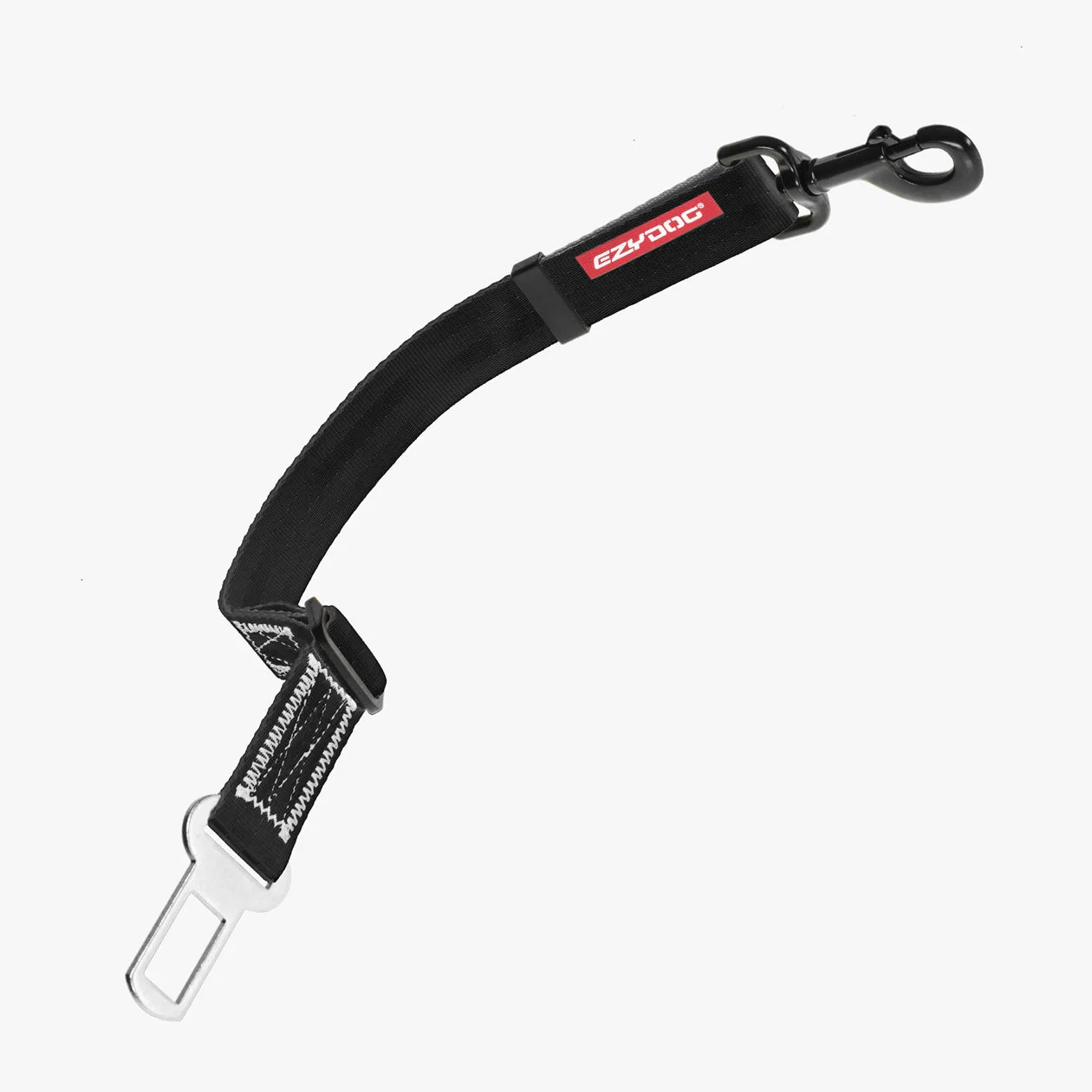
- Click™ Adjustable Car Restraint: The Click Adjustable Car Restraint keeps your dog in the back seat during car rides and is designed to be used with an EzyDog harness. Trailheads usually start with a drive. A restraint that requires a harness means your travel and hiking gear can share the same base layer, so you're not swapping equipment in a parking lot.
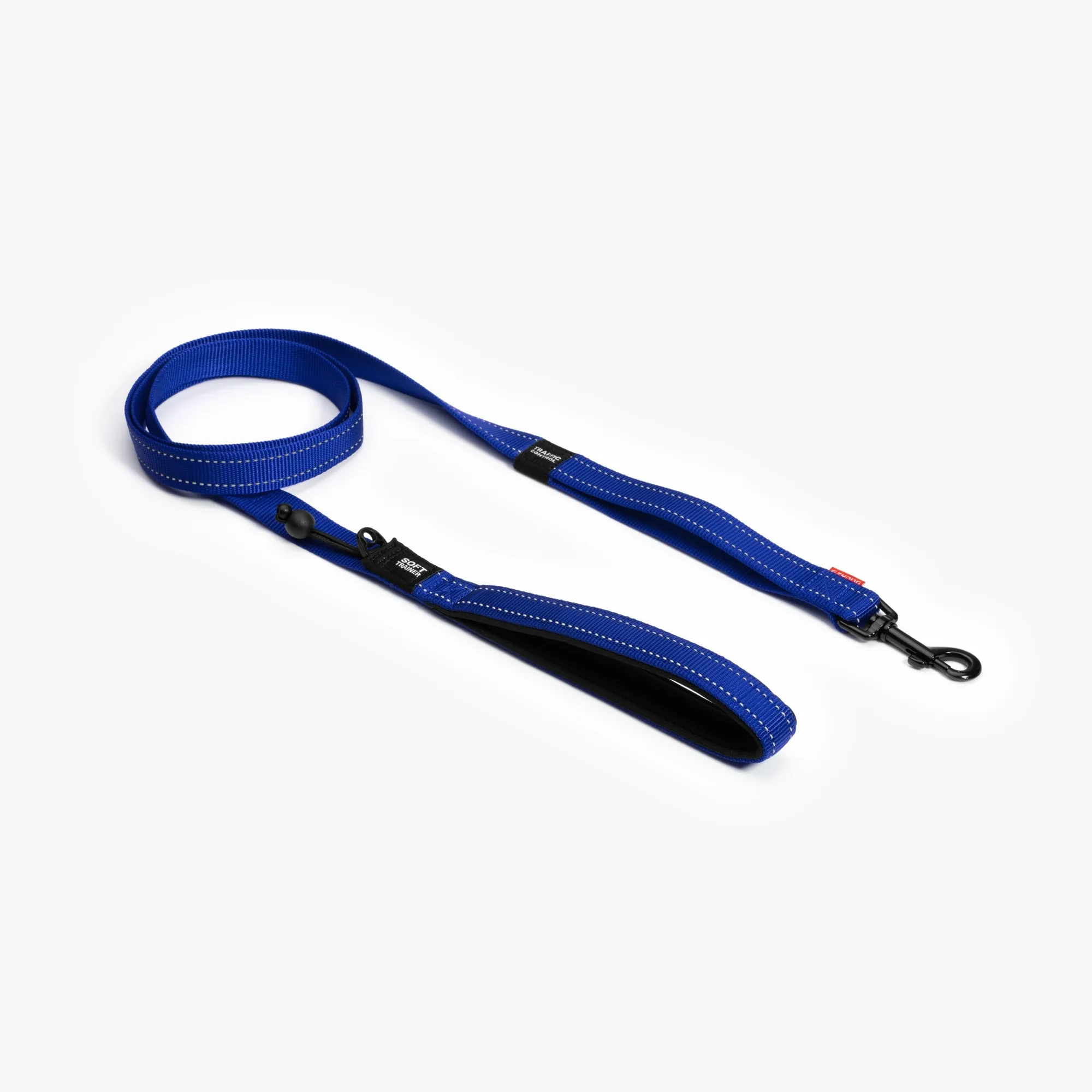
- Soft Trainer™ Leash: The Soft Trainer Leash has an extra traffic handle near the collar for quick, secure control in built-up areas. A loaded dog is harder to hold if it spooks. A traffic handle gives you a second grip point for tight trailheads, parking lots, and road crossings.
Who this approach fits
Best for
- Healthy adult dogs that already walk calmly in a harness
- Owners who want their dog to carry its own water, bowl, and waste bags on day hikes
- Dogs doing structured conditioning work under a vet's or trainer's guidance
Not for
- Puppies, seniors, or dogs with back, neck, or joint problems
- Dogs that pull, bolt, or are reactive on leash — fix the walking first
- Short neighborhood walks where a pack adds heat and bulk for no real benefit