Quick answer
Choose a crate if you need containment for house training, chewing management, or a dog who settles better in a den-like space. Choose a standalone bed if your dog already sleeps reliably loose in the house and you mainly want comfort. If you want one purchase that covers both jobs, a matched crate-and-bed set is the cleaner path because the bed is sized to sit inside the crate.
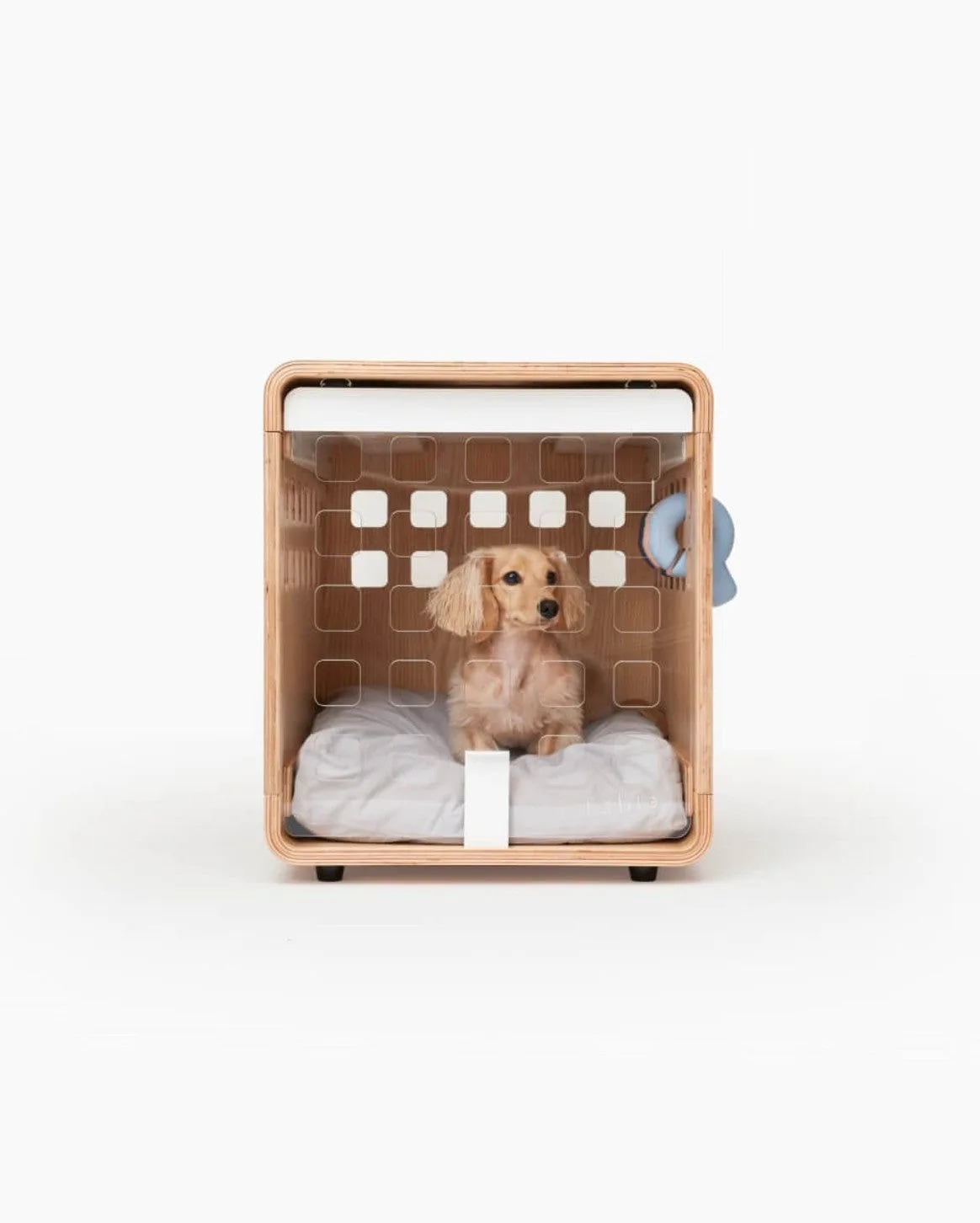
crate
What each option actually does for your dog
A crate is a management tool. It limits where your dog can roam, which is why it works so well during house training and during the chewing-heavy months. A bed is a comfort tool. It gives your dog a soft, familiar surface to settle on, but it does nothing to keep a puppy away from baseboards or a chewed-up remote.
That difference explains most of the confusion around crate training vs free sleeping. It is not really a debate about which is kinder. It is a question of whether your dog can safely and quietly handle the freedom of the whole room right now.
Where a crate earns its place
Crates work best when they are set up as a resting spot rather than a timeout zone. A crate that balances airflow and light while still feeling enclosed gives a dog the den-like conditions many dogs seek out on their own, which is why a crate is often recommended for dogs who get anxious when left loose.
The practical catch is that a bare crate floor is not comfortable for long stretches. Most dogs settle faster when a properly sized bed sits inside the crate rather than on top of it, and that fit matters more than the crate's appearance.
Where a bed alone is enough
If your dog is past the destructive-chewing stage, sleeps through the night without accidents, and does not pace or whine when left alone, a bed on its own is usually the simpler and more comfortable answer. You avoid crate footprint in your living space and your dog gets a defined place to nap that is not the sofa.
The trade-off is that a bed offers no containment. A dog who is not yet reliable loose in the house can chew the bed itself, so a standalone bed is a poor first purchase for a puppy in the middle of house training.
Sizing, placement, and the mistake most owners make
Buy the crate for your dog's adult size, not their puppy size, and use a divider or an insert bed to take up the extra room early on. An oversized crate with no filler gives a puppy enough space to eliminate in one corner and sleep in another, which undermines the whole point of crate training.
Placement matters too. A crate in a high-traffic hallway gets treated as a cage; the same crate in a quiet corner of the room where the family actually spends time gets treated as a bed. Put the crate where your dog can still see and hear you.
The trade-offs, side by side
- Containment vs freedom: A crate prevents chewing, accidents, and counter-surfing while you are out. A bed gives your dog free run of the room and relies on them having already earned it. If you cannot yet trust your dog loose for two hours, you are not choosing between a crate and a bed. You are choosing a crate.
- Training speed vs setup speed: Crate training takes weeks of consistent, positive introductions. A bed requires almost no training, but it also teaches your dog nothing about where to eliminate. Puppies and newly adopted adult dogs almost always need the crate first.
- Floor space vs one purchase: A crate takes up permanent floor space even when your dog is not in it. A matched set solves the footprint problem by making the crate do double duty as furniture. In a small apartment, a crate that works as a side table is easier to justify than a crate that only stores a dog.
- Cost of buying twice: Buying a crate and then a separate bed often means paying for a bed that does not quite fit the crate. A set removes that guesswork. Compare the set price against the crate plus a correctly sized bed before deciding the set is the expensive option.
Fable options that cover both jobs
- Best Selling Rest Set: The Best Selling Rest Set pairs the Fable Crate with a water-resistant, breathable bed designed to fit inside it, and the crate doubles as a functional side table. You get containment and comfort in one purchase, and the bed is already sized to the crate instead of being a near-miss fit.
- Ultimate Dog Set: The Ultimate Dog Set includes the bent wood crate, a memory foam dog bed, bowls, a silicone bowl mat, and toys. Useful if you are starting from nothing and want rest, feeding, and play covered in a single order rather than three separate ones.
- Armadillo™: The Armadillo is a modular puzzle toy whose pieces join together, work separately, or combine with additional Armadillos, and it can be filled. A crate works better when your dog has something to do in it; a fillable puzzle toy gives a confined dog a job instead of boredom.
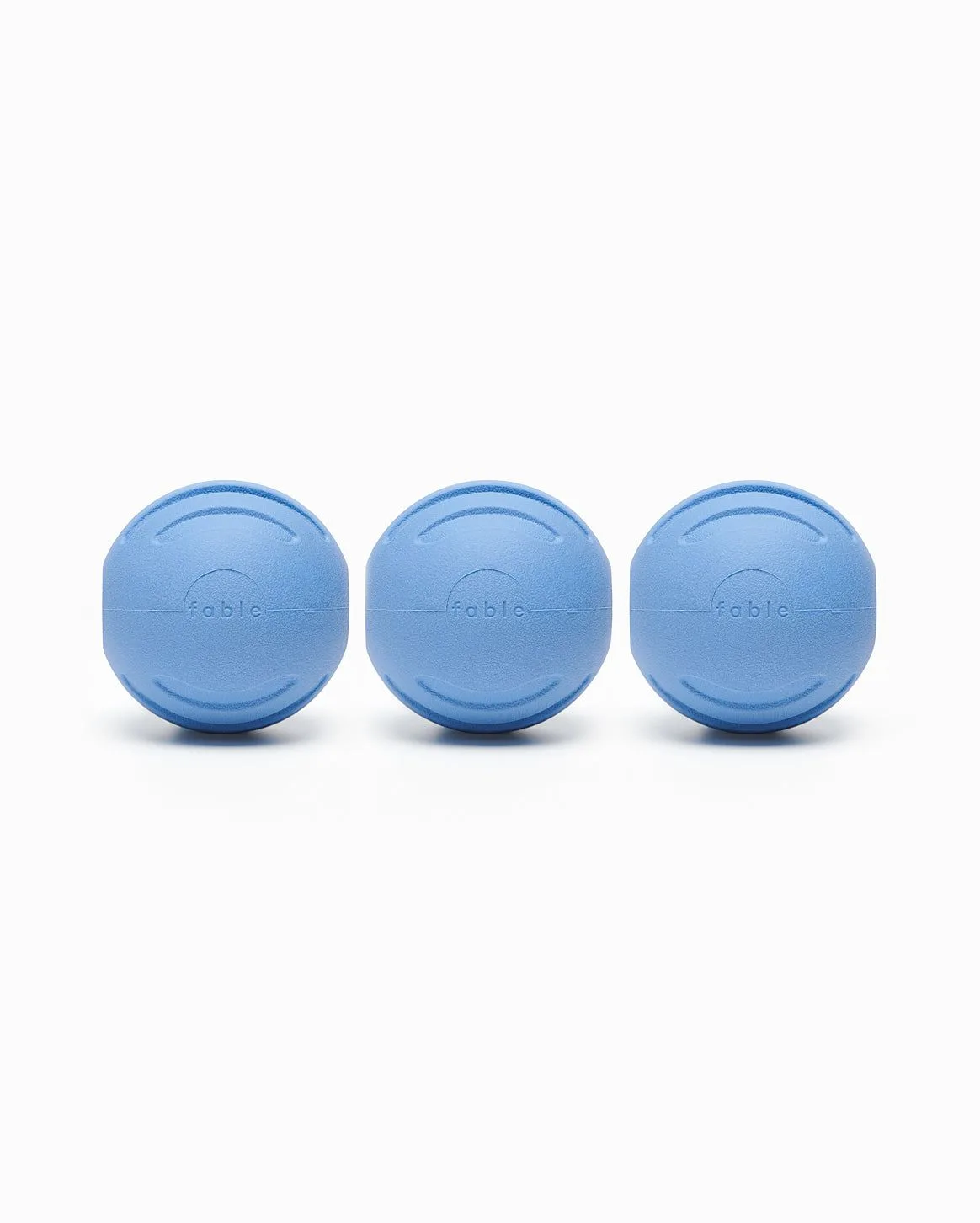
- Signature Ball (Pack of 3): The Signature Ball is made from natural rubber with dual openings and is described as durable and easy to clean. A washable toy is the practical choice for crate time, since anything that goes in the crate will need cleaning.
Which setup fits your dog
Choose a crate or crate-and-bed set if
- You have a puppy or a newly adopted dog who is not yet reliable loose in the house
- Your dog chews furniture, cables, or bedding when left alone
- Your dog settles faster in an enclosed, den-like space than in an open room
- You live in a smaller home and want the crate to function as furniture
Choose a standalone bed if
- Your dog already sleeps through the night loose with no accidents or damage
- Your dog panics or injures themselves trying to escape an enclosed space, which needs a vet or trainer rather than a crate
- You need a second resting spot in a room where a crate would block traffic