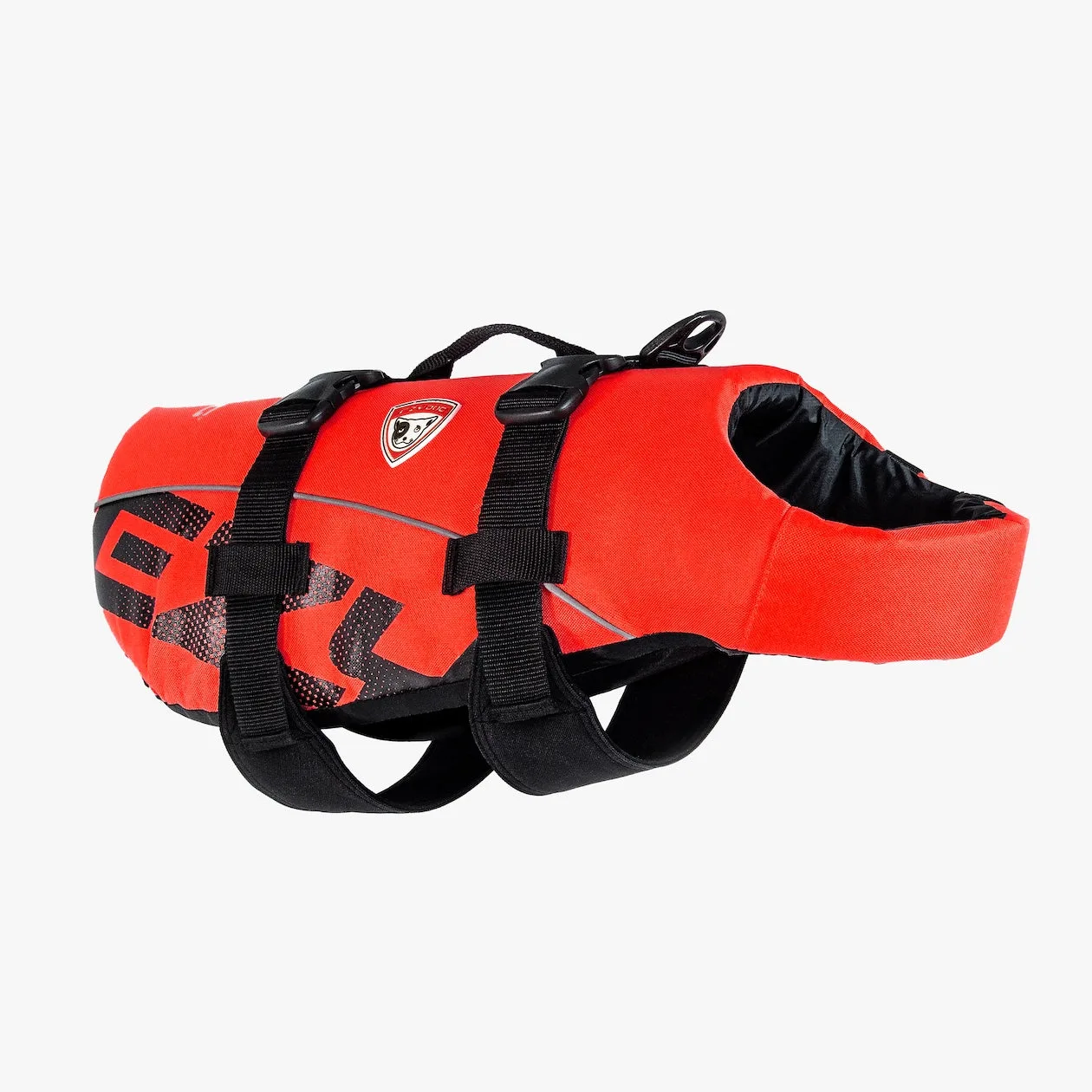
Quick answer
Measure your dog's rib cage at its deepest point and their back length from base of neck to tail base, then match those numbers to the jacket's size chart. A properly fitted dog life jacket should be snug enough that you can slide two fingers under the straps but not so loose that it shifts when you lift the grab handle. If your dog's measurements fall between two sizes, size up for buoyancy and adjust the straps down.
Why a snug fit matters more than you think
A life jacket that is too loose can ride up around your dog's neck when they enter the water, which is uncomfortable and can interfere with swimming. Too tight, and it restricts breathing and shoulder movement, making your dog tire faster. The goal is a jacket that stays in place when you pull up on the grab handle without digging into the skin or armpits.
Buoyancy foam only works when it stays positioned over the chest and back. If the jacket slides sideways or bunches up, flotation becomes uneven and your dog may list to one side. That is why sizing comes before brand or color.
How to measure your dog in three steps
Use a soft measuring tape and have a helper hold your dog steady. Measure the widest part of the rib cage, usually right behind the front legs. Then measure from the base of the neck to the base of the tail for back length. Finally, measure the neck circumference at the narrowest point, just behind the ears and below the jaw.
Write down all three numbers. Most life jacket size charts rely on rib cage girth as the primary size, with back length as a secondary check. If your dog is between sizes, choose the larger size and use the adjustment straps to take up the extra room.
Signs your dog's life jacket is too tight or too loose
After you put the jacket on, check these fit signals before heading to the water. A too-tight jacket leaves red marks or indentations after a few minutes, restricts your dog's ability to sit or lie down, and makes the straps dig in when you lift the handle. A too-loose jacket slides side to side when your dog walks, rides up toward the neck, or lets you pull more than two fingers under the chest strap.
Adjust one strap at a time and recheck. Neoprene straps can stretch slightly when wet, so a fit that feels perfect on dry land may loosen in the water. Test the jacket in shallow water first to confirm it stays put.
Matching jacket features to your dog's swimming style
Dogs who swim in pools or calm lakes need a jacket with even foam distribution and a strong grab handle for lifting. Dogs who join you on a boat benefit from reflective trim and a light attachment point for visibility. Dogs in hydrotherapy need a jacket that allows full range of motion in the shoulders and does not bunch at the neck.
Look for dual adjustment points if your dog has a deep chest or a slender waist. A fixed collar system can help keep the jacket from riding up, but it must still allow comfortable neck movement. If your dog is a strong swimmer, a lower-profile vest may be enough; if they are new to water or a senior, choose a jacket with more buoyancy foam.
When to size up or consider a different style
Size up if your dog is at the top of a size range or if the jacket leaves less than two fingers of space under the straps. Size up also if your dog has a thick double coat or you plan to use the jacket over a cooling vest. Size down only if the jacket shifts more than an inch when you lift the handle and you have already tightened all straps.
If your dog has a very deep chest and a narrow waist, a jacket with independent chest and belly straps will fit better than a single-strap design. If your dog is between sizes and you cannot get a snug fit with either, consider a different model rather than forcing a poor fit.
Decision rules for sizing and fit
- Measure rib cage first: Use the widest part of the chest, right behind the front legs. This is the primary number most size charts use. If rib cage is between sizes, choose the larger size and tighten the straps.
- Check back length second: Measure from base of neck to base of tail. A jacket that is too long can bunch at the hips; too short can ride up. Back length should match the size chart within one inch.
- Test the two-finger rule: You should be able to slide two fingers under the chest strap without forcing. More than two fingers means it is too loose. If you can pull the jacket over the head, it is too loose for water use.
- Lift the grab handle: Pull up gently. The jacket should stay in place without sliding up toward the neck or digging into the armpits. If it shifts more than an inch, tighten the straps or size down.
- Recheck in water: Neoprene can stretch when wet. Have your dog swim in shallow water and confirm the jacket still fits snugly. Adjust straps again after the first swim.
Product facts to compare
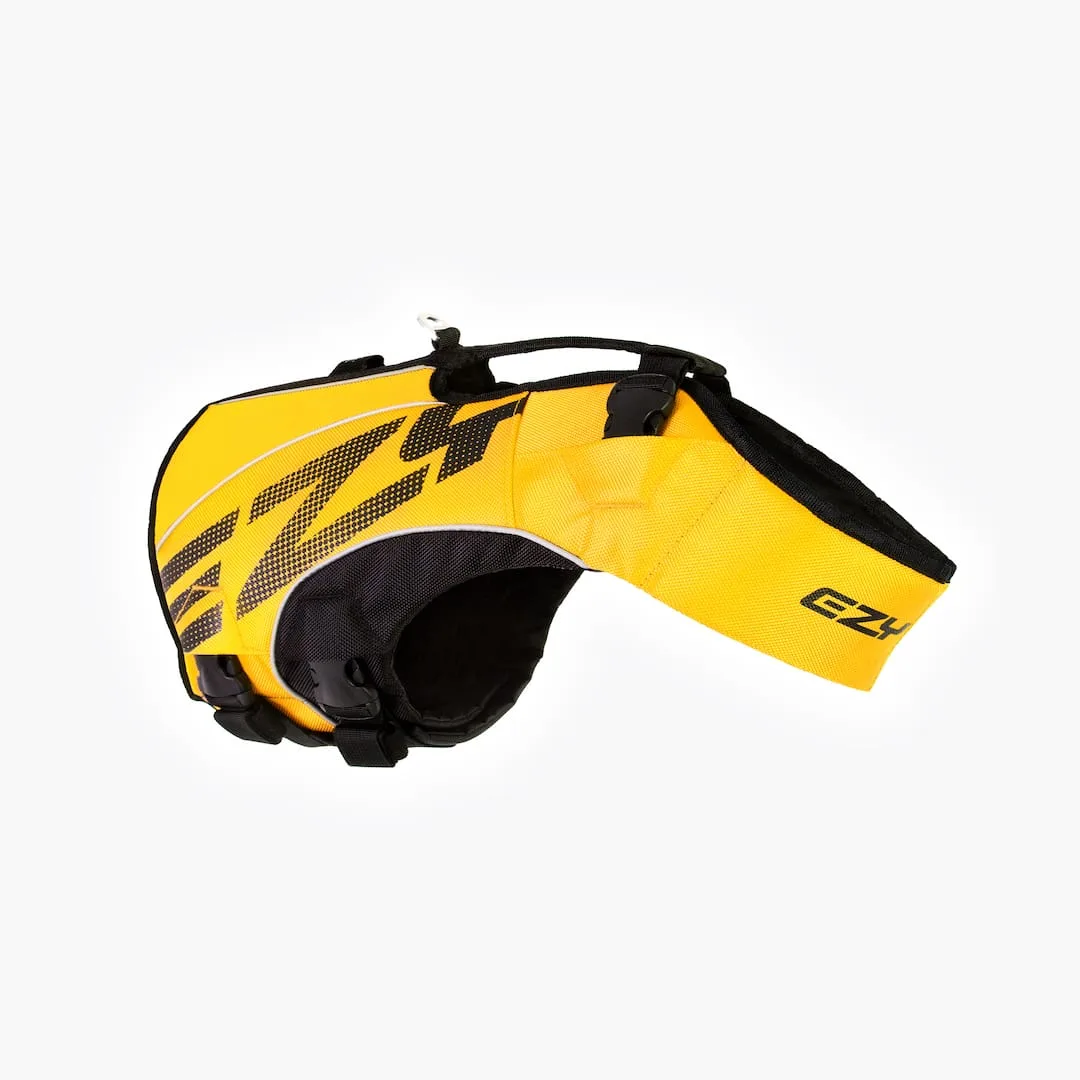
- DFD™ X2 Boost: DFDTM X2 Boost has a fixed collar system, ultra-buoyant foam, and dual adjustment points. The dual adjustment points let you fine-tune the fit around the chest and belly, which helps if your dog is between sizes. The fixed collar system adds stability but requires careful neck measurement.
- DFD™ Life Jacket: DFDTM Life Jacket uses ultra-buoyant foam and adjustable neoprene straps with a grab handle, reflective trim, and heavy-duty D-ring. Neoprene straps can stretch slightly when wet, so check the fit again in the water. The D-ring gives you a leash attachment point without adding a separate harness.
Who this sizing guide is for
Best for
- Owners of dogs who are new to swimming or need extra buoyancy
- Dogs with deep chests or narrow waists that need dual adjustment points
- Anyone buying a life jacket online without trying it on first
Not for
- Dogs who already have a well-fitted jacket and just need a replacement of the same size
- Owners looking for a harness or collar sizing guide instead