Quick answer
Most dog wellness product claims are marketing, not proof. Judge a product by its stated ingredients, its intended job, and whether the label tells you what it does not do. If a claim sounds like a cure or promises results with no specifics, treat it as a red flag rather than a reason to buy.
Walk down any pet aisle and you will see the same words repeated: supports, promotes, natural, premium. None of those words are regulated in a way that guarantees your dog gets a real benefit. That does not mean every product is useless. It means the label is a starting point, not a verdict.
This guide separates common dog supplement myths from what labels actually tell you. You will see how to read claims on daily chews, coat spritzes, and chew toys, and where the honest limits of a product usually sit.
Myth: "Supports" means the product treats a problem
Verdict: false. The word "supports" describes a general role, not a treatment. A multivitamin chew can support immune, brain, heart, skin, and coat health through the nutrients it contains, but that is different from diagnosing or fixing a medical issue. If your dog has a specific health problem, the label is not a substitute for veterinary advice.
What the label does tell you is the job the product is built for. The All-Natural Multivitamin Supplement is described as a daily chew with vitamins, minerals, and other essential nutrients intended to support the immune system, brain and heart health, and skin and coat health. That is a maintenance role, not a cure. Read it that way and you will set realistic expectations.
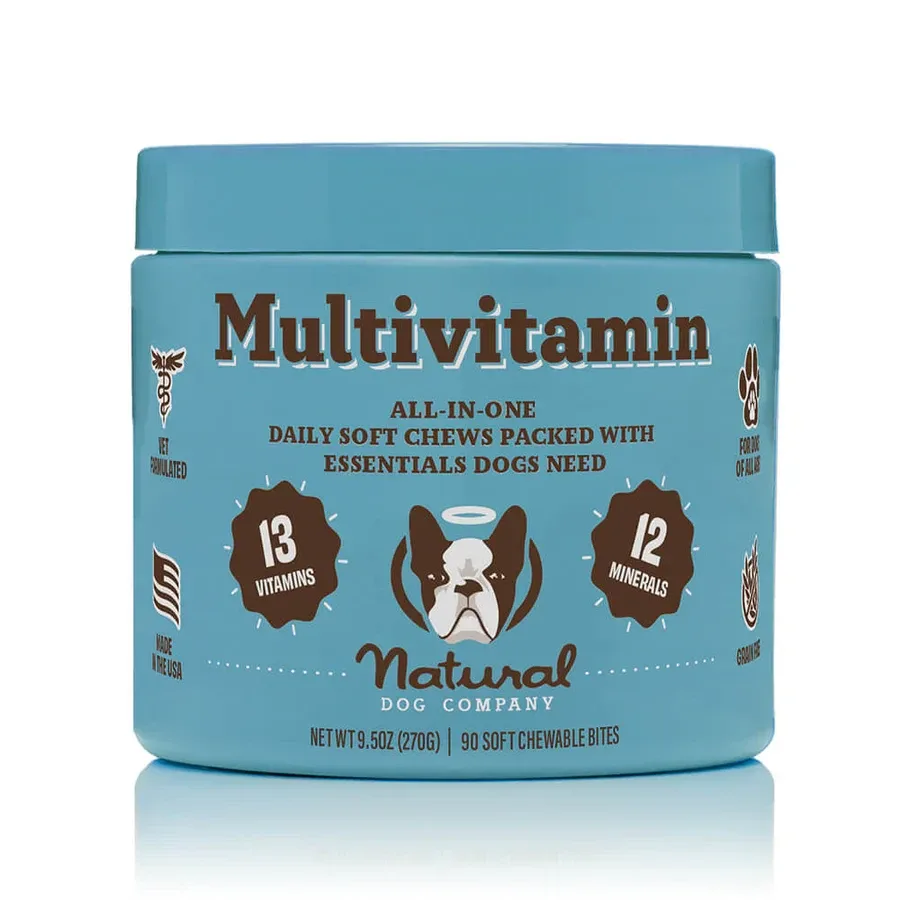
All-Natural Multivitamin Supplement
- Treat "supports" as a maintenance claim, not a treatment claim.
- Match the stated nutrients to a general goal, such as daily wellness or coat condition.
- Ask your vet before using any supplement for a diagnosed condition.
Myth: "Natural" ingredients automatically mean gentle or effective
Verdict: partly true, mostly oversold. Natural ingredients can be mild and pleasant, but the word does not guarantee your dog will tolerate them or that they will solve the problem you bought them for. Lavender, eucalyptus, and aloe vera are natural, and they can still bother a sensitive dog.
The Itchy Dog Spritz is a useful example of honest positioning. The catalog describes it as a between-bath refresher with natural ingredients to keep itching at bay, applied by spritzing and working into the coat for a fresh scent with no bathing required. That is a specific, limited job: freshening and soothing between baths. It is not presented as a fix for a skin condition, and you should not expect one from a spritz.
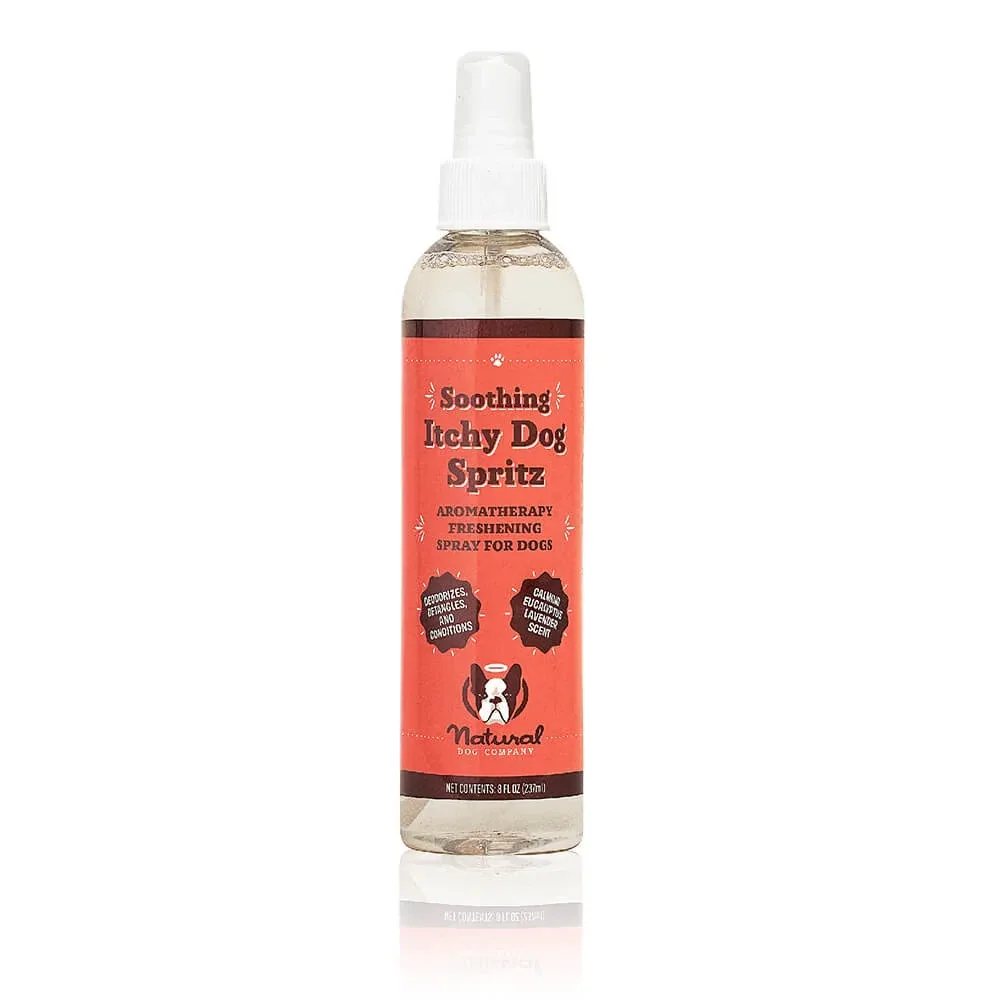
Itchy Dog Spritz
- Read the ingredient list, not just the word natural.
- Test any new spritz on a small area first.
- If itching is constant or worsening, that is a vet question, not a product question.
Myth: A higher price or a bigger claim means a better product
Verdict: false. Price and claim size do not track with usefulness. What matters is whether the product's stated purpose matches your dog's actual need. A cheap chew toy that dispenses treats and survives a power chewer can do more for your dog's day than an expensive bottle with vague promises.
The NEW! Gift Box Durable Rubber Chew Toy & Treat Dispenser shows how concrete claims look. The catalog says it withstands the abuse of most power chewer dogs, dispenses treats like kibble or Dog Daze CBD treats, reduces problem chewing and boredom, relieves separation anxiety, and slows fast eaters. Those are specific behaviors you can observe. Compare that with a label that only says "premium wellness support" and tells you nothing you can check.
- Look for claims you can observe, such as slower eating or less destructive chewing.
- Ignore vague superlatives that cannot be tested.
- Match the product to a behavior you actually want to change.
Myth: If the label is silent, the product must be hiding something
Verdict: not always. Sometimes a missing detail is a real limitation, and sometimes it is simply not relevant to the product's job. The honest move is to treat absent information as a question to ask, not as proof of a flaw or proof of quality.
For example, the supplied catalog records for these wellness products do not list available option types, so you cannot confirm size or flavor variants from the label alone. That is a decision limitation, not a scandal. It means you should check the product page or ask before assuming a specific option exists. The same logic applies to dosage, frequency, and suitability for puppies or seniors when those details are not stated.
- Write down the details you need before buying: size, dose, age range, ingredients.
- If a key detail is missing, ask the seller rather than guessing.
- Do not fill gaps with assumptions just because the rest of the label sounds good.
Myth: One product can cover wellness, training, and behavior
Verdict: false. Wellness, training, and behavior are different jobs, and the products built for them reflect that. A daily chew supports nutrition. A receiver collar supports off-leash training and containment. A treat dispenser occupies a bored dog. Expecting one item to do all three leads to disappointment.
The PAC00-16163 PetSafe Add-A-Dog Receiver Collar is described as a tool to assist in training for off-leash safety, teaching a dog to respond to commands and stay safe from potential dangers, and it is adjustable to fit various dogs, which helps owners with multiple canine companions. That is a training and safety role. It is not a wellness product, and no supplement will replace it.
- Assign each product one primary job.
- Use training gear for training and nutrition products for nutrition.
- Reassess if you are asking one product to solve unrelated problems.
Claim-by-claim verdicts
- "Supports immune, brain, heart, skin, and coat health": This is a broad maintenance claim tied to the nutrients in a daily chew, not a treatment for a diagnosed condition. Verdict: reasonable as daily nutrition, not as medicine.
- "Natural ingredients keep itching at bay": Natural ingredients like lavender, eucalyptus, and aloe vera can freshen and lightly soothe between baths, but they do not replace a vet visit for persistent itching. Verdict: useful for between-bath freshness, not for skin disease.
- "Reduces problem chewing and separation anxiety": A treat-dispensing chew toy can redirect boredom and chewing into an occupied activity, which is a behavior you can observe rather than a medical outcome. Verdict: believable when the claim describes a behavior you can watch change.
- "Premium" and similar empty descriptors: Words like premium, ultimate, and advanced carry no defined meaning on a pet label and tell you nothing about ingredients, dose, or fit. Verdict: ignore them and look for specifics instead.
What the labels actually say
- All-Natural Multivitamin Supplement: Described as a daily chew with vitamins, minerals, and other essential nutrients that support the immune system, brain and heart health, and skin and coat health, made in the USA with high-quality essential nutrients. This is a maintenance product with a defined nutritional role, so judge it on daily consistency rather than expecting it to treat a condition.
- Itchy Dog Spritz: A between-bath refresher made with natural ingredients including lavender, eucalyptus, and aloe vera, applied by spritzing and working into the coat for a fresh scent with no bathing required. Its honest job is freshening and light soothing between baths, not resolving an ongoing skin problem.
- NEW! Gift Box Durable Rubber Chew Toy & Treat Dispenser: A durable rubber chew toy that withstands most power chewer dogs, dispenses treats such as kibble or Dog Daze CBD treats, reduces problem chewing and boredom, relieves separation anxiety, and slows fast eaters. These are observable behavior claims, so you can tell within days whether the product is doing its job.
Read dog wellness labels the way you would read a job description: what is this product actually supposed to do, and can you tell whether it did it? When a claim is specific and observable, it is worth testing. When it is vague or promises a cure, keep your money and ask your vet instead.