Quick answer
To layer a dress over a skirt cohesively, start with a close-fitting base dress, add a skirt that is 2–4 inches shorter or longer than the dress hem, and secure both at the waist so nothing shifts. Choose fabrics with similar weight and drape, then check the silhouette in a mirror before you leave. The goal is a deliberate, balanced look—not bulk.
Why layering a dress over a skirt works
Layering a dress over a skirt lets you remix what you already own and create new proportions without buying a whole new outfit. It also solves common fit issues: a slip dress that feels too bare becomes wearable with a skirt underneath, and a mini dress that feels too short gains coverage and interest. The trick is to treat the two pieces as one silhouette rather than two separate garments fighting for attention.
Fabric and fit checks before you layer
Start by comparing fabric weights. A lightweight silk dress layers cleanly over a stretch powermesh skirt because both are thin and move together. A heavy knit skirt under a delicate chiffon dress will bunch and pull. If you are unsure, hold both pieces up to a window—if one is significantly more opaque or stiff, it will likely show through or distort the line.
Next, check the waistbands. A skirt with a wide, flat waistband sits smoother under a dress than one with a gathered or ruffled waist. If the skirt has a hook-and-eye closure or side zipper, make sure it lies flat against your body before you pull the dress over it.
How to choose hem lengths that flatter
The most reliable hem relationship is a 2–4 inch difference: either the skirt peeks out below the dress, or the dress extends past the skirt. A skirt that ends exactly at the dress hem creates a lumpy line. If you want a dramatic layered look, try a mini dress over a midi skirt—the contrast in length reads as intentional. If you prefer subtle layering, keep the skirt just slightly shorter than the dress so only a sliver of fabric shows.
Waist management: belts, tucking, and securing
Adding a belt over both layers is the fastest way to make the combination look cohesive. A slim belt defines the waist without adding bulk; a wide belt can work if the fabrics are thin. If you do not want a belt, use a few safety pins to tack the skirt to the dress at the side seams—this stops the skirt from twisting when you walk. Avoid tucking the dress into the skirt unless the dress is very thin and the skirt has a flat waistband; otherwise you create a visible ridge.
Step-by-step: layering a dress over a skirt
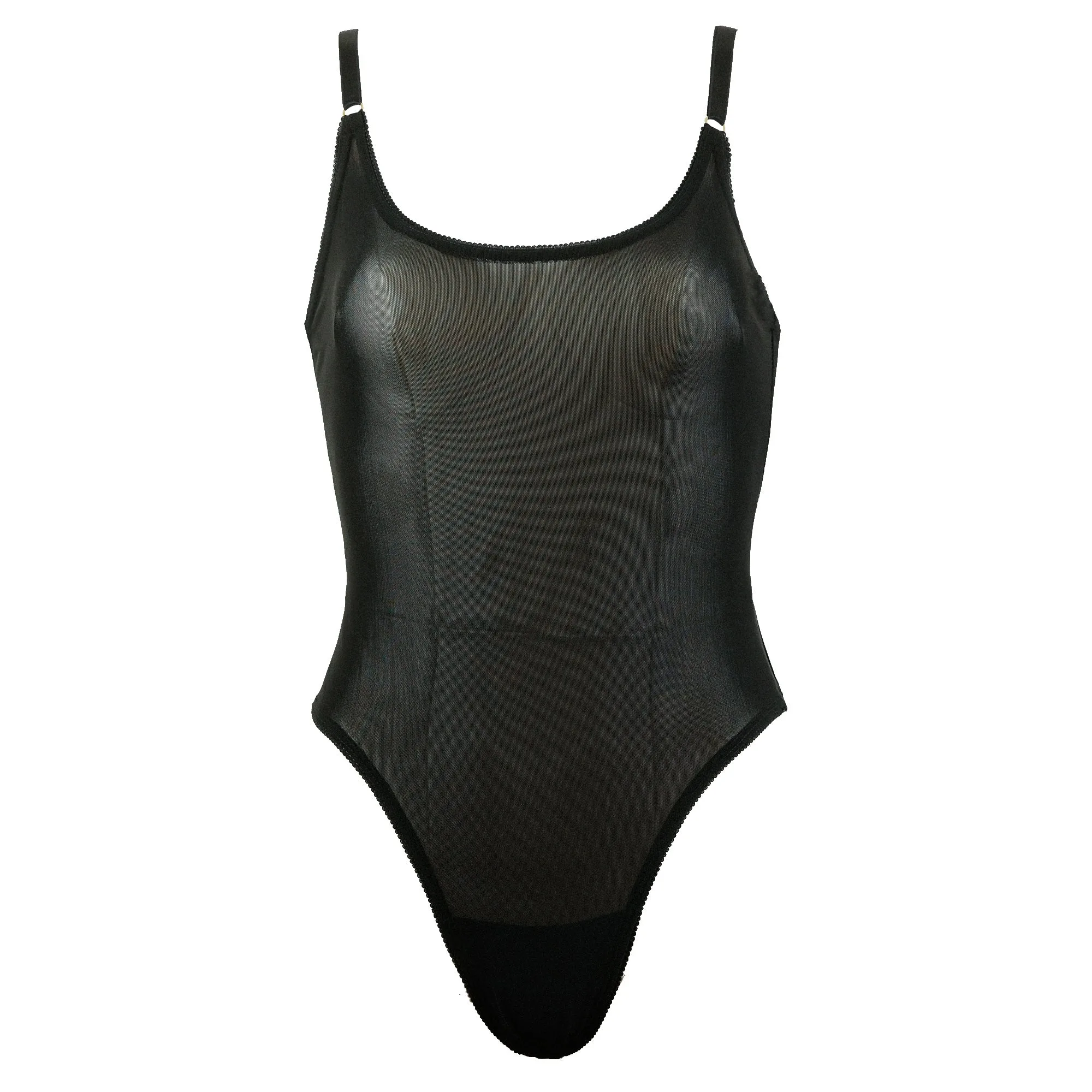
- 1. Start with a close-fitting base: Put on a slim slip, bodysuit, or thin dress that sits smooth against your body. This is your foundation layer. Common mistake: wearing a loose or gathered base—it will bunch under the skirt and show through. Checkpoint: run your hands over your hips and waist; the base should feel flat, not wrinkled.
- 2. Add the skirt and check the waistband: Pull on the skirt so the waistband sits at your natural waist or slightly above. If it has a hook-and-eye closure, fasten it flat. Common mistake: letting the skirt sit too low—it will drag the dress down and create a gap at the waist. Checkpoint: the skirt should stay in place when you twist side to side.
- 3. Layer the dress over the skirt: Step into the dress and pull it up gently, smoothing as you go. If the dress has a zipper, close it after the skirt is on. Common mistake: yanking the dress down quickly—this shifts the skirt and creates lumps. Checkpoint: both hems should hang evenly with a 2–4 inch difference.
- 4. Adjust the waist and secure if needed: If the dress has a defined waist, align it with the skirt’s waistband. Add a belt or use two safety pins at the side seams to stop the skirt from twisting. Common mistake: over-pinning—two pins are enough; more will pucker the fabric. Checkpoint: walk a few steps and sit down; nothing should shift or dig in.
- 5. Finish with shoes and accessories: Choose shoes that match the mood: sleek flats for a subtle layered look, heels or boots for a bolder silhouette. Keep accessories minimal if the layers are already visually busy. Common mistake: adding a long necklace that competes with the neckline—let the layers be the focus. Final check: view the outfit from the side and back; the layers should look intentional, not accidental.
Nether pieces that layer well
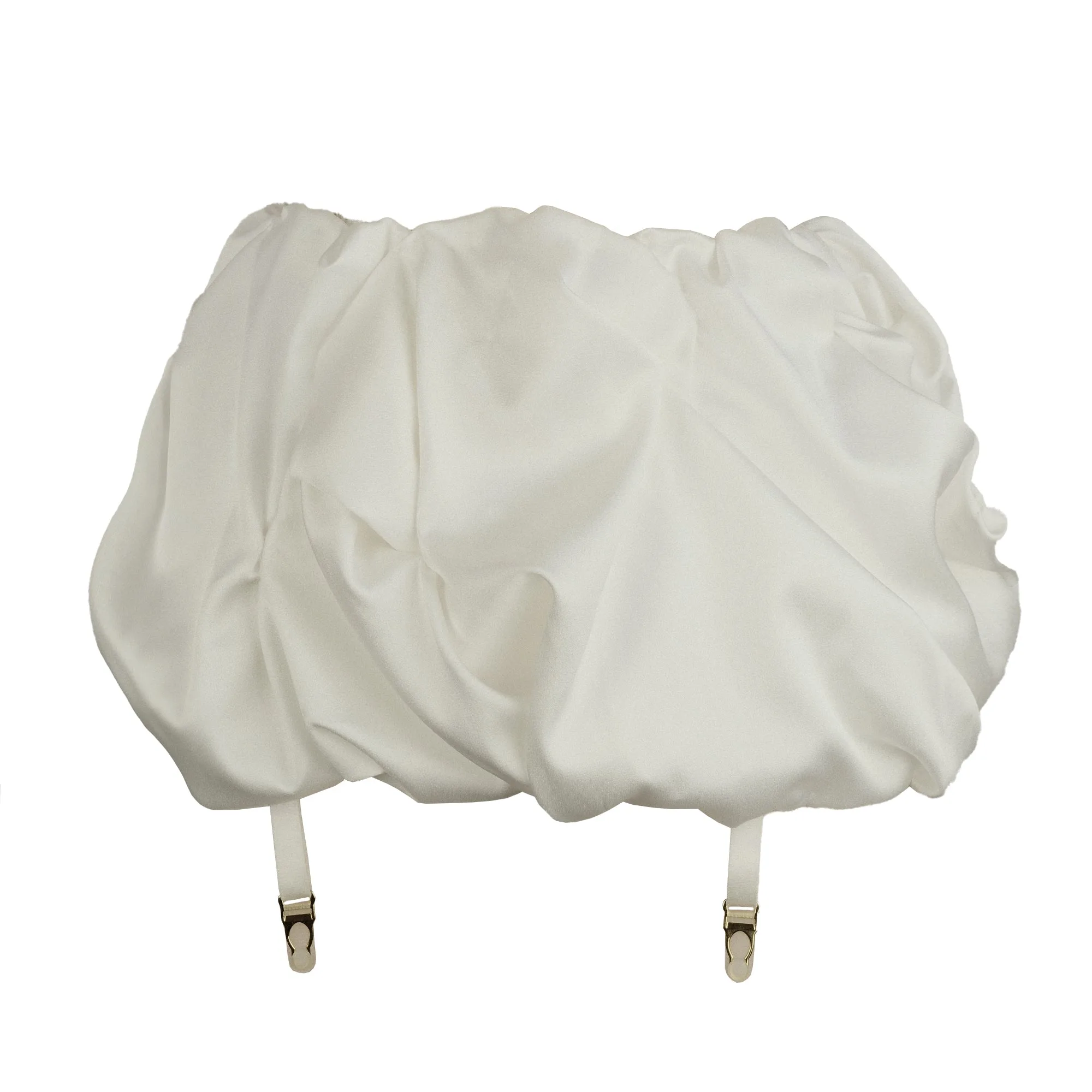
- Puffball Suspender Skirt: Puffball Suspender Skirt is hand draped and sculpted from crisp off-white silk with a powermesh underskirt and removable suspender straps. Available in sizes 6–22, cut and stitched once you order (allow 10–14 days). The removable suspender straps let you wear it as a skirt or lingerie piece, so you can layer it under a dress without the straps showing—or wear it over a slip for a party look. The powermesh underskirt adds light structure that holds volume without bulk.
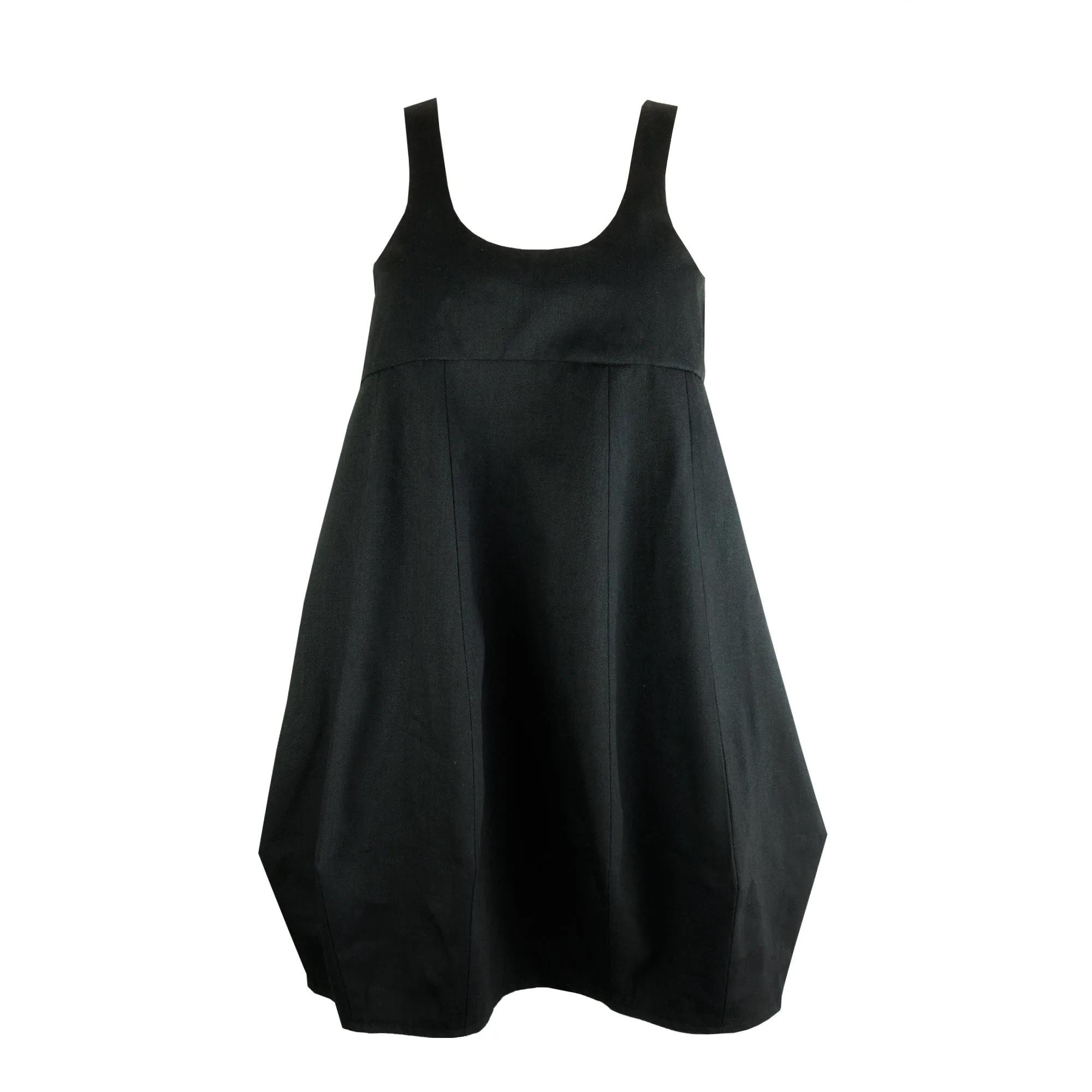
- Lantern Dress: Lantern Dress has shaped panels that create a lantern form with volume that holds without stiffness. Deep scoop neckline, empire seam, mini length, black. Available in sizes 6–22, cut and stitched once you order (allow 10–14 days). The structured volume means you should not layer a full skirt underneath—it would fight the silhouette. Instead, wear it over a slim skirt or leggings, or let it be the top layer over a fitted slip.
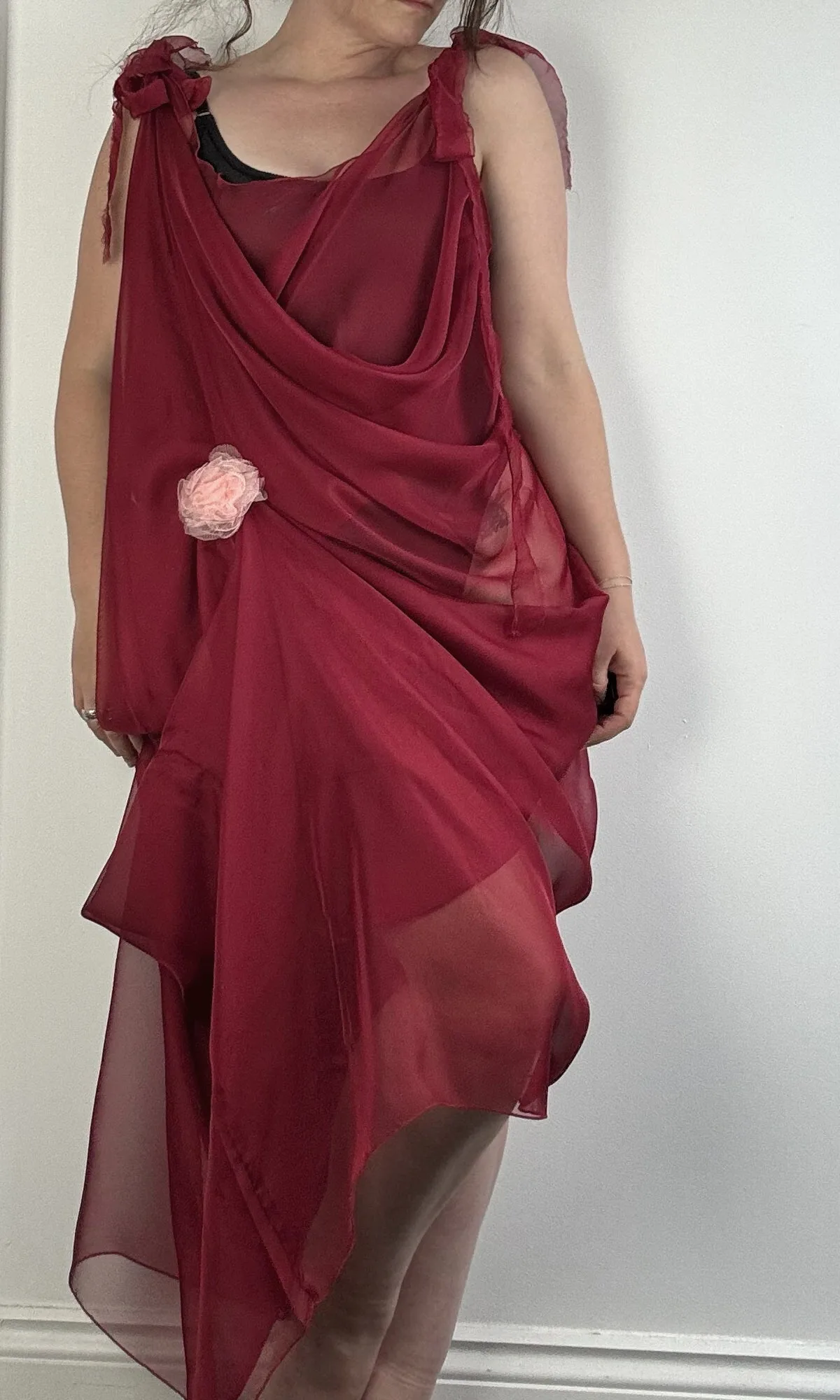
- Ondine Dress: Ondine Dress is a one-of-a-kind free-size dress (fits UK 8–14 best) in cascading layers of sheer burgundy chiffon, with asymmetric length and blush rosette details. Hand wash. The sheer chiffon and asymmetric hem make this dress ideal as a top layer over a simple skirt; the free-size fit means you can adjust where the waist sits. Hand wash to protect the delicate fabric.