Quick answer
Replace your duckbill valves when you notice reduced suction, milk backflow, visible cracks or warping, or if the valve no longer seals properly.
Why duckbill valves wear out
Duckbill valves are made of flexible silicone that opens and closes with each pump cycle. Over time, the repeated motion and exposure to heat and cleaning can cause the material to lose its elasticity, leading to cracks, warping, or an incomplete seal. This directly impacts pump performance and milk output.
Diagnosis guide
- Symptom: Pump suction feels weak or inconsistent during a session. Check if the valve is sealing properly by performing a finger test: remove the valve, cover the opening with your thumb, and try to pull air through. If air leaks, the valve is worn.
- Likely cause: The duckbill valve's silicone has lost elasticity or developed a small crack, preventing it from closing fully after each pump stroke.
- Corrective action: Replace the worn duckbill valve with a new one. Ensure you use the correct valve set for your pump model. The Spectra Duckbill Valve Set is a direct replacement for most Spectra pumps. If the valve is still sealing but suction remains low, check tubing and flange fit before replacing.
- Stop or choose another option: If the valve appears intact but suction is still low after replacement, inspect the pump diaphragm or consider professional servicing. Do not continue pumping with a leaking valve, as it can introduce bacteria into the milk.
Product facts
-
Duckbill Valves Set: The Spectra Duckbill Valve Set is one-piece, making it easier to clean and longer-lasting than multi-piece alternatives. A one-piece design reduces the chance of small crevices where milk residue can hide, helping the valve maintain its seal longer.
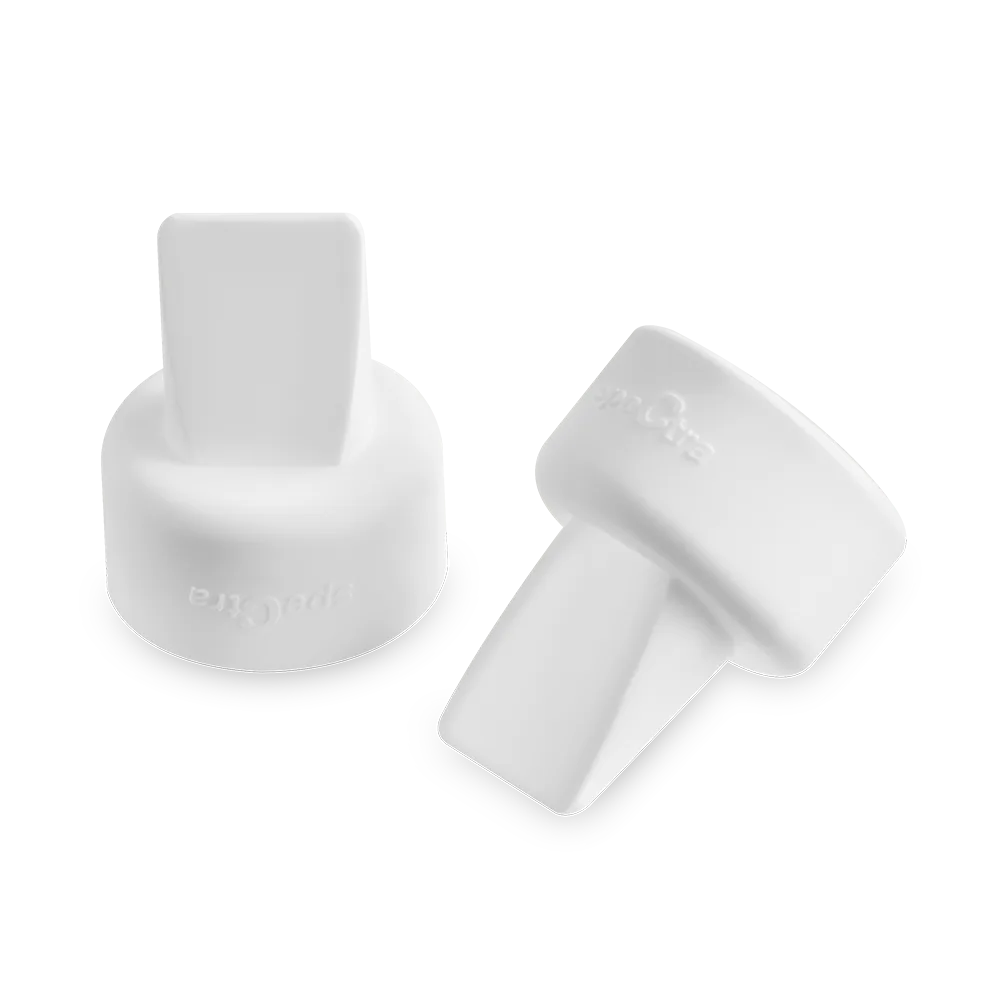
Duckbill Valves Set