Quick answer
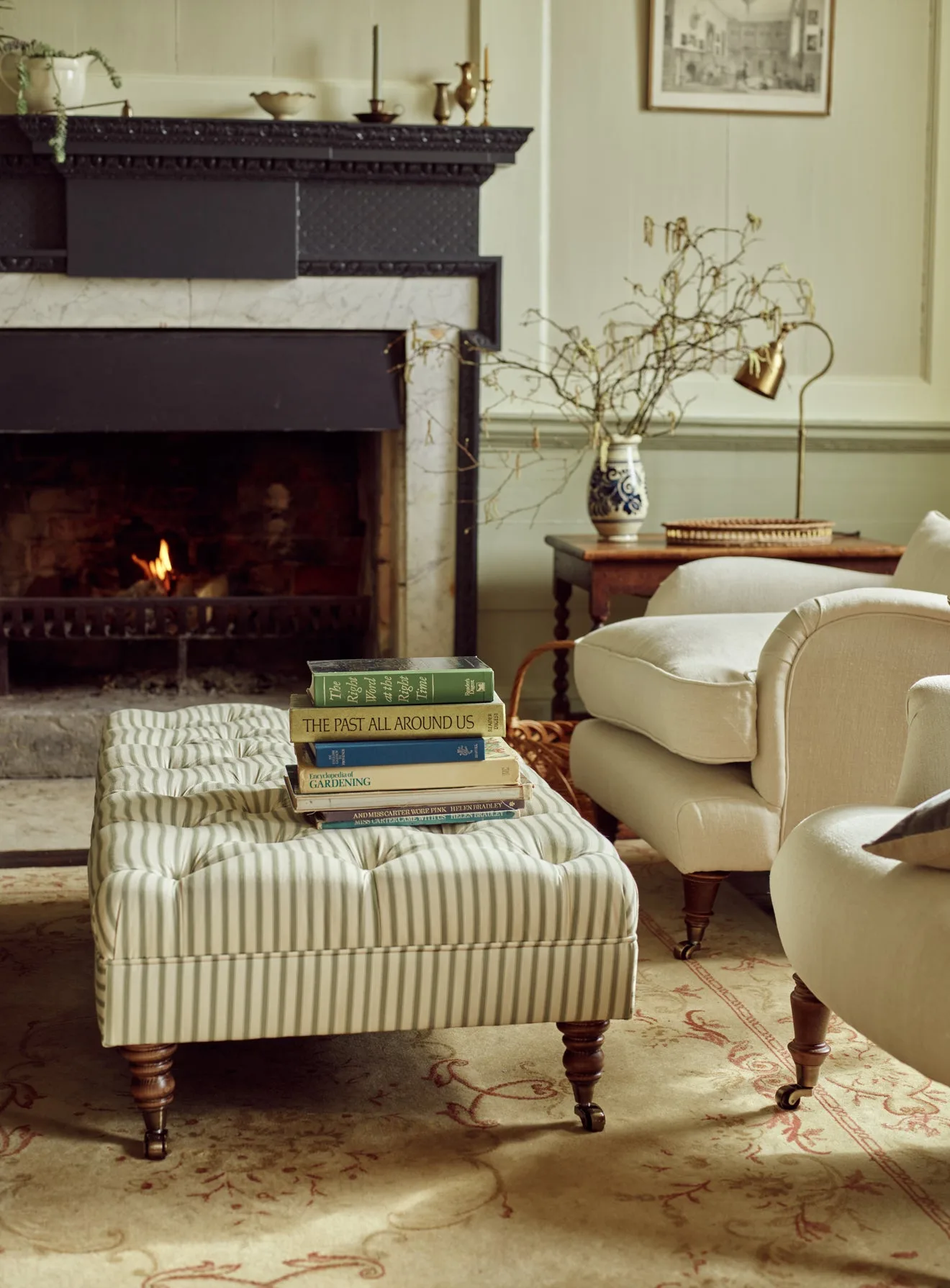
Style the Edith Oak Coffee Table with one low, wide anchor (a tray or stack of books), one tall element such as a brass candlestick, and one handmade ceramic piece. Keep the total footprint under about a third of the tabletop so the oak grain and turned legs stay visible, and stick to three materials: oak, brass and glazed stoneware.
Start with the table, not the accessories
The Edith Oak Coffee Table is carved from solid oak with a warm walnut-toned oil finish, turned legs and a curved cross bracing detail. That finish already brings a mid-to-dark tone to the room, so styling works best when you treat the wood as the dominant colour and let accessories sit quietly against it. Pale ceramics, aged brass and natural linen read as calm; bright glazes and high-contrast patterns fight the oak.
Before you buy anything, clear the table completely and look at how much usable surface you actually have. The curved cross bracing sits below the top, so it does not reduce usable space — but it does mean the area under the table is visually open. Anything you place on top will be read against that open frame, so heavy, blocky arrangements can make the table look weighed down.
The three-piece rule for oak coffee table styling
A calm living room coffee table usually holds three things: something low and horizontal, something tall and vertical, and something with texture or a handmade quality. This gives the eye a clear path — across, up, then in — without clutter.
For the low anchor, use a shallow tray, a stack of two or three books, or a wide bowl. For the tall element, a single brass candlestick or a small vase works. For texture, a handmade stoneware piece adds a soft, tactile surface that contrasts with the smooth oiled oak.
- Low anchor: tray, books or wide bowl — keeps the composition grounded
- Tall element: one candlestick or slim vase — adds height without bulk
- Texture piece: handmade ceramic — softens the hard edge of the wood
- Empty space: leave at least two-thirds of the surface clear
Choosing ceramics that suit the oak finish
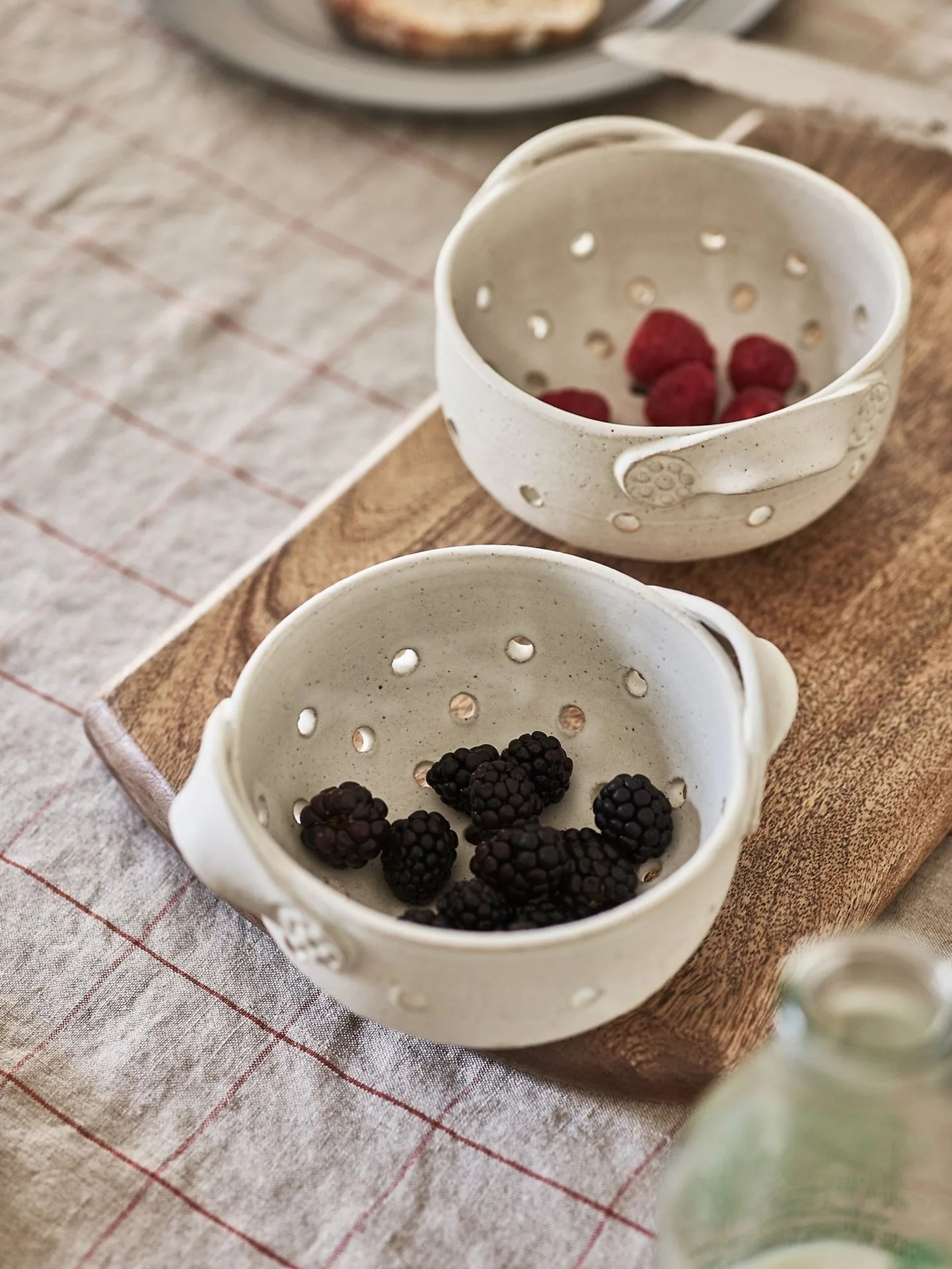
The walnut-toned oil finish on the Edith table is warm and slightly dark. Cream, oatmeal, off-white and soft grey ceramics sit comfortably against it because they are lighter in value but low in saturation. Handmade stoneware is particularly useful here: the small variations in shape and glaze keep the arrangement from looking mass-produced, which matters when the table itself is a crafted piece.
If you use a storage jar on the coffee table rather than in the kitchen, choose the small size and keep it functional — remote controls, matches, a pen. A jar with a delicately twisted handle on the lid adds a quiet detail that rewards a closer look without shouting across the room.
Brass candlestick decor without the clutter
Brass works with oak because both are warm metals and woods, but the finish matters. An aged brass finish looks settled next to an oiled oak top; a highly polished brass can look sharp and formal. For a calm room, aged brass is the easier choice.
Use one candlestick solo on a side table or a low-lit corner, or use multiples on a mantle. On the coffee table itself, one or two is usually enough — more than that and the arrangement starts to read as a display rather than a living space. Always place candles on a stable, heat-safe base and never leave a burning flame unattended.
Neutral living room styling: layering without losing calm
Neutral styling fails when everything is the same tone and texture. The fix is contrast in material, not colour: oiled oak, aged brass, glazed stoneware, a linen runner or a wool throw. Each surface reflects light differently, which gives the eye something to do without adding visual noise.
Keep the palette to three tones — a light (cream or oatmeal), a mid (oak or walnut), and a metal (brass). If you want to introduce a fourth, make it a natural material such as a woven basket or a wooden bowl, and keep it low.
Rotate rather than accumulate. A coffee table that changes with the seasons — heavier ceramics and candles in winter, a single vase in summer — stays interesting without becoming crowded.
Decision rules for styling your coffee table
- Rule 1: Keep the footprint under one third: Measure your tabletop and aim to cover no more than about a third of it with objects. The Edith table's oak grain and curved cross bracing are the point — if you cannot see them, you have over-styled. If in doubt, remove one piece.
- Rule 2: One tall, one low, one textured: Build the arrangement from three roles rather than three objects. A low tray, a tall candlestick and a handmade ceramic cover height, width and surface interest in one pass. If two pieces compete for the same role, swap one out.
- Rule 3: Match the finish, not the trend: Aged brass and cream or oatmeal stoneware suit the walnut-toned oil finish. Highly polished metals and saturated glazes will look sharper and less restful against it. Choose aged over polished for a calmer result.
- Rule 4: Buy for function first: A jar that holds remote controls, a tray that contains coasters, a candlestick that actually gets lit — functional pieces stay on the table longer than purely decorative ones. If it has no job, it will end up in a cupboard.
Products that work with this table
- Edith Oak Coffee Table: Carved from solid oak with a warm walnut-toned oil finish, turned legs and a curved cross bracing detail. The oiled finish is the dominant tone in the arrangement, so accessories should be lighter or warmer — not brighter — to keep the room calm.
- Handmade Stoneware Storage Jar, Small: Hand-thrown stoneware storage jar with a delicately twisted handle on the lid, glazed in cream or oatmeal. The soft, tactile glaze contrasts with smooth oak and gives the table a handmade quality without adding colour noise.
- Bingley Brass Candlestick: Petite brass candlestick with an aged finish, designed for use in multiples or solo. A single aged brass candlestick adds height and warmth to the table; a pair works better on a mantle or side table than on the coffee table itself.
Is this styling approach right for you?
Best for
- Rooms with a neutral or warm palette where oak and brass already appear
- Households that want a coffee table to look styled but still be usable daily
- Anyone building a calm living room around one or two crafted pieces rather than many small accessories
Not for
- Highly colourful or maximalist interiors where a restrained oak-and-brass palette would feel flat
- Homes with very young children, where low trays, candles and ceramic jars on a coffee table need to be kept out of reach or stored elsewhere
- Anyone wanting a coffee table to double as a primary storage surface — this approach deliberately leaves most of the top clear