Quick answer
Most canicross gear problems come down to three fit faults: a harness that shifts because it is too loose or wrongly angled, a belt that rides because it is not anchored to your hips, or a line that goes slack because the bungee is too long for your dog's drive. Fix the harness first, then the belt, then the line. If chafing or slipping continues after you have adjusted size, position, and tension, stop running in that setup and switch to a harness or belt designed for pulling.
Symptom: chafing behind the front legs or under the chest
Chafing usually appears where the harness webbing rubs repeatedly against the same spot. The most common cause is a harness that moves side to side or up and down during the run, which turns a light contact into a friction burn. A harness that is too loose will shift; one that is too tight will press into the skin without moving. Both create heat and wear.
Check the fit with two fingers under every strap. If you can slide more than two fingers under the chest strap, tighten it one notch. If the strap leaves a visible indent when you remove the harness, loosen it. Then check the angle: the chest strap should sit across the breastbone, not across the throat. A harness that rides low on the neck will pull forward and rub the shoulders.
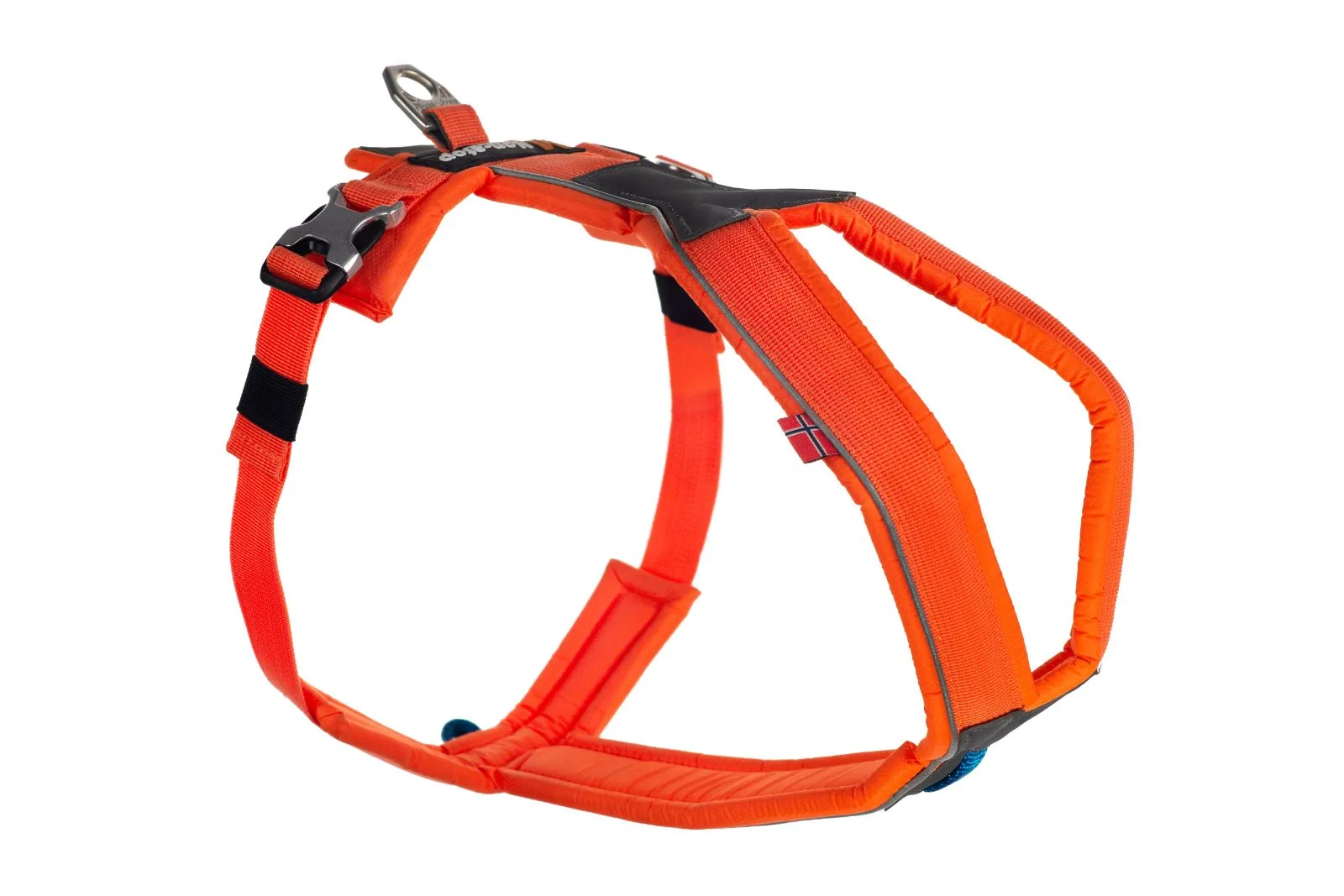
If the fit is correct and chafing still happens, look at the padding and the material. Some dogs do better with a harness that has a wider, padded chest plate. The Line harness grip is designed with an ergonomic shape that gives the dog freedom of movement at the shoulders, and its handle gives you extra control when you need to steady your dog. That control can reduce the sudden jerks that cause rubbing.
Line harness
Symptom: harness slips to one side or rotates during the run
A harness that rotates is usually a size or adjustment problem, not a dog problem. If the harness is too big, the pull comes from one side and the whole harness twists. If the straps are uneven, one side takes more load and the harness slides toward that side. Start by checking that the left and right straps are the same length.
Then check the connection point. A harness with a single attachment point will always shift more than one with a balanced design. For canicross, the line should attach low and centered so the pull stays in line with your dog's spine. If your dog is built with a deep chest or a narrow waist, you may need a harness with more adjustment range.
If the harness still slips after you have evened out the straps and centered the attachment, the shape may not match your dog. A slipping harness is not just annoying; it can cause chafing and reduce your dog's pulling power. At that point, stop adjusting and try a different harness model.
Symptom: line goes slack, tangles, or wraps around legs
A slack line is a tension problem. If the bungee is too long for the distance between you and your dog, the line will sag and catch on brush or legs. If the bungee is too short, it will yank and cause the harness to shift. The fix is to match the line length to your dog's natural running position.
Start by running without the bungee attached to your belt, letting your dog pull the line straight. Mark where the line meets your hand. That is roughly the working length you need. Then attach the line to your belt and adjust the bungee so it has just enough stretch to absorb sudden changes in speed without going slack.
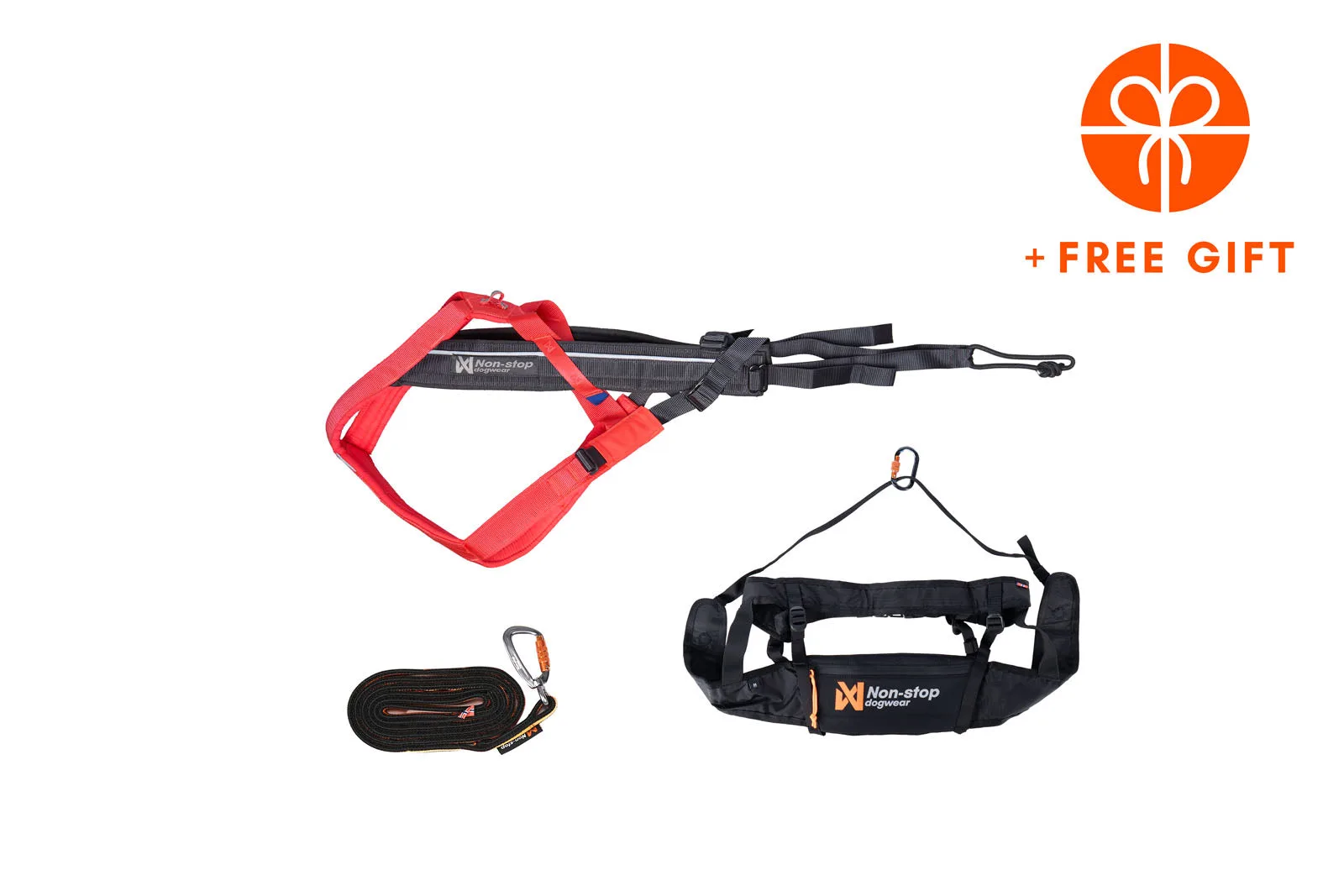
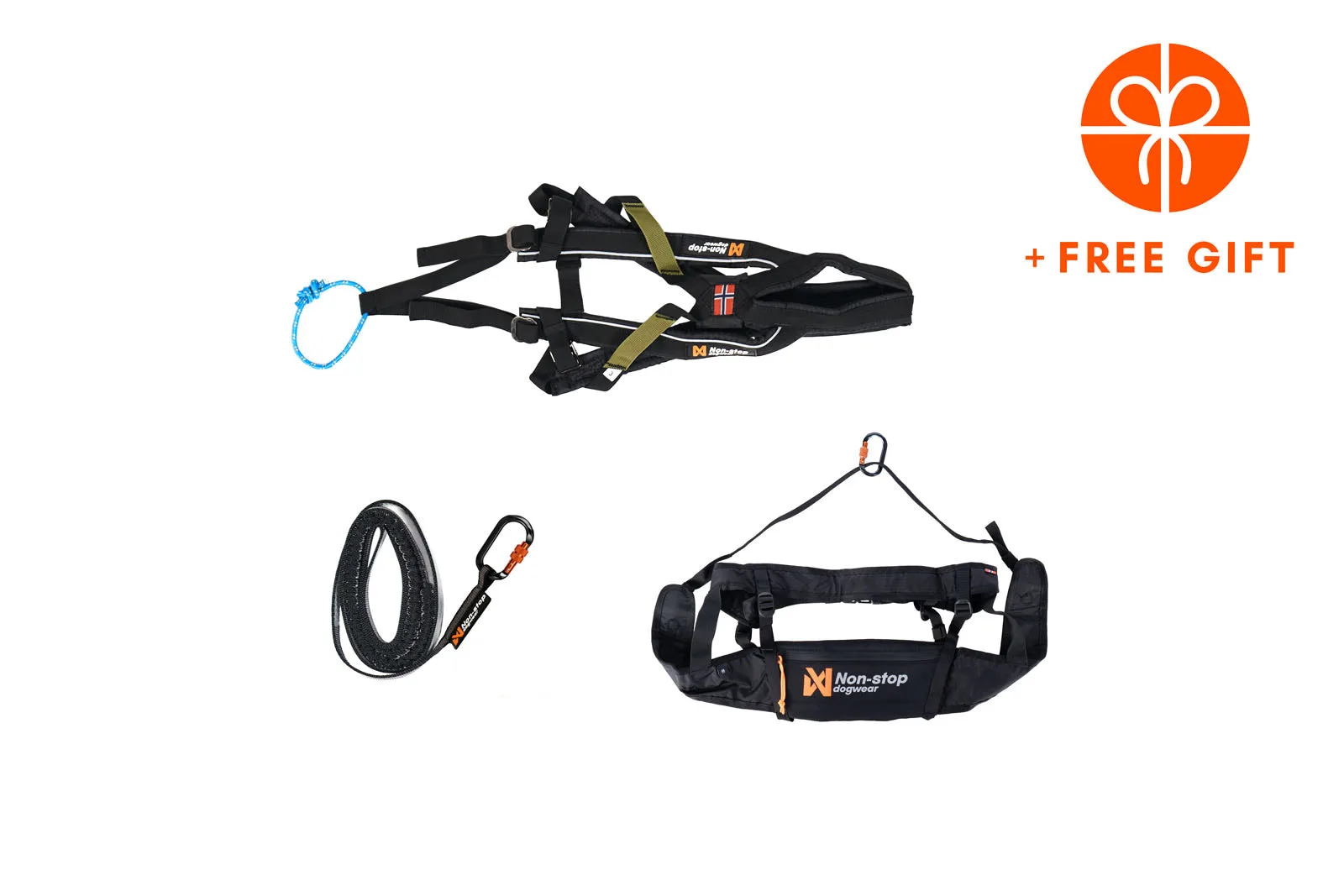
Tangling often happens when the line is too long or when the belt rotates. A belt that rides up or twists will change the angle of the line and cause it to wrap. The CaniX belt 2.0 is built for canicross with a wide waistband and a low attachment point, which keeps the line pulling from your hips rather than your lower back. If you are setting up a full kit, the CaniX kit Teal includes the https://nonstopdogwearoz.com/products/freemotion-harness-5-b3aec08d83ae6df2d3cd936d-582049Freemotion harness 5.0, Bungee leash, and CaniX belt 2.0, so the attachment points are designed to work together.
Symptom: belt rides up or digs into your hips
A canicross belt should sit low on your hips and stay there. If it rides up, the problem is usually that the belt is too loose or the attachment point is too high. Tighten the belt so it sits snugly on your hip bones, then check that the line attaches below your center of gravity. If the attachment point is above your waist, the pull will lift the belt.
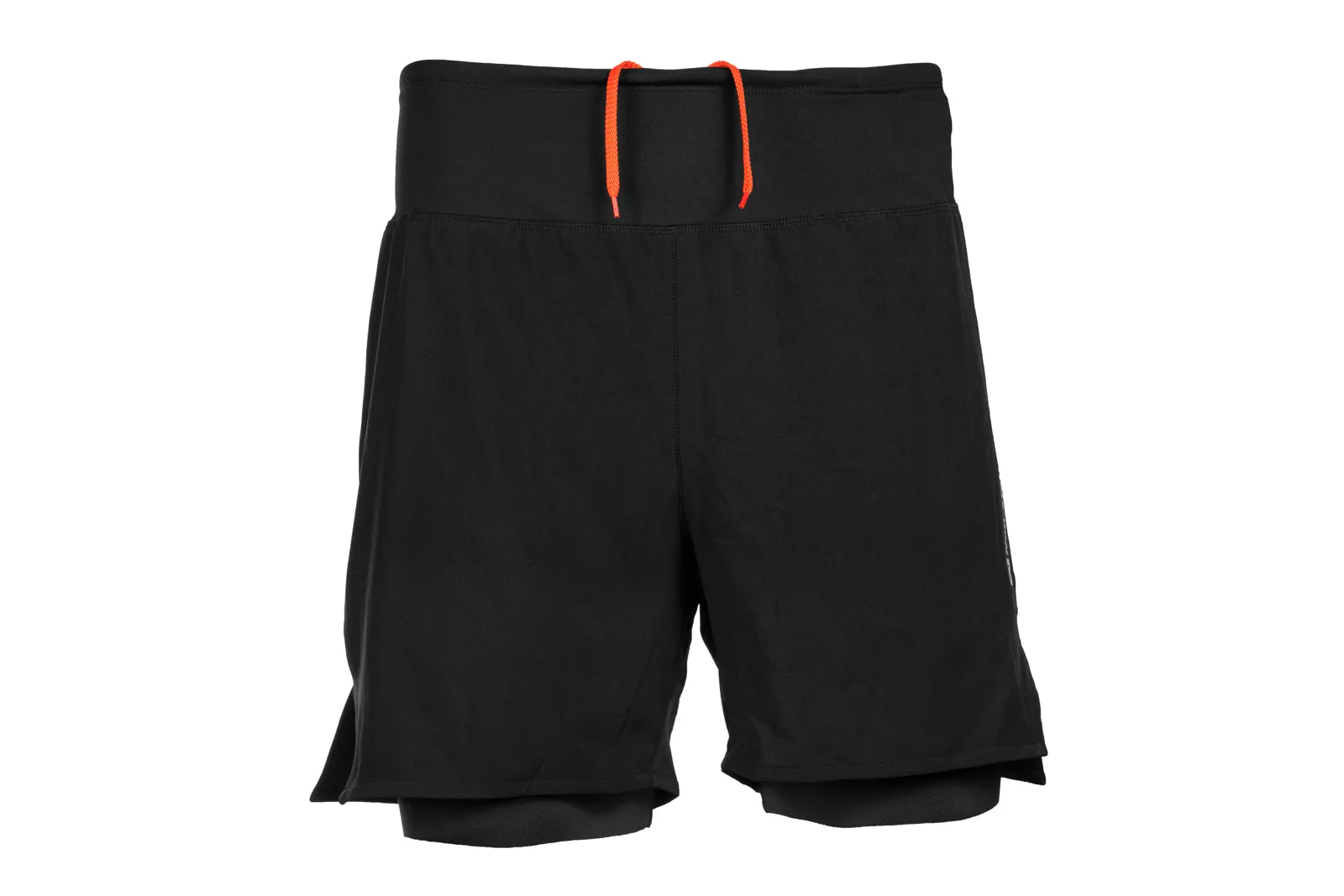
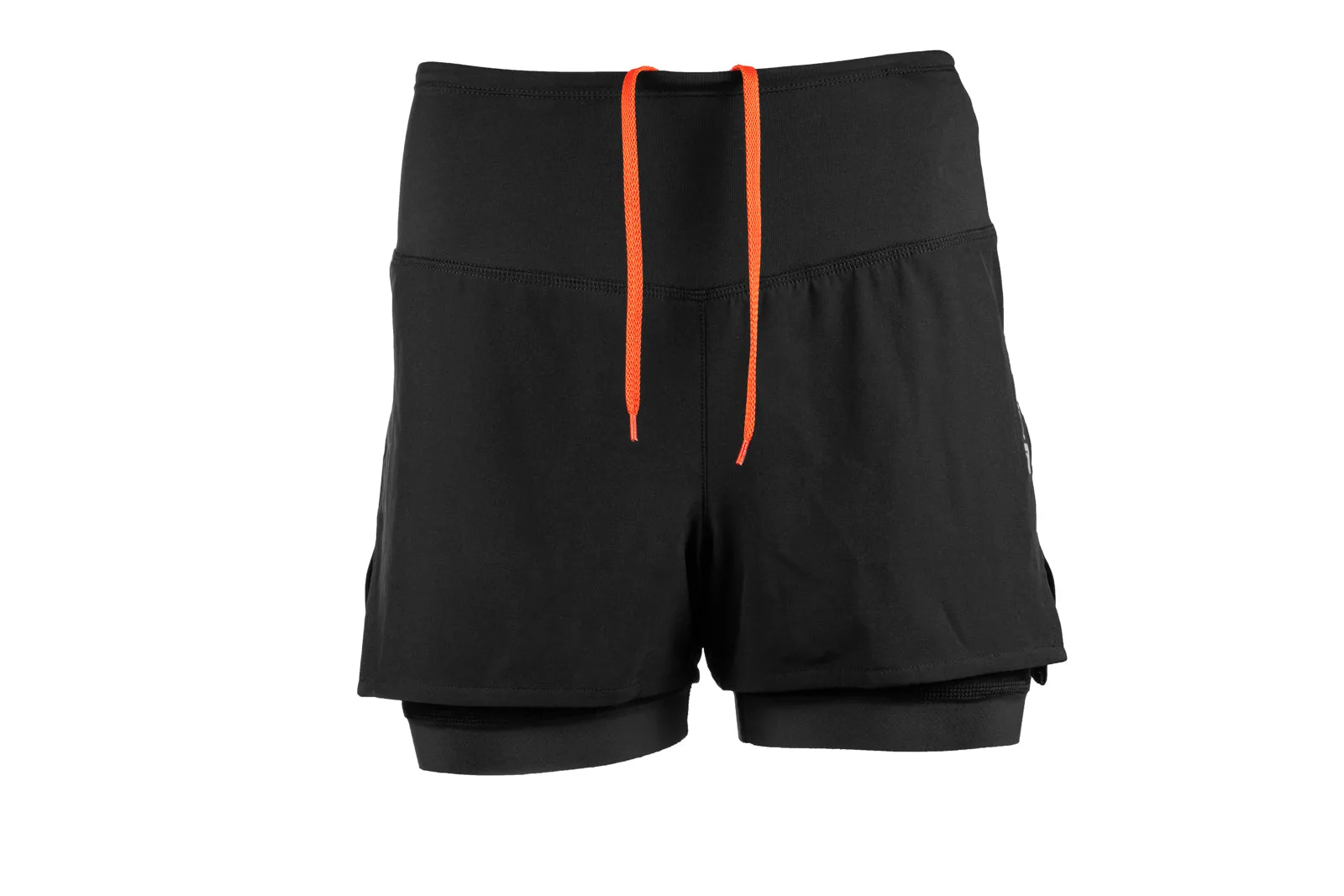
Also check your clothing. A smooth, bulky jacket can let the belt slide. The CaniX short tights men's are designed for canicross with a wide waistband and a zipperless pocket, which means you can wear a belt over them without the pocket zipper digging in or catching. That combination reduces the chance of the belt shifting during a run.
Diagnosis: when to adjust, when to stop
- Chafing behind front legs: Check strap tension and chest strap angle. Tighten or loosen one notch, then run a short distance. If the skin is red or the hair is rubbed thin, stop. If chafing continues after two fit adjustments, switch to a harness with a different chest plate shape or more padding.
- Harness rotates to one side: Even out left and right straps and center the attachment point. If the harness still twists, the size or shape is wrong for your dog. Do not run with a rotating harness. It will chafe and reduce pulling efficiency. Try a different model.
- Line goes slack or tangles: Measure the working length of your dog's pull and adjust the bungee so it never sags. Check that your belt attachment is low and centered. If the line still tangles after adjusting length and belt position, the bungee may be too long for your dog's stride. Use a shorter line or a different attachment setup.
- Belt rides up: Tighten the belt so it sits on your hips, not your waist. Check that the line attaches below your center of gravity. If the belt still rides up, the attachment point is too high or the belt is the wrong size. Stop and try a different belt.
Gear that addresses these problems
- CaniX short tights men's: Light and functional shorts developed for canicross and an active lifestyle with dogs, with a wide waistband and zipperless pocket. The wide waistband and zipperless pocket reduce pressure and snag points when you wear a canicross belt, which helps prevent the belt from riding up or twisting.
- CaniX kit Teal: A canicross set including Freemotion harness 5.0, Bungee leash, CaniX belt 2.0, and a free gift. Buying the harness, line, and belt as a matched kit removes the guesswork of mixing attachment points and bungee lengths that can cause slack or tangling.
- Line harness grip: A versatile harness for everyday and hiking with a handle for extra control, ergonomic design, and freedom of movement for the dog's shoulders. The handle lets you steady your dog without grabbing the line, which can reduce the sudden jerks that cause chafing and harness rotation.