Quick answer
Most toddler frustration with the Fraction Puzzle comes from missing prerequisite skills—not from the puzzle being too hard. Before you shelve it, check whether your child can grip the pieces, match shapes, and tolerate a two-step task. If they can't do those three things yet, put the puzzle away for a few weeks and build those skills with simpler toys first.
Why the Fraction Puzzle trips up toddlers (and it's not the fractions)
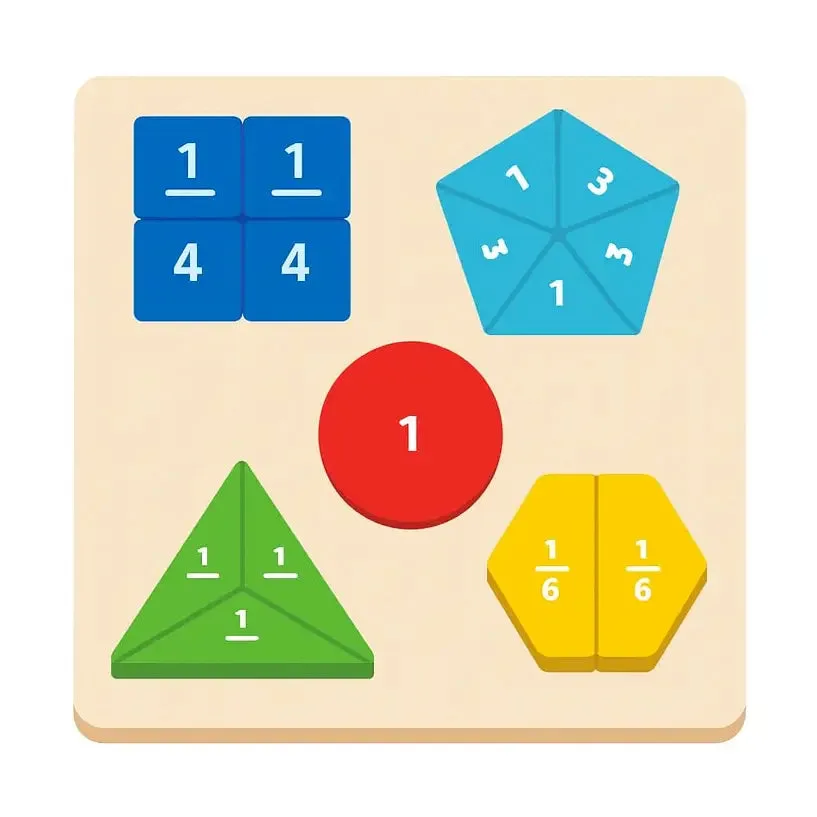
The Fraction Puzzle is a wooden board with shape pieces that fit into corresponding slots. It's designed to introduce early math concepts through hands-on play—fractions, shapes, and colors—while improving problem-solving and fine motor skills. But toddlers don't experience it as a math lesson. They experience it as a physical challenge: can I pick up this piece, turn it the right way, and push it into the hole?
When a toddler gets stuck, the problem is usually mechanical, not conceptual. They may not have the pincer grasp to lift the piece cleanly. They may not yet match a triangle to a triangle slot. Or they may simply not have the attention span for a task that requires two sequential actions: pick up, then place. None of that means the puzzle is wrong for your child—it means the timing or the setup is off.
The four-minute reset that fixes most stuck moments
Before you assume the puzzle is too advanced, try a reset. Clear the board completely and place only two pieces in front of your child—one that fits easily and one that's slightly more challenging. Sit beside them, not across from them, and model the motion slowly without correcting. If they place the easy piece, celebrate that specifically: 'You turned it! It fits!' If they reach for the harder piece and struggle, wait five seconds before helping. Many toddlers need that pause to self-correct.
If the reset works, repeat it for a few days before adding more pieces. If your child still pushes the puzzle away after two or three tries, stop. Forced practice builds frustration, not skill. The goal is to end on a successful placement, even if that means only one piece goes in.
When to pause the puzzle and what to use instead
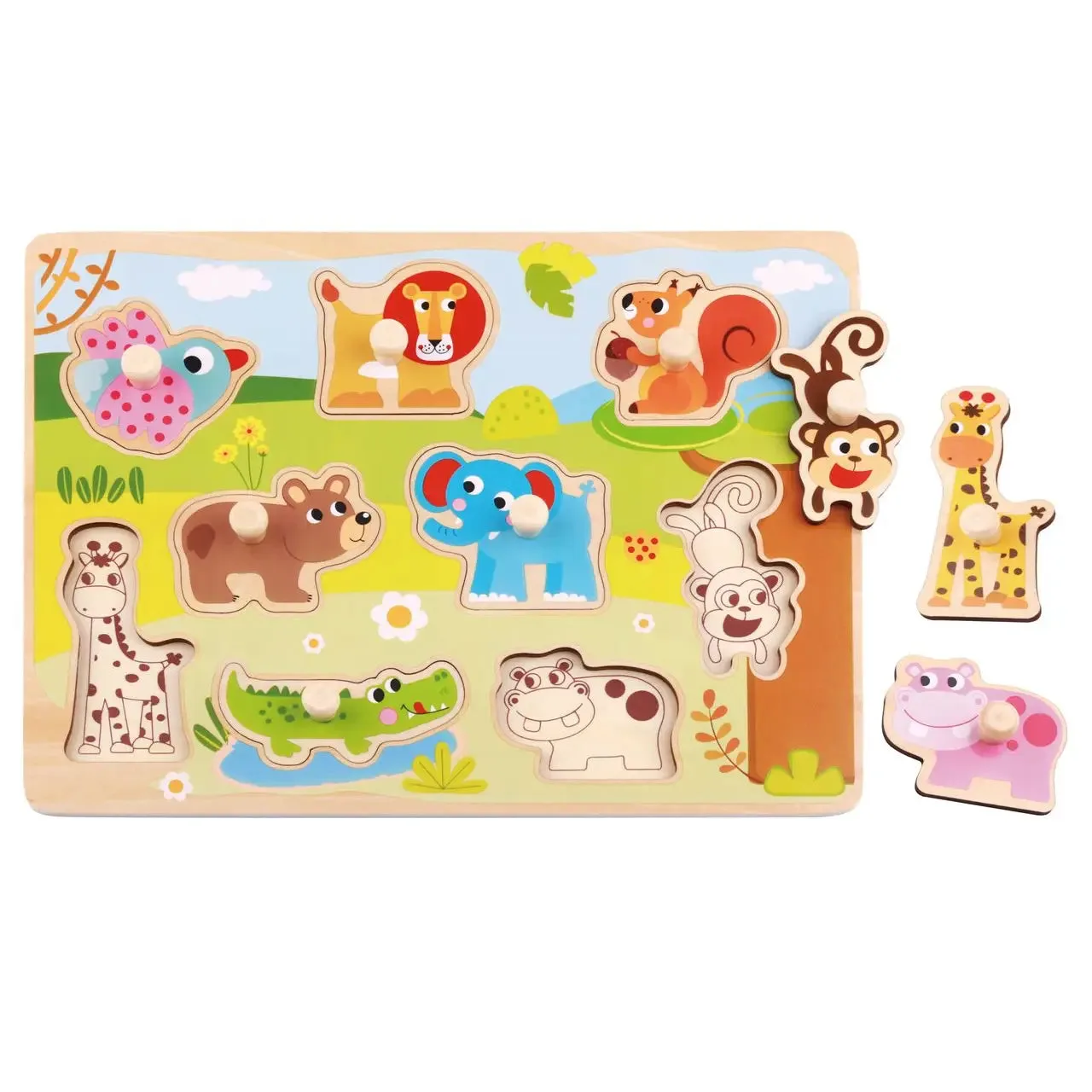
If your toddler can't yet grip a chunky wooden piece or match a basic shape, the Fraction Puzzle is not the right next step. Put it away for two to four weeks and use toys that target the missing skill in isolation. The Animal Puzzle has larger, simpler pieces and focuses on animal recognition, shape recognition, and hand-eye coordination—it's a better fit if your child is still learning to grasp and place. The Montessori Educational Box (34-36 Months) includes a Spelling Game, Animal Jeep, Color Paddies, Stacking Rocks, Play Book, and Vegetable Board, which together build fine motor strength and open-ended play before a child is ready for fraction concepts.
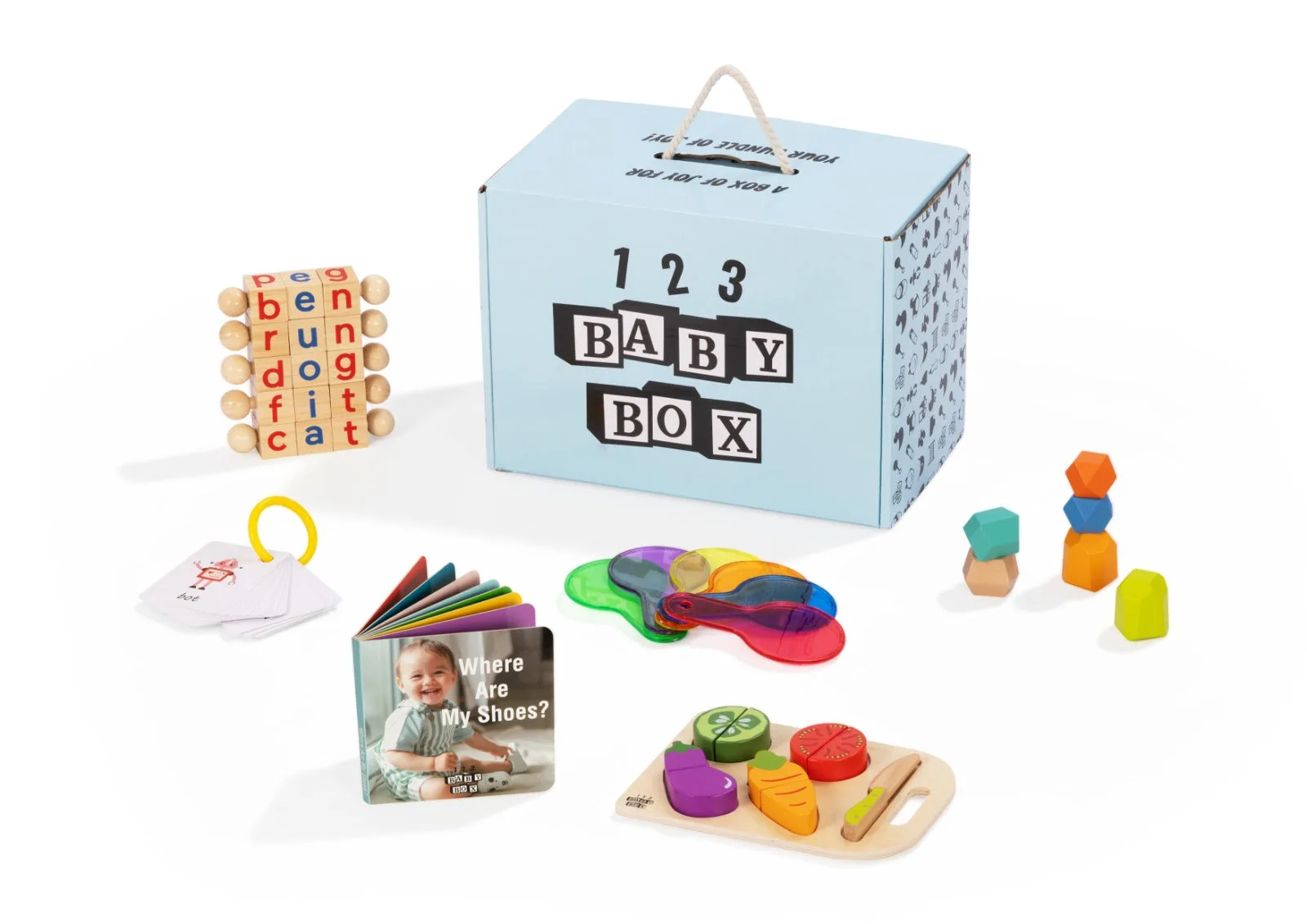
Montessori Educational Box (34-36 Months)
The point of pausing isn't failure. It's sequencing. A toddler who can stack rocks and place animal pieces will come back to the Fraction Puzzle with the physical control and confidence to actually engage with the fractions later.
Diagnosis: match the symptom to the fix
- Symptom: Toddler grabs the piece but drops it before placing it.: Likely cause: The pincer grasp (thumb and forefinger) isn't developed enough for the piece's thickness. This is common before 30 months. Corrective action: Practice picking up smaller, lighter objects like stacking rocks or the Color Paddies from the Montessori Educational Box. If dropping continues after two weeks of practice, pause the Fraction Puzzle and revisit in a month.
- Symptom: Toddler places pieces randomly, ignoring the shape of the slot.: Likely cause: Shape matching is still emerging. The child sees the piece and the hole as separate objects, not a matched pair. Corrective action: Reduce to two pieces and physically guide the piece to the correct slot once. If the child still forces the wrong piece after three guided tries, switch to the Animal Puzzle for simpler shape matching.
- Symptom: Toddler completes one piece, then throws the rest or walks away.: Likely cause: The task requires sustained attention across multiple steps. A toddler's attention span for a single seated activity is often 2–4 minutes at this stage. Stop point: End the session after one successful placement. Do not push for a full board. If walking away happens consistently for a week, the puzzle is ahead of your child's current attention span—use it as a 2-minute activity, not a sit-down task.
Product facts that matter for this fix
- Fraction Puzzle: The wooden Fraction Puzzle introduces early math concepts through hands-on play. Kids learn fractions, shapes, and colors while improving problem-solving and fine motor skills. Size: 22 × 22 × 2.4 cm (8.66 × 8.66 × 0.95 in). The compact size and wooden construction mean the pieces are small enough to require a controlled grip. If your toddler is still using a whole-hand grab, the pieces will feel slippery and frustrating—not because the puzzle is flawed, but because the grasp isn't there yet.
- Animal Puzzle: This wooden Animal Puzzle helps little ones learn about animals while developing problem-solving and fine motor skills. Each colorful piece encourages shape recognition, hand-eye coordination, and early learning through playful, hands-on exploration. Size: 30 × 22.5 × 1.5 cm (11.81 × 8.86 × 0.59 in). The larger board and simpler piece shapes make this a better stepping stone when a toddler is stuck on the Fraction Puzzle. Use it to build the pick-up-and-place motion before returning to fraction pieces.