Quick answer
In 2026, the most useful way to shop fruit snacks is to read the ingredient line first, then match the format to where you will actually eat it. A two-ingredient fruit bar and a three-ingredient fiber fruit bar solve different problems, and mini fruit bars solve portion and packing problems that full-size bars do not. Buy the format that fits your routine, not the one with the loudest front-of-package claims.
What shoppers are actually asking in 2026
The questions have shifted. Fewer people ask whether fruit snacks are healthy in the abstract; more ask which specific bar fits a lunchbox, a desk drawer, a gym bag, or a daily fiber goal. That is a better question because it has a checkable answer: look at the ingredient list, the stated fiber amount, and the bar size.
The second shift is format. Mini fruit bars and variety packs get asked about more often because shoppers want portion control and flavor rotation without committing to a 12-count box of one flavor. If you are shopping for more than one person or more than one occasion, a variety pack usually beats a single-flavor box on real-world use.
How to read a fruit snack label without overthinking it
Start with the ingredient line. Short lists are easier to verify: apples, figs, pears, apple fiber, and similar whole-fruit entries tell you what you are eating. If the list includes concentrates, purees, or added sugar, that is not automatically bad, but it is a different product than a bar made from whole fruit, and it should be priced and used accordingly.
Then check the fiber number if fiber is your reason for buying. A bar that states 7g of fiber from fruit is doing a specific job; a bar with no fiber claim is a different snack. Finally, check the bar weight. A 20g mini bar and a full-size bar are not interchangeable in a lunchbox or a calorie budget, and the package weight is the fastest way to tell which one you are holding.
Fiber fruit bars vs. regular fruit bars
Regular fruit bars are usually about fruit and convenience. Fiber fruit bars add a functional job: helping you reach a daily fiber target with a real-food source rather than a supplement. If you already eat enough fiber, the regular bar is the simpler choice. If you are actively trying to build a fiber habit, the fiber bar earns its place because the fiber is stated on the package and comes from fruit ingredients.
One practical note: adding fiber is a change to your routine, so introduce it gradually and drink water. That is general guidance, not medical advice, and anyone managing a condition should check with a clinician about how a specific bar fits their plan.
When mini fruit bars make more sense than full-size bars
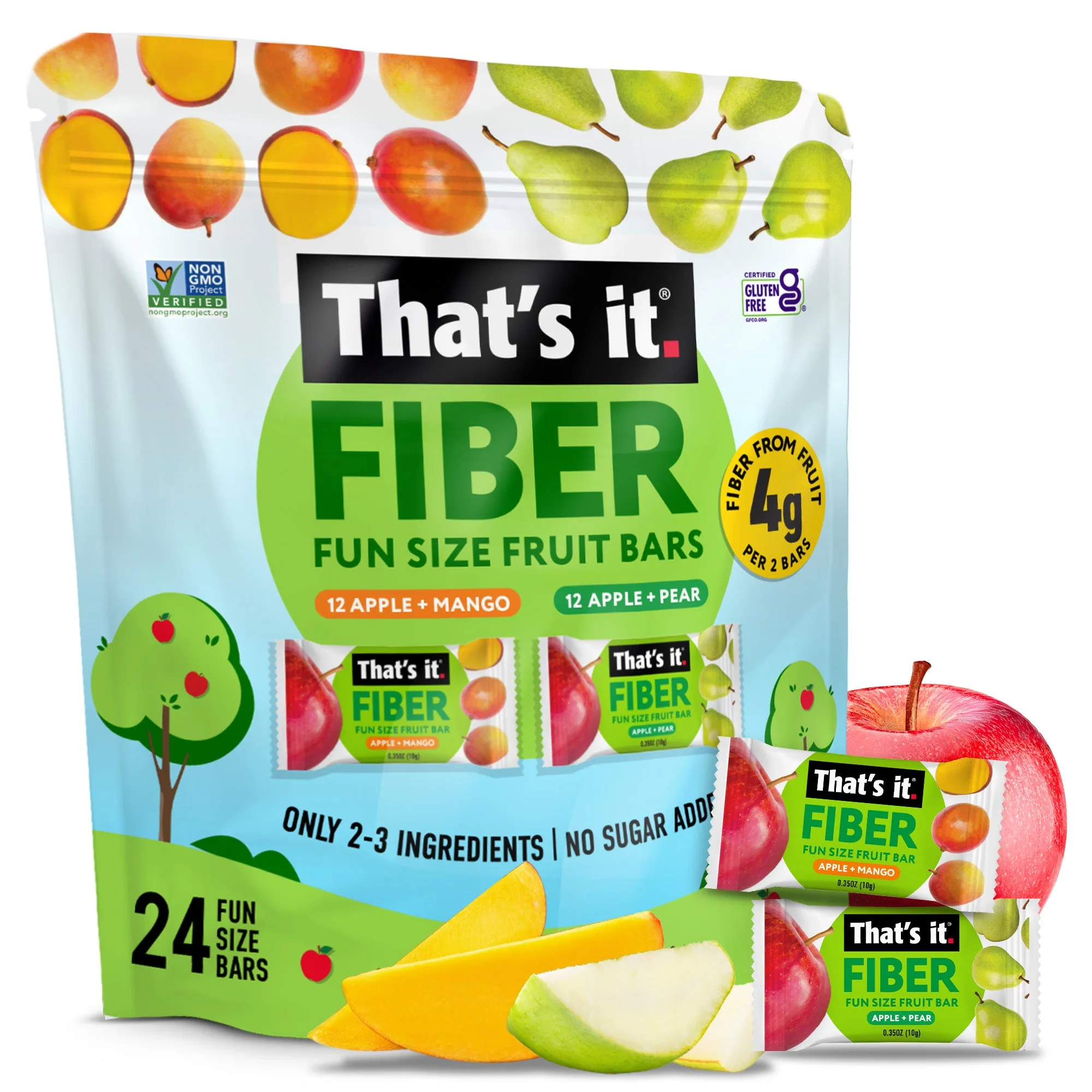
Mini bars win in three situations: lunchboxes, travel, and mixed-age households. A 20g bar is a smaller commitment for a child or for a quick bite between meetings, and it lets you hand out a snack without opening a full-size bar that may not get finished. The tradeoff is packaging: a 24-count bag takes up more pantry space and creates more wrappers than a 12-count box of full-size bars.
Variety packs also reduce flavor fatigue. If you buy one flavor in bulk and your household gets bored by week two, the remaining bars sit. A pack with three flavors keeps the snack in rotation, which matters more than most shoppers expect when they are buying for a full month.
What to check before you buy in bulk
Check the count, the bar size, and whether the pack is single-flavor or mixed. Then check the price per bar rather than the sticker price, because a larger bag is not always the better value once you account for bar weight. Finally, check the storage instructions and the best-by guidance on the package; fruit bars are shelf-stable, but heat and humidity still affect texture over time.
If you are buying for a specific person, ask what they already finish eating. The most sustainable bulk purchase is the format that disappears from the pantry, not the one with the best claims on the front.
Quick answers to the most common questions
Are fruit bars and crunchables the same thing?
No. Fruit bars are chewy, pressed fruit snacks, while crunchables are a crisp, bite-sized format. They can both be made from fruit, but the texture and eating occasion differ, so do not assume a bar and a crunchable are interchangeable in a lunchbox. Match the format to the eater, not the category name.
Is a shorter ingredient list always better?
A shorter list is easier to verify, but it is not automatically better for every goal. A three-ingredient fiber bar adds apple fiber on purpose, and that is a functional choice, not a red flag. Judge the list against your reason for buying.
How do I compare a mini bar to a full-size bar?
Use the bar weight and the count. A 24-count bag of 20g minis is a different purchase than a 12-count box of full-size bars, even when the total package weight looks similar. Compare price per bar and grams per bar before you compare sticker prices.
Do I need a fiber bar if I already eat fruit?
Not necessarily. Whole fruit and a fiber fruit bar both contribute fiber, but a bar makes the amount visible on the package, which helps if you are tracking. If you already hit your fiber target, a regular two-ingredient fruit bar is the simpler pick. Buy fiber bars when fiber is the goal; buy fruit bars when fruit is the goal.
What should I check before buying a variety pack?
Confirm the flavors, the count per flavor, and the bar size. A variety pack is only useful if everyone in the household will eat all three flavors, so check that before committing to a larger bag. Variety packs reduce waste only when the flavors get eaten.
Three current examples and what they tell you
- Apple + Fig Fruit Bars: Apple + Fig Fruit Bars are made with just apples and figs, with no preservatives, added sugar, concentrates, or purees. This is the simplest ingredient profile in the lineup, so it is the one to choose when you want a fruit bar that is only fruit and nothing else.
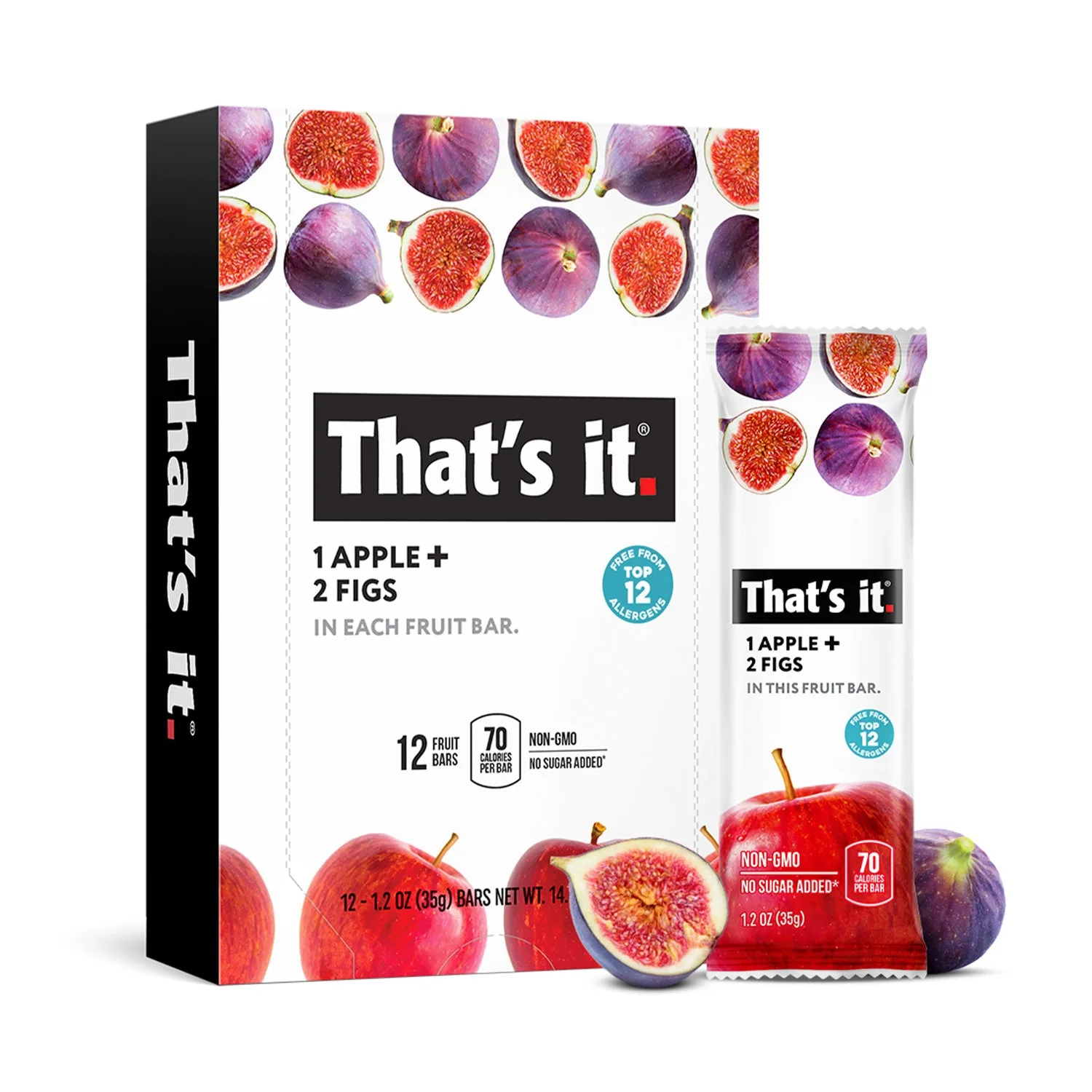
Apple + Fig Fruit Bars
- Apple + Pear Fiber Fruit Bars (12 Bars): Apple + Pear Fiber Fruit Bars deliver 7g of fiber from fruit in every bar and are made with only three ingredients: apples, pears, and apple fiber. This is the option to pick when fiber is the reason you are buying, because the fiber amount is stated and comes from a fruit ingredient rather than a blend of additives.
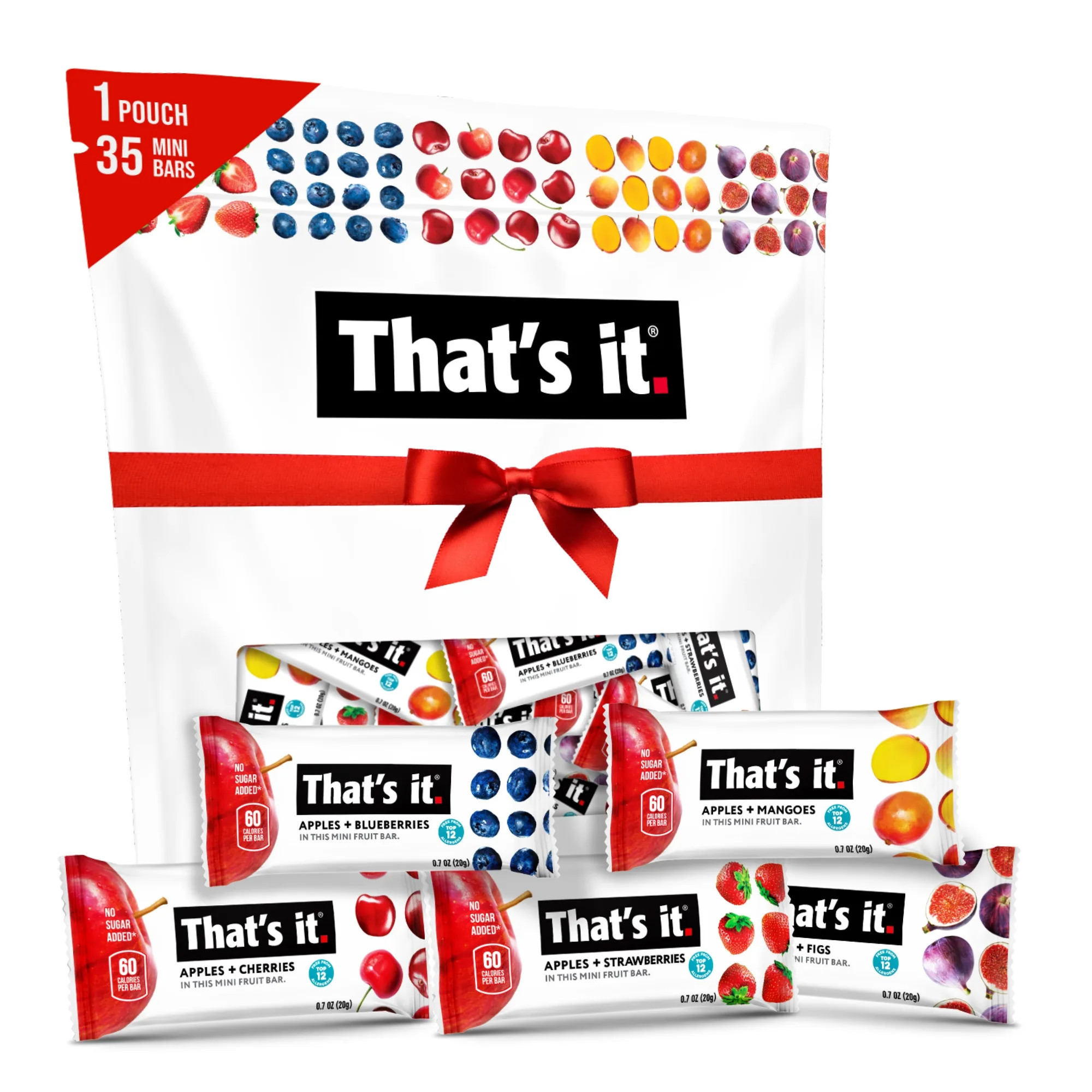
- Minis Variety Pack - Blueberry, Mango & Strawberry (24 Bars): The Minis Variety Pack contains 24 bars across three flavors: eight Apple + Strawberry, eight Apple + Mango, and eight Apple + Blueberry, in 20g bars. This is the format for lunchboxes, travel, and households that want portion control and flavor rotation without buying three separate boxes.