Quick answer
Choose the Fujinon XF 55-200mm f/3.5-4.8 if you want a lighter, faster-aperture telephoto zoom with strong stabilization for portraits, events, and everyday reach. Choose the Sigma 100-400mm f/5-6.3 DG DN OS Contemporary if you need significantly more reach for wildlife or distant subjects, and can accept a slower aperture and larger lens.
Reach vs. aperture: the core trade-off
The most obvious difference is focal length. The Fujinon XF 55-200mm gives you a 3.6x zoom range, while the Sigma 100-400mm doubles the reach at the long end. That extra reach matters when you can't get closer to your subject—wildlife, sports, or distant landscapes. But the Sigma's slower maximum aperture (f/5-6.3) lets in less light than the Fujinon's f/3.5-4.8, which can mean higher ISO or slower shutter speeds in dim conditions. The Fujinon's faster aperture also gives you more control over depth of field for isolating subjects.
Size and handling: portability vs. stability
The Fujinon XF 55-200mm is designed to be highly portable, making it a natural walk-around lens that balances well on smaller X-mount bodies. The Sigma 100-400mm, while relatively compact for its class, is still a larger, heavier lens that benefits from a solid tripod or monopod for extended use. If you plan to hand-hold for long periods or travel light, the Fujinon has a clear advantage. If you need maximum reach and can support the lens properly, the Sigma's extra size is the price of admission.
Stabilization and autofocus
Both lenses offer optical image stabilization, but the Fujinon's OIS is rated to allow shutter speeds 5.0 stops slower, which is a concrete benefit for handheld shooting in low light. The Sigma also includes OS (Optical Stabilization), but the catalog does not specify a stop-rating, so you should not assume parity. For autofocus, the Fujinon uses a linear motor for high-speed AF performance, which is well-suited to moving subjects. The Sigma's AF system is not detailed in the supplied specs, so if focus speed is critical, try before you buy or look for more information.
Key trade-offs to weigh
- Reach: The Sigma 100-400mm gives you 400mm at the long end, while the Fujinon stops at 200mm. If your subjects are often far away and you can't move closer, the Sigma's extra reach is a decisive advantage. Decide if 200mm is enough for your typical shooting distance; if not, the Sigma is the practical choice.
- Aperture and low light: The Fujinon's f/3.5-4.8 aperture is faster than the Sigma's f/5-6.3, letting in more light and allowing shallower depth of field. This helps in dim conditions and for blurring backgrounds. If you often shoot in low light or want more background blur, the Fujinon's faster aperture is a real benefit.
- Size and stabilization: The Fujinon is more portable and its OIS is rated for 5.0 stops, making handheld shooting easier. The Sigma is larger and heavier, and its stabilization rating is unspecified, so plan to support it with a tripod or monopod for best results. For all-day handheld carry, the Fujinon is easier; for maximum reach, prepare to support the Sigma properly.
Product facts
-
Sigma 100-400mm f/5-6.3 DG DN OS Contemporary Lens (FUJIFILM X): 100-400mm focal range with f/5-6.3 maximum aperture and optical stabilization (OS). Gives you long reach for wildlife and distant subjects, but the slower aperture requires more light or higher ISO.
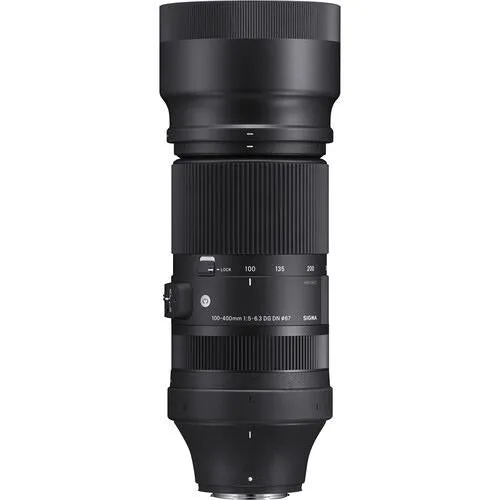
Sigma 100-400mm f/5-6.3 DG DN OS Contemporary Lens (FUJIFILM X)
-
Fujifilm Fujinon XF 55-200mm f/3.5-4.8 R LM OIS Lens (open box): 55-200mm focal range with f/3.5-4.8 maximum aperture, linear motor AF, and OIS rated for 5.0 stops. Offers a faster aperture and strong stabilization in a portable package, ideal for handheld shooting and subject isolation.
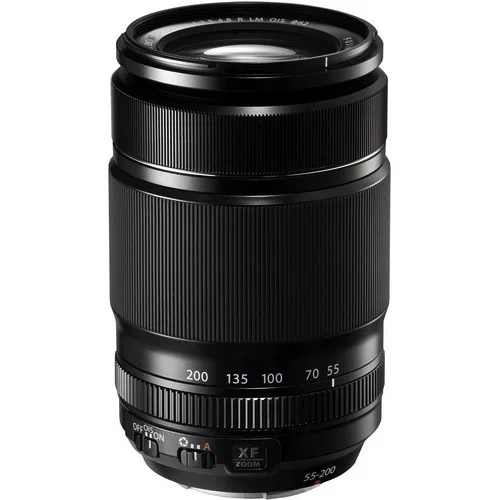
Fujifilm Fujinon XF 55-200mm f/3.5-4.8 R LM OIS Lens (open box)
Which lens fits you?
Choose the Fujinon XF 55-200mm if:
- You want a lightweight, portable telephoto zoom for travel, events, and portraits.
- You need a faster aperture for low light or shallow depth of field.
- You rely on strong image stabilization for handheld shooting.
Choose the Sigma 100-400mm if:
- You need more than 200mm reach for wildlife, sports, or distant landscapes.
- You don't mind a larger lens and slower aperture in exchange for extra reach.
- You are willing to use a tripod or monopod for stability.