Quick answer
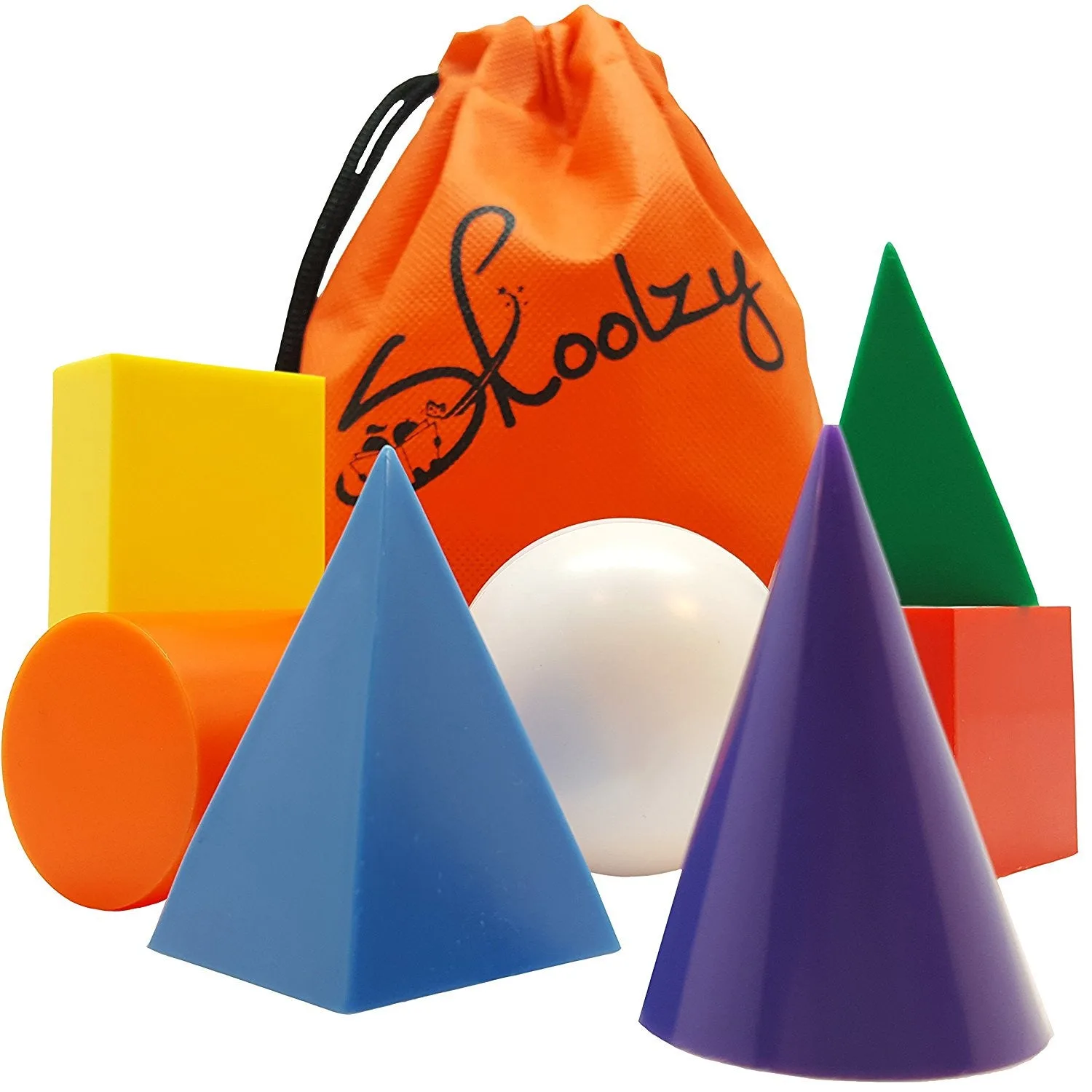
Start with three jumbo geometric solids: a sphere, cube, and cylinder. Hold each one, name it, and point out one attribute like 'round' or 'flat faces.' Then let your child stack, roll, and sort them during play. Keep sessions short and repeat the shape names often.
Set up a shape-friendly play space
Choose a low table or a blanket on the floor where your child can reach the solids easily. Remove other toys that might distract from the three shapes you are introducing. Place the solids in a basket or bin so your child can take them out one at a time.
Introduce one shape at a time
Hold up a sphere and say 'sphere.' Roll it gently to your child. Then hold up a cube and say 'cube.' Stack it on the table. Do the same with a cylinder. Use the same words every time so your child hears the shape names repeated.
Use everyday objects to compare
Point to a ball and say 'sphere.' Point to a box and say 'cube.' Point to a can and say 'cylinder.' This helps your child connect the solid shapes to things they already know. Keep the comparisons simple and concrete.
Encourage hands-on exploration
Let your child roll the sphere, stack the cubes, and slide the cylinder. Ask questions like 'Which one rolls?' or 'Which one stacks?' This builds early geometry vocabulary without pressure. If your child loses interest, put the solids away and try again later.
Add a sorting challenge
Once your child knows the names, mix the solids together and ask them to find all the spheres or all the cubes. You can also sort by attribute: 'Find something with a flat face' or 'Find something round.' This turns shape learning into a game.
Step-by-step shape teaching plan
- Start with three basic solids: Choose a sphere, cube, and cylinder. These are the easiest for toddlers to recognize and handle. Checkpoint: Your child can point to each shape when you name it.
- Name and describe each shape: Hold each solid and say its name. Add one simple attribute: 'sphere is round,' 'cube has flat faces.' Mistake to avoid: Don't introduce too many shapes at once. Three is plenty for a first session.
- Let your child explore freely: Give your child time to roll, stack, and drop the solids. Narrate what they do: 'You rolled the sphere!' Checkpoint: Your child stays engaged for at least two minutes.
- Compare with real objects: Find a ball, a box, and a can. Ask your child which solid matches each object. Mistake to avoid: Don't correct every wrong answer. Guide gently and keep it playful.
- Play a sorting game: Mix all solids and ask your child to put all the spheres in one pile, cubes in another, and cylinders in another. Checkpoint: Your child can sort at least two shapes correctly.
Product facts
- 7 Jumbo Geometric Solids 3D Shapes for Kids: These Geometric Solids 3D Shapes for Kids help teach GEOMETRY and the properties of geometric shapes. The 3-D shapes of these jumbo geo solids provide hands-on experience in geometry concepts such as identify and classify 3-D shapes, learn shape attributes, identify faces & vertices and more. The jumbo size makes it easy for small hands to hold, roll, and stack, which supports the step-by-step activities in this guide.