Quick answer
Buy the box or tin after you decide what goes inside, not before. For cookies and small pastries, a shallow tin or a small handled bag with a food-safe liner is the simplest reliable choice. For larger assortments, choose a box with at least 1 inch of headroom for filler and cushioning.
Most disappointing baked-goods gifts fail for a boring reason: the container was chosen before the contents. A tin that looks generous online can crush scones. A box that fits a dozen cookies perfectly leaves no room for a liner, so crumbs and grease show through.
This guide gives you decision rules for sizes, materials, fillers, and presentation, plus a few real packaging and catering products from Kneads • Bakery • Café • Mill that show how the same thinking applies to ready-made gift and catering formats.
Start with the contents, then pick the size
Measure your baked goods at their widest point and add clearance. Cookies need about 1/2 inch of side clearance so they do not shift and crack. Scones and muffins need 1 inch of headroom because domed tops are fragile. Tarts and pies need a rigid base and a lid that does not touch the surface.
If you are packing a mix of items, size the box to the largest footprint and use filler to lock the smaller pieces in place. A box that is too deep lets contents slide and collide; a box that is too shallow forces you to press the lid down. Both look careless when opened.
- Cookies: shallow, wide boxes or tins work better than deep ones.
- Scones and muffins: allow 1 inch of headroom for domed tops.
- Tarts and pies: choose a rigid base and a lid with clearance above the filling.
Food-safe materials and liners
Not every pretty box is food-safe. Direct contact with unlined paperboard or printed surfaces can transfer ink, odor, or grease. Use a food-safe liner, parchment, or a greaseproof bag between the baked goods and the container. For tins, check that the interior is food-grade and free of rust or exposed seams.
Grease is the most common failure. Buttery cookies, nut fillings, and chocolate all leave marks. A liner solves most of this and also makes the box easier to reuse. If you are shipping, choose a liner that will not slide when the box is tilted.
- Use a food-safe liner or parchment for direct contact.
- Avoid unlined printed board against greasy baked goods.
- For tins, check for a clean food-grade interior before buying.
Fillers that protect and present
Filler is not decoration; it is cushioning. Tissue paper, shredded paper, and small corrugated inserts keep items from moving. For heavier items like a pie or a dense loaf, use a rigid insert or a snug fit rather than loose filler. For lightweight cookies, a crumpled tissue layer is enough.
Leave a small gap between the top of the contents and the lid. If the lid presses on the food, the gift arrives flattened. If there is too much empty space, the contents rattle. Aim for a snug but not compressed fit.
- Use rigid inserts for heavy items, loose filler for light ones.
- Leave a small gap so the lid does not press on the food.
- Test by closing the box and gently shaking it; nothing should move.
Presentation that survives the trip
Presentation is mostly about what the recipient sees first. A clean liner, a neat arrangement, and a simple label or tag do more than elaborate ribbon. If the gift will be carried or shipped, avoid tall stacks and loose bows that catch on things.
For a bakery-style look, keep the palette simple and let the baked goods be the color. A small handled bag can work as an outer carrier for a box, keeping the presentation tidy without extra wrapping.
- Keep the interior tidy; the first look is the liner and arrangement.
- Skip tall stacks if the gift will travel.
- Use a simple tag instead of a loose bow for shipping.
When to buy ready-made instead of packing your own
If you are short on time or need a consistent result for a group, a catering-ready box can be the better buy. These formats are already portioned, packed, and sized for transport, so you avoid the trial and error of matching contents to containers.
The trade-off is flexibility. Ready-made boxes come in set formats and serving counts, so they suit a defined event rather than a custom assortment. If you want to choose every item, build your own; if you want a reliable gift or catering option, buy the finished box.
- Choose ready-made for consistent portions and less assembly time.
- Choose build-your-own when the assortment itself is the point.
Decision rules for choosing a box or tin
- If the baked goods are fragile: Choose a rigid box or tin with 1 inch of headroom and a snug fit, not a loose bag. Test the closed box with a gentle shake; nothing should move.
- If the baked goods are greasy: Use a food-safe liner or parchment between the food and the container. Skip unlined printed board for direct contact.
- If you are shipping: Avoid tall stacks, loose bows, and deep boxes that let contents slide. Choose a snug fit with a rigid insert for heavy items.
- If you need many identical gifts: Pick one box size and one filler system, then buy in the quantity that matches your list. Consistency matters more than variety when packing in volume.
Product facts that show the sizing logic
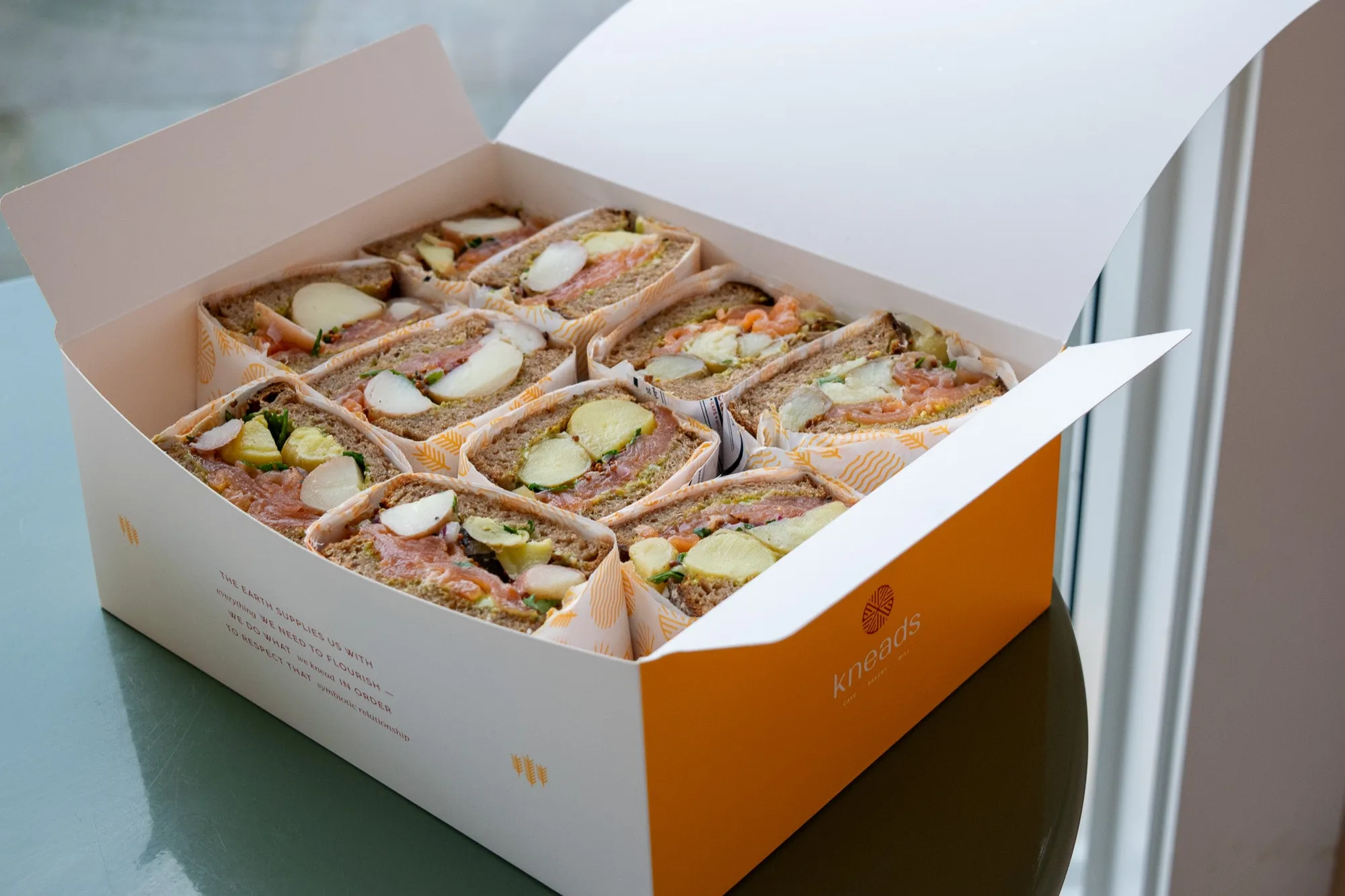
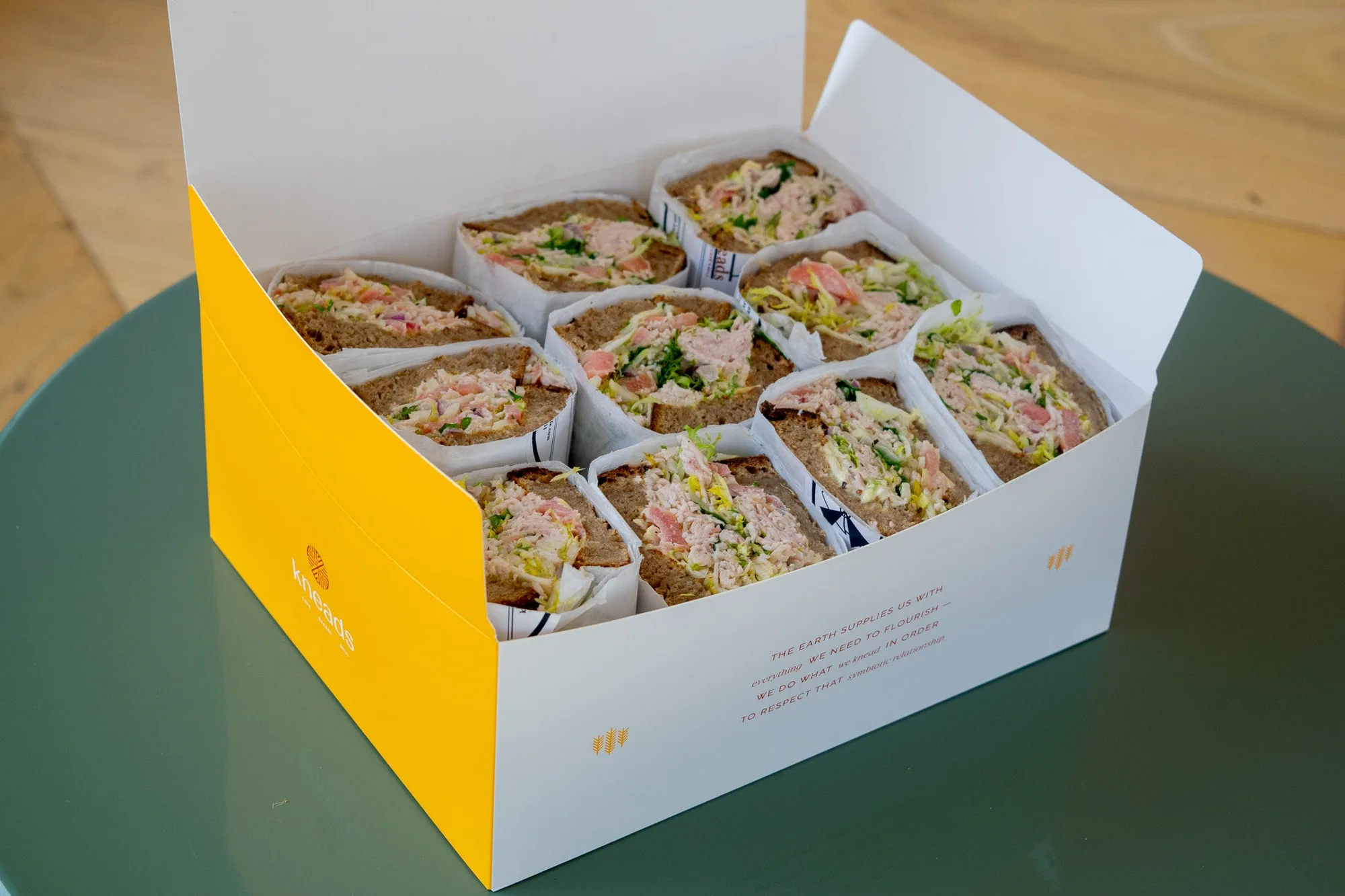
- Smoked Salmon Sandwich Box: Each box includes 10 servings, made up of 5 sandwiches cut in half, with smoked salmon on sourdough, paired with NY potatoes, gribiche, red onion, and lemon. A catering box is sized around a fixed serving count, so you order by headcount rather than by container dimensions.
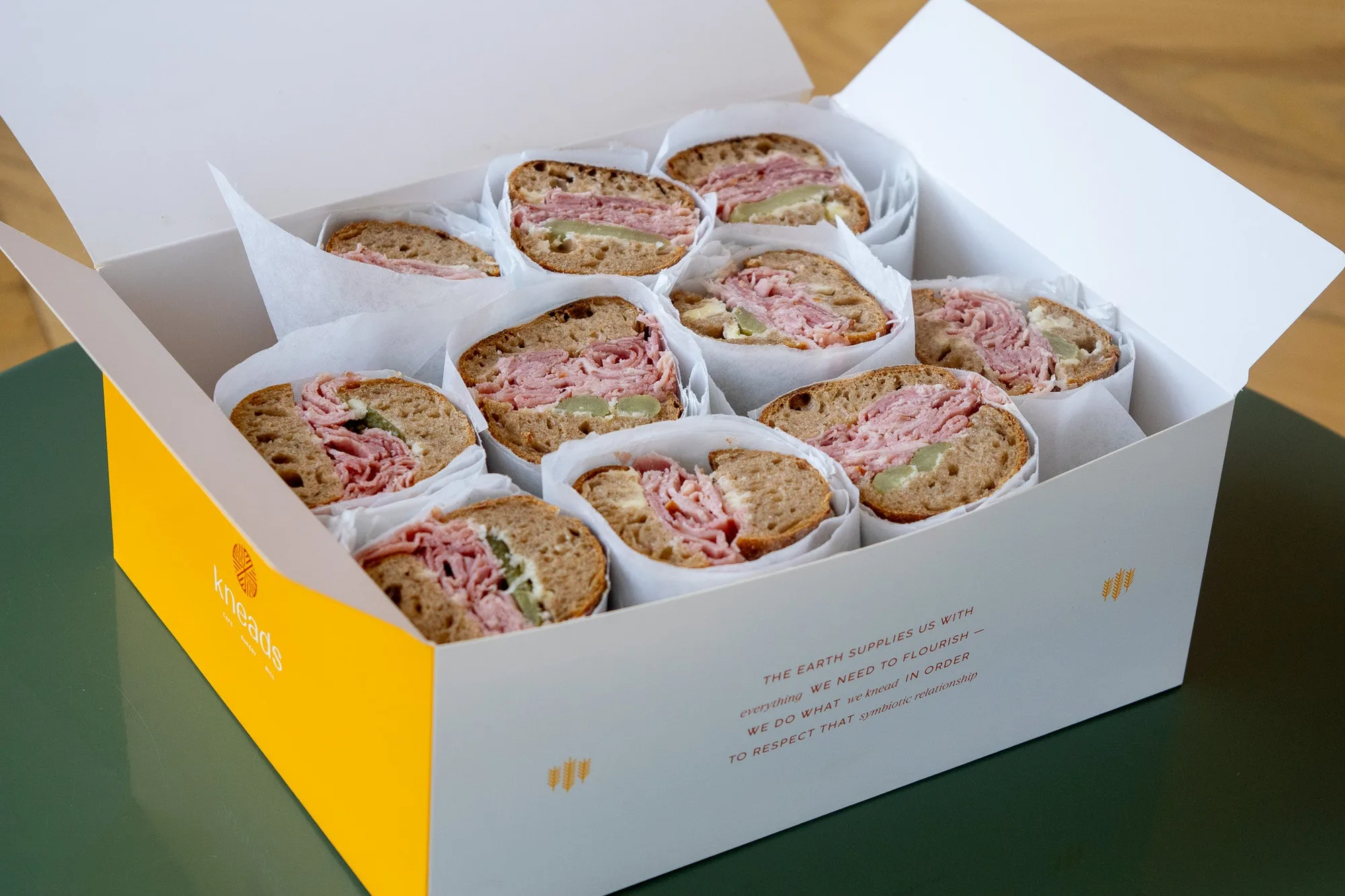
- Country Ham Sandwich Catering Box: Includes Nodines ham, Vermont creamery butter, cornichons, grated horseradish, and demi baguette, with 10 servings and 5 sandwiches cut in half. A second fixed-format option shows how the same box size can serve a different menu without changing your packing plan.
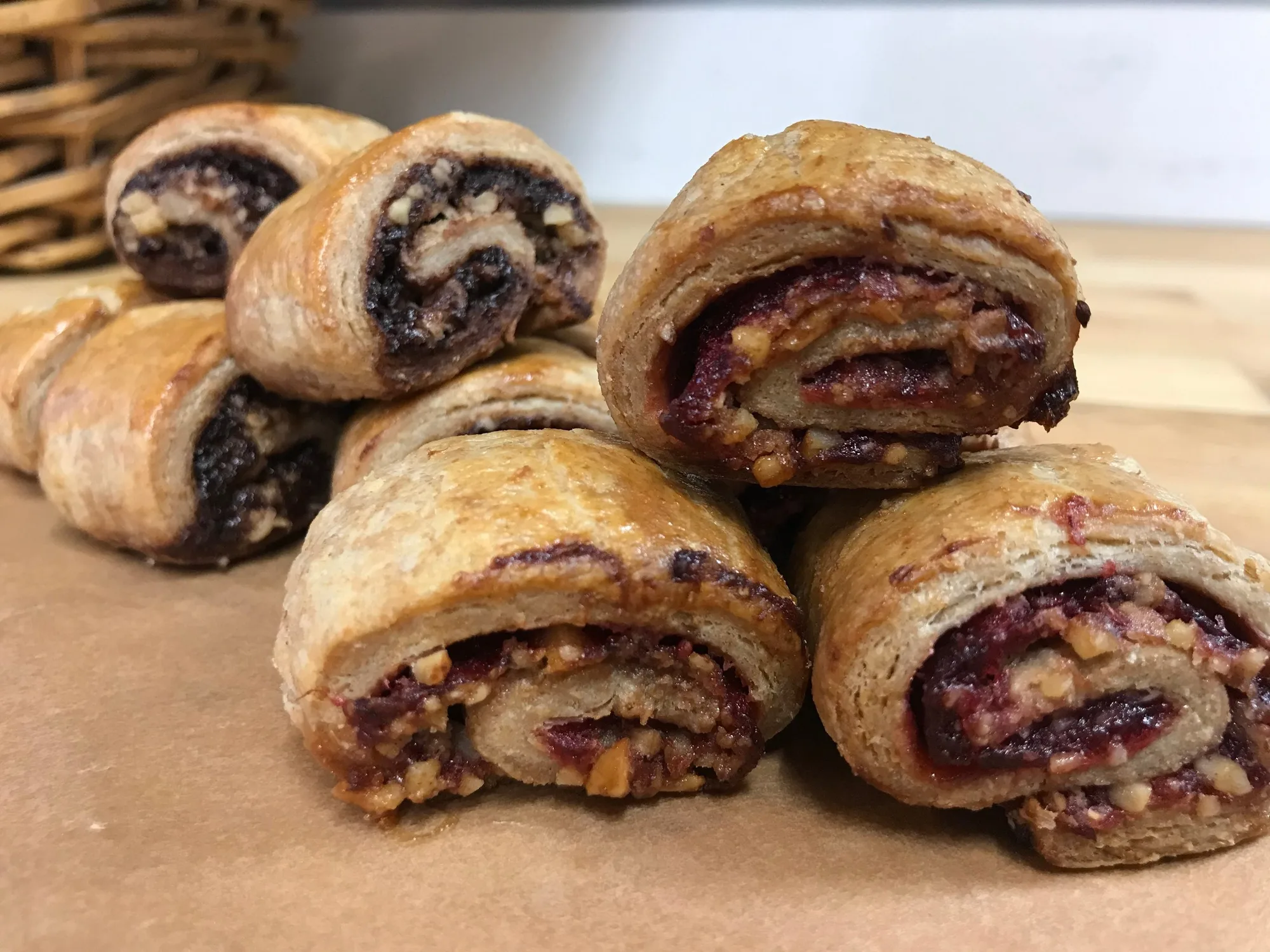
- Chocolate Walnut Rugelach: A cream cheese whole wheat pastry with a chocolate walnut filling, tagged for Hanukkah and Rosh Hashanah. Small filled pastries are the classic case for a shallow tin or box with a food-safe liner, since the filling can mark the container.
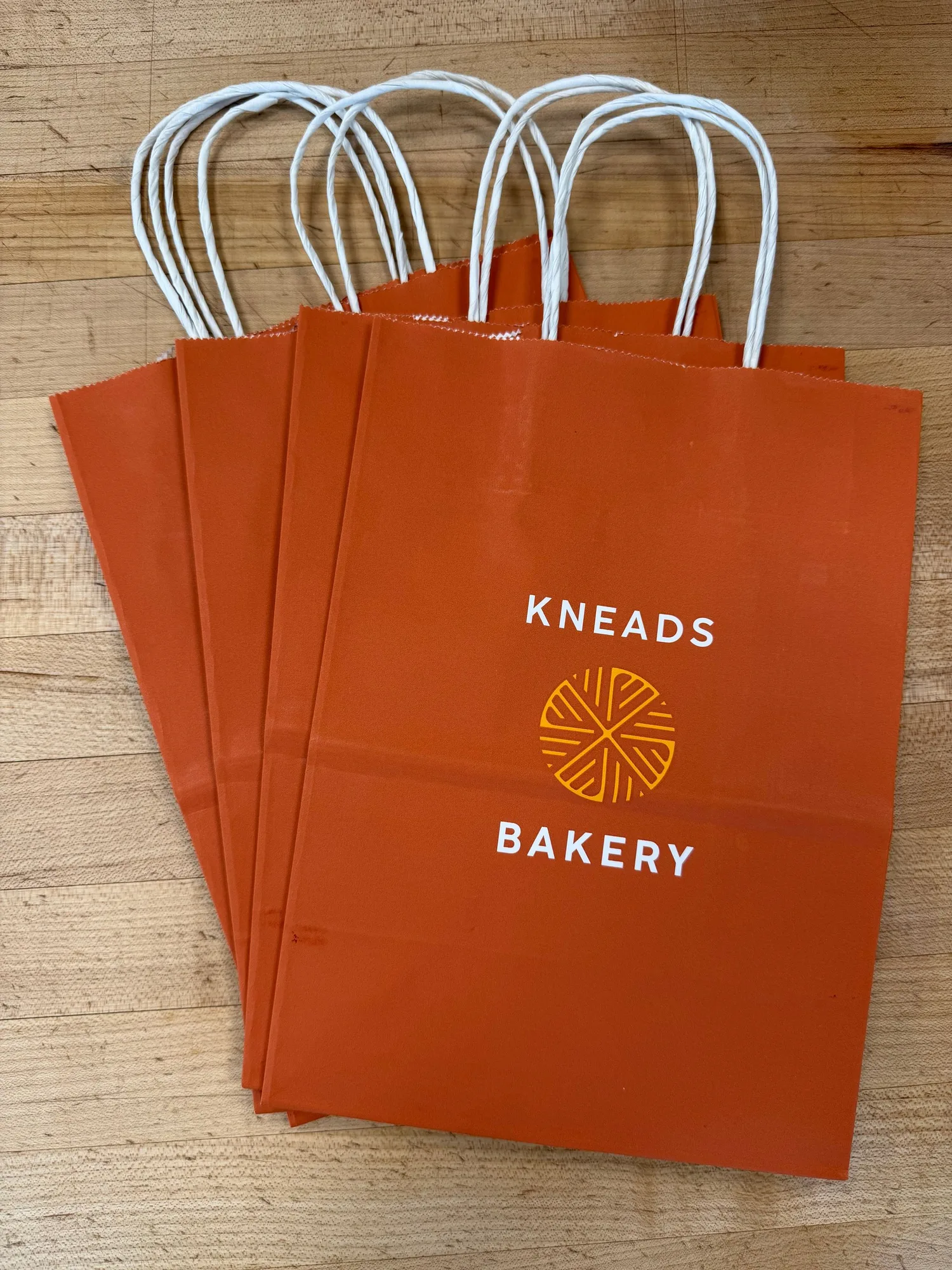
- Handle Bags Small: Case dimensions are 8" x 4.75" x 10.25", sold by the case and marked wholesale-only. A compact handled bag works as an outer carrier for a small box or tin, and the wholesale-only listing means it suits volume buyers rather than one-off gifts.
Who should buy which format
Best for
- Home bakers giving cookies, scones, or small pastries as gifts
- Hosts who want a tidy presentation without custom wrapping
- Small events that need a consistent, transportable baked-goods gift
Not for
- Buyers who need a custom assortment of many different items
- Anyone shipping long distances without rigid outer protection
- Commercial volumes where a wholesale-only packaging format is not practical
Choose the container after you know the contents, use a food-safe liner, and leave enough room for filler without letting the lid press on the food. That is most of what makes a baked-goods gift look and arrive well.