Quick answer
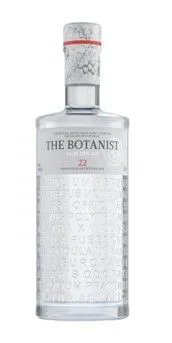
Read a gin label in this order: confirm it says gin (not a flavored spirit drink), check whether it says dry, London Dry, or names a region like Islay, then scan the botanical list for the flavors you actually want. For a versatile bottle that works in a martini, gin and tonic, or a citrus-forward highball, a dry gin built on 22 foraged botanicals such as Botanist Islay Dry Gin gives you both juniper backbone and herbal range.
What the word gin actually guarantees
Legally, gin must be juniper-led, but that is the only botanical the rules force. Everything else is a choice, which is why two bottles at the same price can taste nothing alike. Look for the word gin on its own first. If you see gin liqueur, gin spirit drink, or a flavored malt base, you are buying a sweeter or lower-strength product, not a mixing gin. That distinction matters most when you are choosing gin for cocktails, because a liqueur will throw off the balance of a dry martini or a bitter negroni.
Dry, London Dry, and Islay: three labels that mean different things
Dry gin simply means the spirit is not sweetened after distillation, so the finish stays crisp. London Dry is stricter: no added sugar, and all botanicals must be distilled in, not added afterward. London Dry vs Islay gin is not a quality contest, it is a flavor split. London Dry tends to be lean, citrusy, and juniper-forward, while an Islay gin like Botanist is distilled on the Scottish island and leans into foraged herbs, giving it a more savory, layered profile. If you drink gin and tonics with a wedge of lime, either works. If you drink martinis, the Islay style adds a quiet herbal edge that a classic London Dry will not.
How to read the botanical list without guessing
Most labels list only a few botanicals, so treat the list as a direction, not a recipe. Citrus names such as grapefruit zest or lemon peel signal brightness. Root and seed names such as angelica, coriander, or orris point to structure and a drier finish. Floral or herbal names point to perfume and a softer mid-palate. When a label says 22 botanicals, as Botanist does, that usually means the producer is aiming for range rather than a single loud note, so it will hold up in a wider set of drinks. If the label lists nothing at all, that is a real gap, not a hidden secret, and you should judge the bottle by the dry or London Dry designation instead.
Match the bottle to the drink you actually make
Choose by your most common serve, not by the shelf talker. For a gin and tonic, look for a dry gin with clear citrus or floral notes so it survives the tonic. For a martini, pick something juniper-forward and dry so the vermouth does not dominate. For a negroni or other bitter cocktail, a gin with herbal or root botanicals keeps the drink from turning flat and sweet. If you want one bottle to cover all three, a broad, dry, multi-botanical gin is the safer buy than a strongly flavored specialty bottle.
How to read a gin label in six steps
- 1. Confirm it says gin, not gin liqueur: Check the main label for the standalone word gin. If you see gin liqueur, gin spirit drink, or a flavored base, the product is likely sweetened or lower strength. Checkpoint: if it is not labeled gin, do not use it as a direct swap in a dry cocktail.
- 2. Note whether it says dry: Dry means no sweetening after distillation, so the finish stays crisp. If the label is silent on sweetness, assume you may be buying a softer, sweeter style. Checkpoint: for martinis and negronis, dry is the safer default.
- 3. Separate London Dry from regional styles: London Dry means all botanicals are distilled in and no sugar is added. A regional name like Islay tells you where it was made and often hints at a more herbal, savory profile. Checkpoint: London Dry is lean and juniper-forward; Islay gin is typically more layered and herbal.
- 4. Scan the botanical list for direction: Citrus names signal brightness, root and seed names signal structure, and floral or herbal names signal perfume. A long list such as 22 botanicals usually means a broader, more versatile spirit. Checkpoint: match the direction to your usual drink, not to the longest list.
- 5. Check the proof or ABV if it is printed: Higher-strength gin holds up better in diluted drinks such as a gin and tonic, while a lower-strength bottle can taste thin over ice. If ABV is not shown, treat it as an unknown and buy from a style you already trust. Checkpoint: never assume a strength that is not on the label.
- 6. Buy for your most common serve: Pick a dry, citrusy gin for tonic, a juniper-forward dry gin for martinis, and an herbal gin for bitter cocktails. If you want one bottle for everything, choose a broad dry gin. Next step: taste it once neat before you mix, so you know how much tonic or vermouth it can take.
Label facts worth checking
- BOTANIST ISLAY DRY GIN, Scotland 750ml: Botanist Islay Dry Gin is crafted with 22 botanicals that are hand-foraged locally and sustainably on the Scottish island of Islay, picked at varying times of the year and only when it is dry. A large, foraged botanical set is a practical sign of range, so this bottle is a strong single-bottle choice if you make several different gin drinks.