Quick answer
Choose glass if you pump at home, warm milk in water or a warmer, and want a bottle that resists scratches and lingering odors. Choose plastic if you pump on the go, feed one-handed, or have a baby who likes to throw bottles. Many parents end up with both: glass for the kitchen and plastic for the diaper bag.
What actually changes when you switch materials
Material affects three daily moments: warming, carrying, and cleaning. Glass conducts heat slowly and evenly, so milk warms gently in a water bath or warmer without hot spots. Plastic warms faster, which is convenient but easier to overshoot. Glass is heavier and can chip or shatter on tile; plastic is lighter and survives drops but can scratch over time and hold onto milk fats or soap residue if it isn't rinsed promptly.
How to warm breastmilk in each bottle
For either material, use warm water or a bottle warmer and swirl gently. Never microwave breastmilk: it heats unevenly and can create hot spots that burn your baby's mouth. Glass holds warmth longer, so test a drop on your wrist before feeding. Plastic cools faster, so you may need to re-warm a paused feed sooner. If you pump directly into storage bags, you can thaw and pour into whichever bottle you're feeding from that day.
Durability, weight, and real-world handling
Glass bottles are heavier in a full diaper bag and need a sleeve or padded pocket if you travel. They don't absorb smells or stains, which matters if you store milk with strong-smelling foods nearby. Plastic bottles are lighter for long outings and less likely to break in a stroller basket, but they can cloud or scratch with repeated washing. Whichever you pick, check the nipple and collar for wear and replace parts when they look stretched or discolored.
Matching the bottle to your pump and nipple
The bottle matters less than the nipple and the seal. A breastfed baby often does best with a nipple that supports the same sucking motion learned at the breast. Lansinoh's NaturalWave® Nipple is clinically proven to reduce nipple confusion, and it fits Lansinoh bottles. If you already own a pump with a specific thread, confirm the bottle you choose screws on securely before you commit to a full set.
Trade-offs at a glance
- Glass: heat and odor resistance: Glass warms evenly in water or a warmer, doesn't hold onto milk smells or stains, and won't scratch like plastic can. Best for home pumping and kitchen-based feeding routines.
- Glass: weight and break risk: A full glass bottle is heavier to hold and can chip or shatter on hard floors, so it needs careful handling and a travel sleeve. Skip glass for stroller cups, tile floors, or one-handed feeding.
- Plastic: light and drop-friendly: Plastic bottles are easier to carry, hold one-handed, and survive drops; they also warm faster. Best for diaper bags, daycare, and babies who throw bottles.
- Plastic: wear over time: Plastic can cloud or scratch with repeated washing and may retain milk fats or soap film if not rinsed promptly. Replace scratched bottles and worn nipples rather than stretching their life.
Product facts to compare
- Glass Baby Bottles 5oz (4 pack): Glass Baby Bottles 5oz (4 pack) feature Lansinoh's NaturalWave® Nipple, which is clinically proven to reduce nipple confusion, and are available in different nipple flow speeds. You get glass durability with a nipple designed to support the same sucking actions learned at the breast, so you can size the flow as your baby grows.
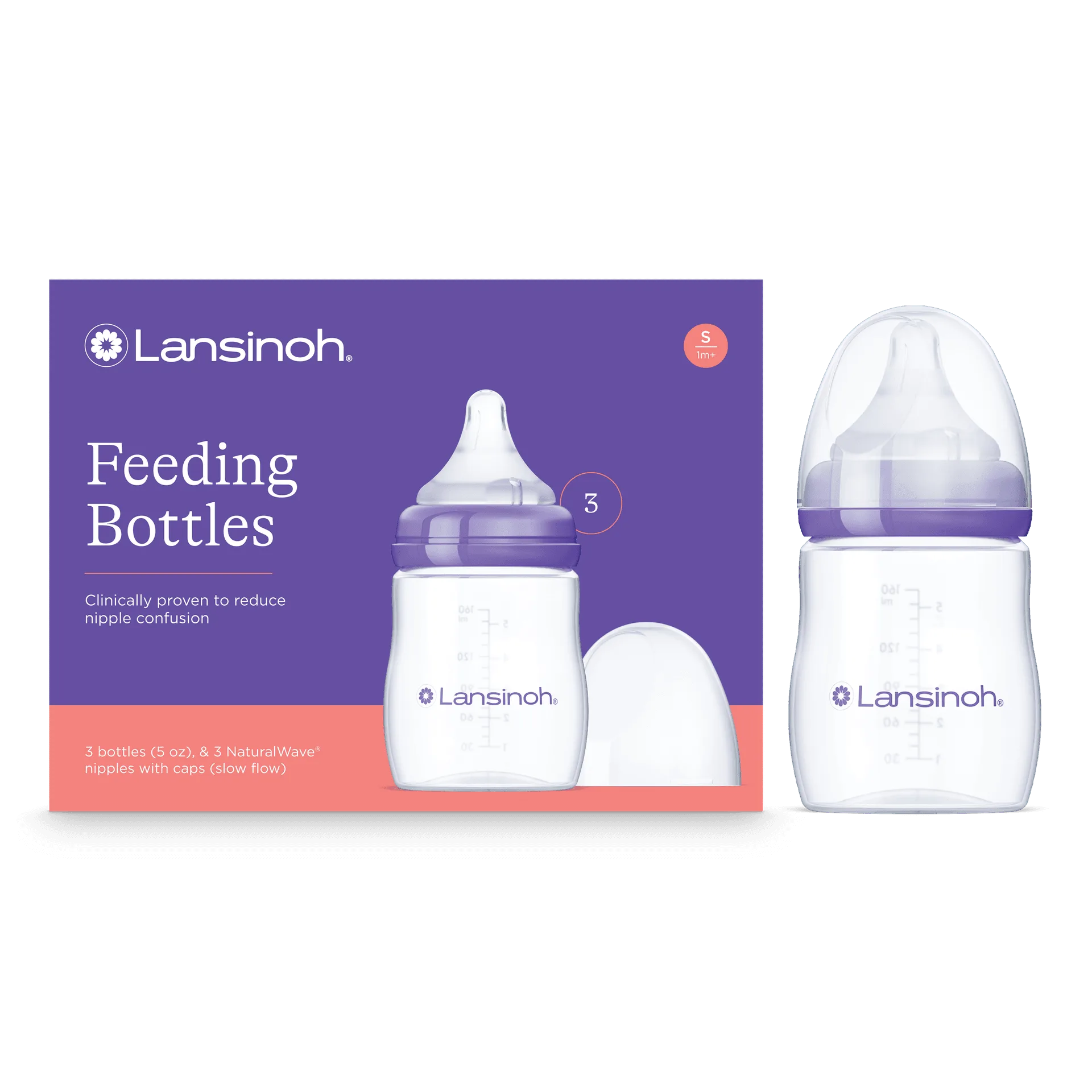
Baby Bottles 5oz
- Breastmilk Bags Storage Container: Breastmilk Bags Storage Container uses a first-in, first-out design and a quick-freeze tray that helps milk storage bags freeze faster and flatter; it works vertically or horizontally and fits most bags, including Lansinoh Milk Storage Bags. If you pump into bags and then pour into bottles, this organizer keeps milk rotated and freezer space predictable, which matters whether you feed from glass or plastic.
- NaturalWave® Nipples - 2 count: NaturalWave® Nipples - 2 count are clinically proven to reduce nipple preference in established breastfed babies and are available in different flow speeds. Replacement nipples let you keep the breast-like feeding behavior even if you change bottle material later.
Which should you buy?
Choose this if
- You pump mostly at home and want a bottle that warms evenly and resists odors and stains.
- You feed in the kitchen or nursery and can set the bottle down safely between sips.
- You want to pair glass with a nipple clinically proven to reduce nipple confusion, like the NaturalWave® Nipple.
Skip this if
- You need a bottle for a diaper bag, stroller, or daycare where drops and weight matter.
- Your baby likes to hold and throw the bottle during feeds.
- You want the lightest possible bottle for frequent travel or one-handed feeding.