Quick answer
Most gluten-free country gravy mix problems come down to three things: adding the mix to cold liquid, using the wrong liquid-to-mix ratio, or not cooking long enough for the starch to hydrate. Whisk the mix into cool water first, add it to hot liquid, and simmer two to three minutes before you judge the texture. If the gravy is already lumpy, strain it or blend it, then simmer again.
Why gluten-free gravy misbehaves more than wheat gravy
Gluten-free gravy mixes rely on starches like cornstarch, potato starch, or rice flour instead of wheat flour. Those starches hydrate, thicken, and set at different speeds, and they keep thickening as they cool. That is why a gravy that looks perfect on the stove can turn pasty on the plate. It also means a gravy that looks thin right after whisking may be fine after two minutes of simmering.
Lumpy gravy fix: break up clumps before you add more mix
Clumps usually mean dry mix hit hot liquid and the outside gelled before the inside could dissolve. The fix is mechanical, not more liquid. Pour the gravy through a fine-mesh strainer into a clean pot, pressing the lumps with a spoon, then return it to a simmer. If you do not want to strain, an immersion blender works in ten seconds. Only after the texture is smooth should you decide whether it needs more thickening.
- Whisk the dry mix into cool water or cool milk first, then add it to the hot pan.
- Add liquid in a steady stream while whisking, not all at once.
- Strain or blend before adding more mix; extra mix will not dissolve existing lumps.
Gravy too thick or too thin: adjust in small amounts
If the gravy is too thick, whisk in warm water or milk one tablespoon at a time and simmer for thirty seconds between additions. Cold liquid can shock the starch and create new lumps. If it is too thin, keep it at a low simmer for two to three minutes first, because gluten-free starches need heat and time to reach full thickening power. If it is still thin after that, whisk a small amount of additional dry mix with cool water in a separate cup, then stream it in.
Bland or gluey: flavor and texture are separate problems
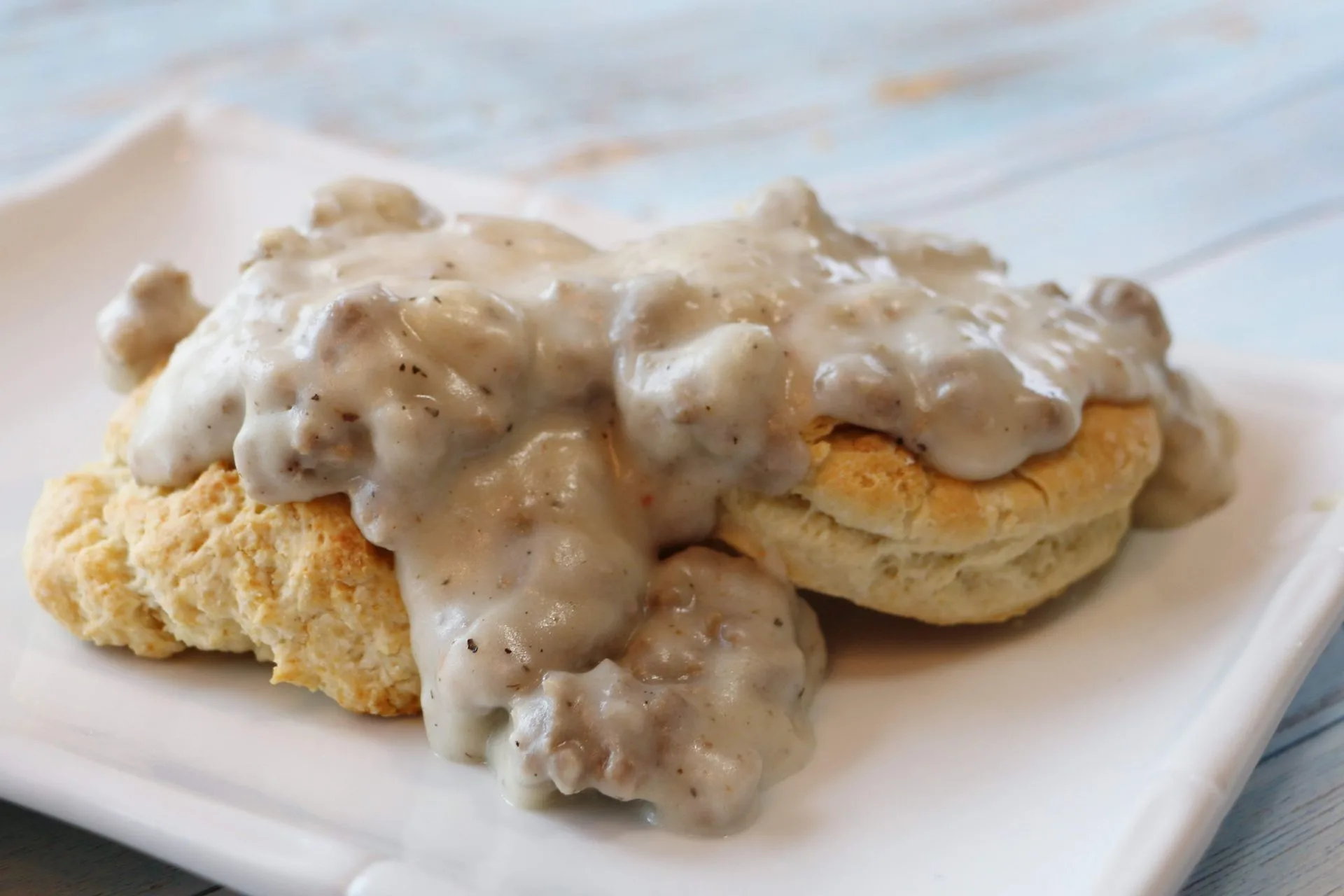
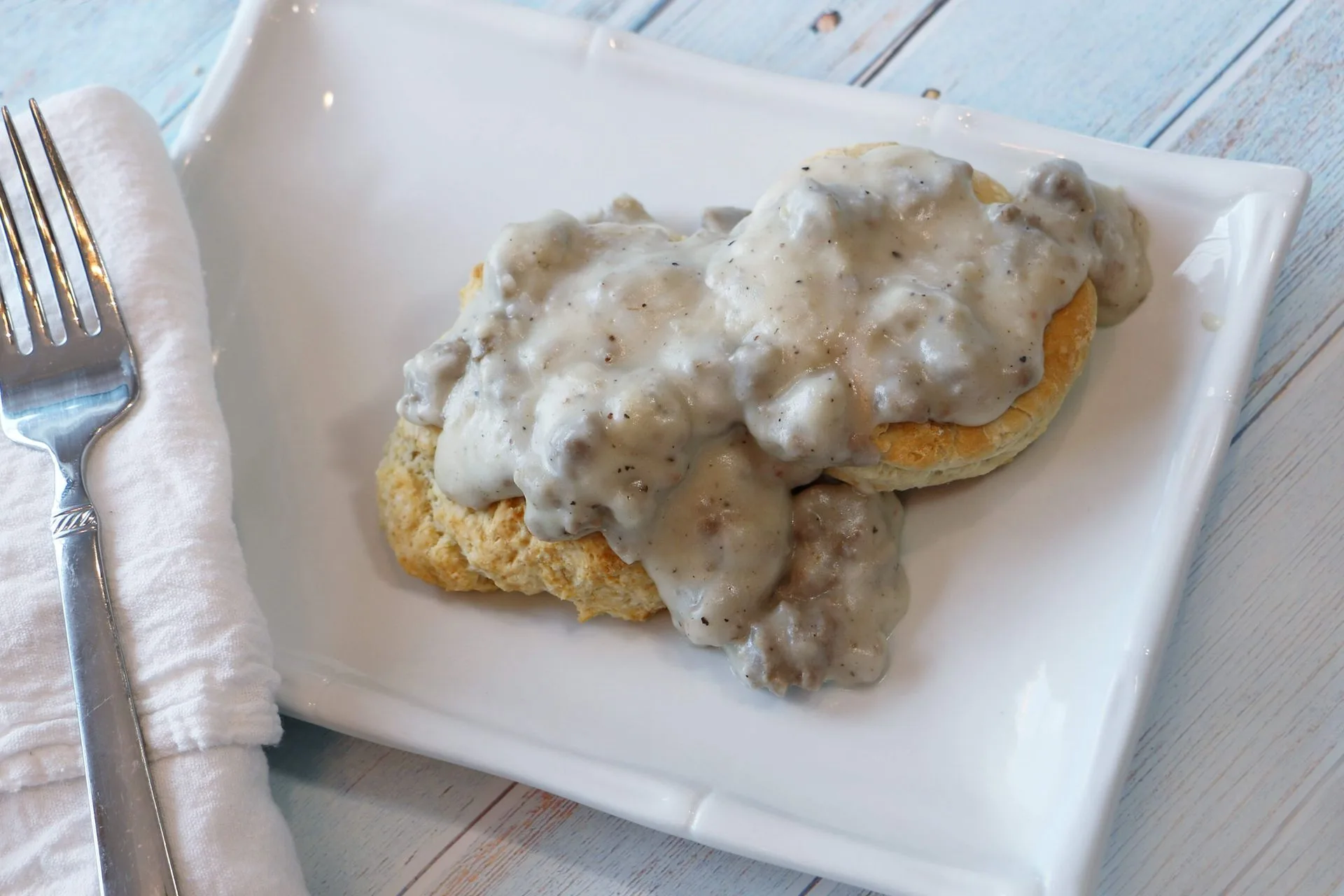
A gluey mouthfeel often means the gravy was over-whisked after it thickened or held too long on high heat. Stir gently once it coats a spoon. Blandness is easier: country gravy is a fat-and-salt-forward sauce, so a pat of butter, a pinch of salt, and plenty of black pepper at the end will do more than extra mix. If you are making gluten-free sausage gravy, brown the sausage first and use the rendered fat in the pan, then crumble the cooked sausage back in.
Diagnosis: match the symptom to the cause
- Lumps that will not whisk out: Dry mix was added directly to hot liquid or the liquid was added too fast, so starch granules gelled on the outside. Strain or blend, then simmer. If lumps remain after that, start over with cool water and a whisk.
- Gravy thickens on the plate: Gluten-free starches continue to set as they cool, so a gravy that is perfect in the pan will tighten within a few minutes. Pull it off the heat a little looser than you want it, and keep a splash of warm water nearby to loosen at the table.
- Thin even after simmering: Either the ratio was off or the gravy did not reach a true simmer, so the starch never fully hydrated. Simmer two to three minutes, then add a slurry of extra mix and cool water. If it is still thin, the batch is likely under-measured; start fresh.
- Bitter or starchy taste: The gravy was cooked too briefly or scorched on the bottom of a thin pan. Use a heavy pan, stir the bottom, and simmer at least two minutes. If it tastes scorched, do not try to mask it; start over.
- Gluey, pasty texture: Over-whisking after thickening or a long hold on high heat breaks the starch structure. Stir gently once it coats a spoon. If it is already pasty, thin with warm liquid and serve immediately rather than reheating.
Products that fit this troubleshooting
- Gluten-Free Country Gravy Mix: Mom's Place Gluten-Free Country Gravy Mix is a creamy, rich gravy mix that pairs with gluten-free buttermilk biscuit mix and can be used from breakfast through dinner. A single-purpose gravy packet is the easiest way to control the liquid-to-mix ratio, which is the main cause of thickness problems.
- Gluten-Free Buttermilk Biscuits & Country Gravy Mix: The Gluten-Free Buttermilk Biscuits & Country Gravy Mix combines a buttermilk biscuit mix and a country gravy mix in one bag, and the gravy is richer with sausage added. If you are making gluten-free biscuits and gravy, this removes the guesswork of matching a biscuit recipe to a gravy recipe.
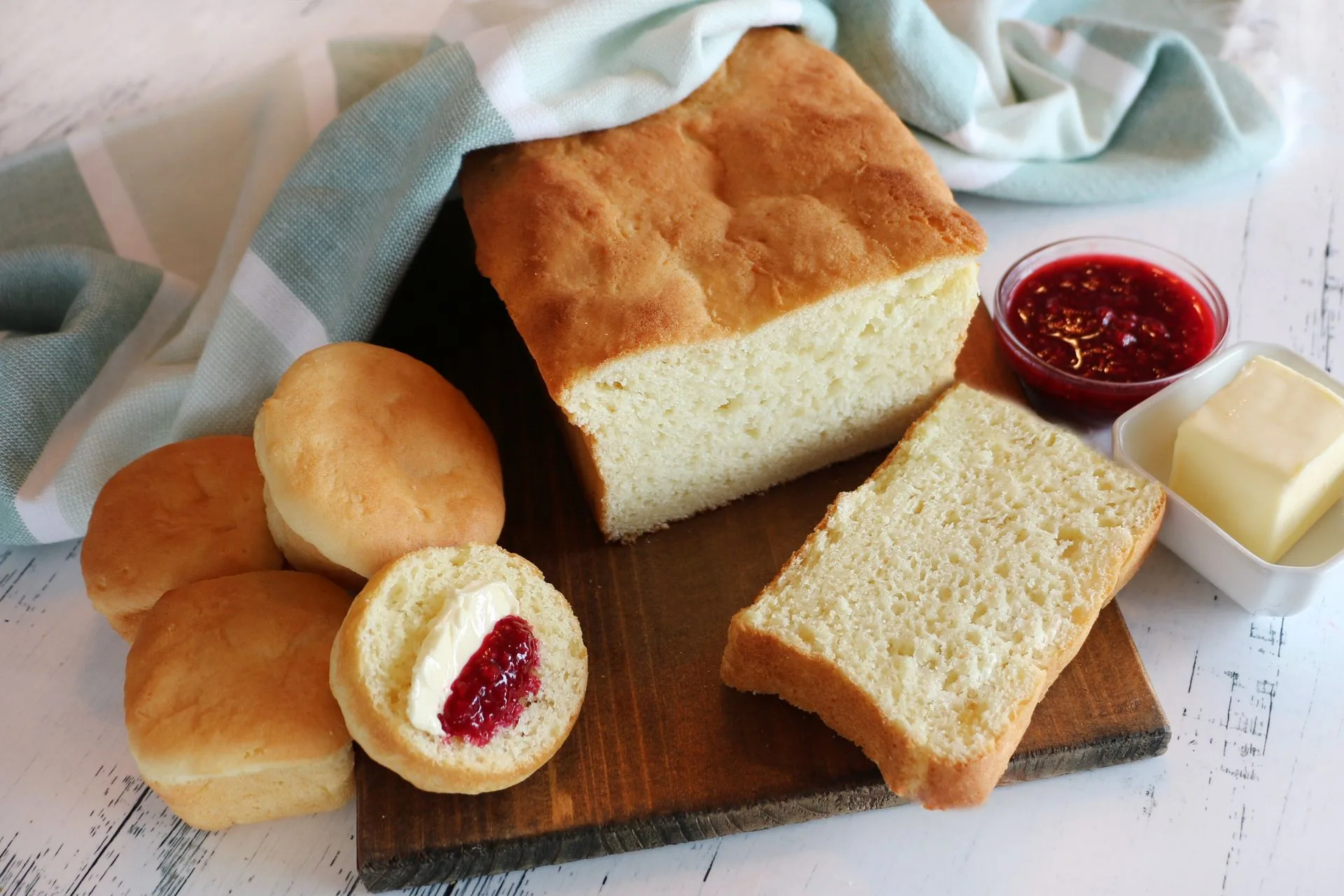
- Mom's Best Gluten-Free Rolls or Bread Mix: Mom's Best Gluten-Free Rolls or Bread Mix makes rolls or white bread for brunch, dinner, or sandwiches. Useful when you want the same gravy over a roll or toast instead of biscuits, without changing brands or flour blends.