Quick answer
Treat grain-free lamb snacks as a small add-on, not a meal: keep them to roughly 10% of your dog's daily calories and subtract that from dinner. Use them for training in pea-sized pieces, and pick a lamb treat that lists lamb high and states its calorie content so you can portion accurately.
What does "grain-free" actually change for a lamb treat?
Grain-free means the recipe skips wheat, corn, rice, barley and similar grains. That matters most for dogs that have been diagnosed with a grain sensitivity or whose stools and skin improve on a grain-free diet — not for every dog. The tradeoff is that grain-free recipes often lean on potato, pea or legume flours and can be higher in fat, so a grain-free treat is not automatically lower-calorie. Read the calorie line on the label before you decide how freely to hand it out.
Do lamb treats really support stamina?
Lamb is a protein- and fat-rich meat, so it supplies steady energy for active adult dogs. That is the honest version of "stamina support": a treat contributes calories and protein, it does not create endurance by itself. If your dog is a working, sporting or very active breed, a lamb treat can be a convenient top-up between meals. If your dog is a couch companion, the same treat is simply a tasty snack and the calorie math matters more than the protein.
How many treats per day is reasonable?
A widely used guideline is that treats should stay at or below about 10% of daily calories, with the rest coming from a complete diet. For a 30 lb adult dog eating roughly 700 calories a day, that is about 70 calories of treats — often just two or three small biscuits. Because treat calories vary enormously by size and recipe, weigh or count out a day's portion in the morning and put the bag away. If your dog gains weight or gets loose stools, cut the treat portion before you change the main food.
How do I use lamb treats for training?
Training works best with small, soft, high-value pieces. Break each treat into pea-sized bits so you can reward ten repetitions for the calorie cost of one whole biscuit. Keep a separate "training bag" and a "everyday bag" so your dog learns that the good stuff appears during focused work. For dogs with sensitive stomachs, introduce lamb slowly over several days rather than switching treat types in the middle of a training week.
What should I check on the label before buying?
Look for a named meat — lamb — near the top of the ingredient list, a stated calorie content per treat or per cup, and a guaranteed analysis you can compare across brands. Check whether the treat is labeled complete or complementary: complementary snacks are meant to be fed alongside a complete diet, not as a meal. If the label does not state calories or a feeding guide, treat that as a limitation and portion by size and body condition instead.
FAQ: grain-free lamb treats in practice
Can I give lamb treats to a dog on a grain-free diet?
Yes, if the treat itself is grain-free and your dog tolerates lamb. Check the ingredient list for wheat, corn or rice; a treat labeled grain-free will not list them. Match the treat to the diet, not just the marketing on the front of the bag.
Are lamb treats good for dogs with allergies?
Lamb is a common protein, so it is not automatically hypoallergenic. Dogs can be allergic to lamb just as they can to chicken or beef. If your dog has a diagnosed allergy, confirm the protein with your vet before adding a new treat. Novel protein is not the same as safe protein for every dog.
How many training treats equal one biscuit?
Break one biscuit into 8–10 pea-sized pieces. That lets you reward a full training session without exceeding the treat portion you already set aside for the day. Portion the day's treats first, then break them up as you train.
Should treats replace part of my dog's dinner?
If treats push past about 10% of daily calories, reduce the main meal slightly that day. Complementary snacks are designed to sit alongside a complete diet, not replace it. Treat calories count — adjust the bowl, not the label.
Product facts worth knowing
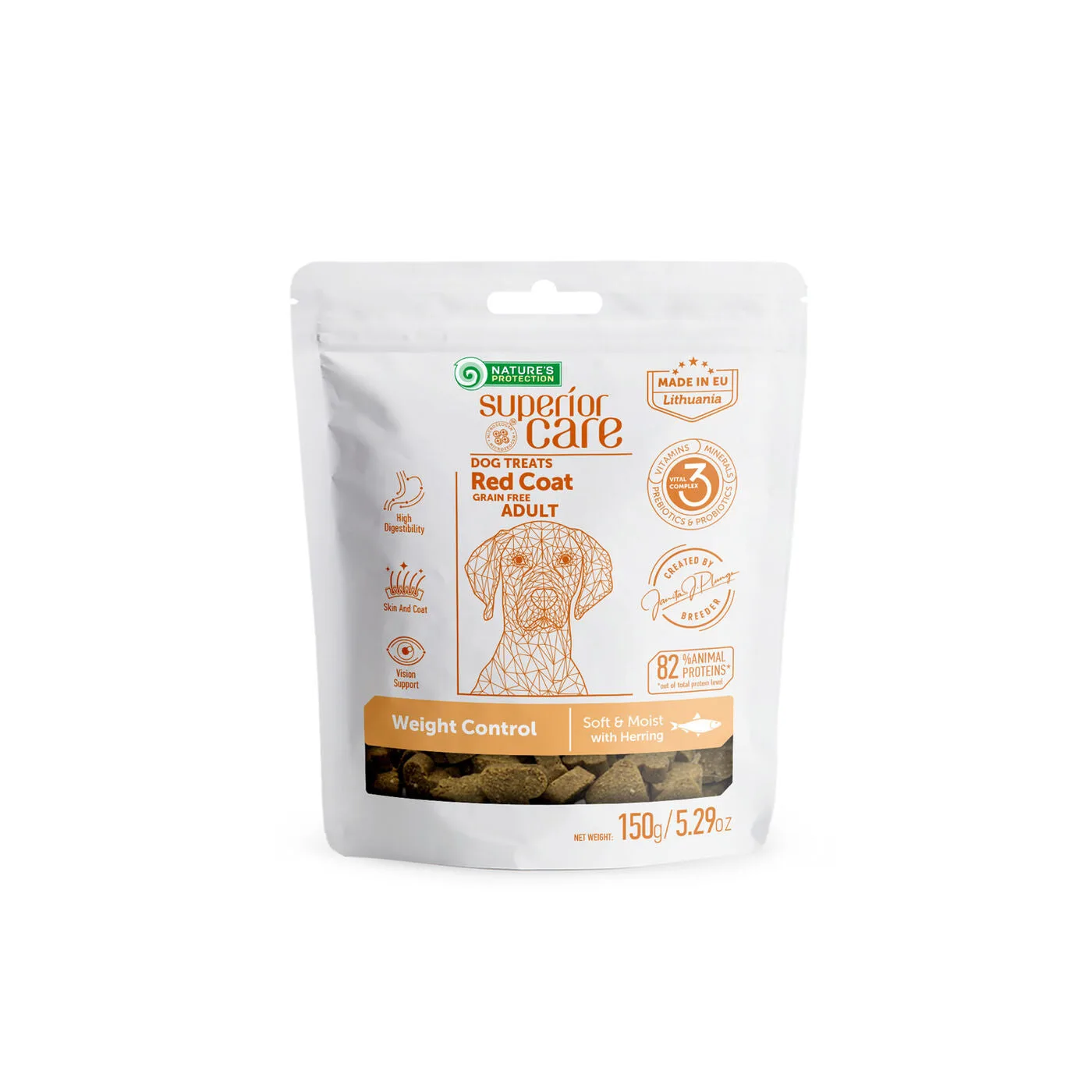
- Grain-Free Lamb Dog Treats for Adult Dogs – Complementary Snacks to Support Stamina and Endurance: Nature's Protection Superior Care Red Coat grain-free lamb treats are complementary snacks positioned for adult dogs with red coats, supporting healthy body weight and stamina, and the formula also addresses joint function and sensitive or allergic dogs. The word complementary tells you it is a snack, not a meal replacement — so it fits the 10% treat rule rather than replacing dinner.
- Junior Dogs Food for Light Coat All Breeds with Salmon: Nature's Protection Superior Care Grain-Free Dog Food with Salmon is a hypoallergenic, highly digestible junior formula for all breeds with white and light coats, and it is designed to reduce brown tear stains while supporting skin, coat and weight control. If you are feeding a junior dog a salmon-based main diet, adding a lamb treat is a different protein — useful for variety, but introduce it slowly if your dog has a sensitive stomach.