Quick answer
Choose the Astroverse Spiral Gravity Tube if you want a quiet, visual calm-down sensory toy that rewards watching and turning. Choose a push-and-go or die-cast alternative if your child needs active, hands-on movement or vehicle play. The gravity tube is not a spinner-style fidget, so match it to a child who settles by looking, not by squeezing or spinning.
What the Astroverse Spiral Gravity Tube actually does
The Astroverse Spiral Gravity Tube is a flip-and-watch toy: colorful pieces cascade down a spiral when you turn it, then you flip it to start again. That makes it a gravity tube sensory toy built around visual tracking and a simple cause-and-effect loop, not a handheld fidget you squeeze or spin. It suits a child who calms by watching movement, and it needs no batteries or setup beyond a flip.
How spiral tube fidget toys differ from push-and-go play
Push-and-go toys such as Toysmith Push N' Go Monsters work by press, release, and watch them go. That is active, repeatable movement play that burns energy and invites chasing. The gravity tube is the opposite pace: slower, quieter, and more visual. If your child needs to move their whole body to settle, a push-and-go monster is the better match; if they need a focal point to slow down, the spiral tube wins.
Where die-cast and vehicle play fit the decision
If your child already gravitates to cars and trucks, a vehicle-based option may hold attention longer than a pure sensory tube. The Majorette Monster Rockerz Diecast Car is built for jumps, crashes, and rough play, while the Dickie Toys Car Carrier adds loading and unloading mechanics with unfolding ramps. These are not calm-down sensory toys, but they are strong choices when the goal is engaged, high-energy play rather than settling.
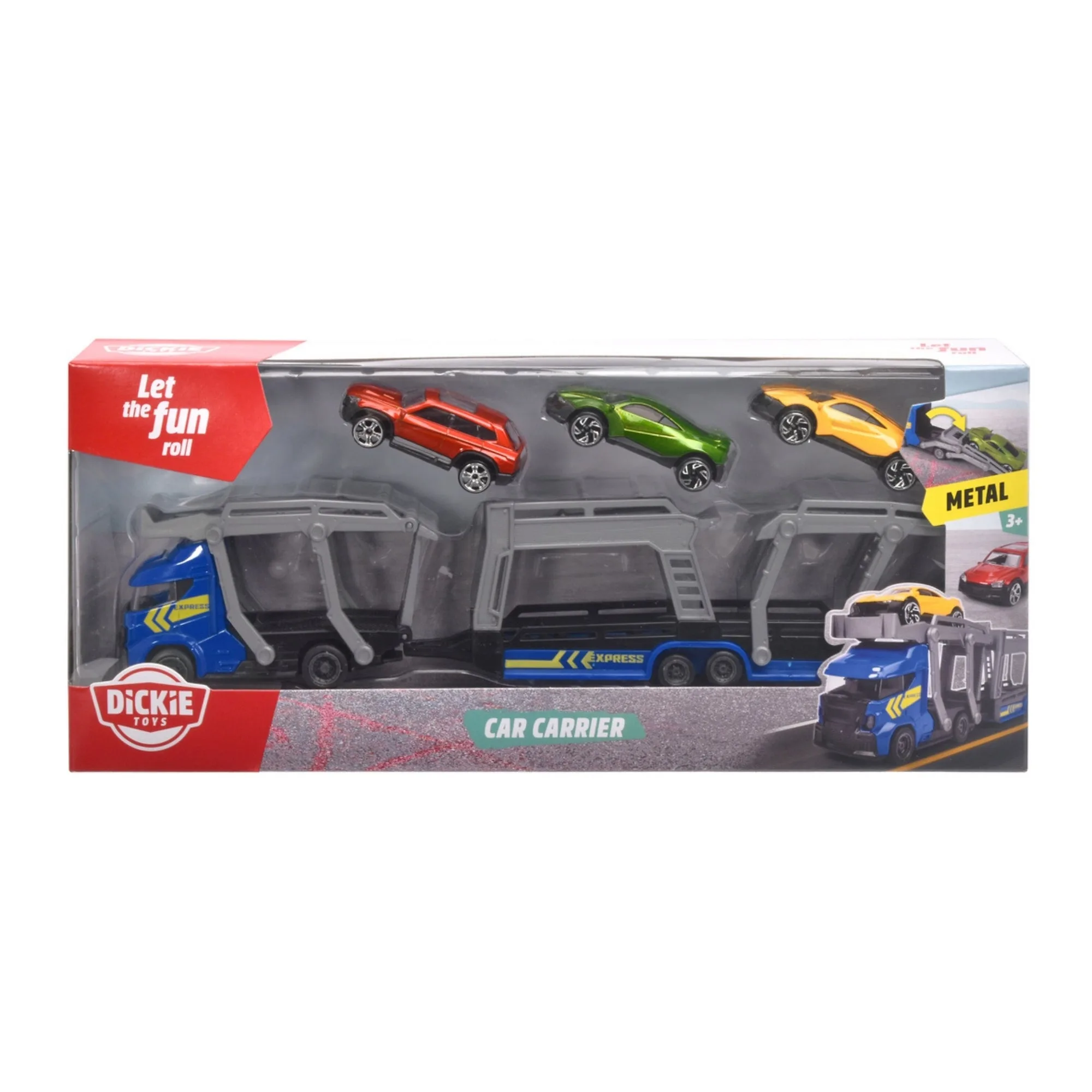
Dickie Toys Car Carrier
Trade-offs to weigh before you buy
- Quiet visual focus vs active movement: The gravity tube asks a child to flip and watch, which supports slowing down. Push-and-go monsters and die-cast trucks ask for movement and action, which supports burning energy. Pick the gravity tube for settling; pick the others for active play.
- Repeatable simplicity vs open-ended vehicle play: The spiral tube has one satisfying loop: flip, watch, repeat. The Dickie Toys Car Carrier adds loading, unloading, and ramp play, while Monster Rockerz adds stunt crashes. More open-ended play means more setup and more space. Choose the tube for a contained, low-mess activity; choose vehicles for longer, imaginative sessions.
- Portability and mess: The gravity tube is a single handheld item with no loose parts to load, so it travels easily. The car carrier holds multiple cars and unfolds ramps, which is more to pack and keep track of. For on-the-go calm-down, the tube is simpler; for home play, the carrier offers more.
Product facts that shape the choice
- Astroverse Spiral Gravity Tube: Flip it, watch it flow and start again; colorful pieces tumble down a spiral for a simple, endlessly repeatable visual experience. This is a watch-and-turn sensory toy, so it fits quiet focus and visual calming better than active fidgeting.
- Toysmith Push N' Go Monsters: Press, release, and watch them go, combining silly characters with speedy action. Best when your child needs movement and repeatable cause-and-effect play to stay engaged.
- Majorette Monster Rockerz Diecast Car: Oversized monster trucks with bold graphics, huge suspension wheels, and durable die-cast bodies built for jumps, crashes, and rough-and-tumble play. A better fit for high-energy kids and vehicle collectors than for calm-down moments.
Which should you buy?
Best for
- A child who calms by watching motion and needs a quiet sensory reset
- Parents who want a compact, no-battery calm-down sensory toy for transitions
- Kids who enjoy simple cause-and-effect loops they can repeat independently
Not for
- A child who needs whole-body movement or active chasing to settle
- Vehicle collectors who want die-cast detail, stunts, or loading play
- Kids who prefer squeezing, spinning, or fidgeting with their hands rather than watching