Start with your child's age, not the set name
The Happy Feeding Set and Mini Feeding Set look like two versions of the same idea, but the catalog draws a clear line between them. The Happy Line is designed for older toddlers and preschoolers who are 2+ years of age, while the Mini Feeding Set is positioned for the transition from infancy to toddlerhood, when a child is learning to scoop with a spoon and pierce with a fork.
That age framing is the most reliable starting point in the supplied information. If your child is already eating balanced meals with different food groups and is ready to practice a training knife, the Happy Feeding Set matches that stage. If your child is just beginning to self-feed with spoon and fork, the Mini Feeding Set is the more direct fit.
What each set is designed to do
-
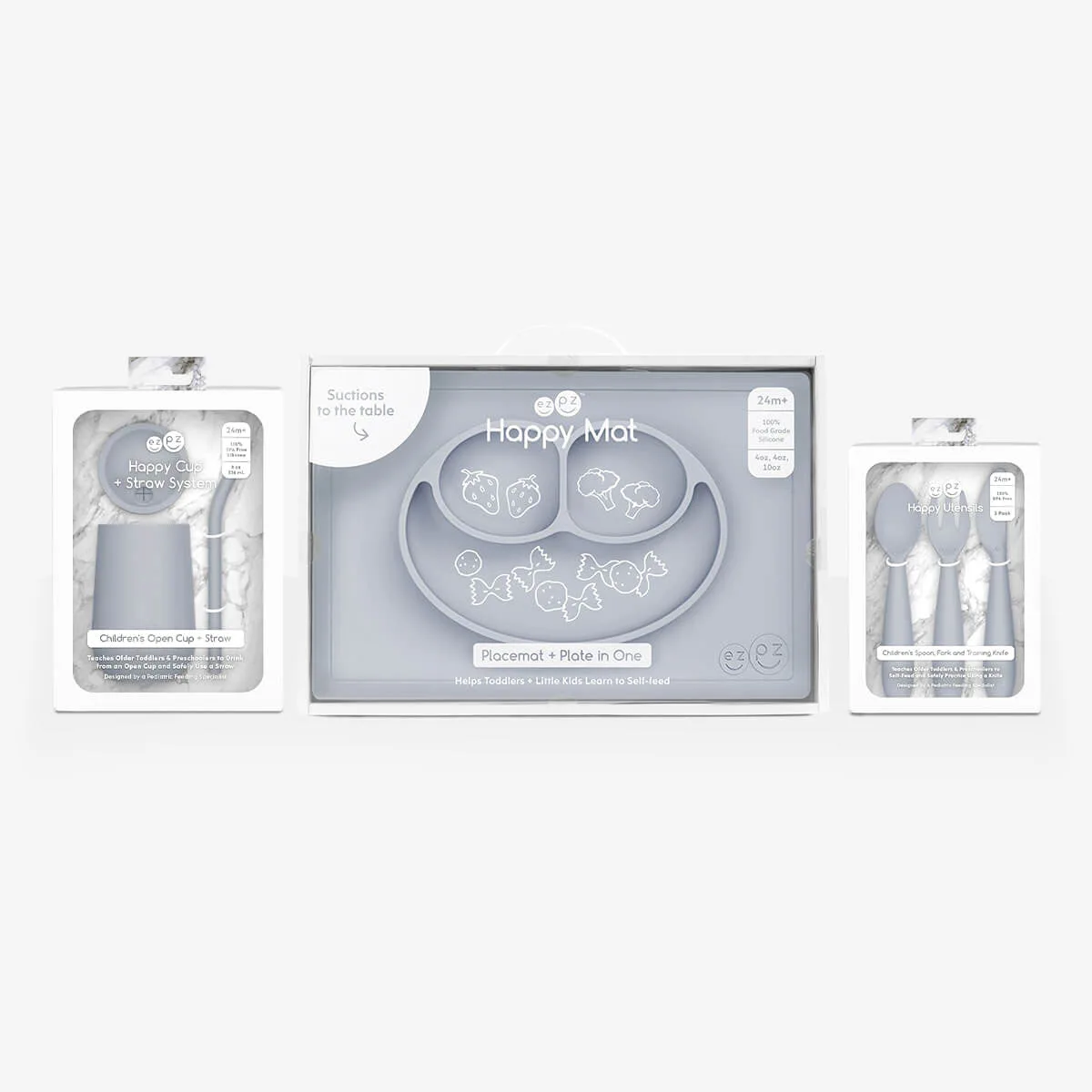
Happy Feeding Set: The Happy Line was designed for older toddlers and preschoolers that are 2+ years of age. This is the clearest age marker in the comparison. It tells you the Happy Feeding Set is not the first self-feeding set in the lineup.
Happy Feeding Set
-
Happy Feeding Set: The Happy Mat is portion-sized at 4oz, 4oz and 10oz. The compartment sizes show how the set is built for a fuller, more balanced meal rather than a first taste of solids.
-
Mini Feeding Set: The Mini Feeding Set includes the Mini Mat, Mini Spoon and Mini Fork. This is the core tool list for a child learning to scoop and pierce, so you can see exactly what arrives before you buy.
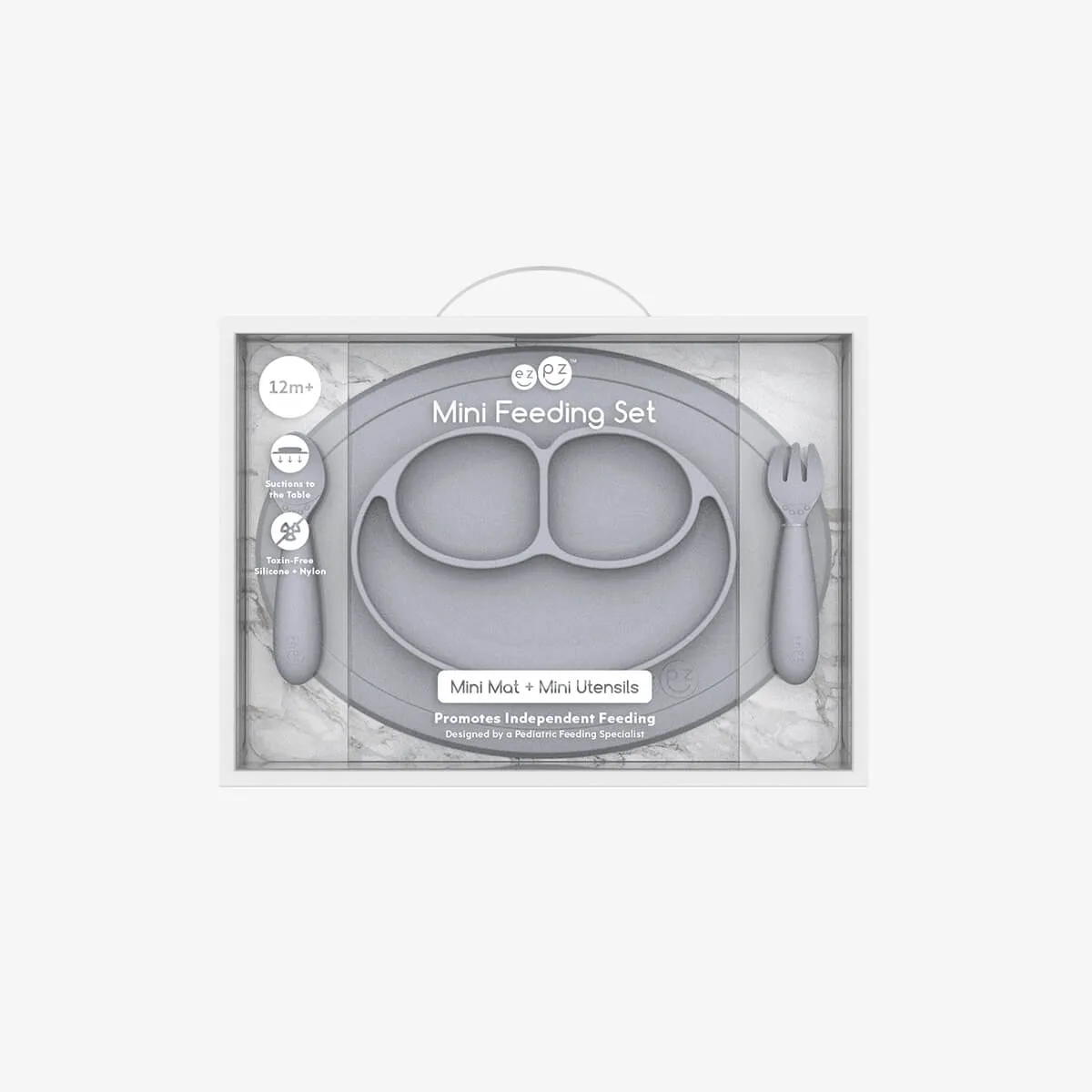
Mini Feeding Set
-
Mini Feeding Set: The Mini Feeding Set is described as providing the developmental tools for independent mealtime with your toddler. It frames the Mini set as a stage-based kit, not just a smaller plate and utensils.
Happy Feeding Set vs Mini Feeding Set at a glance
The two sets differ in age framing, portion sizes, and the utensils included. Use this side-by-side to see which differences matter for your child's current mealtime routine.
- Happy Feeding Set: Designed for older toddlers and preschoolers 2+ years of age. The Happy Mat is portion-sized at 4oz, 4oz and 10oz. Includes a training knife and a more advanced spoon and fork with a slightly elongated handle sized for preschoolers' hands. Also includes the Happy Cup + Straw System, sized at 8oz with a longer, more advanced straw.
- Mini Feeding Set: Positioned for the infant-to-toddler transition, when a child is eating a balanced meal and learning to scoop with a spoon and pierce with a fork. Includes the Mini Mat, Mini Spoon and Mini Fork. The supplied record does not list a training knife or cup system in this set.
When the Mini Feeding Set is the better first step
The Mini Feeding Set earns its place when your child is still building the basic mechanics of self-feeding. The catalog describes this stage as learning to scoop with a spoon and pierce with a fork, and the set supplies those two tools with a mat to anchor the meal.
If you are moving from a first plate or a baby-led weaning setup, the Mini set keeps the tool list simple. There is no training knife to introduce before your child is ready for one, and no cup system to manage if you already have a cup your child uses well. The tradeoff is that the Mini set does not include the more advanced utensils or the cup and straw system that come with the Happy set.
What the Happy Feeding Set adds for older eaters
- Happy Feeding Set: The set includes a training knife and a more advanced spoon and fork with a slightly elongated handle sized for preschoolers' hands. These are the tools that separate the Happy set from the Mini set. They are sized for a child who has moved past the first scooping and piercing stage.
- Happy Feeding Set: The set also includes the Happy Cup + Straw System, sized at 8oz and includes a longer and more advanced straw for enhanced swallowing skills. If you are also working on straw drinking, the Happy set bundles that tool rather than requiring a separate cup purchase.
Portion sizes and the small-appetite question
The Happy Mat's 4oz, 4oz and 10oz compartments are the only portion figures in the supplied records. The Mini Mat's compartment sizes are not listed in the supplied information, so a direct ounce-for-ounce comparison is not possible from the catalog alone.
That gap matters if you are shopping for a child with a small appetite. The Happy set's 10oz compartment is the largest single portion listed, and the two 4oz compartments give you room to separate foods. If you need to keep portions smaller, the Mini set is framed for the earlier stage, but you will need to confirm its compartment sizes before relying on it for portion control.
A simple way to choose between the two sets
Use your child's current eating stage and the tools you already own to make the call.
- Choose the Mini Feeding Set if: Your child is transitioning from infancy to toddlerhood, is learning to scoop and pierce, and does not yet need a training knife or a cup and straw system.
- Choose the Happy Feeding Set if: Your child is 2+ years of age, is eating balanced meals with different food groups, and is ready to add a training knife and more advanced utensils to mealtime.
- Check before you buy: The supplied records do not include care instructions, safety limits, or Mini Mat compartment sizes. Confirm those details on the product pages if they affect your decision.
Colors and the practical tradeoff
Both sets come in Pewter, Blush, Sage, Indigo, Coral and Blue, so color is not a deciding factor between them. The real tradeoff is whether you want a simpler first self-feeding kit or a more complete set for an older toddler who is ready for more advanced tools. Matching the set to your child's current stage is more useful than buying the larger set early or holding a younger child back.