Quick answer
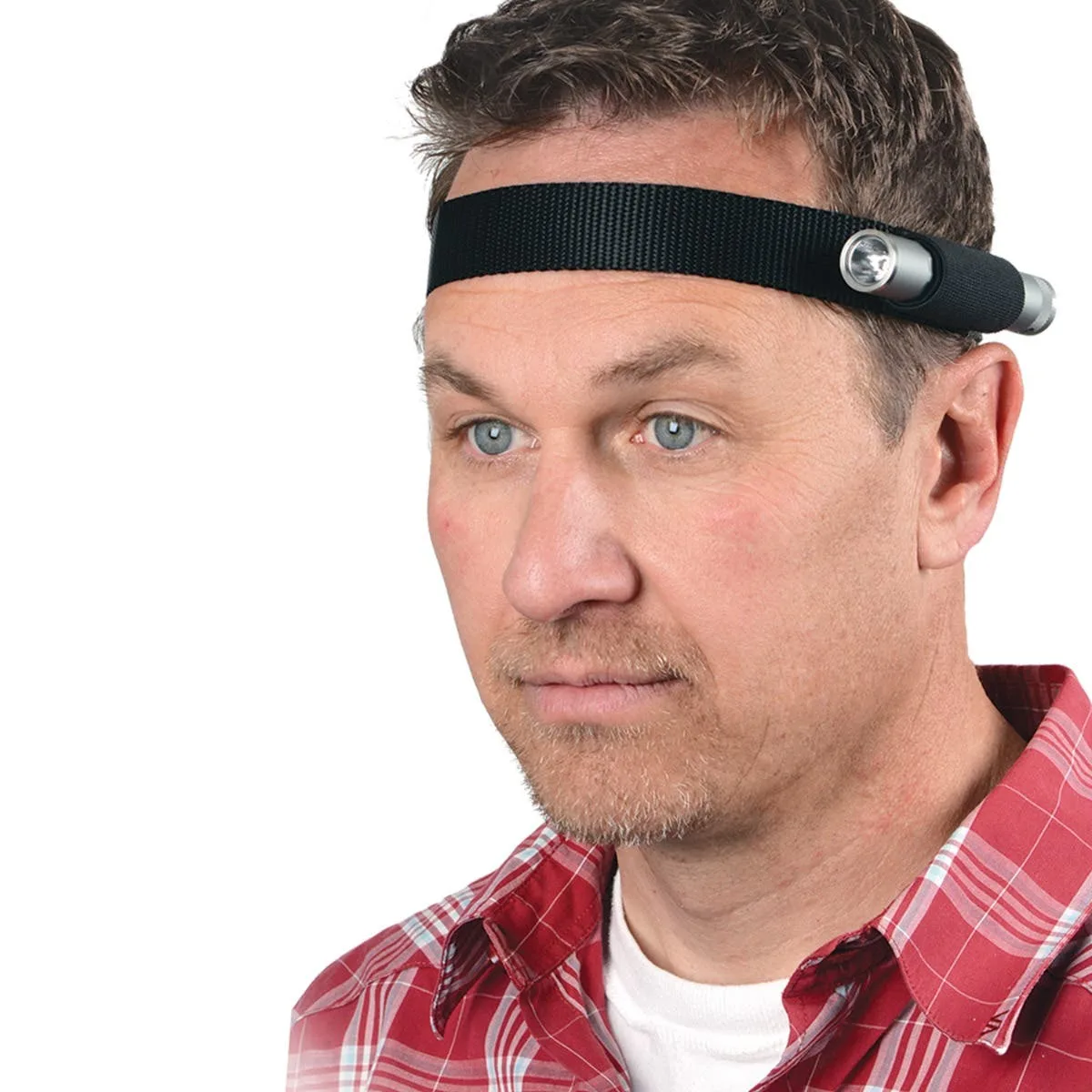
Choose a headlamp when you need both hands free and light that follows your eyes, such as camping, repairs, or night walks. Choose a handheld flashlight when you need to aim a beam at a distance or light up a specific spot. If you already own a compact flashlight, a headband flashlight holder can turn it into a hands-free headlamp for a few dollars instead of buying a second light.
The real difference: where the light points
A headlamp sits on your head, so the beam moves with your gaze. That is the whole advantage: you look at a knot, a map, or a trail sign, and the light is already there. A handheld flashlight has to be aimed by hand, which means one hand is busy and the beam drifts whenever you gesture, climb, or carry something.
The trade-off is reach and control. A handheld light can be raised, angled, or held away from your body to throw light farther or keep it out of someone else's eyes. Headlamps sit close to your face, so they are better for close and mid-range work than for long-distance spotting.
When to use a headlamp
Use a headlamp for tasks where your hands are the tool: pitching a tent, cooking at a picnic table, changing a tire, sorting gear in a pack, or walking a dog on a dark street. It also wins in tight spaces, like a crawlspace or under a sink, where you cannot hold a light and work at the same time.
For camping, the best headlamp for camping is usually a compact, lightweight model you can wear for hours without noticing it, with a low mode for inside the tent and a brighter mode for walking. If you already carry a small flashlight, a headband flashlight holder converts it into a headlamp without adding a second battery system to your kit.
When a handheld flashlight is the better call
Reach for a handheld flashlight when you need to inspect something at a distance, signal to another person, or direct a concentrated beam into an engine bay, attic, or storm drain. Handheld lights are also easier to hand to someone else and easier to set down and aim upward when you need light on a ceiling or wall.
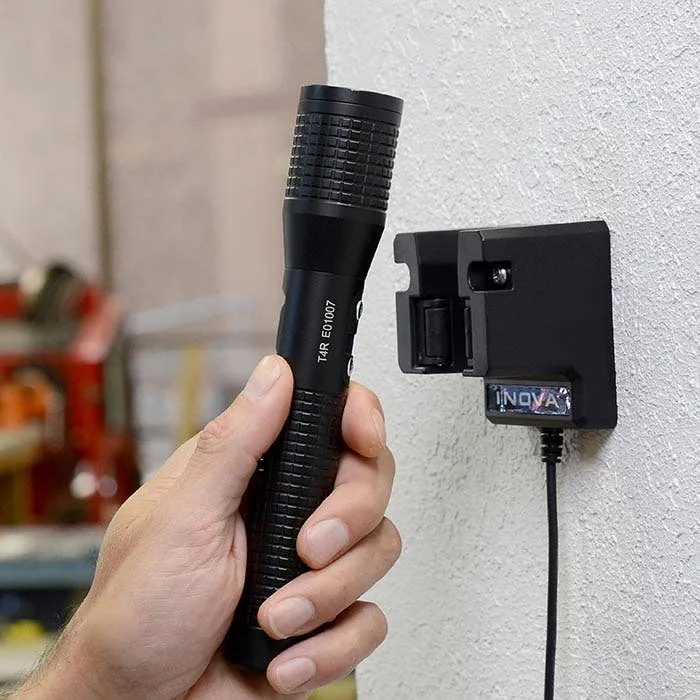
A high-output rechargeable model makes sense if you use a light professionally or for long night sessions. The INOVA T4R PowerSwitch Rechargeable Tactical Flashlight is a USB rechargeable, cradle-mounted LED light rated at 1300 lumens, which puts it in a different class from a keychain light for brightness and sustained output. That extra power matters when throw and runtime are the priority, not hands-free convenience.
How to decide in under a minute
Ask one question: will I be using my hands while I need light? If yes, go headlamp or convert a flashlight with a headband holder. If no, and you mainly need to point a beam at something, a handheld flashlight is simpler and usually throws farther.
Then check three practical details. First, power source: rechargeable lights cost more up front but avoid disposable batteries, while battery-powered lights are easier to keep as emergency backups. Second, mounting: a headlamp needs a comfortable strap, and a converted flashlight needs a holder that fits its body diameter. Third, weather and drop resistance: if the light will be used in rain or on concrete, prioritize a sealed, durable build over extra features.
A note on fit and mounting
Headlamps and headband holders are sized to fit a range of head sizes, but the strap and the light cradle matter more than the number on the box. A holder with an adjustable strap can tighten down for running or loosen for wearing over a hat. If you plan to convert a flashlight, check that the holder's cradle grips your light's barrel securely before you rely on it on a trail.
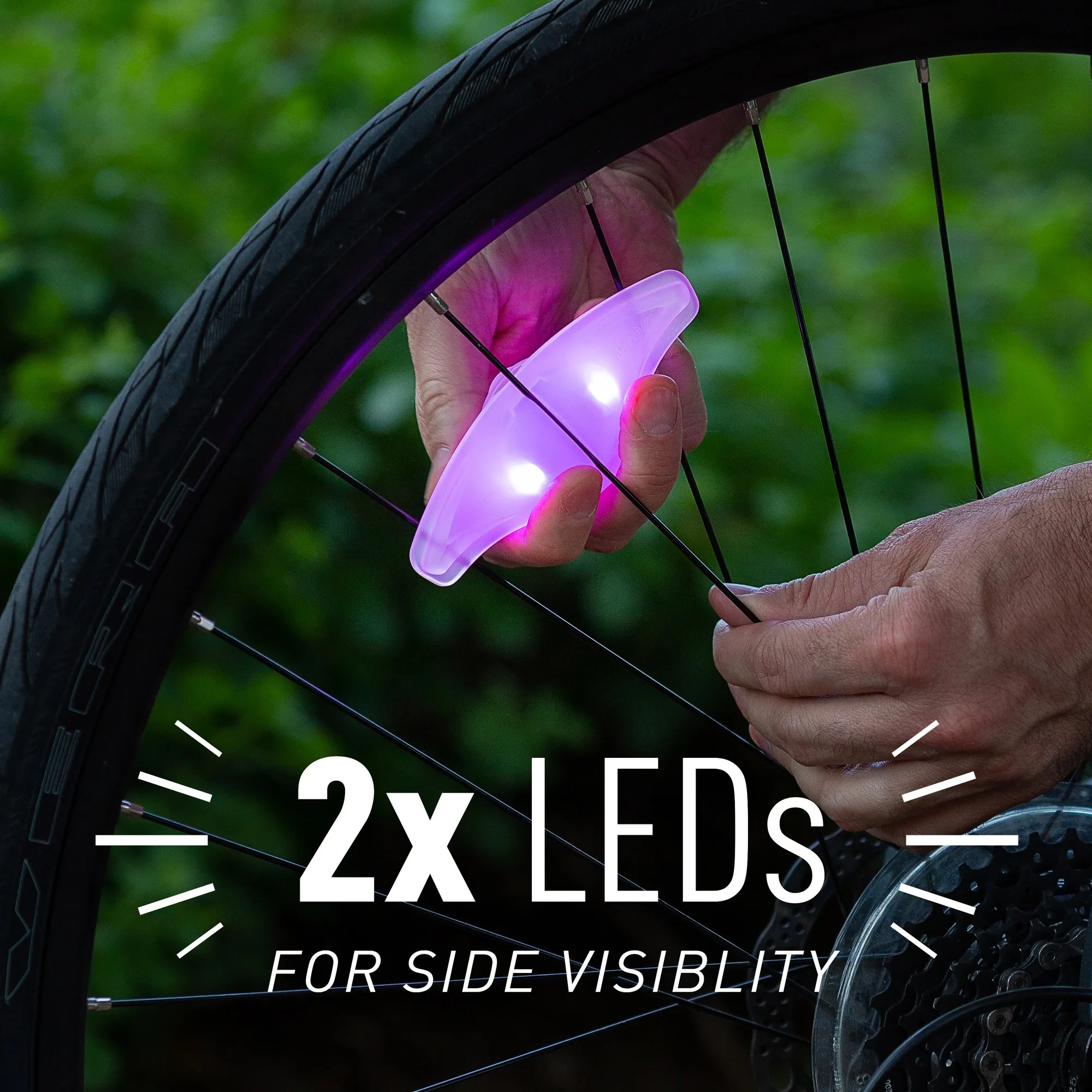
For bike or roadside visibility, a light that mounts to the bike or your body is a different job than a headlamp. The SpokeLit Rechargeable Wheel Light attaches to most bike spokes and adds side visibility, which is about being seen rather than seeing. Treat visibility lights and task lights as separate purchases.
Decision rules: pick your light in three checks
- Rule 1: Hands busy? Go headlamp.: If you will be climbing, cooking, repairing, or carrying anything while you need light, choose a headlamp or convert your flashlight with an adjustable headband holder. Hands-free beats brightness for close and mid-range tasks.
- Rule 2: Need reach or a focused beam? Go handheld.: If you need to inspect something at a distance, signal, or aim light into a specific space, a handheld flashlight gives you more control and usually more throw. Aimable light wins when the target is far away.
- Rule 3: Already own a flashlight? Convert before you buy.: A headband flashlight holder turns a compatible flashlight into a headlamp, so you carry one light and one set of batteries instead of two. Check the holder fits your flashlight's barrel before relying on it outdoors.
- Rule 4: Match the power source to your habits.: Rechargeable lights suit frequent users and long sessions; battery-powered lights suit emergency kits that sit for months. Neither is wrong, but mixing systems adds clutter. Pick one charging or battery standard for your whole kit.
Products that solve the hands-free problem
- Headband™ Flashlight Holder: The Headband Flashlight Holder is an adjustable headband that quickly turns your flashlight into a headlamp. If you already own a compact flashlight, this is the lowest-cost way to get hands-free light without buying a separate headlamp.
- INOVA® T4R® PowerSwitch™ Rechargeable Tactical Flashlight: The INOVA T4R PowerSwitch Rechargeable Tactical Flashlight is a USB rechargeable, cradle-mounted LED light rated at 1300 lumens. Choose this class of light when you need high output and rechargeable convenience for professional or long-duration use, and pair it with a holder if you also want hands-free operation.
- SpokeLit® Rechargeable Wheel Light - Disc-O Select™: The SpokeLit Rechargeable Wheel Light is a push-button activated, weather-resistant light that attaches to most bike spokes for side visibility. It solves a different problem than a headlamp: being seen by others at night rather than lighting your own path.
Who should buy which
Best for
- Campers, hikers, and dog walkers who need both hands free and light that follows their eyes
- DIYers and tradespeople working in tight spaces where a handheld light is awkward
- Anyone who already owns a compact flashlight and wants a low-cost hands-free upgrade with the Headband Flashlight Holder
Not for
- Users who mainly need long-distance throw or a focused beam on a specific target; a handheld flashlight such as the INOVA T4R is the better fit
- Riders whose priority is being seen from the side rather than lighting their own path; a wheel light like the SpokeLit serves that job