Quick answer
Choose a heat protection spray if your hair is fine, oily, or easily weighed down, or if you flat iron quickly at high heat and want even, fast coverage. Choose a cream if your hair is thick, dry, coarse, or curly and needs moisture and slip before styling. Many people get the best result by layering a light cream on mid-lengths and ends, then misting a spray over the top layers.
What each form actually does
A heat protectant spray is a thin, fast-drying liquid you mist over damp or dry hair. It spreads quickly through fine strands, disappears without leaving a film, and lets you re-mist a section you missed. Because it is light, it rarely changes how your hair feels after styling.
A heat protectant cream is thicker and usually carries more conditioning ingredients. It gives dry or coarse hair slip so a flat iron or wand glides instead of dragging, and it adds softness that spray alone often cannot. The trade-off is weight: too much cream on fine hair can look greasy or flatten volume.
How to apply each one without ruining the style
For spray, hold the bottle 6-8 inches from your hair and mist section by section, then comb through so the product reaches the strands you will actually iron. Spraying only the surface leaves the middle of each section unprotected.
For cream, start with a pea-sized amount, rub it between your palms, and work it from mid-lengths to ends, avoiding the roots unless your hair is very dry. Add more only after your hair is dry, since cream applied to soaking-wet hair can dilute and distribute unevenly.
Whichever form you use, let hair dry completely before touching it with a flat iron. Sizzling or steam means moisture is still trapped inside the strand, which is the moment heat damage happens fastest.
The temperature question nobody asks
The best heat protectant form depends on how hot your tool runs. Fine hair styled at a low to medium setting usually does well with spray alone. Thick or coarse hair that needs a higher setting often benefits from cream because the extra conditioning helps the iron pass through in one smooth stroke instead of several passes over the same section.
If you are unsure what temperature your iron reaches, treat that uncertainty as a reason to use less heat and more passes, not more heat and fewer passes. No protectant replaces good technique.
Trade-offs at a glance
- Spray: speed and weightlessness: Mists on fast, dries quickly, and is easy to reapply to a missed section without making hair feel coated. Best default for fine, oily, or short hair and for quick flat-iron touch-ups.
- Cream: moisture and slip: Adds conditioning that helps irons and wands glide through thick, dry, or coarse hair with fewer passes. Best for dense, textured, or chemically treated hair, but easy to overdo on fine hair.
- Layering both: Cream on mid-lengths and ends first, then a light spray over the top layers, gives coverage without heaviness. Try this if one form alone leaves your hair either dry or flat.
Which one should you buy?
Best for
- Fine, oily, or limp hair that loses volume easily
- Quick flat-iron passes at low to medium heat
- Anyone who wants to reapply protection between sections or on dry hair
Not for
- Very dry, coarse, or curly hair that needs slip and moisture before styling
- High-heat styling on thick hair where several passes are needed
- Anyone who wants a single product to double as a leave-in conditioner
From the product catalog
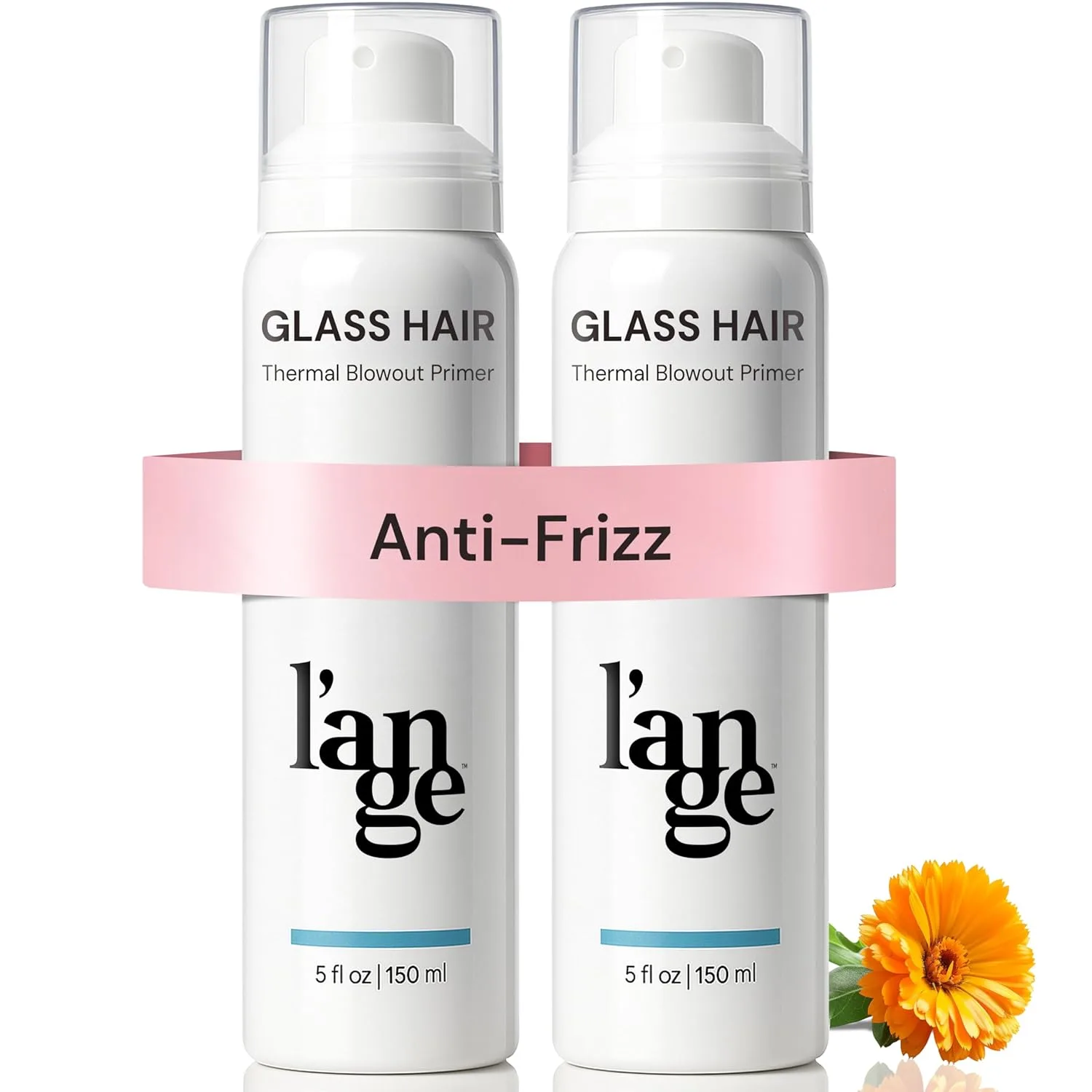
- L'ANGE HAIR Glass Hair Heat Protectant Spray: L'ANGE HAIR Glass Hair Heat Protectant Spray is designed to help shield your hair from the damaging effects of heat styling tools. This product offers a protective barrier while aiming to keep your hair looking smooth and glossy. Formulated as a heat protectant spray to help reduce damage from hot styling tools. Designed to support a sleek, glass-like finish for your hair. Available in a 2.5 Fl Oz (Pack of 2) size…