Quick answer
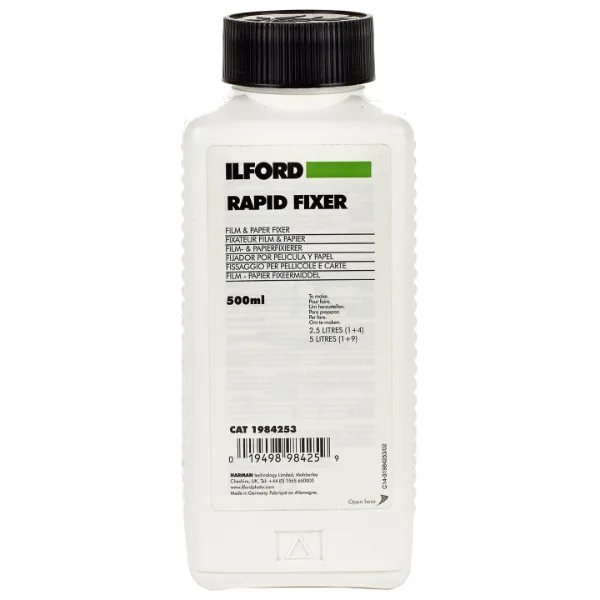
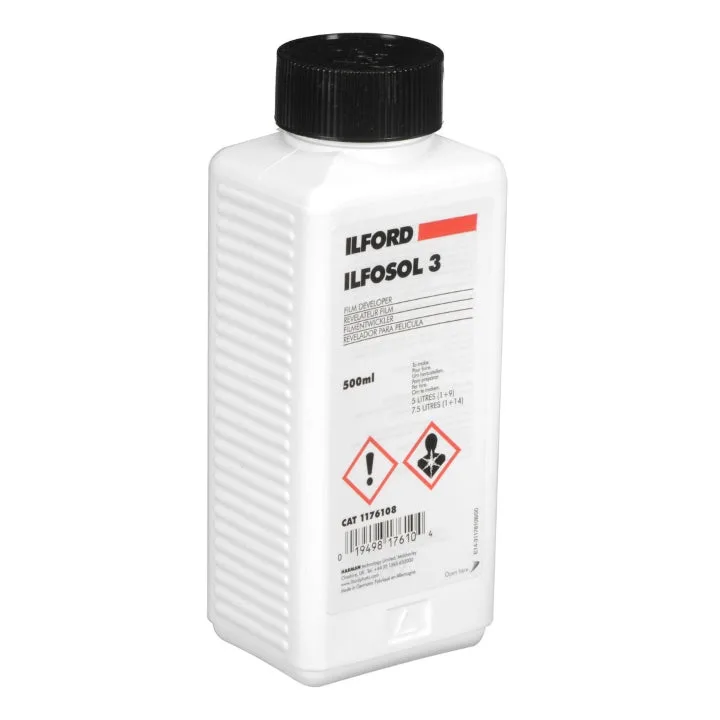
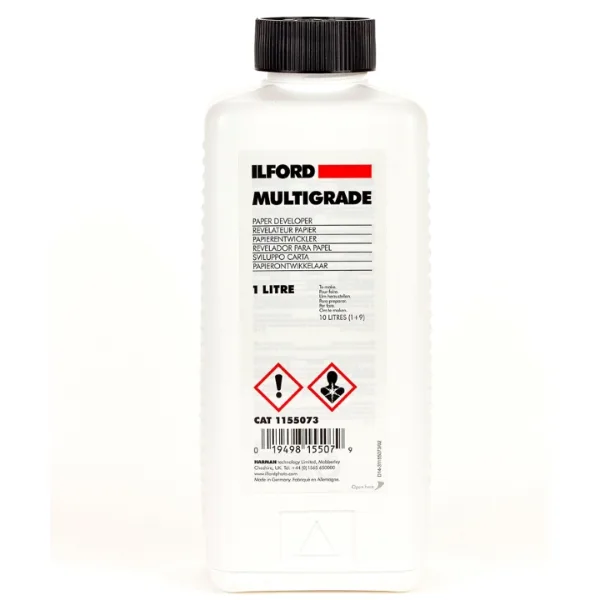
Buy chemistry first, paper second. For film, a one-shot liquid developer such as Ilford Ilfosol 3 500ml keeps your first rolls repeatable. For prints, Ilford Multigrade Paper Developer 1L covers both resin-coated and fibre-based papers at 1+9, and one bottle of Ilford Rapid Fixer 500ml handles film and paper so you are not storing two fixers. Add one pack of variable-contrast RC paper in 8x10in before you buy anything else.
Start with chemistry, not with a second camera
Most first darkrooms stall because the buyer spends the budget on an enlarger and then discovers the chemistry does not match the paper or the film they actually shoot. Work backwards instead: decide which films you use most, which paper size you can comfortably tray-process, then buy chemistry that covers both without duplication.
Two liquids do most of the work. A film developer you dilute once per session and discard, and a paper developer you can mix at two different dilutions depending on how much control you want. Fixer sits underneath both. If you shoot 35mm and 120 alongside each other, nothing in this list forces you to choose a format.
Film developer: one-shot liquid beats powder for a first setup
A one-shot liquid developer removes the two variables that ruin early results: mixing dry powder evenly and reusing chemistry past its useful life. You measure, dilute, develop, and pour away. That means an inconsistent roll is almost always a time or temperature mistake rather than exhausted developer, which is far easier to diagnose.
Ilford Ilfosol 3 500ml is supplied as a concentrate and is positioned for medium and slow speed films such as Pan F Plus, FP4 Plus and Delta 100 Professional, where it is intended to hold fine grain and sharpness at full film speed. If your shelf is mostly faster films, you are not doing anything wrong by choosing it, but the fine-grain advantage is the reason it exists, so match it to the films you actually load.
Print developer: match the dilution to your control, not your ego
Print developer is where beginners overspend, because a tray of working solution is cheap and a bottle of concentrate is not. The real decision is dilution. A stronger dilution develops faster and gives you a snappier image with less time to intervene; a weaker dilution stretches the same bottle further and slows development enough that dodging and burning become practical rather than frantic.
You do not need a separate developer for resin-coated and fibre-based paper if you choose one that explicitly covers both. Buying one versatile print developer and learning its two working dilutions properly will teach you more than owning three bottles you have not calibrated.
Fixer: one bottle for film and paper keeps the shelf simple
Fixer is the least interesting purchase and the one most likely to be bought twice by accident. A non-hardening rapid fixer that suits both film and paper means one storage bottle, one set of clearing times to learn, and one thing to test when a print looks milky under room light. Hardening fixers belong to a different workflow; if your chemistry is non-hardening, do not expect it to toughen emulsion.
Capacity is the number that matters. Fixer exhausts by area processed, not by calendar age, so keep a written tally of sheets and rolls and discard on count rather than on smell or colour.
Paper: buy one box, learn it, then branch out
For a first darkroom, variable-contrast resin-coated paper in 8x10in is the sensible starting point. It washes and dries quickly, lies flat in a tray, and lets you change contrast with filtration instead of buying a second box. Fibre-based paper is a legitimate upgrade later, but it demands longer wash times and careful drying, and it will punish you while you are still learning exposure.
Buy a box of 100 rather than a sampler pack. Consistency across a single emulsion batch is what lets you tell whether a change in your print came from your exposure or from the paper.
What to buy in what order
Order chemistry before hardware. Chemistry is consumable, so a wrong choice costs you one bottle rather than a shelf of equipment you cannot use. Then buy one paper, one set of trays you can actually fit on the bench, and a thermometer you trust. Only after your first ten prints should you consider a second paper surface or a second developer.
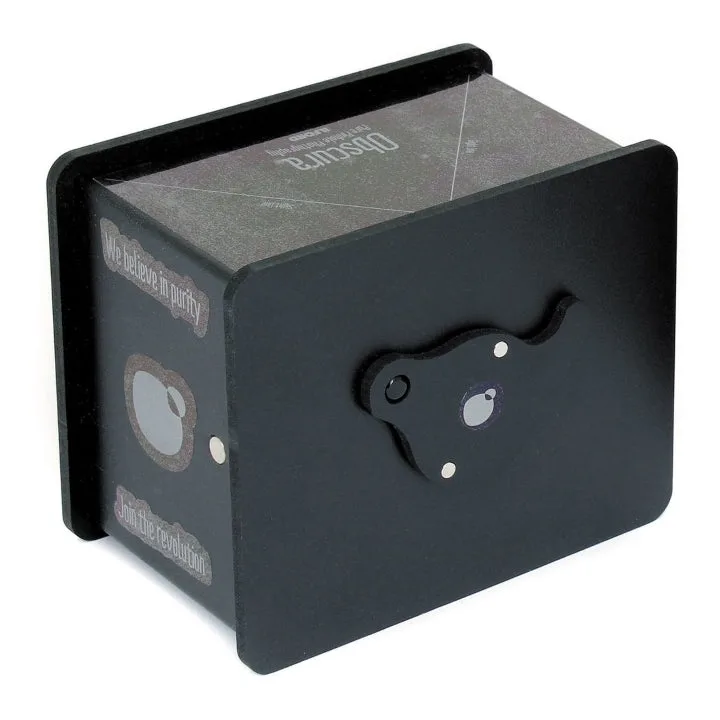
If you are also setting up a pinhole or paper-negative workflow, the same chemistry covers it. Ilford Obscura Pinhole Camera Kit is a precision-cut expanded PVC camera built from two interlocking sections, with the photographic medium loaded into the bottom section and held by the sliding top section. It uses the same developer, stop and fixer as your other work, so it adds a camera rather than a second chemistry line.
Decision rules for a first darkroom order
- If you shoot mostly slow and medium speed film: Choose a one-shot liquid film developer and dilute per roll. It removes reuse and powder mixing as variables while you are still dialling in time and temperature. Buy the film developer before the enlarger.
- If you want one print developer for RC and fibre paper: Pick a concentrate that explicitly states it covers both paper types, then learn its standard dilution and its economy dilution rather than buying two bottles. Two dilutions of one developer beat two developers you have not tested.
- If your bench space is limited: Choose a non-hardening rapid fixer rated for both film and paper so you store one bottle and track one capacity count instead of two. One fixer, one written tally of rolls and sheets.
- If you are buying paper for the first time: Start with variable-contrast RC paper in 8x10in and buy a full box rather than a mixed sampler, so contrast changes come from filtration and not from a batch change. One emulsion batch is the fastest way to learn exposure.
- If you already own a pinhole or paper-negative workflow: Do not buy extra chemistry for it. A pinhole camera such as the Obscura uses the same developer, stop and fixer you already mixed for film and prints. Add cameras, not chemistry lines.
Products worth anchoring your setup around
- Ilford Multigrade Paper Developer 1L: Ilford Multigrade Paper Developer is a rapid liquid concentrate dimezone-s/hydroquinone developer for tray developing of all black and white photographic papers, both resin coated and traditional fibre based, usually at 1+9 and optionally at 1+14 for greater development control and economy. One bottle covers both paper types, and the two dilutions let you choose between speed and control without buying a second developer.
- Ilford Rapid Fixer 500ml: Ilford Rapid Fixer is a non-hardening liquid concentrate film and paper rapid fixer suitable for all black and white film and darkroom paper fixing in manual and machine processing. A single 500ml bottle replaces separate film and paper fixers, which simplifies storage and gives you one clearing time to learn.
- Ilford Ilfosol 3 Developer 500ml: Ilford Ilfosol 3 is a one-shot, general-purpose liquid film developer supplied as a concentrate, suited to medium and slow speed films such as Pan F Plus, FP4 Plus and Delta 100 Professional, where it is intended to give fine grain and optimal sharpness at full film speed. One-shot mixing removes reuse as a variable, so inconsistent negatives point to time or temperature instead of exhausted developer.
- Ilford Obscura Pinhole Camera Kit: The Ilford Obscura Pinhole Camera Kit is an entry-level pinhole camera precision cut and formed from expanded PVC, made of two interlocking sections with the photographic medium loaded into the bottom section and held in place by the sliding top section. It runs on the same developer, stop and fixer as your enlarging work, so it extends your shooting without adding a second chemistry line.
Who this setup suits
Best for
- First-time darkroom users who want one film developer, one print developer and one fixer
- Photographers shooting both 35mm and 120 who want chemistry that covers both without duplication
- Anyone printing on both resin-coated and fibre-based paper who wants a single print developer
Not for
- Photographers committed to a powder developer or a staining developer for a specific look
- Darkrooms standardised on hardening fixers or machine processing chemistry
- Buyers who want a single kit that includes an enlarger, easel and safelight in one purchase