Quick Answer
For a throw quilt around 50 x 60 inches, plan on 12 to 16 fat quarters. A baby quilt near 36 x 48 inches usually takes 6 to 8, while a queen-size quilt can need 30 or more. Always round up by one or two fat quarters so you have room for miscuts, pattern matching, and binding.
Fat quarters are the quilter's favorite pre-cut for a reason: they are small enough to buy in a bundle, big enough to cut strips, squares, or triangles, and they let you sample a whole fabric collection without committing to yardage. But once you have a stack on the table, the practical question is always the same: how many will this project actually use?
This guide gives you the math, the standard pack sizes, and a few honest tradeoffs so you can plan a fat quarter quilt with confidence. If you are working from a pattern, its fabric list wins every time; use the numbers here to check the pattern or to design your own layout.
What Is a Fat Quarter, Exactly?
A fat quarter is a quarter yard of fabric cut wider instead of longer: roughly 18 x 21 inches instead of the 9 x 44 inch strip you would get from a standard quarter-yard cut. That extra width is why quilters prefer it. You can cut four 9-inch squares, sixteen 4.5-inch squares, or a stack of 2.5-inch strips from one fat quarter, depending on how you nest the cuts.
Because a fat quarter is a fixed pre-cut, the usable area is about 378 square inches. That number is the backbone of all fat quarter quilt math: divide the total fabric area your pattern needs by 378, then round up. Keep in mind that print direction and fussy cutting can reduce usable area, so treat the result as a minimum, not a target.
- Fat quarter: about 18 x 21 inches, roughly 378 square inches of usable fabric.
- Standard quarter yard: 9 x 44 inches, same area but a long, narrow strip.
- Pre-wash only if your pattern or fabric care instructions call for it; shrinkage changes the math slightly.
How Many Fat Quarters for Common Quilt Sizes?
These estimates assume simple piecing with little waste and no borders. A crib quilt around 36 x 48 inches needs about 6 to 8 fat quarters. A lap or throw quilt around 50 x 60 inches needs about 12 to 16. A twin-size quilt around 70 x 90 inches needs roughly 24 to 30, and a queen around 90 x 108 inches can take 30 to 40 or more.
The range exists because layout matters. A quilt made mostly of large squares uses fabric efficiently, while one built from small half-square triangles loses more to seam allowances and trimming. If your design has lots of small pieces, add 15 to 20 percent to the top of the range.
- Crib (36 x 48 in): 6-8 fat quarters.
- Throw (50 x 60 in): 12-16 fat quarters.
- Twin (70 x 90 in): 24-30 fat quarters.
- Queen (90 x 108 in): 30-40+ fat quarters.
How to Do the Fat Quarter Math Yourself
Start with the finished quilt size, then add seam allowances. Multiply the width by the height to get total area, then divide by 378, the usable area of one fat quarter. For example, a 50 x 60 inch quilt is 3,000 square inches. Divided by 378, that is about 8 fat quarters, but real piecing waste pushes the practical number to 12 or more for a comfortable layout.
Next, check the shape of your pieces. If the pattern calls for strips longer than 21 inches, a fat quarter cannot supply them without piecing, so you may need yardage instead. This is the most common reason a fat quarter plan fails: the fabric quantity is fine, but the cut dimensions do not fit.
- Finished size x finished size = total area.
- Total area ÷ 378 = minimum fat quarters.
- Add 15-20 percent for small pieces, directional prints, or fussy cutting.
Fat Quarter Bundles, Charm Packs, and Other Pre-Cuts
Pre-cut packs are sold in standard counts, which makes planning easier. A fat quarter bundle usually contains 12 to 40 fat quarters depending on the collection, while a charm pack holds 42 five-inch squares, a jelly roll holds 40 two-and-a-half-inch strips, and a layer cake holds 42 ten-inch squares. Knowing these counts lets you match a pack to a pattern without opening it.
If a pattern calls for 14 fat quarters and the bundle has 12, you have three options: add two coordinating fat quarters, scale the quilt down slightly, or use the bundle for the pieced top and buy separate yardage for borders and binding. Borders and binding are easy to forget, and they often need more length than a fat quarter can provide.
- Charm pack: 42 squares, 5 x 5 inches.
- Jelly roll: 40 strips, 2.5 inches x width of fabric.
- Layer cake: 42 squares, 10 x 10 inches.
- Fat quarter bundle: count varies by collection, commonly 12-40 pieces.
Where Fat Quarters Fall Short
Fat quarters are efficient for patchwork but awkward for borders, backing, and binding, which need long continuous lengths. A 50 x 60 inch quilt needs a backing roughly 58 x 68 inches after quilting take-up, so plan on separate yardage or a wide backing fabric rather than fat quarters. Binding for the same quilt usually takes about 1/2 yard of fabric cut into 2.5-inch strips.
Directional and large-scale prints are another limitation. A fat quarter may not give you a full repeat, so a big floral could look chopped when pieced. For those fabrics, buy a half-yard or more so the motif reads clearly. This is a design decision, not a flaw in the pre-cut.
- Buy separate yardage for borders, backing, and binding.
- Check that the print repeat fits inside 18 x 21 inches before committing.
- For large-scale prints, a half-yard cut preserves the design.
Fat Quarter Planning FAQ
How many fat quarters are in a bundle?
It depends on the collection. Many bundles contain 12, 20, or 40 fat quarters, and some smaller curated bundles have fewer. Check the product listing for the exact count before you match it to a pattern. Count the bundle against your pattern's fat quarter requirement before buying.
Can I use fat quarters for backing?
You can piece a backing from fat quarters, but it adds seams and bulk. For a 50 x 60 inch quilt, a pieced fat quarter backing would need roughly 20 fat quarters, which is usually more expensive and slower than buying wide backing yardage. Use yardage or wide backing for the back; save fat quarters for the top.
How much extra should I buy?
Add one or two fat quarters beyond your calculated minimum. That covers a miscut, a misjudged print direction, or a small design change without a second order. Round up, not down, especially with directional prints.
Fat Quarters and Half-Yards That Work in Real Projects
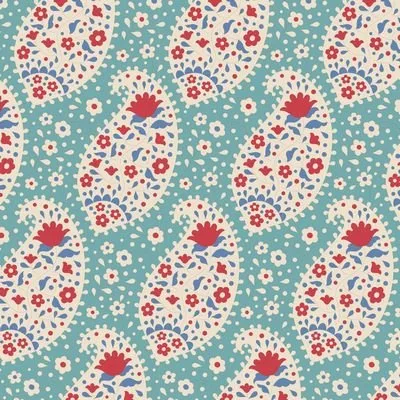
- Tilda Jubilee – Teardrop Teal 1/2 Yard: From the Tilda Jubilee collection, this teardrop print is a 1/2 yard cut (18 x 44/45 inches) of 100% cotton in a cool teal colorway. A half-yard gives you the same 18-inch width as a fat quarter but twice the length, so it covers borders or longer strips that a fat quarter cannot.
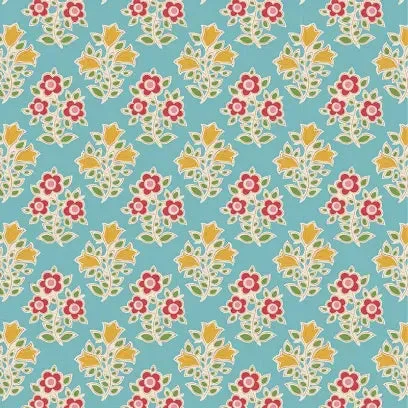
- Tilda Jubilee – Farm Flowers Teal 1/2 Yard: Farm Flowers Teal is a rustic floral print from Tilda's Jubilee collection, sold as a 1/2 yard cut of 100% cotton, 44/45 inches wide. Pairing this floral with a geometric blender in the same teal palette keeps a fat quarter quilt cohesive without buying an entire bundle.
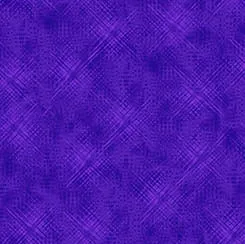
- Vertex – Ultraviolet (29513-VB) 1/2 Yard: Vertex is a weave blender from QT Fabrics Studio in an electric ultraviolet colorway, cut as 1/2 yard (18 x 44/45 inches) of quilting-weight cotton. A solid-leaning blender like this stretches a fat quarter bundle further by adding contrast sashing or background without introducing a competing print.
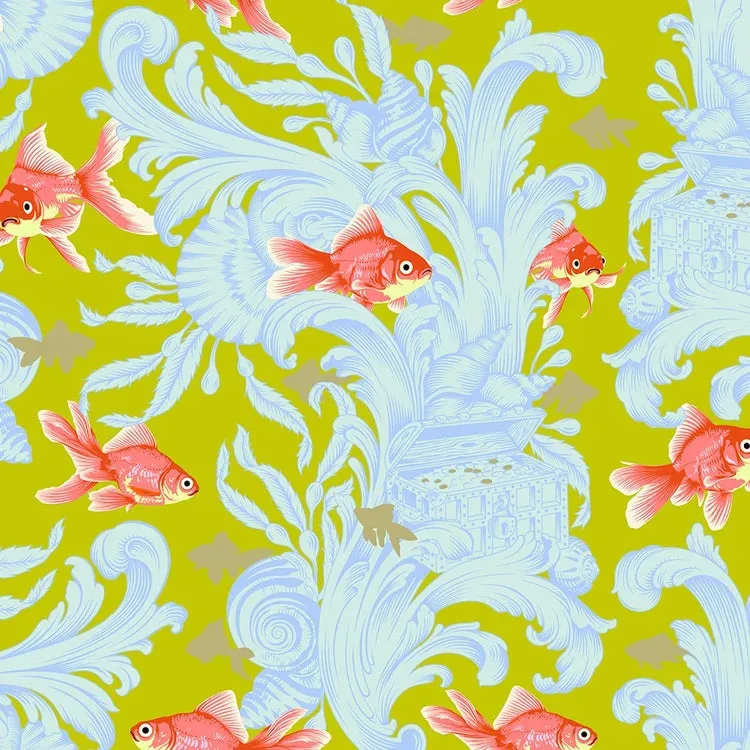
- Tula Pink Besties Treading Water - Clover 1/2 yd: Treading Water in Clover is a playful print from Tula Pink's Besties collection for Free Spirit Fabrics, 100% quilting-weight cotton, 44/45 inches wide, sold by the 1/2 yard. A half-yard cut is the safer choice for a focal print where you want the full motif to show rather than being trimmed away.
Fat quarter planning comes down to area, cut dimensions, and a little cushion. Measure your finished quilt size, divide by 378, add 15 to 20 percent for waste, and buy one or two extra. If your pattern needs long strips, borders, or backing, switch to half-yard or yardage cuts and keep the fat quarters for the piecing.