Quick answer
To add plant-based omegas to a vegan diet, take a daily algae-derived omega-3 supplement like Zhou Nutrition Plant-Based Omegas, and pair it with whole foods rich in ALA such as flaxseeds, chia seeds, and walnuts for balanced essential fatty acid intake.
Why vegans need a dedicated omega-3 strategy
Omega-3 fatty acids are essential for heart, brain, and eye health, but the two most active forms—EPA and DHA—are almost absent from plant foods. Vegans rely on ALA (alpha-linolenic acid) from seeds and nuts, which the body converts to EPA and DHA at a low rate (around 5-15%). That is why a targeted plant based supplement, especially one with pre-formed DHA and EPA from algae, can fill the gap without compromising your diet.
Many vegans assume flax oil alone is enough, but relying only on ALA sources may leave you short on DHA. Adding a direct source of DHA and EPA from algae oil ensures your body gets the forms it can use immediately.
Choosing between algae oil and ALA-only sources
Algae oil is the only vegan source that provides ready-to-use DHA and EPA, similar to fish oil but without the fish. ALA sources like flax, chia, and hemp seeds are still valuable for overall fatty acid diversity and fiber, but they cannot fully replace the direct DHA/EPA that algae oil delivers.
If you are pregnant, nursing, or have a family history of heart issues, prioritize an algae-based supplement for reliable DHA intake. For general wellness, a combination of a daily algae oil capsule and ALA-rich foods works well.
How to add plant-based omegas to your vegan routine
- Choose a reliable algae-based supplement: Look for a supplement that provides both DHA and EPA from algal oil. Check the label for at least 200-300 mg combined DHA+EPA per serving. Zhou Nutrition Plant-Based Omegas delivers EPA, DHA, and ALA in one capsule, making it a straightforward choice. Common mistake: buying a product labeled "omega-3" that only contains ALA from flax oil. Verify the supplement facts for DHA and EPA content.
- Take it consistently with a fat-containing meal: Omega-3s are fat-soluble, so absorption improves when you take your capsule with food that contains some dietary fat—like avocado toast, a nut butter smoothie, or a chia pudding. Aim for the same time each day to build a habit. Checkpoint: If you experience mild fishy burps (rare with algae oil), try taking the capsule right before a meal rather than on an empty stomach.
- Pair with whole-food ALA sources for variety: Add ground flaxseeds, chia seeds, hemp hearts, or walnuts to your meals. These provide ALA and additional fiber, protein, and minerals. A tablespoon of ground flax or chia in oatmeal or a smoothie covers about half your daily ALA needs. Common mistake: using whole flaxseeds instead of ground—your body cannot break down the outer shell, so you miss the omega-3s. Always grind them or buy pre-ground.
- Store supplements properly to preserve freshness: Omega-3 oils can oxidize and go rancid if exposed to heat, light, or air. Keep your bottle in a cool, dark cabinet (not the kitchen counter near the stove). Refrigeration is optional but can extend shelf life, especially in warm climates. Checkpoint: If the capsules smell fishy or the oil looks dark, discard the bottle—rancid oil offers no benefit and may cause digestive upset.
Product spotlight
-
Plant-Based Omegas: Zhou Nutrition Plant-Based Omegas provides EPA, DHA, and ALA from plant sources to support cardiovascular and overall wellness in a once-daily capsule. It offers a convenient, fish-free way to get both DHA and EPA, which are the forms your body uses most efficiently for heart and brain support.
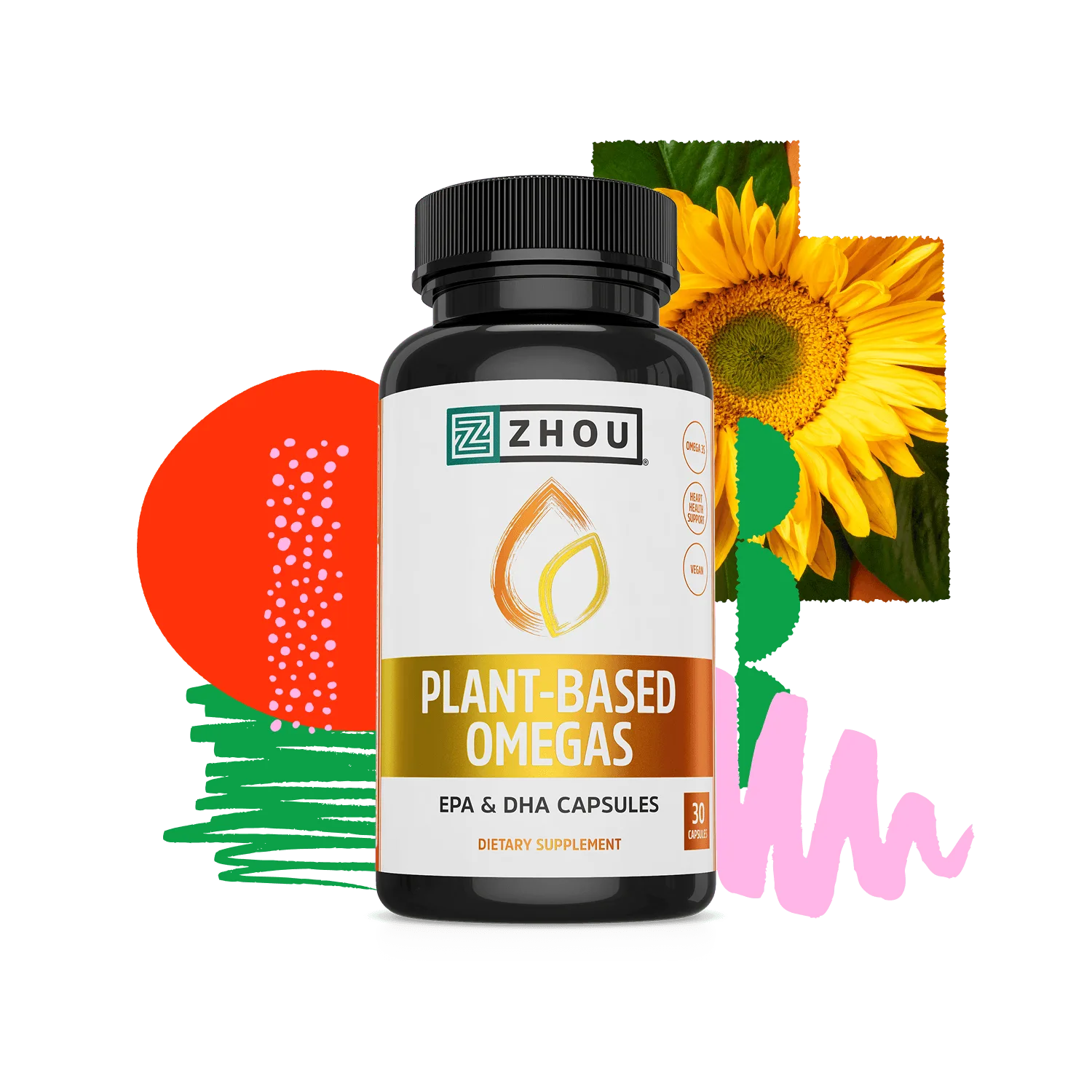
Plant-Based Omegas